

Sound Design
The sound design in The Expanse: Osiris Reborn reflects the same focus on authenticity that defines the rest of the game. Audio Director Sergey Eybog leads the team responsible for creating an audio experience that respects the physics of The Expanse universe while still delivering the gameplay feedback players need in a cover-based shooter. The approach was detailed in a March 2026 developer diary, where Eybog laid out the philosophy: the game is "not an astronaut simulator, but a cover shooter," meaning the team had to balance scientific accuracy with the practical needs of a fast-paced action game.
The Challenge of Sound in Space
In real space, sound does not propagate because there is no medium to carry the vibrations. The Expanse has always respected this fact; in the books and TV show, space is largely silent except for what characters hear through their suits and radio. Osiris Reborn follows the same rule, but the challenge for a video game is that sound is one of the primary ways players receive gameplay information. Gunfire direction, enemy movement, companion calls, grenade warnings: all of these are communicated through audio in a typical shooter.
Eybog's solution was to replace traditional audio channels with alternatives that are both scientifically plausible and functionally clear. Instead of hearing a gun fire across the room, the player hears vibrations transmitted through surfaces and their own suit systems. Instead of hearing an explosion's boom, they see the flash and debris while feeling a rumble through their magnetic boots. The result is a zero-gravity combat experience that sounds distinctly different from standard-gravity fights, creating two separate audio identities for the game's two combat environments.
Sound Channels in Vacuum
When the player is in vacuum (either inside a depressurized station section or in open space), audio comes through several distinct channels, each grounded in the physics of the situation.
Sound Channel | Source | Description |
|---|---|---|
Breathing | Spacesuit internal | Always audible. The player character's breathing rate increases during combat and physical exertion. Acts as a subtle stress indicator. |
Magnetic Boot Vibrations | Surface contact | Transmits tactile feedback from the surface the player walks on. Nearby activity (enemy footsteps, machinery, explosions) travels through the station hull and into the boots. |
Weapon Tremors | Physical contact | Firing a weapon in vacuum produces no audible report. Instead, the player hears the mechanical action of the weapon as vibrations through their hands and suit. Enemies' weapons are similarly muffled. |
Radio Communications | Helmet speakers | Companion callouts, mission updates, and enemy chatter (if intercepted) come through the helmet radio. EM interference in certain areas can distort or cut out radio signals. |
Suit Warning Systems | Spacesuit HUD | Automated audio cues for suit integrity breaches, low oxygen (if applicable to a specific scenario), incoming threats detected by suit sensors, and proximity warnings. |
The transition between pressurized and vacuum environments is handled dynamically. When atmosphere vents from a room (due to a hull breach or the player opening an airlock), sound fades progressively rather than cutting out instantly. The reverse happens when the player enters a pressurized area: ambient station noise gradually returns as air fills the space. This smooth transition prevents jarring audio shifts and reinforces the physicality of atmosphere as something the player can observe leaving or arriving.
EM Interference
Electromagnetic interference is an environmental hazard that affects radio communications. In certain areas of the game, particularly near heavy machinery, damaged power systems, or specific story-related locations, EM interference distorts or cuts out radio signals. This means companion callouts, mission updates, and intercepted enemy communications can become garbled or disappear entirely. Losing radio contact in the middle of a firefight forces the player to rely on visual cues and suit vibrations alone, creating a heightened sense of isolation.
The EM interference system is not just atmospheric set dressing. It has gameplay implications: losing radio contact means losing access to companion tactical callouts that would normally alert the player to flanking enemies or incoming threats. Players who enter high-interference zones need to compensate by being more visually attentive and using the Tactical Visor more aggressively.
Pressurized Environment Audio
In pressurized environments (station interiors with atmosphere, planet surfaces with domes), audio functions more traditionally. Gunfire sounds like gunfire. Explosions have bass and concussive impact. Companions shout warnings across the room. Ambient sounds of station machinery, crowd chatter, and environmental effects fill the background. The contrast between pressurized and vacuum audio is one of the game's strongest atmospheric tools, and the developers use environmental depressurization as a mid-combat event that shifts the audio landscape in real time.
Main Theme and Original Score
The game's main theme was composed by Paweł Perepelica, who also scored Pathfinder: Wrath of the Righteous and Warhammer 40,000: Rogue Trader for Owlcat Games. Perepelica's involvement provides musical continuity with Owlcat's previous work while the composition itself reflects the different tone of Osiris Reborn: less high-fantasy orchestration and more atmospheric, tension-driven sci-fi scoring.
The main theme was publicly revealed on November 7, 2025, shortly after the game's announcement. Early reactions from the community were positive, noting the theme's blend of ambient electronics with orchestral elements that evoke the vastness and danger of space travel. The full original soundtrack will accompany the game at launch. A digital copy of the OST is included in the Miller's Pack and Collector's Edition pre-order tiers.
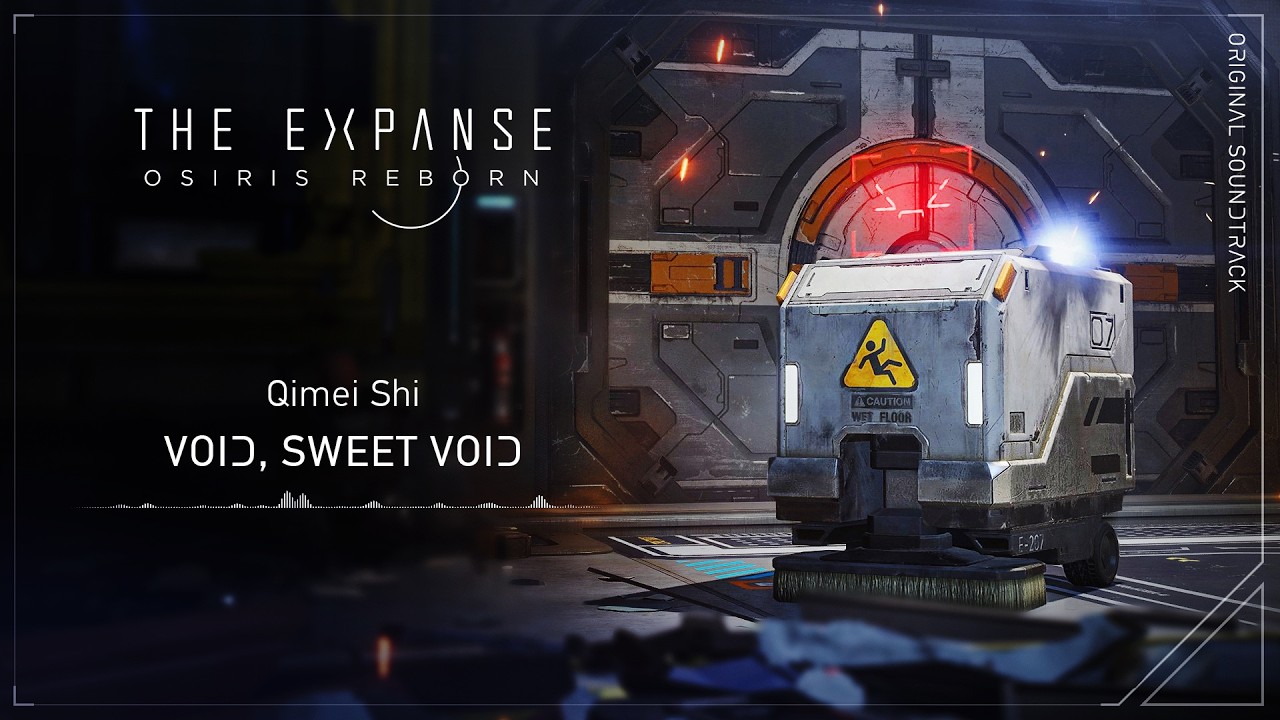
In July 2026, Owlcat released the game's opening-menu track on its own so players could hear it ahead of launch. Titled "Out of the Gravity Well," it is the piece that plays over the main menu, which the studio presented as the first moment of immersion before the game itself begins. A second soundtrack piece followed in August 2026: "Void, Sweet Void," credited to Qimei Shi. Its release confirmed that the score is not the work of a single composer, with Perepelica credited for the main theme and Shi credited for this track.
Paweł Perepelica is not the only composer on the project. "Void, Sweet Void", released on August 5, 2026, is credited to QimeiShi, making a second named composer part of the soundtrack team.
Eybog's Design Philosophy
In the March 2026 developer diary, Eybog emphasized that the sound team's goal was to make the player feel the difference between fighting in atmosphere and fighting in vacuum on a gut level, not just an intellectual one. "You should know where you are with your eyes closed," he said. Every combat encounter in vacuum is meant to feel tense and slightly wrong compared to the more conventional audio of pressurized fights. The quietness of vacuum combat, broken only by breathing and vibrations, creates a sense of vulnerability that no amount of armor or firepower fully dispels.
The team also worked to ensure that audio cues remain readable in both environments. A player who hears a specific vibration pattern through their boots in vacuum should understand that it means the same thing as the corresponding sound in atmosphere: an enemy is approaching from behind, an explosion is about to go off nearby, or a companion is calling for help. The two audio palettes are different in presentation but parallel in information.
Closed Beta Observations
The closed beta build gave the first hands-on look at how the vacuum soundscape, interior audio, voice performance, and ambient flavor all come together. The sections below record what was actually present in that build, where the beta lined up with the developer's stated philosophy, and which audio layers were still being tuned as of the beta period.
Vacuum Soundscape in Practice
When the player steps outside the station during an EVA section, the traditional gunfire soundscape that drives ordinary combat is deliberately muted. The developer's intent is for vacuum fighting to feel different from interior fighting on a gut level, so the mix pulls back sharp report layers and replaces them with vibrations transmitted through the player's suit and pings bouncing off nearby plating. Explosions thud rather than crack, debris booms through the hull rather than splintering overhead, and impacts pound through the soles of the magnetic boots. The beta consistently delivered this effect during the external portion of the Pinkwater Four mission, where even a nearby explosive tank rupturing registered as a heavy, pressurized thump instead of a standard action-game boom.
The quietness becomes a combat resource. With the usual audio cues flattened, players rely more on visual tells: muzzle flashes, floating debris trails, and the shapes of bodies that have lost their magnetic grip and begun to drift. Fights in this mode feel tense and slightly wrong compared to the more conventional audio of interior encounters, which matches the design goal of making the player aware of where they are even with their eyes closed.
Interior Station Audio
Inside pressurized sections of Pinkwater Four Station, audio reverts to full fidelity. Weapon reports are sharp and directional, grenades and mines carry concussive bass, footsteps and melee impacts travel through the floor, and environmental destruction produces clearly layered glass and metal work. Ambient station life fills the background: overlapping NPC chatter, vendor conversations, mechanical hum from ongoing repair work, and the hiss of pressure doors cycling nearby. The deliberate contrast with the muted EVA sections makes the transitions between the two feel like distinct zones rather than continuous levels.
Element | Pressurized Interior | Vacuum EVA |
|---|---|---|
Weapon reports | Sharp, directional gunfire with reverb off station walls. | Muted entirely. Players feel the weapon's mechanical action through the suit and see the muzzle flash without hearing a crack. |
Explosions | Full concussive bass and shrapnel audio. | Deep thuds felt as pressure waves through the hull, with debris pinging off nearby surfaces rather than cracking through the air. |
Footsteps and melee impacts | Audible through the floor with room acoustics. | Transmitted as vibrations through magnetic boots. Enemy movement on the same hull segment pounds through the soles of the player's boots. |
Ambient chatter | Background crowd noise, vendor shouts, NPC conversations, station PA announcements. | Replaced by helmet radio traffic and the player's own breathing. |
Environmental destruction | Breaking glass, metal tearing, decompression roars. | Decompression bursts fade to near silence within a second; metal shearing becomes a felt tremor rather than a heard impact. |
Soundtrack Style
The score pairs synthy electronic textures with orchestral arrangements, producing a layered sci-fi palette rather than a pastiche of any single science-fiction franchise. Ambient electronic beds run underneath the orchestration during exploration, and the orchestral side swells during combat peaks and story beats. In the beta, the main theme plays over the opening menu against a backdrop of space and Jupiter, setting a tone that carries through Pinkwater Four's ambient stingers and the louder action passages. The combined effect is an identity of its own while still feeling at home in the grounded, industrial tone of the Expanse universe.
Voice Acting and Performance
The main cast and the companions available in the beta are fully voiced. Dialogue sequences are not limited to stationary back-and-forth exchanges: companions react dynamically while the player is talking to NPCs, and the writing clearly anticipates the sibling traveling with the player at all times.
Players noted that J (the player's twin, also addressed as Jay) will step in during NPC conversations with their own lines, add contextual comments, and occasionally break off on their own to chat with NPCs the player passes in a social hub. One beta example had J walking over to a crew member fixing a fuse box and striking up a short side conversation without any input from the player. These moments act as ambient characterization rather than scripted cutscenes and contribute to the lived-in feel of the station.
Performance quality was described as uneven in the closed beta build. Minor and supporting characters such as Zafar, Luciana, and Oscar O'Connell were highlighted as strong, with weight, cadence, and personality coming through clearly. The male player-character voice delivery, by contrast, was called out as noticeably flatter than the female delivery: some lines read as overly scripted and undersold the emotional beat they were meant to carry. The developers are expected to tighten this gap before release, and both presets will likely see additional takes and direction passes during the remaining polish cycles.
Belter and Earther Speech Patterns
In the source material, Pinkwater Security mercenaries draw from across the system, and Belters speak a distinct Creole shaped by generations spent in low gravity, with clipped vowels, loanwords from a dozen Earth languages, and hand gestures that substitute for speech in vacuum. The closed beta does not yet represent that layer: Belter and Earther dialogue presets deliver nearly identical lines, and the unique phrasing, accent, and rhythm associated with Belter speech are not yet audible. This has been flagged as an area that needs expansion before launch, and it is one of the clearer audio-side differences between the beta build and the full promise of the setting.
Environmental Storytelling Through Audio
Pinkwater Four Station layers ambient audio to build a sense that life continues around the player. Background news broadcasts play on station screens, covering events from the opening arc of the story and including references to James Holden and the other public figures whose actions frame the larger conflict. Overlapping NPC chatter in the commons and bunk areas covers current events, local gossip, and complaints about the station's ongoing repair backlog. Mechanical hum from active maintenance work bleeds into dialogue scenes and shifts the spatial mix as the player walks past repair bays. These layers are treated as immersion flavor rather than voiceover aimed at the player, which means they keep playing whether the player stops to listen or not.
This ambient broadcast and chatter system is part of why the station feels populated even in a short mission. The designers use it alongside the louder dramatic scenes to signal that the world is active on its own terms and that the player's storyline is one of many happening in parallel.
Audio Bugs Flagged in the Beta
Several audio issues were noticeable during the closed beta build. These are documented here for accuracy, not as permanent features, and the developers have acknowledged that this build represents a pre-release pass on the mix:
Loot containers opened with no latching or mechanical sound effect, which removed the usual audio confirmation that a crate had been accessed.
Some cutscene debris impacts during the spacewalk sequences were missing their muffled impact layer, so pieces of wreckage tumbled past the player in near silence in a few shots.
Oscar O'Connell's in-office dialogue mixing shifted between clean and sharp takes, with some lines sounding noticeably brighter than the surrounding dialogue as if recorded on a different mic pass.
A handful of combat impact sounds dropped out during intense zero-g firefights when a large amount of destruction was happening at once.
These are the kinds of rough edges that beta builds are specifically meant to surface. The developers have signalled that feedback from the closed beta is being folded into the remaining polish work, and the cinematic impact layer, mixing consistency on key NPCs, and small interaction cues like crate latches are expected to be reviewed before release.