

Bounty Hunting and Fugitive Capture
Bounty hunting is one of the primary combat activities. Players take on contracts to track down and capture or kill wanted individuals. This system ties directly into the game's criminal systems. Characters who commit crimes accumulate wanted levels, and bounty hunters can profit from bringing them in. The bounty board creates a steady stream of combat objectives that send players across the map.
Catching fugitives is a related but distinct activity. Fugitives are characters who have already fled from justice rather than those actively committing crimes in the open. The difference matters in practice because fugitives may have relocated to entirely different regions. Tracking them down requires traveling, investigating, and sometimes navigating the politics of whatever area the fugitive has settled in before you can engage.
Both bounty hunting and fugitive capture reward the player with money and reputation. They are a reliable way to earn income through combat skill alone, without needing to run a business or manage territory. For players who want to focus purely on fighting, these activities provide a sustainable gameplay loop.
Bandit Camps and Exploration
Bandit camps are scattered throughout the world and work as combat encounters with material rewards. Clearing a camp may yield weapons, crafting resources, money, or information about nearby factions. Camps vary in difficulty based on the number and strength of the bandits occupying them, so players need to assess their own combat readiness before charging in.
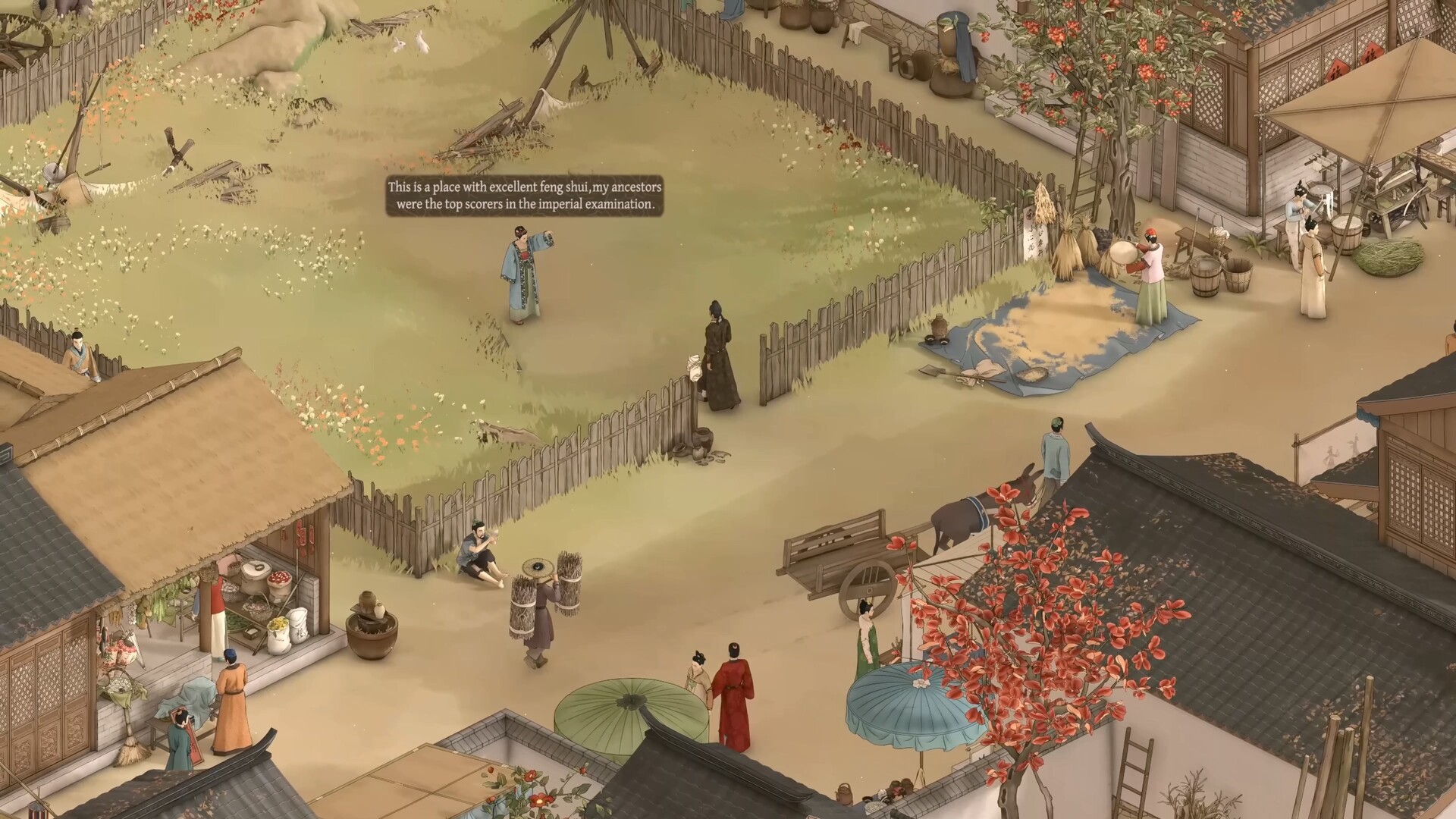
Beyond surface-level bandit encounters, the world contains temples, caves, and ancient ruins filled with mechanisms and traps. These locations function as dungeon-like content where combat and puzzle-solving overlap. A ruin might require fighting through guards, disabling a trap mechanism, and solving a spatial puzzle to reach the martial arts secret stored at the end. These are the locations where the rarer techniques and powerful weapons tend to be found.
Wild beasts add another layer to exploration combat. Some animals are hostile and attack on sight. Others only become aggressive when provoked or when their territory is entered. Certain rare species found in the wild can be tamed as combat companions rather than killed, connecting the combat system to the animal husbandry mechanics. A tamed wolf fights differently than a tamed eagle, so the choice of combat companion adds tactical variety.
Mercenary Forces and Hero Recruitment
Beyond personal combat, players can recruit martial artists and heroes to form a private mercenary force. These are named characters with their own skills, weapon specializations, and personalities. Recruitment is not automatic. Each potential recruit has motivations, conditions, and loyalties that influence whether they agree to join. Some want money. Some want to see proof of the player's fighting ability. Others may require the completion of personal requests before they commit.

The hero recruitment system ties into the NPC systems. Every recruitable hero is a full NPC with personality traits, family connections, and their own opinions. A hero who values justice might refuse to join a player with a criminal reputation. One who craves combat might grow restless during extended periods of peace. Managing a mercenary force means managing relationships, not just assigning troops to positions.
Building a strong mercenary force is about quality, not just quantity. Each recruited hero brings specific weapon specialties and martial arts knowledge. A force composed entirely of swordsmen fights differently than one with a mix of spearmen, archers, and staff wielders. Diversity of fighting styles makes the group more effective across different combat situations.
Military Warfare
At the largest scale, combat extends into full military operations. Players can recruit soldiers and horses, upgrade their army's equipment and training, defend controlled territory from attack, and launch campaigns against rival powers. This is the highest-stakes combat layer, where the consequences of victory or defeat reshape the political map.

Military strength directly affects faction diplomacy. A player commanding a large, well-equipped army has more leverage in peace talks and trade negotiations. A weak military invites aggression from neighbors who sense opportunity. Geography matters too. Defending a mountain fortress is different from holding open farmland, and the terrain of a region shapes which military strategies work.
Wars are not abstract. They displace NPCs, disrupt trade routes, damage buildings, and reshape the economy of affected regions. A region devastated by warfare needs rebuilding, which loops back into the construction and city management systems. Winning a war is only the first step. Governing the aftermath is the harder part.
The military layer connects personal combat to the game's political simulation. You might start the game as a lone fighter with a sword, gradually recruit a mercenary band, build that band into a proper army, and eventually wage war to control entire regions. The overview covers how this progression fits alongside the game's other systems.
Military Applications
Weapons and martial arts skills extend beyond personal combat. Players can hire heroes and recruit specialists to build a mercenary force. Army recruitment and troop upgrading are available for those who pursue large-scale warfare, where the composition of your forces matters.