
Overview
Magic in The Blood of Dawnwalker is described as "raw" and "ritual-based," with dark, primordial origins. Rebel Wolves was clear about the tone: "We're not going the high fantasy route." To cast spells, practitioners must carve runes into their flesh to "open the gate and welcome the power in." Coen becomes a living conduit for occult forces, and the magic is tied to grounded elements: blood, heat, and air that seems to pulse and breathe.
Visual Appearance
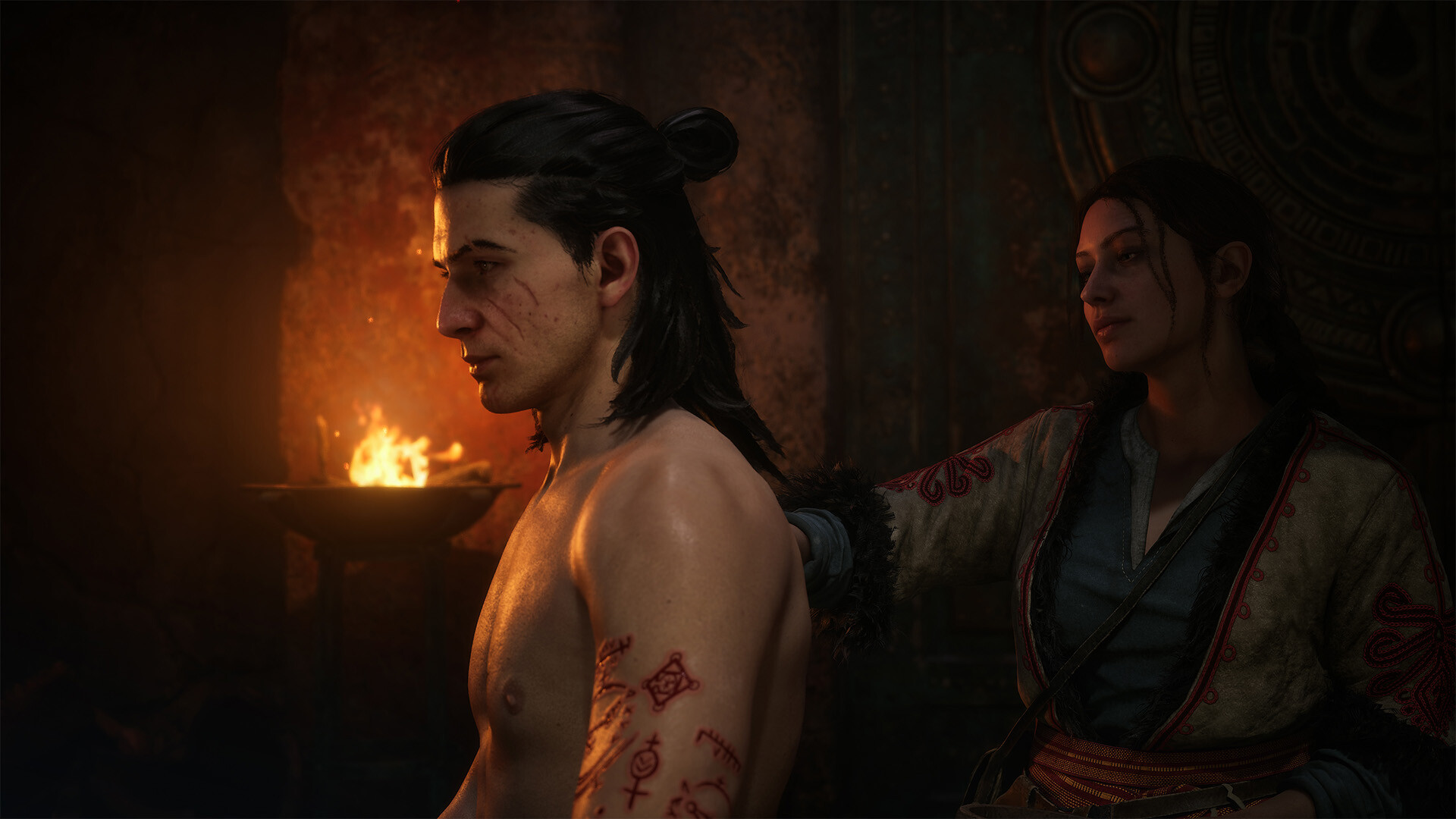
During the day, Coen's runes appear as bloody scars etched on his skin. The aesthetic is deliberately dark and visceral rather than the glowing fantasy sigils common in other RPGs. The runes reflect the game's grounded approach to supernatural elements, treating magic as something painful and physical rather than elegant.
The Night Problem
This is where rune carving intersects with Coen's dual nature as a Dawnwalker. Because of his vampiric regeneration, Coen's runic scars seal over at night as his flesh heals itself. This renders the runes inert and makes rune-based magic unavailable during nighttime. The mechanic is one of the main reasons both forms have distinct combat identities: daytime Coen has swords and Hex magic, while nighttime Coen relies on vampire abilities.
HP Cost
Hex abilities consume HP to cast, not just Activation Charges. Players must balance the power of their magic against their own survival. Since daytime Coen cannot regenerate health naturally (unlike his vampire form), every Hex cast is a genuine sacrifice. Crafted consumables from the crafting system become a critical resource for players who rely heavily on rune magic, as they are the only way to recover HP during the day.
That cost sits on top of the charge economy rather than replacing it. Activation Charges are earned by fighting well and are spent on abilities and executions alike, so a day-side Coen is paying for his magic twice: once in charges he has to earn in the swordfight, and once in health he cannot passively get back until sundown.
Known Hex Abilities
What the runes actually channel is the Witchcraft tree, counted at ten abilities in the shipped game and set out in full on Hex Magic. Three names were listed on this page before release, and two of them need qualifying against that roster.
Name | Standing in the Shipped Game |
|---|---|
Burning Blood | One of the ten Witchcraft abilities, and one of the four Anca teaches at the end of the prologue. Deals damage over time to a single target. |
Acrid Dust | Not a hex. The dust-throwing stun shown in the June 2025 gameplay reveal and described at the time as spending activation charges to open an attack window is a Swordmastery technique, and guides to the shipped game list it as Dirty Trick, so Acrid Dust is best read as that stun's earlier name. |
Artery Strike | A Swordmastery ability, not a hex: a critical strike with a chance of decapitating the target. It was filed here as a rune ability, which the shipped Swordmastery roster contradicts. |
The rest of the tree is gated by manuals rather than by perk points alone. A hex cannot be learned until its manual has been found in the world or bought from one of the valley’s Witchcraft merchants, so the Skill Trees set the depth of Coen’s rune magic while exploration sets its breadth. A second copy of a manual is not wasted: it raises the level of an ability he already carries.