
Overview
The Blood of Dawnwalker uses four-direction attacks and blocks. Coen can fight with equipped melee weapons during both day and night, while vampiric claws provide another nighttime option. Players choose up, down, left or right to attack an opening or block the direction of an incoming strike.
How it Works
Each attack has a directional input that determines where Coen's blade travels. Enemies telegraph their attacks with directional indicators, and successful defense requires matching the correct blocking direction. A parry (timing the block precisely) creates an opening for a counterattack, while a missed directional block allows the enemy's strike to land at full force.
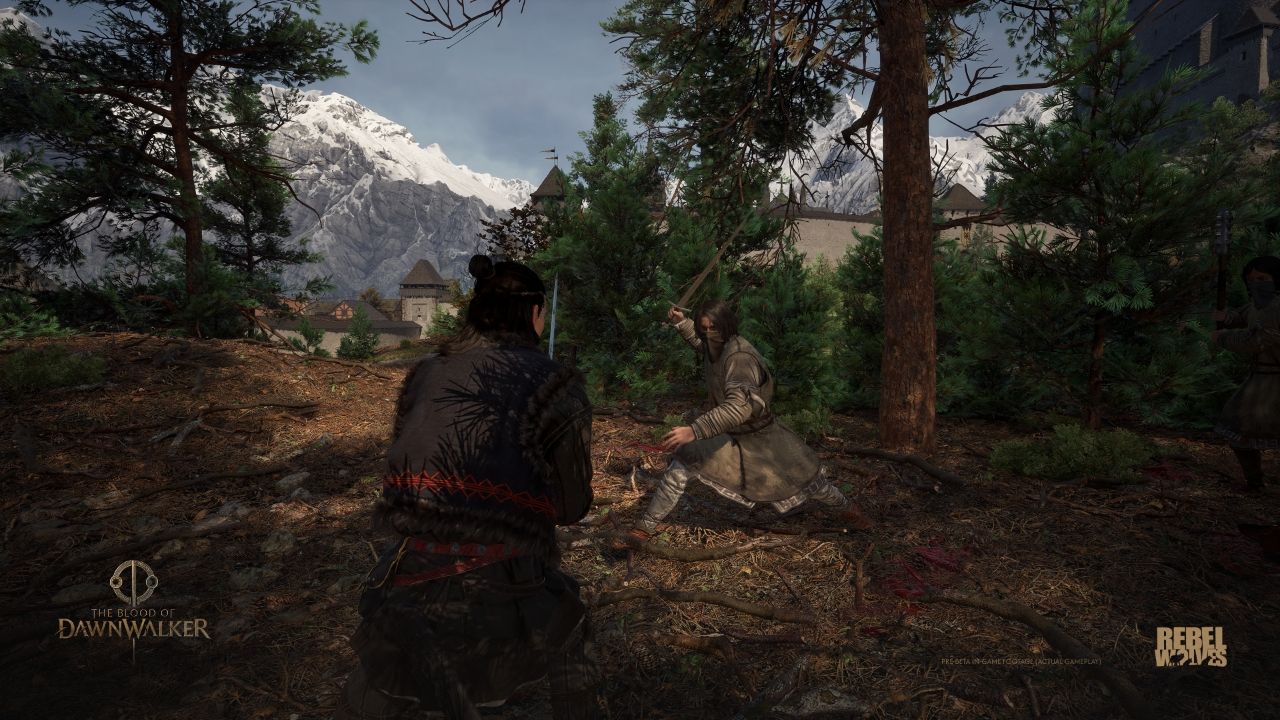
The system is fast and not animation-locked. Players can change attack direction quickly and swap between offense and defense with ease. Fights require on-the-fly decision-making about where to strike and when to guard, rather than memorizing fixed combo strings.
Design Intent
Design Director Daniel Sadowski stated that the goal was to make the player "feel like a real swordmaster who closely observes his enemies." Rebel Wolves invested in authenticity: they studied medieval fighting styles and employed trained swordsmen on the development team. The result is a human combat system that feels grounded in historical technique rather than flashy fantasy animation.
The studio acknowledged a specific design challenge: they "were afraid that people wouldn't want to play as human Coen" when vampire abilities were the flashier alternative. Their answer was to make the human combat system compelling enough to stand on its own. The directional system is a major part of that effort.
Integration with Other Systems
Directional combat works alongside Activation Charges: successful attacks and blocks replenish the pool that powers active abilities. Equipped weapons and Swordmastery remain available at night alongside claws and Vampirism abilities, so the choice of form does not remove conventional weapon combat.
The Assisted Option
Two automated alternatives sit alongside the manual system for players who would rather not commit to a direction on every input. Omniblock handles defence in all directions at once, and omniattack picks the swing angle automatically. Rebel Wolves added them after community feedback on earlier showings and has been clear that the fully directional approach remains the intended experience, with the assisted options trading precision for a higher stamina cost.
There is also a middle ground during a fight. A dedicated input randomises the attack direction for players who want to keep swinging without choosing an angle for that particular strike, which is useful when a fight is moving faster than the reads can keep up with.
Defensive Timing
Blocking in the correct direction stops a strike, but the timing layer is where the system opens up. A block landed inside a tight window becomes a parry rather than a plain block. Dodges have their own separate perfect-timing window. Clean blocks and combat finishers both trigger a brief slow-motion cue, which doubles as feedback that the timing landed.
Successful blocks, parries and hits all feed Activation Charges, which are the only route to special skills, so defending well is not merely survival, it is how the offensive options get paid for.
An optional on-screen indicator shows the direction of an incoming attack and changes colour during the Perfect Block window. Turning it off requires reading enemy animations instead. Duelist removes that directional assistance; the indicator can also be adjusted through custom settings.
A Perfect Block pays three ways at once. It stops the strike outright, restores stamina, and refunds activation charges, on top of opening the riposte window. That is what makes defence an offensive resource in practice rather than a way to survive an exchange.
Two named upgrades sit directly on top of that. Perfect Riposte turns the counter that follows a Perfect Block into a guaranteed critical hit, which is the single clearest reason to learn the shield cue rather than the swing animation. Perfect Block itself appears on the Swordmastery tree as a purchasable upgrade, so the timing window is something a build invests in rather than a flat property of the system.
Precision rewards the directional system itself. It raises damage for directional attacks that do not repeat the previous direction, and a higher rank cuts their stamina cost. It has to be unlocked with a manual sold by a Swordmastery teacher before it can be bought, and players who lean on the automatic options give up its benefit.
Weapon Arts
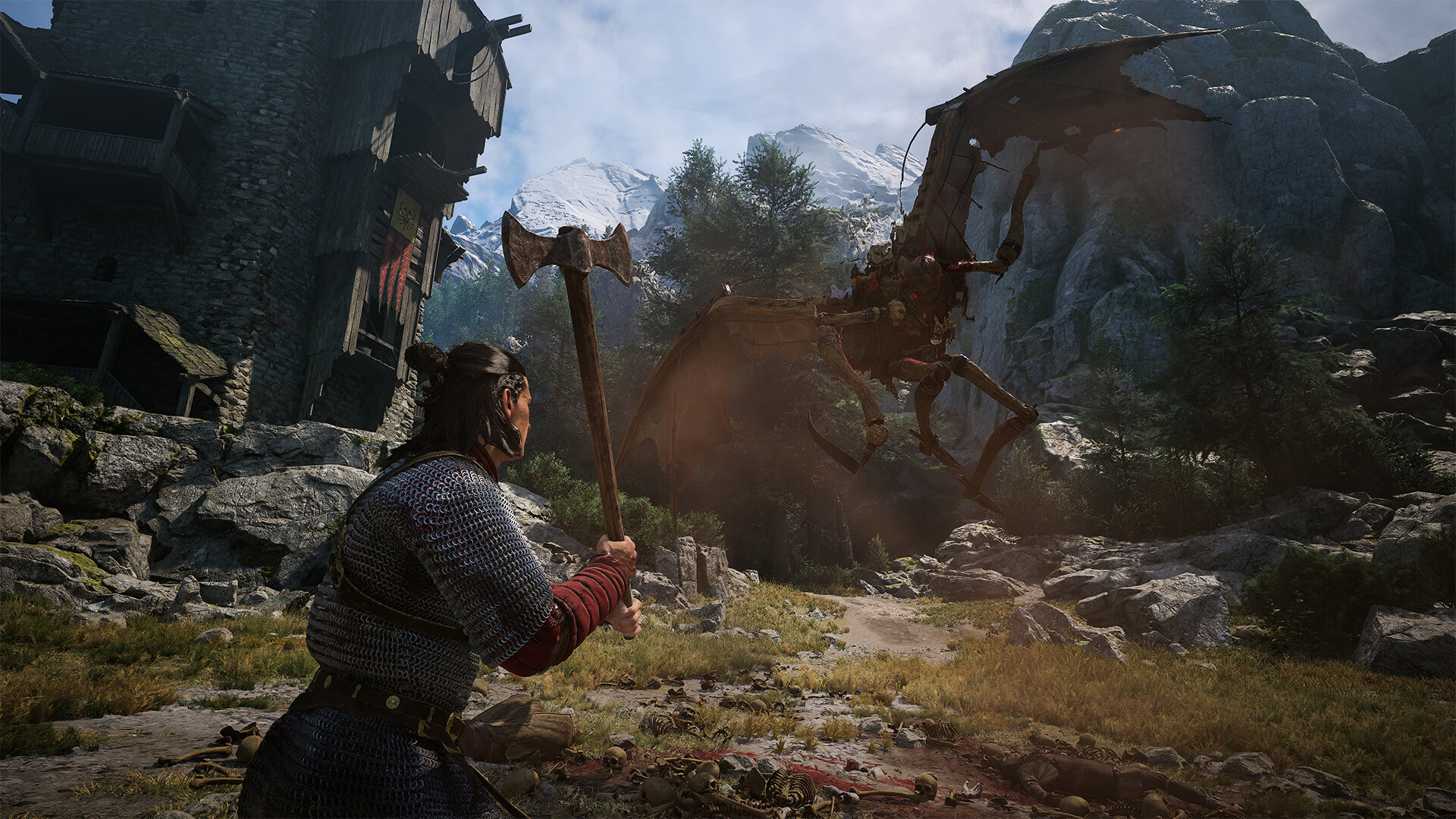
Directional inputs are not the whole offensive vocabulary. Every blue, purple and legendary weapon carries a weapon art, a bound move on its own cooldown that costs nothing to use, so changing swords changes what Coen can do as well as how hard he hits. The night side has an equivalent: bracers carry claw arts for the vampiric form. Neither draws on the charge economy, which makes them the free layer underneath everything the skill trees charge for. See Equipment and Crafting for what carries them.
Which presets switch the indicator off, and the separate controls for enemy health, damage and aggression that sit alongside them, are covered on Difficulty Settings.
Directional blocks and perfect dodges
A successful directional block does not consume stamina, while Omniblock spends stamina to handle the direction automatically. Attacks marked with a red skull cannot be blocked and must be dodged.
A Perfect Dodge is performed just before an attack connects. It briefly slows the environment and avoids the attack without a stamina cost. Use a directional dodge where necessary to move clear of the incoming strike.