Loading...
Loading...
Gameplay Systems
July 22, 2026 at 02:25 AM
Added the confirmed 25-entry faction roster, the item and inventory taxonomy, the planned crime and law-enforcement systems, and the world permanence rules (daily cleanup, rebuilding, and NPC replacement)
Streets of Rogue 2 is a systems-driven immersive sim, and much of its appeal comes from how its mechanics interact. This page collects the gameplay systems the developer has described, beyond the dedicated pages for Character Classes, Vehicles, Animals and Wildlife, Mutators, and Mayors and the President. Because the game is in development, some specifics may change before release.
Quests are generated procedurally and given out by NPCs, including Mayors and city authorities. The developer has stated that quest generation goes hand-in-hand with crafting material placement, time advancement, and the elite NPC system. A planned Cell Phone feature will let players grab missions over the phone instead of having to physically return to questgivers each time; internal builds already allow the player to call quest-givers in the UI to receive new quests. For 'kill' quests on animals, a humane disposal option is intended where the player can transport a knocked-out animal to a Ranger outpost rather than killing it. Quest objects placed in chunks are randomized: a chest, a safe, or a kidnapped person can all fill the same marker.
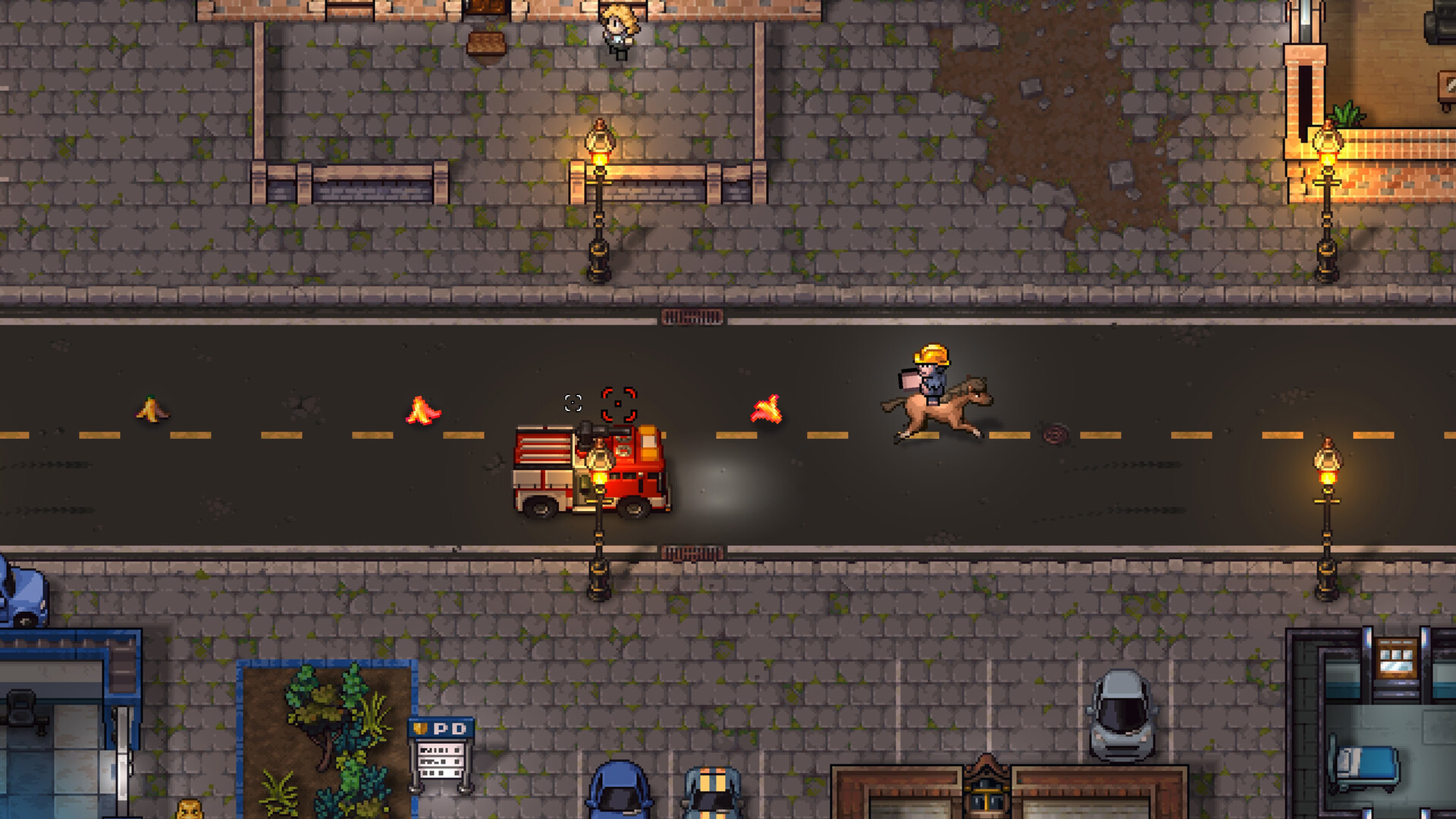
Combat covers melee, firearms, and a wide range of throwables and gadgets. The developer has described a redesigned guns-and-ammo system since the original game. Weapons may include items as silly as banana peels (no longer considered lethal in newer patches), and players can interact with weapons in unusual ways such as throwing or augmenting them. Some animals can use weapons themselves, an unplanned interaction the developer chose to keep because it amuses him.
Damage is categorized into types that are more or less effective against different materials, so a particular tool works better on some targets than others (for example an axe against a tree). Weapons are organized into subcategories such as Pistols and Knives, and a weapon's subcategory ties into the World Tier system. Reloading is part of ranged combat, all firearms within the same subcategory share a single ammo type, and non-lethal weapons produce knockouts more often than lethal ones. These combat details continue to be refined in development.
Each character has a skill tree, and augmentation booths around the world let players acquire additional skills. These systems are designed to encourage role-playing: a character that commits to a profession can get specialized upgrades that reinforce their playstyle, rather than each character having access to every option.
Players can place objects and floors in the world via Build Mode, accessed by holding the inventory button on gamepad. Build Mode includes a mousewheel-driven rotation control and supports object variants per chunk type, lining up with the broader chunk system. Player-built homes have specific rules around NPC pathing: in some cases a floor must be present for NPCs to avoid the area.
Players can craft items and recipes including food, with recipe ingredients sourced from animals (meat), plants, and shop purchases. Recipes the player has ingredients for appear at the top of the crafting list. The developer has specifically described in-world recipes such as Spaghetti and Bearballs, with both meat and vegetarian variants planned for major recipes.
Items are sorted into four storage groups. The split matters in play because crafting materials and ammunition do not compete for space with everything else.
Group | Contents | Notes |
|---|---|---|
Main Inventory | Tools, Consumables, Weapons, Quest Items | The slot-limited inventory. Tools perform unique functions, consumables cover food and other status-effect sources, and quest items are used only in the quest that produced them. |
Unlimited Slots | Ammo, Materials | Neither takes an inventory slot. Materials are used only for crafting and get their own tab. |
Build Mode | Buildable Objects, Farming Items, Claim-Related Items | Purchased or crafted. Farming items such as seed and fertiliser are early-stage; claim items such as the Land Voucher cover land acquisition. |
Other | Key Items, Currency | Keys, safe combinations, and keycards tied to specific locations. Money is the only currency, with no plans for a second one, though a city treasury may become available to a player who takes a mayorship. |
Stolen items are planned to be flagged as such. A flagged item would not be sellable at a normal shop, though a black market at a lower price is under consideration, and stolen goods could be confiscated if the player runs afoul of the law.
Status effects shape moment-to-moment gameplay. The developer has named effects including Smelly (typically gained by being around or eating skunk), Confused, Annoyed (an NPC reaction to player behavior), Well Rested (gained by sleeping in a bed), and various sickness states. Status effects carry over correctly across save loads after recent patches.
NPCs follow daily routines and react to player behavior. They sleep in their beds, go to work at appropriate businesses, and respond to provocation. The developer has fixed many edge cases in alpha demo patches: NPCs getting stuck between beds and walls, failing to leave their bed for work, refusing to walk through Fence doors, working at locations they were not meant to, and so on. NPCs may also be Annoyed with the player and refuse to speak with them in some interactions.
A dedicated crime system is planned but not built. The developer has described it as being in the ideas phase, so none of the following is playable yet.
System | Intent |
|---|---|
Cop Response | Police reaction to crimes, with effectiveness expected to depend on the city the crime happens in, including its prosperity. |
Non-Lethal Takedowns | A way for police to arrest rather than simply turn hostile. In the first game police had only neutral and lethal states. |
Bounty | Points accrued for the scale of a crime and the value of what was stolen. Bounty hunters are one possible consequence; the player would be able to pay a bounty off, and events such as death might clear part of it. |
Butler Bots and Cop Bots | Dispatched to the scene of a major crime, likely at a set time each day. A player who lingers at the scene may be found responsible, so sleeping in the bed of someone you killed carries a risk. |
The world remembers what the player does to it, then quietly repairs itself on a schedule. Wreckage and bodies are cleared each morning by Butler Bots, with the specifics depending on location. Destroyed walls, floors, and objects are replaced, and an NPC who is killed or leaves is replaced by another who moves into their bed slot and takes over the vacancy.
Both replacement processes currently fire at 5 AM every day. The intent is to make them depend on the state of the city instead, so a prosperous city repairs itself faster than a struggling one. Physical Butler Bots cannot yet be seen carrying out the work, though the code for them is partly in place.
Players can hire NPCs as employees, and the system that handles employment also covers keeping animals at the home base. A home base can provide various benefits including animal-derived bonuses.
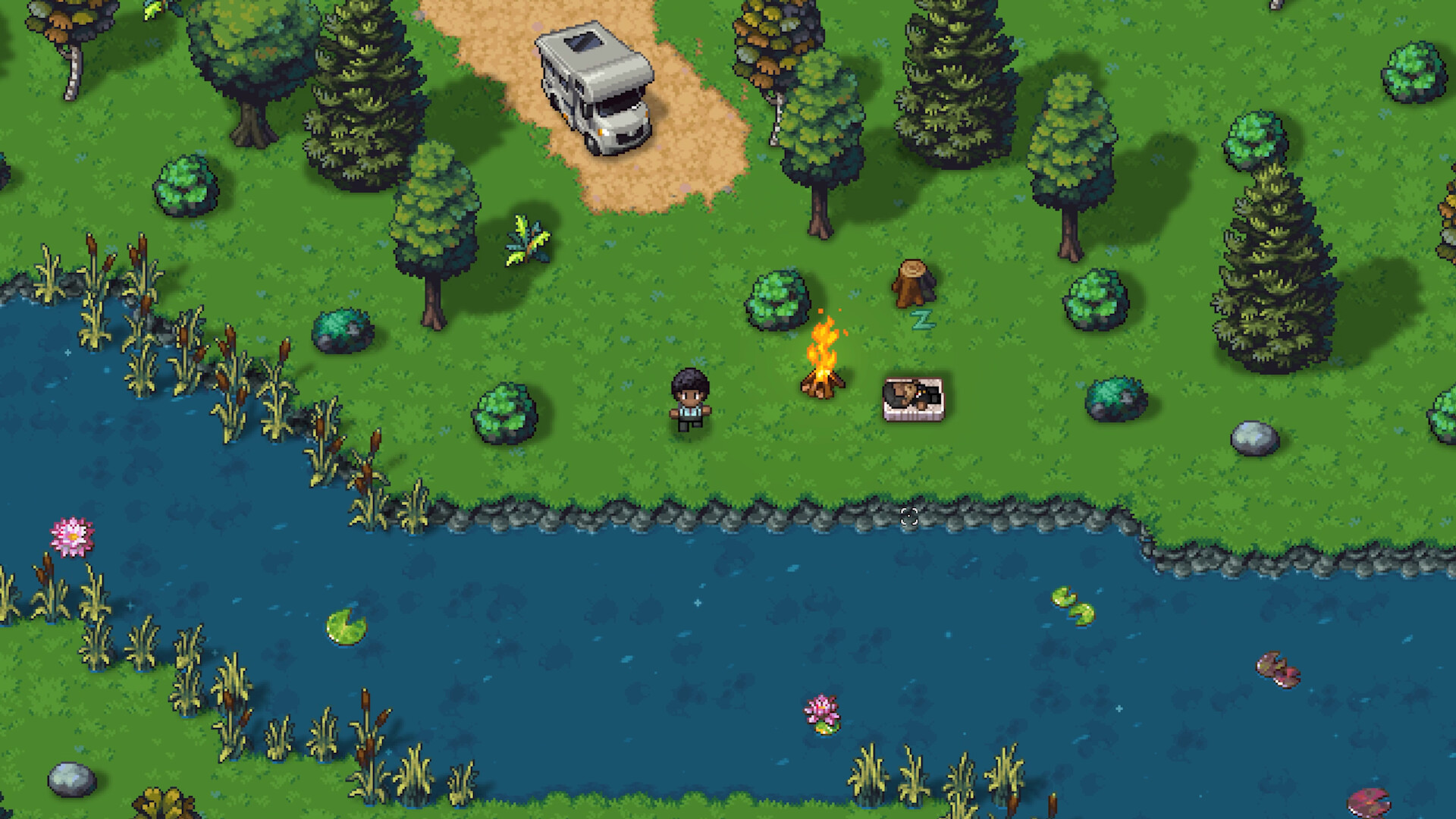
The world contains many factions, and the player's standing with each is tracked by a reputation value that places them somewhere on a scale running from hostile through aligned to friendly. Reputation gates access to faction-specific quests, so improving standing with a group opens up work that group offers. Relationships between factions are currently fixed, but they are intended to become dynamic, and a player-led faction is planned. Faction standing also feeds into the city-level decisions surfaced through Mayors and the President.
Twenty-five faction types are present in current builds, though the developer describes the system as unfinished. Several of them mirror a character Class or Profession, so the group a player belongs to and the groups they can antagonise often overlap.
Faction | Grouping | Notes |
|---|---|---|
Law Enforcement | Institutional | The policing faction. Pairs with the Cop profession. |
Government | Institutional | The state apparatus that the President sits atop. |
Soldiers | Institutional | Military faction. Pairs with the Soldier profession. |
Firefighters | Institutional | Emergency services faction. |
Press | Institutional | Media faction. Pairs with the Journalist profession. |
Scientists | Institutional | Research faction. Pairs with the Scientist profession. |
Resistance | Oppositional | Anti-government faction. Pairs with the Resistance profession. |
Thieves | Criminal | Pairs with the Thief profession. |
Goons | Criminal | Pairs with the Goon profession. |
Mobsters | Criminal | Pairs with the Mobster profession. |
Crepes | Criminal | One of the two rival gangs. |
Blahds | Criminal | The rival gang to the Crepes. |
Cultists | Ideological | Pairs with the Cultist profession. A cultist Mayor archetype leads a large following. |
Farmers | Civilian | Pairs with the Farmer profession. |
Rangers | Civilian | Police the use of natural resources; see Rangers. |
Humans | Species | The baseline species faction. |
Gorillas | Species | Gorillas have their own faction and a planned Gorilla Village settlement. |
Animals | Species | Wildlife is treated as a faction in its own right; see Animals and Wildlife. |
Aliens | Species | Pairs with the Alien class. |
Robots | Species | Pairs with the Robot class. |
RogueBots | Species | Listed separately from Robots. |
Cannibals | Species | A cannibal Mayor archetype and cannibal hideout dungeons both exist. |
Werewolves | Species | Pairs with the Werewolf class. |
Vampires | Species | Pairs with the Vampire class. |
Zombies | Species | Pairs with the Zombie class. |
Streets of Rogue 2 runs on the Unity engine. The developer has been actively optimizing it: at one point the game used as much as 11 GB of RAM, which has been reduced to roughly half through improved Unity asset handling. World generation loading is now consistently smooth without major spikes, and world generation time has been reduced by roughly fifty percent compared to earlier alpha builds. Roughly a quarter of one development year was spent revamping the tilemapping system, which has resulted in more flexibility when designing environments and for in-game player-built structures, with less jank.