
Loading...
Loading...
Headquarters and Intelligence
September 9, 2026 at 01:16 AM
Added official screenshot (2026-09-08)
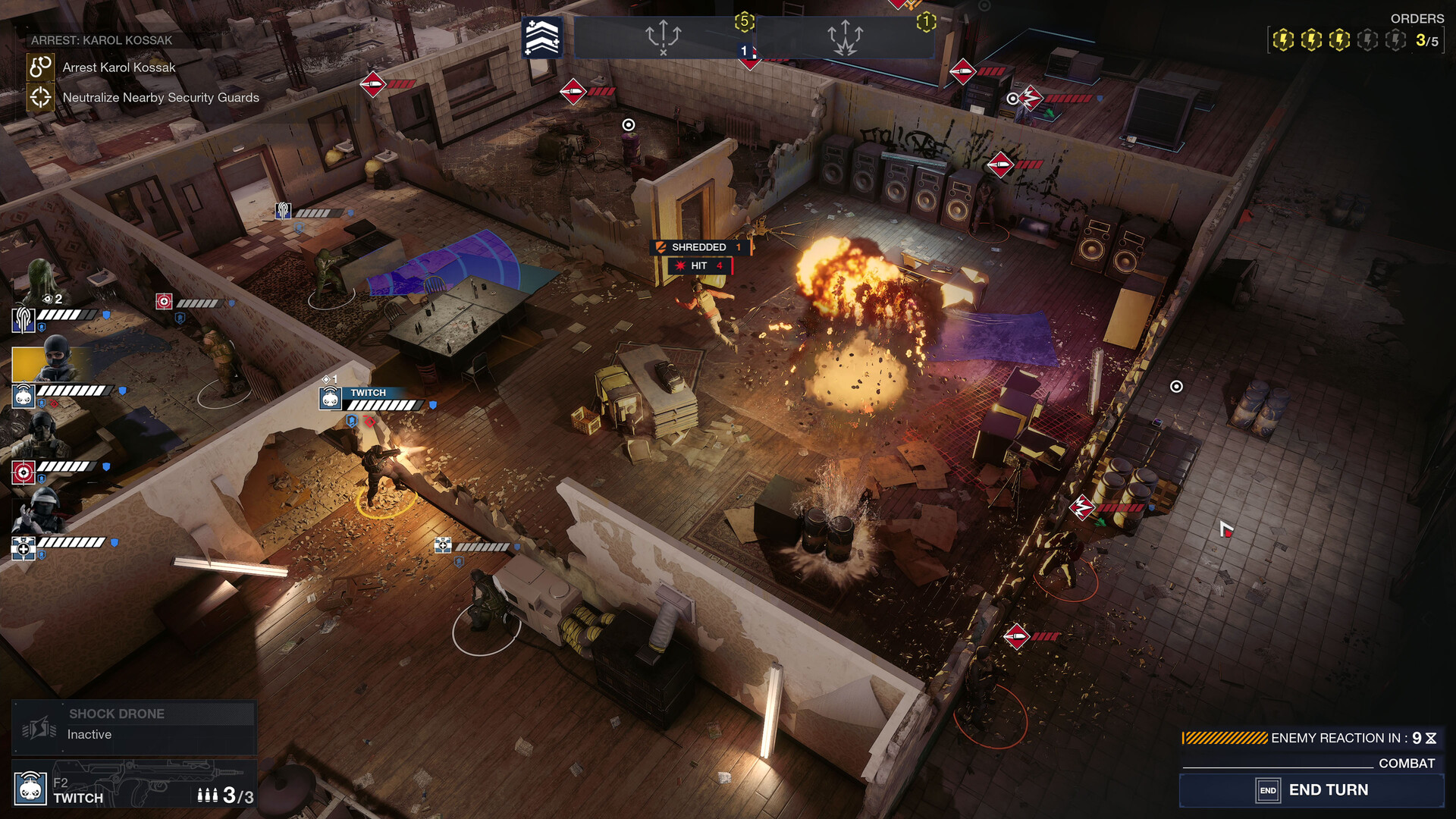
Half of Tom Clancy's Rainbow Six Tactics happens away from the battlefield. Between deployments you run the unit from a base of operations, and Ubisoft has described that layer as improving your performance on the field by developing your headquarters departments. It is the part of the game where progress accumulates, and it is where the next mission is chosen rather than handed to you.
Activity | Detail |
|---|---|
Develop departments | The headquarters is made up of departments that can be developed to improve field performance |
Train Operators | Training upgrades an Operator's skillset. See Skill Trees |
Manage health | Operator health is tracked and managed between deployments |
Customise loadouts | The gear an Operator carries into the field can be changed |
Assess intelligence | Recovered intelligence is reviewed to push the investigation forward |
Assign the squad | Up to four Operators are assigned to the next mission based on what their abilities bring to it |
Choose the assignment | You select a high-stakes assignment and decide on a plan of attack before deploying |
Intelligence is the campaign's connective tissue. Ubisoft's framing is that you gather intel to push your investigation forward and make tough strategic decisions to stay one step ahead of an escalating global threat, which places it at the centre of both the story and the mission economy. The campaign is a hunt for a shadow organisation arming groups worldwide, and what you recover in the field is what tells you where to look next. See Story and Setting.
The word tough is doing work in that description. Ubisoft has framed the strategic decisions as trade-offs rather than a straight upgrade track, which implies choices between competing uses of what you recover rather than simply accumulating everything. Exactly what those trade-offs are has not been detailed.
The headquarters layer and the mission layer are not separate games. Preparation is described as crucial to success before deploying, because each mission brings its own challenges and opportunities. What you learn at headquarters shapes the squad you assemble, and the squad you assemble shapes how the mission plays out from the reconnaissance stage onward.
Health management is the clearest example of the loop closing. An Operator who takes damage in the field carries that into the next deployment unless it is dealt with, and when Permadeath Mode is enabled, sending someone out in poor condition is how a campaign starts to unravel.
You are Six, the commander of Rainbow, and the headquarters is where that role is actually played. You are not a soldier on the field so much as the person deciding who goes, with what, and why. Paul Bishop covers the character behind that role. The relationship is closer to running the organisation than to controlling an avatar, and the between-mission story is delivered through cutscenes at this layer.
None of this is monetised. Ubisoft has confirmed there is no in-game store and no live-service structure, so every upgrade is paid for with what the campaign gives you.
The names, number and function of the headquarters departments.
Whether headquarters development uses a currency, a resource, time, or intelligence itself.
Whether the base is a fixed location or moves with the campaign.
Whether time passes between missions, and whether there is a calendar or a threat clock.
Whether missions expire if you delay them.
How intelligence is recovered in the field, and whether it is an optional objective.
Whether headquarters upgrades gate access to Operators, gear or higher skill tiers.
Whether there are support staff or non-Operator characters at the base.
