
Loading...
Loading...
Wildlife Reserves
September 14, 2026 at 01:20 AM
Added ecosystems, invasive flora and pollutant cleanup, ecological roles, release groups and their requirements, research networks and equipment, the Research Vehicle, and the Great Rift Valley and Sumatra reserve locations
Wildlife Reserves are a brand-new feature in Planet Zoo 2 that push play beyond the boundaries of the zoo itself. By taking on global conservation projects and meeting their requirements, players release animals into large, customisable protected spaces, returning them to a wild setting. Frontier describes a reserve as a network of entirely natural homes that runs with a minimal staff presence, rather than a second zoo.
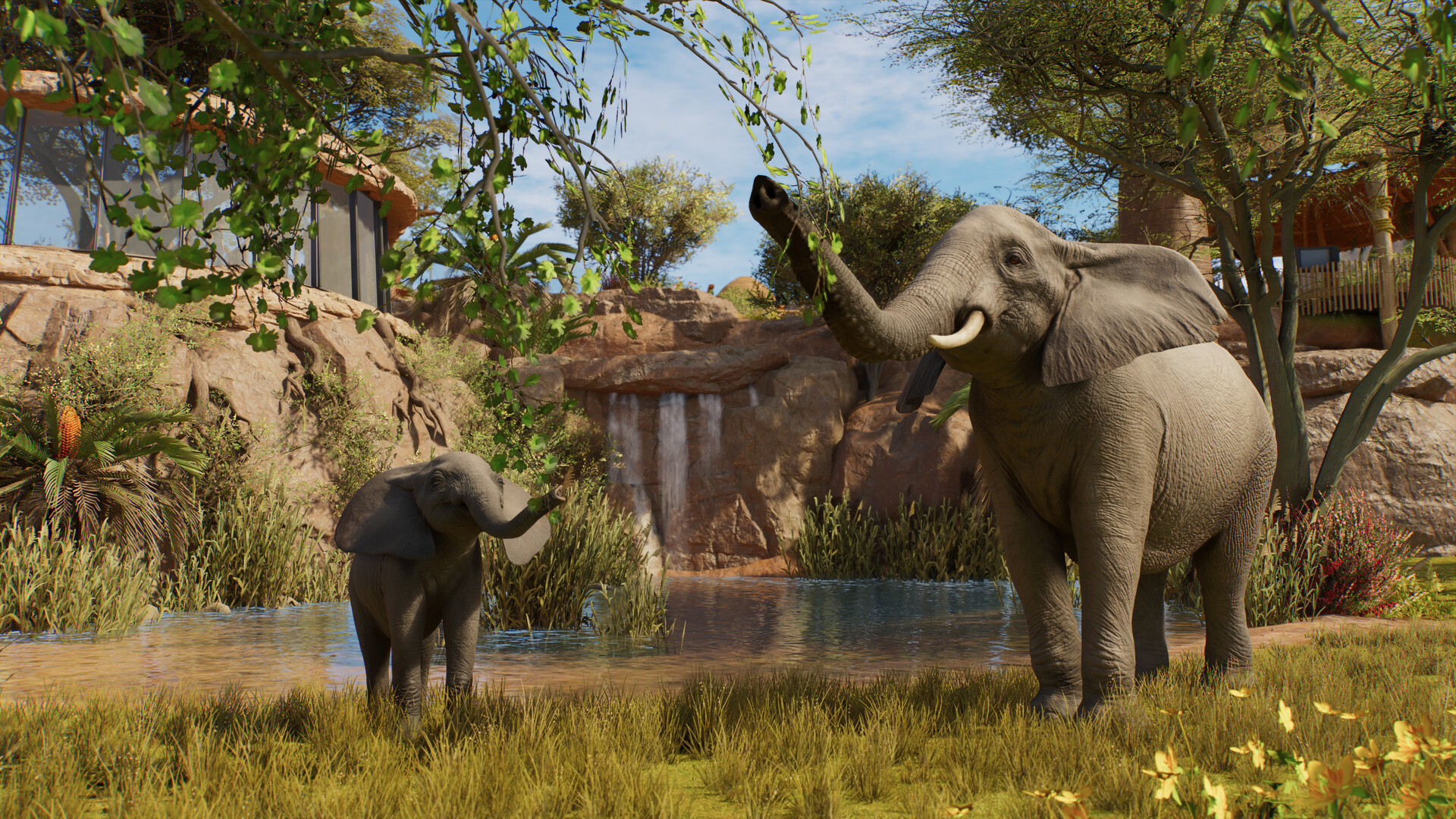
A reserve is not a blank landscape waiting for animals. Reserves are found in locations around the world, from the rainforests of Sumatra to the grasslands of the Great Rift Valley, and each offers a set of potential Ecosystems for released animals to live in. What those ecosystems can be depends on the region: watering holes in grassland reserves, lowland marshes in broadleaf ones. Players define and create the ecosystems they want to suit the animals they intend to release.
Establishing one is rehabilitation work. Each reserve has been left less suitable for its native animals by problems that have to be cleaned up first, including environmental pollutants and invasive flora. Clearing those out and then setting the right ratio of environmental factors, meaning water, foliage, and terrain, is what turns a patch of land into a working ecosystem.
Once an ecosystem exists it still needs balancing. Animals perform different ecological roles in the wild, such as rooting in the soil, browsing from the trees, or acting as predators, and filling each of those roles with a suitable population is what lets an ecosystem flourish and endure. Doing so improves the biodiversity of the reserve and in turn its overall rating.
Three reserve settings have been named or shown so far, each tailored to the animals it is meant to support, so the landscape, planting, and water reflect the region the released species come from. Frontier has named the Sumatran and Great Rift Valley locations in writing, and has shown African savannah and Scottish Highland settings in footage.
Reserve | Setting | Shown With |
|---|---|---|
Great Rift Valley | Grasslands of the African Great Rift Valley, with plains, scattered trees, rivers, and watering holes | Savannah herds and a watering hole, plus a Sumatran Tiger in dense cover in later footage; the setting used for the conservation segment of the Zoological Summit |
Scottish Highlands | Rugged highland terrain suited to a cooler climate | Red Deer, Eurasian Beaver, and the White-Tailed Sea-Eagle |
Sumatra | Rainforest | Named as a reserve location in the official Wildlife Reserves feature |
The Scottish Highland reserve was given its own extended look in a World Conservation Day feature in July 2026, presented as a tranquil, largely unmanaged landscape rather than a built environment. Frontier has not published a complete list of the reserves shipping with the game.
Animals move from a zoo into a reserve through release groups, which are species-specific groupings that range from solitary animals through breeding pairs to larger groups. Each group carries requirements that the animals have to satisfy first, and those requirements are outcomes of good husbandry rather than currency: a required level of longevity, fertility, and genetic diversity. The breeding side of that chain is covered under Breeding and Nesting.
Released animals are not removed from play. They live out the rest of their lives in a natural environment, fill their niche in the ecosystem, raise their young, and increase the wild population of their species. Frontier contrasts this directly with the original game, where releasing an animal earned conservation credit and ended the relationship.
Not every animal can be rewilded. Frontier has said that only species with an appropriate reserve to go to can be released, because each reserve is designed around a particular landscape and a set of animals chosen to suit it. The studio frames the roster of releasable species as something that grows alongside the reserves themselves, so which animals can be returned to the wild depends on which reserves exist rather than on the zoo alone.
Reserves are also a research asset. They produce new insight into how animals behave naturally, earning Conservation Credits, unlocking higher levels of species research, and opening new ways to help the animals still in a player zoos. Supporting more species for release depends on building a Research Network inside the reserve.
A network is anchored by a Research Outpost, which comes with its own Research Vehicle, and is extended with equipment placed around the landscape to capture behavioural data: Observation Platforms for staff to watch from, Acoustic Monitors to pick up audio discreetly, and Camera Traps to capture footage. Running a network raises the Biodiversity Rating of the reserve. The full detail is under Research.
The Research Vehicle turns a reserve into somewhere to visit rather than only to manage. It drives across reserve terrain on four wheels, and the player can get out and continue on foot. A compass points toward the nearest animals and a camera takes photographs, with Frontier encouraging players to capture varied animal behaviour without disturbing the animals in the process.
Reserves are designed to run with minimal staff and to host research and conservation projects whose benefits feed back into a player’s zoos, producing better habitats and stronger conservation outcomes. Together, a player’s zoos and reserves form an interconnected international network rather than a single isolated park, and that network is managed from the Planet Hub described under Game Modes.
Reserves are not a Career-only feature. Sandbox lets players build a reserve as readily as a zoo, and Franchise networks span both. Releasing an animal is the end of a chain that starts with breeding and welfare in the zoo, covered under Animals and Welfare.
Reserves use the same creative toolset as zoos, described under Building and Construction, with the emphasis on terrain, water, and planting rather than paths and facilities. Premade blueprints from the Frontier Workshop can be dropped in just as they can in a zoo, or a player can design research structures themselves. Frontier frames the goal as designing, rewilding, and then observing a living ecosystem, so much of the work is landscape shaping followed by watching what the released animals do with it.
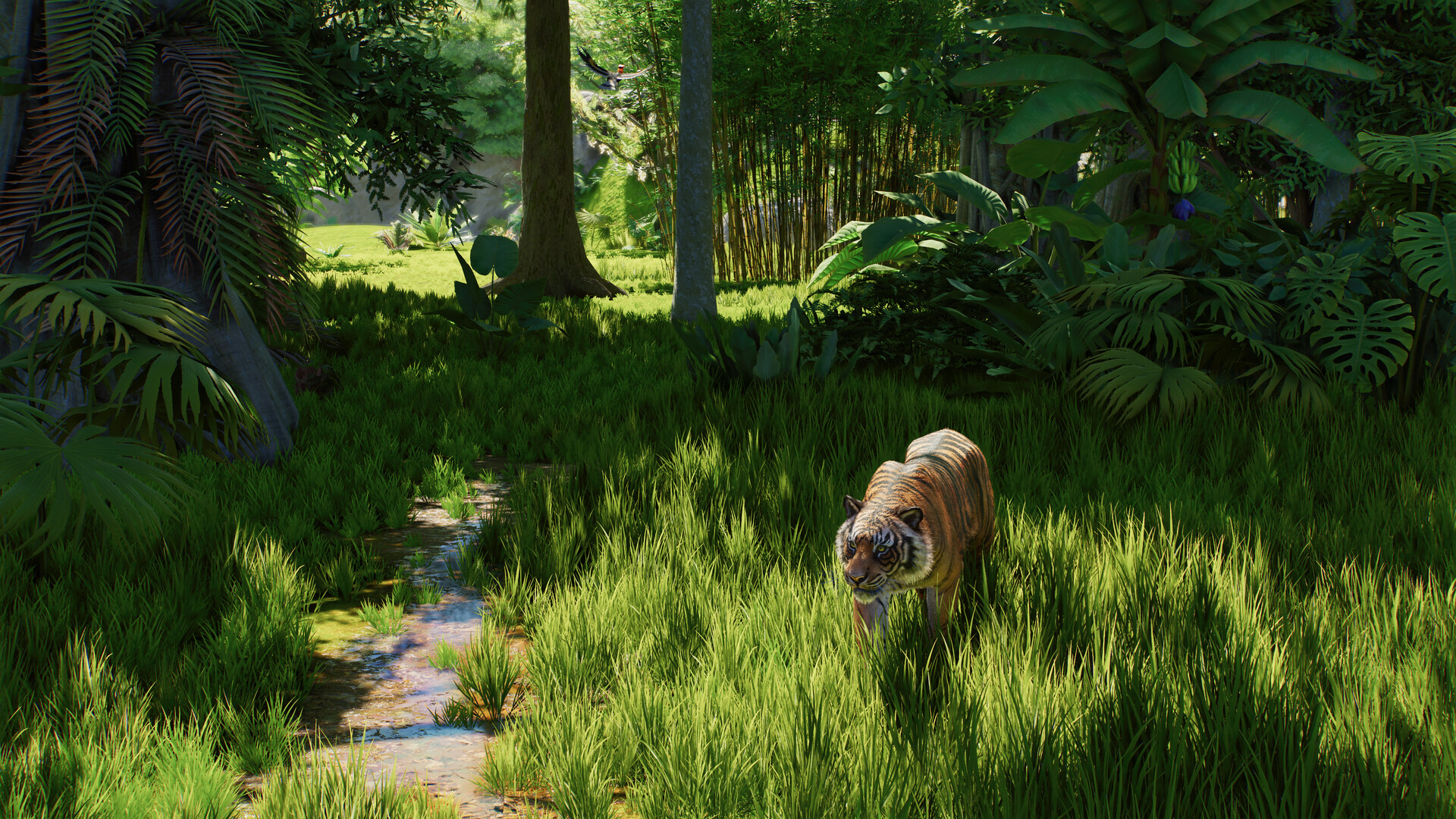
Seasons run in reserves as they do in zoos, changing the weather, the foliage, and the temperature across the longer in-game year described under Seasons and Weather.
The reserves give the sequel’s conservation theme a concrete destination: animals raised and bred in a zoo can ultimately be rewilded, completing the journey from enclosure to open reserve.
