

The Frontier Workshop is the community library Planet Zoo 2 uses for sharing player creations. It is the official name for the sharing system, and it is not the same thing as any single storefront library, because it has to work across PC, PlayStation 5, and Xbox Series X|S alike.
Built Into the Game
Frontier has fully integrated the workshop into the game itself. A player browses community creations from inside the editor, picks one, and places it, with no separate window and no leaving the game. The studio describes the library as running to thousands of blueprints created by the community. Uploading a creation of your own takes a few steps from the same menu.
What Can Be Shared
Content | Notes |
|---|---|
Blueprints | Individual buildings, habitat structures, shops, and facilities |
Habitats and aquariums | Complete enclosures including their barriers and furnishing |
Whole parks | Zoos and Wildlife Reserves downloadable and explorable in full |
Reserve structures | Research outposts and equipment placements built in a reserve |
Downloads are cross-platform, so a design made on one system can be used on another. Players can also subscribe to favourite creators to keep their creations to hand.
Ready-Made Blueprints
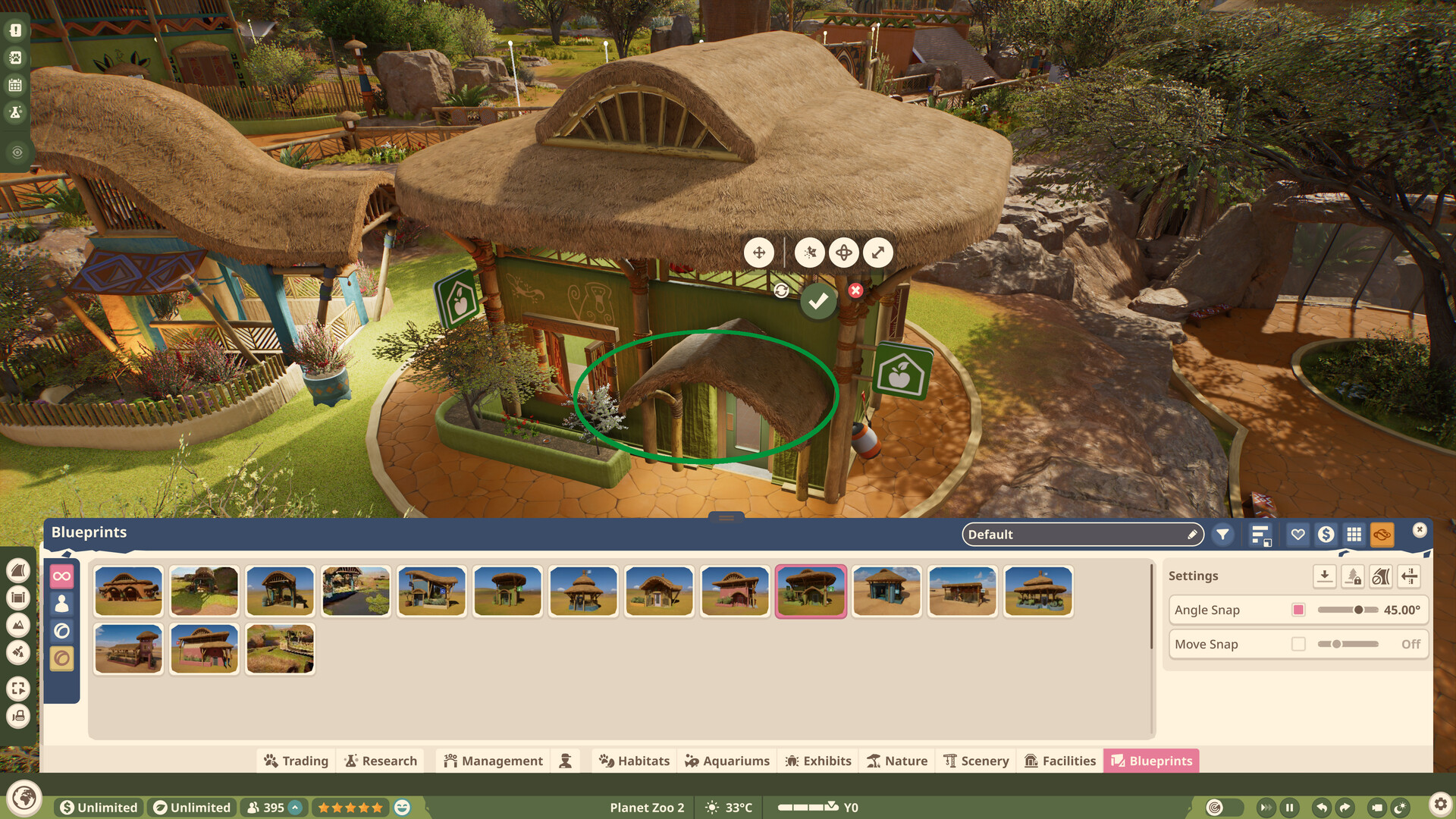
Alongside community content, Planet Zoo 2 ships with an extensive selection of blueprints made by Frontier, placeable at a click. The in-game library is browsable with filters, sorting, favourites, and price display, and angle and move snapping apply when a blueprint is placed. The wider construction toolset is covered under Building and Construction, and blueprints are equally usable in a Wildlife Reserve as in a zoo.
Connection Requirements
The workshop is the reason the game touches the internet at all. Planet Zoo 2 plays offline once downloaded, and a connection is only needed to download blueprints from the in-game workshop or to share parks with other players. Frontier has stated there is no multiplayer in the game: the workshop and the Franchise network are asynchronous, as covered under Game Modes and System Requirements and Platforms.