

Raising animals across generations is central to Planet Zoo 2. A breeding programme in the sequel runs through nesting sites, seasonal windows, welfare, and the genetic quality of a population, and it ends either in a stronger zoo group or in a release into a Wildlife Reserve.
Nesting
Nesting is new to the series and is required rather than optional for the groups it covers. Flying birds, flightless birds, and reptilian egg-layers all need an appropriate nesting site for each breeding pair, and a pair cannot conceive until it has claimed one. Nests are placed around the habitat like other furnishings, and the available types are matched to how different birds actually breed.
Nest Type | Suited To | Notes |
|---|---|---|
Cavity nest | Arboreal birds | Carries a dedicated camera for watching the eggs and fledglings inside |
Cup nest | Arboreal birds | Open nest built into branches and habitat objects |
Water platform | Waders and water birds | Built over or beside water |
Mud nest | Ground-nesting birds | Built on the ground |
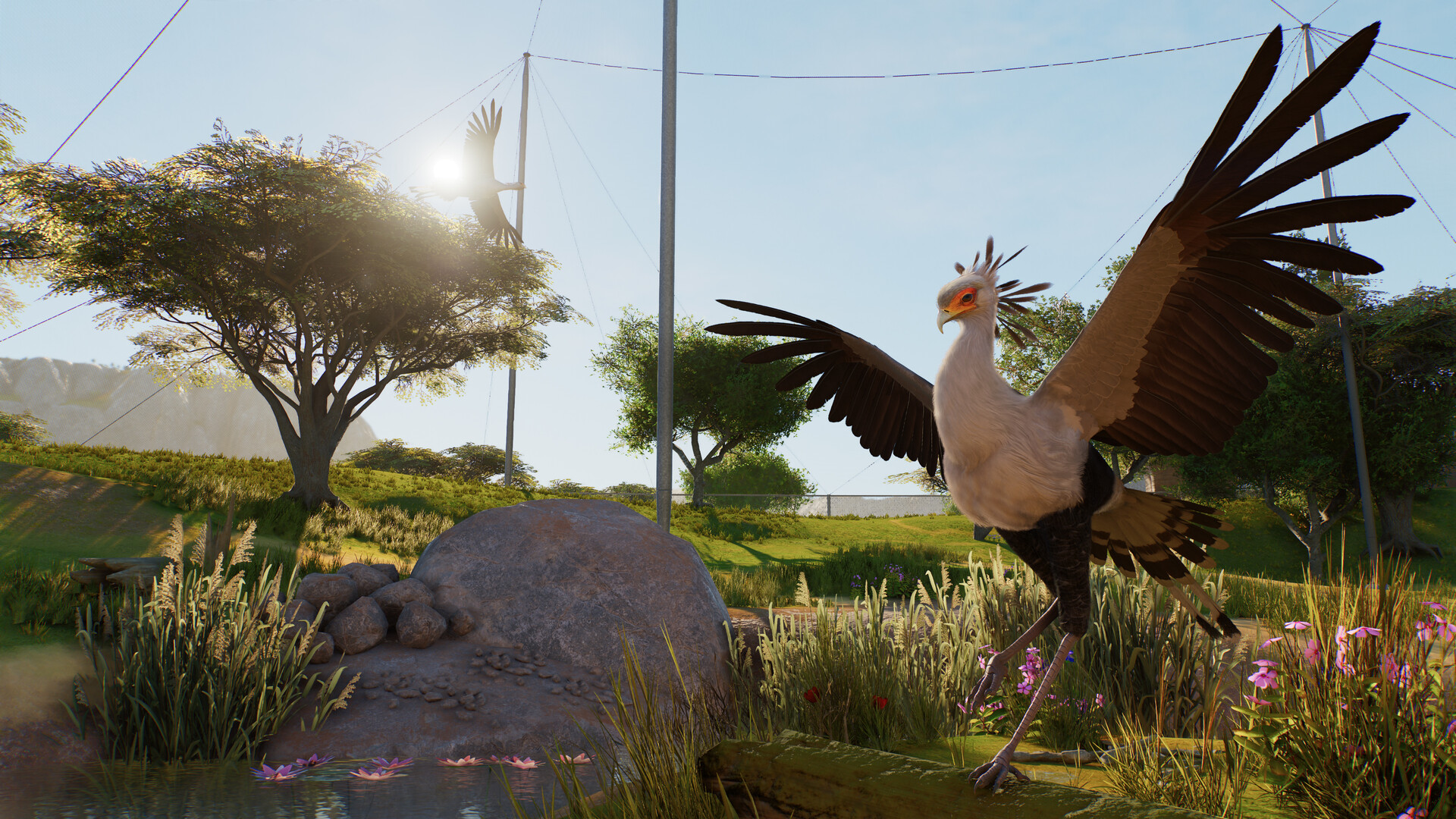
Incubation and Hatching
Eggs are laid in the claimed nest and incubated by the male, the female, or both, depending on the species. Reptiles instead leave their eggs to incubate on their own, although some mothers stay to guard the nest.
What happens after hatching splits by group. Reptiles and flightless birds emerge free to explore straight away. Newly hatched flying birds are nestbound and depend on their parents until fledging age, at which point they trade their shaggy juvenile plumage for adult feathers. Fledged birds still count as juveniles and do not press against a habitat adult population limit until they reach sexual maturity. The systems that drive parenting behaviour are covered under The Animal Brain.
Fertility and Timing
Not every species can breed at any time. Some animals have seasonal fertility and conceive only during part of the year, which ties a breeding programme to the calendar described under Seasons and Weather. Welfare feeds directly into fertility and into the ability to conceive, so an animal in poor condition during its window costs the player a whole year.
Species that breed continuously present the opposite problem. There is no deadline, but there is a constant supply of young to house, which is why contraception exists as a management option for keeping a population under control.
Some species also show visible pregnancies, which Frontier called out as one of the reasons its animal models were rebuilt with animation-friendly topology.
Genetics and Release
Breeding quality matters beyond the zoo gates. Animals are released into reserves in release groups, which are species-specific groupings that run from solitary animals through breeding pairs to larger groups. Each release group carries requirements that the animals have to meet before the release can go ahead.
Requirement | What It Measures |
|---|---|
Longevity | Whether the animals have reached a required level of longevity |
Fertility | Whether the animals are fertile enough to sustain a wild population |
Genetic diversity | How varied the genetics of the group are |
Because all three are outcomes of how well a zoo is run, Frontier ties release eligibility back to everyday welfare management. Released animals then live out their lives in the reserve, fill an ecological role, raise young, and add to the wild population of their species. The release side of the chain is covered under Wildlife Reserves and Conservation.
Only species that have a suitable reserve to go to can be released at all, so the set of releasable animals grows as more reserves are added rather than covering the whole roster.