

Beyond its animals, Planet Zoo 2 is a management game about keeping both visitors and workers happy. Guests arrive to see the animals and spend money at shops and amenities, and well-run zoos also offer educational opportunities that deepen a visitor's experience. A healthy economy ties everything together: a higher zoo rating draws more guests, whose spending funds further expansion and research.
The Zoo Readout
A permanent status bar carries the numbers that matter at a glance. It shows the zoo cash and a second balance for conservation credit, the current guest count, a five-star zoo rating, an overall guest mood indicator, the current temperature, a seasonal progress meter, and the in-game year. Individual animals contribute an Animal Appeal score that feeds the draw a zoo has for visitors, described under Animals and Welfare. What visitors themselves want is covered under Guests.
Staff
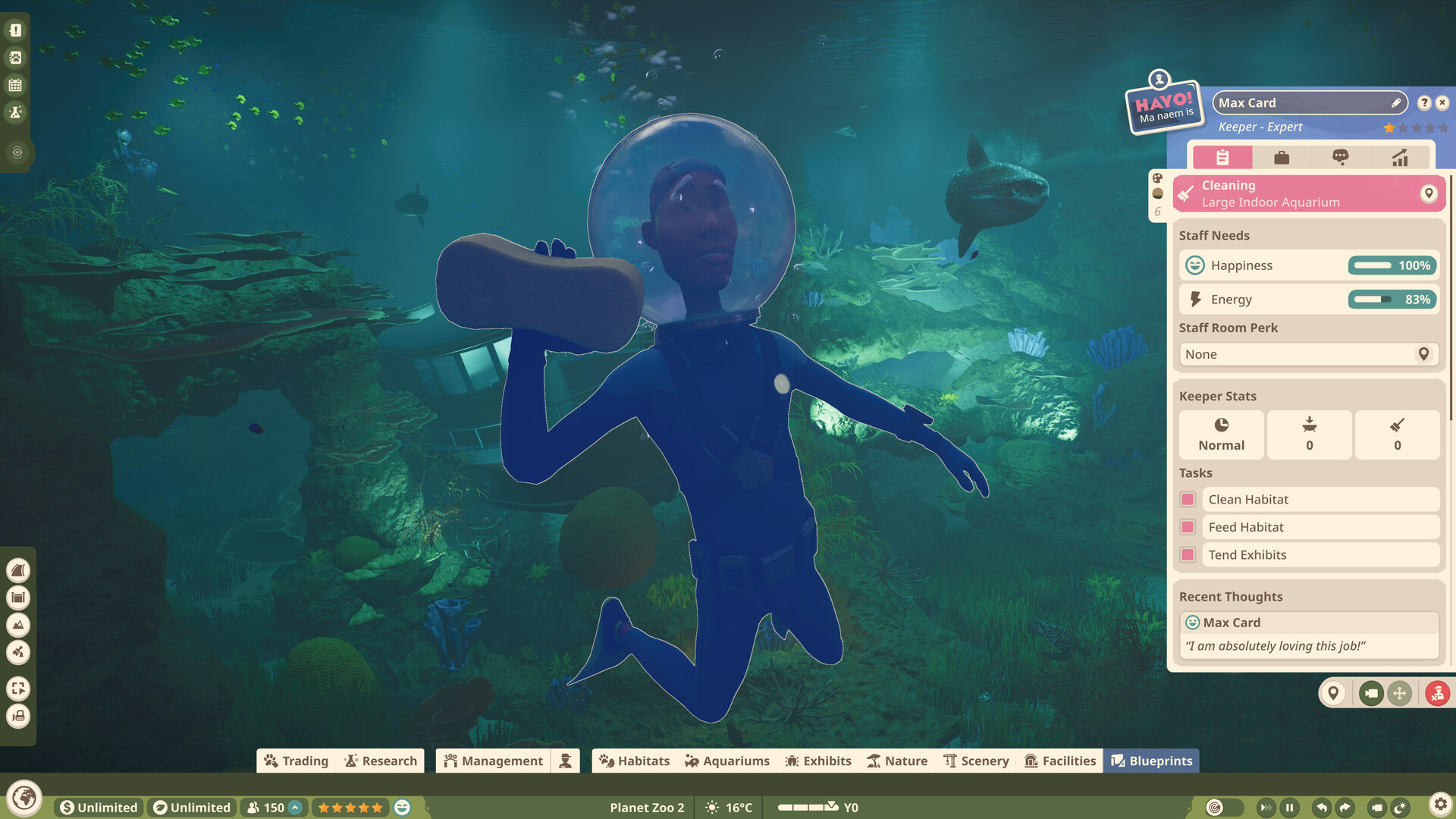
Keepers and other staff keep the zoo functioning. Each member of staff has a skill grade, a current assigned task, and two needs of their own: happiness and energy. They are supported by dedicated facilities and editable working areas, and staff rooms can carry perks that improve the people using them. Individual staff also surface recent thoughts, giving a plain-language read on how they feel about the job.
Tasks are assigned rather than assumed. A keeper can be set to clean habitats, feed habitats, and tend exhibits in any combination, so a large zoo can run specialists instead of generalists. Aquarium care adds a distinct job: keepers put on diving suits and clean tank windows from inside the water, as described under Aquariums.
Staff morale and training are both part of the job, and staff have their own page under Staff.
Economy and Research
Players weigh ticket income and facilities against the cost of building and running habitats. A higher zoo rating draws more guests, and guest spending funds further expansion and research. Research unlocks improvements and feeds into conservation work, and in Franchise mode both research and progression are shared across a player whole network. Trading moves animals between zoos, and Conservation projects convert that work into progress toward releasing animals into Wildlife Reserves. Research and conservation decisions are taken from the Planet Hub.
A Living World
Zoos exist in a changing world, with seasons, varied weather conditions, and longer in-game years that make the passage of time more meaningful. Temperature is tracked and displayed continuously, and it matters twice over: guests respond to the weather, and animals have their own temperature tolerances. Habitats, aviaries, and aquariums all need conditions kept inside a species comfortable range, which in colder seasons means heaters and the power network that keeps them running. The full cycle is covered under Seasons and Weather.
Cash flow and running costs
Zoo expansion, animal adoption and hiring staff draw from the cash balance. Running costs include staff salaries and energy bills. Players can adjust ticket prices, sell souvenirs and encourage donations to maintain cash flow. Paid marketing campaigns for individual animals can attract more guests, while loans provide cash immediately at the cost of interest.
Zoo Reputation
Zoo Reputation gives the park a rating out of five stars based on four areas. Management statistics cover finances and trends in guest thoughts.
Area | What contributes |
|---|---|
Animal Husbandry | Animal care, including welfare and whether animals are thriving. |
Sustainability | Infrastructure sustainability, including recycling bins and renewable power. |
Guest Education | Average guest education and use of education topics about the animals. |
Guest Experience | Guest happiness, zoo decoration and the diversity of animals. |
Facilities and animal care
Support facilities serve guests, care for animals, provide transport and generate income. Facilities may need power, while habitats receive water through filters and pumps. Research lets animals reach the Thriving state: a natural, enriching environment helps them live longer and encourages guests to donate more. The global Planet Hub also manages storage and trading across the current network.