
Loading...
Pang Town
October 28, 2026 at 10:36 PM
Updated launch lighting modes and path-traced water effects
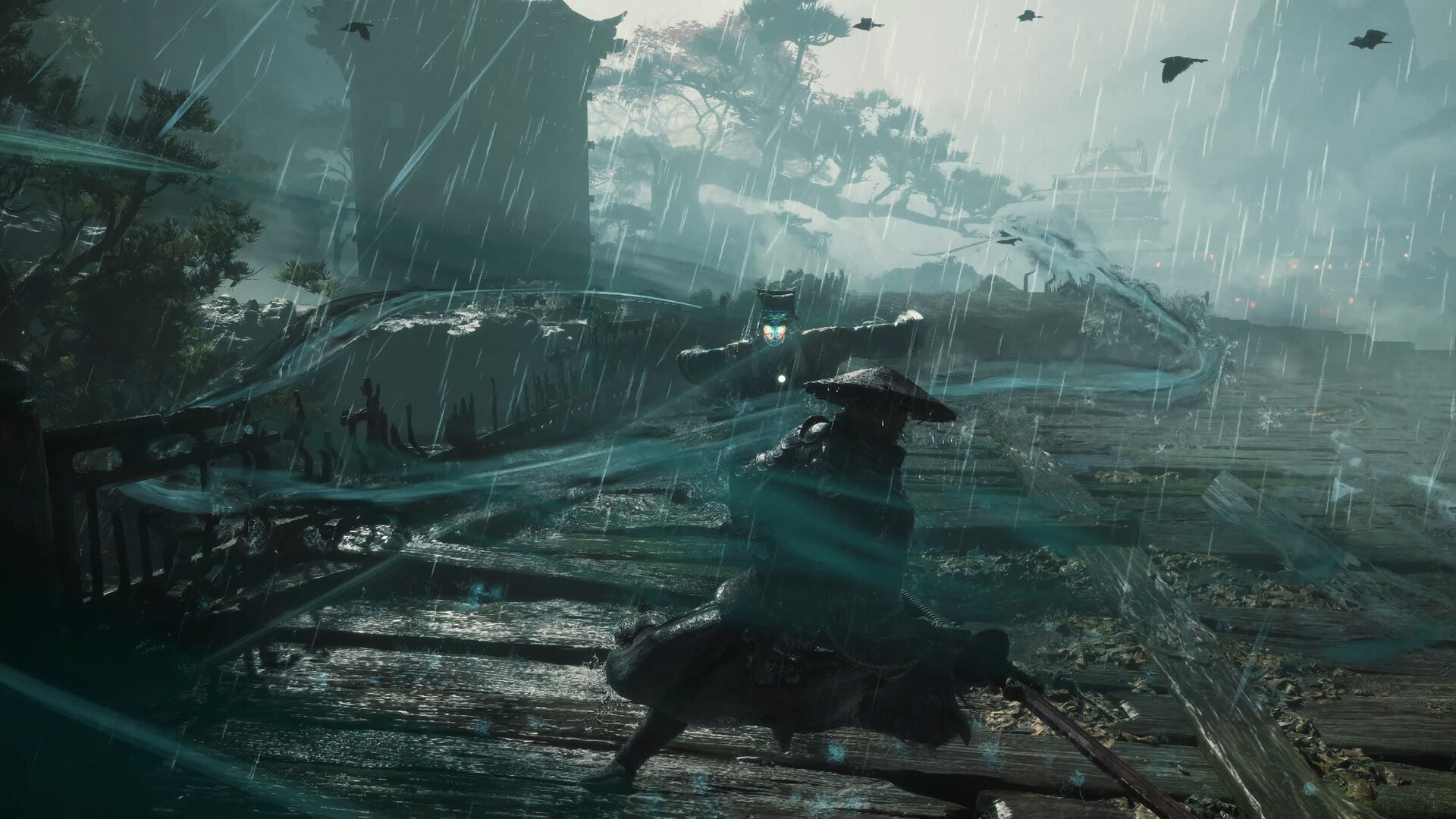
Pang Town is a labyrinthine urban environment in Phantom Blade Zero that is both a gameplay location and a technical show for the game's Unreal Engine 5 rendering capabilities. Featured in dedicated trailers and gameplay demonstrations, Pang Town demonstrates the game's approach to ray-traced lighting, atmospheric effects, and environmental storytelling through its maze of narrow alleys, rain-slicked streets, and flickering lantern light.
S-GAME's own materials call the location Pangzhen Township, and that is the name used on the official site; Pang Town is the shorter form that appears in gameplay coverage. The town's geometry was not modelled from reference art alone: the studio built it from high-precision scans of several surviving ancient Chinese towns, which is why the alley proportions and roof lines read as measured rather than stylised. The result is described as perpetually rain-drenched, and the rain is what the ray-traced water work below is built around.
Pang Town's rain-soaked streets were used to showcase the game's ray tracing. For the PC launch, path tracing replaces hardware-accelerated, ray-traced Lumen global illumination with ReSTIR GI. The rendering options affect different parts of the scene:
Item | Description |
|---|---|
Ray-traced reflections | primarily visible in puddles and water surfaces throughout the town's rain-soaked streets |
Ray-traced shadows | used selectively rather than globally, applied in areas where dynamic shadow quality has the highest visual impact |
Ray-traced caustics | On PC, water caustics require path tracing. They reproduce light reflected and refracted by water onto nearby surfaces. |
Global illumination | PC path tracing uses ReSTIR GI in place of hardware-ray-traced Lumen global illumination, improving bounced light, colour bleeding and indirect shadowing. |
NVIDIA DLSS 4.5 | supports DLSS 4.5 with Dynamic Multi Frame Generation at launch (announced as DLSS 4 with Multi Frame Generation at CES 2026), enabling higher frame rates with maintained visual quality |
Ray tracing and path tracing are distinct settings. The PC path-traced mode adds a unified lighting solution, and enabling it on GeForce RTX hardware automatically activates DLSS Ray Reconstruction. Water caustics are part of this path-traced mode.
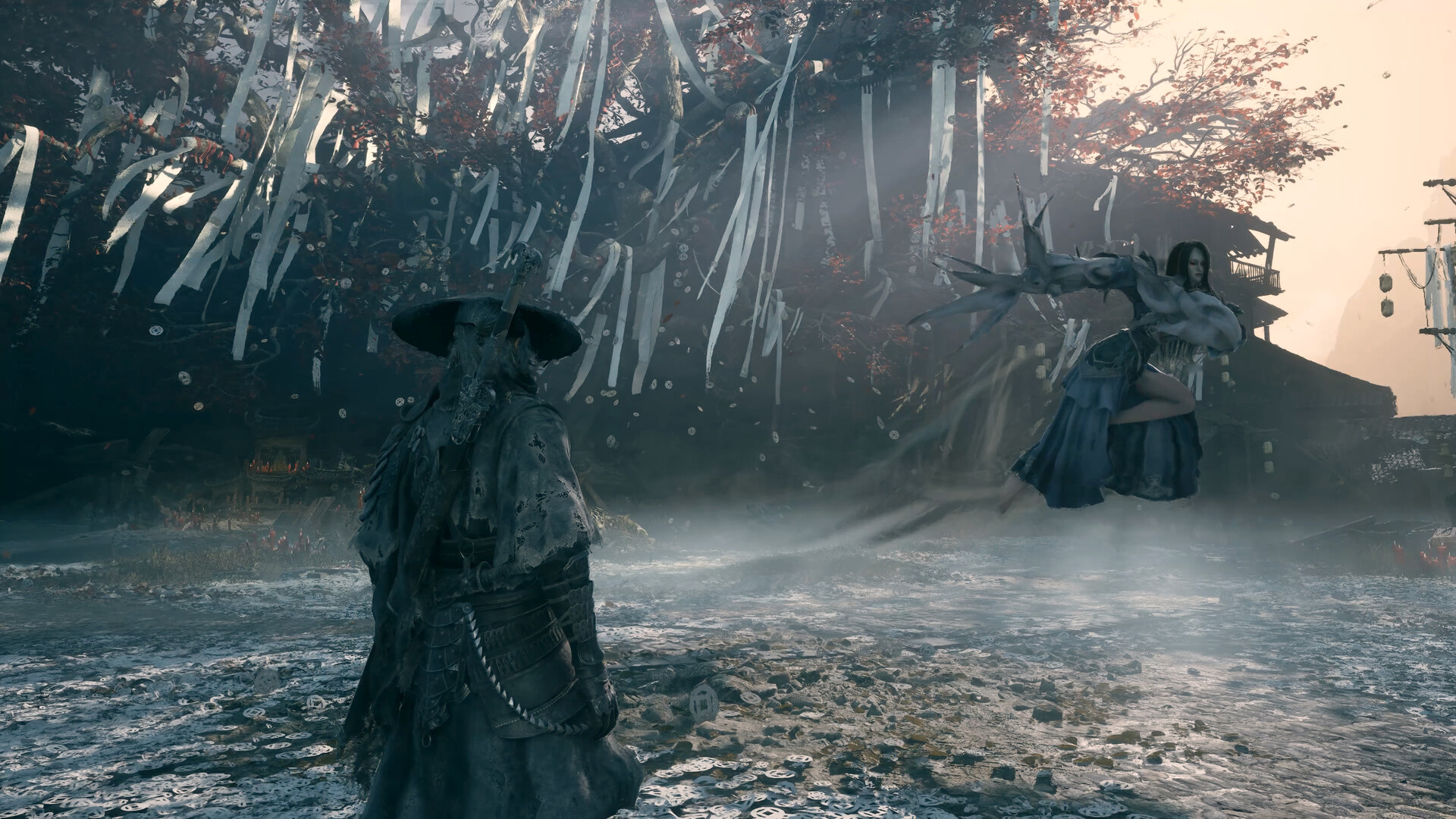
Pre-release descriptions of the Pang Town score say it uses a septuple meter, a 7-beat pattern alternating between 4+3 and 3+4 groupings. That unusual time signature blurs the expected accents, giving the music a sense that something is off, an unsettling, disorienting quality that matches the town's atmosphere of hidden danger and moral ambiguity.
The score also draws on Chinese musical instruments while blending in retro electronic sounds. The result is a soundtrack that feels both traditionally rooted and eerily modern, like hearing ancient melodies through a distorted, dreamlike filter.
Pang Town is designed as a living, breathing space within the kung fu punk aesthetic. Its labyrinthine layout rewards exploration and creates natural opportunities for Stealth and Assassination gameplay. The narrow alleys and elevated walkways provide multiple approach angles to enemy encounters, while hidden alcoves and rooftop paths offer alternative routes through the town.
Aspect | Detail |
|---|---|
Lighting | Ray-traced reflections and shadows; PC path tracing uses ReSTIR GI and enables water caustics. |
DLSS | NVIDIA DLSS 4.5 with Dynamic Multi Frame Generation |
Sound producer | Bo Caisheng |
Music | septuple meter alternating 4+3 and 3+4 groupings |
Atmosphere | rain-soaked, labyrinthine, unsettling |