

Transportation
Getting around the city of Nivalis is a daily consideration. The city is large and vertical, spread across many distinct areas, and your businesses, contacts, and points of interest are scattered throughout. How you travel affects how much of the day you have left for work, cooking, fishing, and socializing. Choosing the right mode of transport for each trip is a small but constant part of managing your time.
On Foot
Walking is the default and most common way to get around. It costs nothing, lets you take in the details of each district, and gives you the freedom to stop and interact with anything you pass. Characters you know might call out to you. Shops, food vendors, and points of interest are visible and accessible. Walking through a neighborhood is the best way to learn its layout and discover things you might miss at higher speeds.
The downside is that walking takes time. Moving between distant districts on foot can eat a significant chunk of your day, and with the 2 AM curfew limiting how long you can stay out, spending too much time in transit means less time for everything else.
Subway System and the Metro Hub
The subway system is the primary means of covering longer distances in Nivalis. It is centered around the Metro Hub, a central station where most routes converge. From the Metro Hub, you can reach the majority of the city's districts without transferring. The subway is reliable and runs throughout the day.
The first time you ride a particular route, the trip plays as a cutscene showing the journey from your seat. You see the tunnels, the stations passing by, the other passengers. After you have taken a route once, you unlock the ability to quick-travel that route via the map, skipping the cutscene and arriving at your destination faster. This two-stage system means your first trips to new areas feel like discoveries while repeat commutes do not waste your time.
The subway does not always drop you right where you need to be. Stations are at fixed locations, and your actual destination might be a short walk from the nearest stop. But for cross-city trips, the train saves substantial time compared to walking.
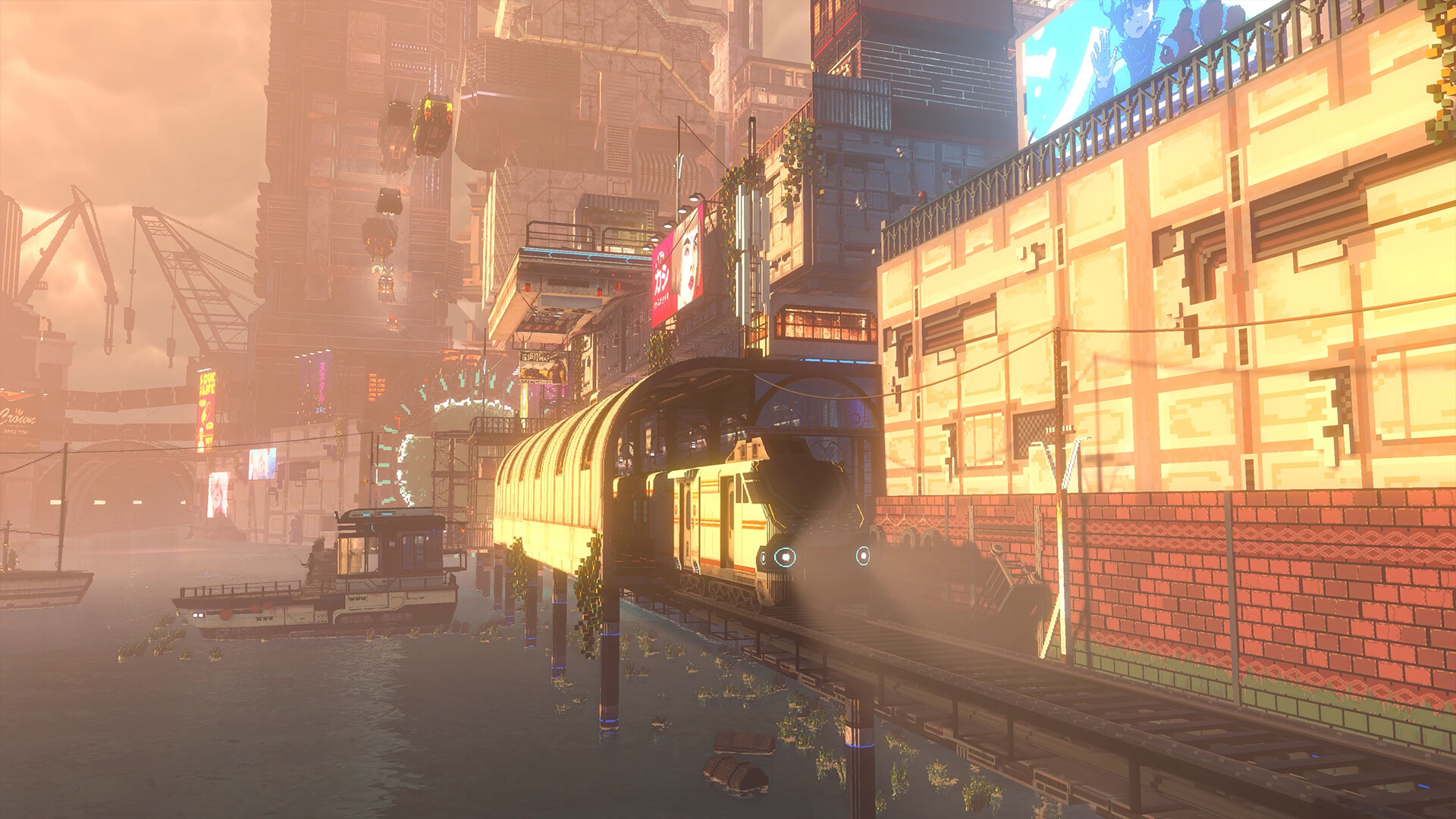
Rail is visible in the promotional material too. Key art released in September 2026 shows an elevated train running below a flyover between the towers, and an official gameplay video from the same month shows a transit stop sign reading "DAKATA STOP" on the street outside the player's noodle bar in Meridian Market. Dakata has not been identified as a district or a line in any text source, so the sign is recorded here as signage only.
HOVA Taxis
HOVA taxis are the automated air-taxi service in the city, named for the flying vehicles they use. They are needed to reach elevated districts that the subway does not serve. Skyhigh Gardens, the Eastern-inspired district high up near the clouds, can only be accessed by HOVA taxi. When you hail one, you select a destination and the game transitions you there with a visual sequence showing the flight. Like subway rides, taxi trips play as cutscenes the first time you take a particular route. After that initial ride, you can quick-travel via the map.
Taxis offer a brief glimpse of the city from above, a perspective that the game does not otherwise provide since you spend most of your time at street level or on the water. This makes the first taxi ride to a new district a bit of a visual event. This shows you the scale of the city from an angle you rarely see.
You do not drive the taxi yourself. You are always a passenger. This is consistent with the game's overall approach to vehicles: Nivalis keeps you in the pedestrian role at all times. You do not drive any vehicles in the game. Not the HOVA taxi, not the train, not any private car. The boat is the closest thing to personal vehicle operation, and even that is limited to the waterways.
Personal Boat
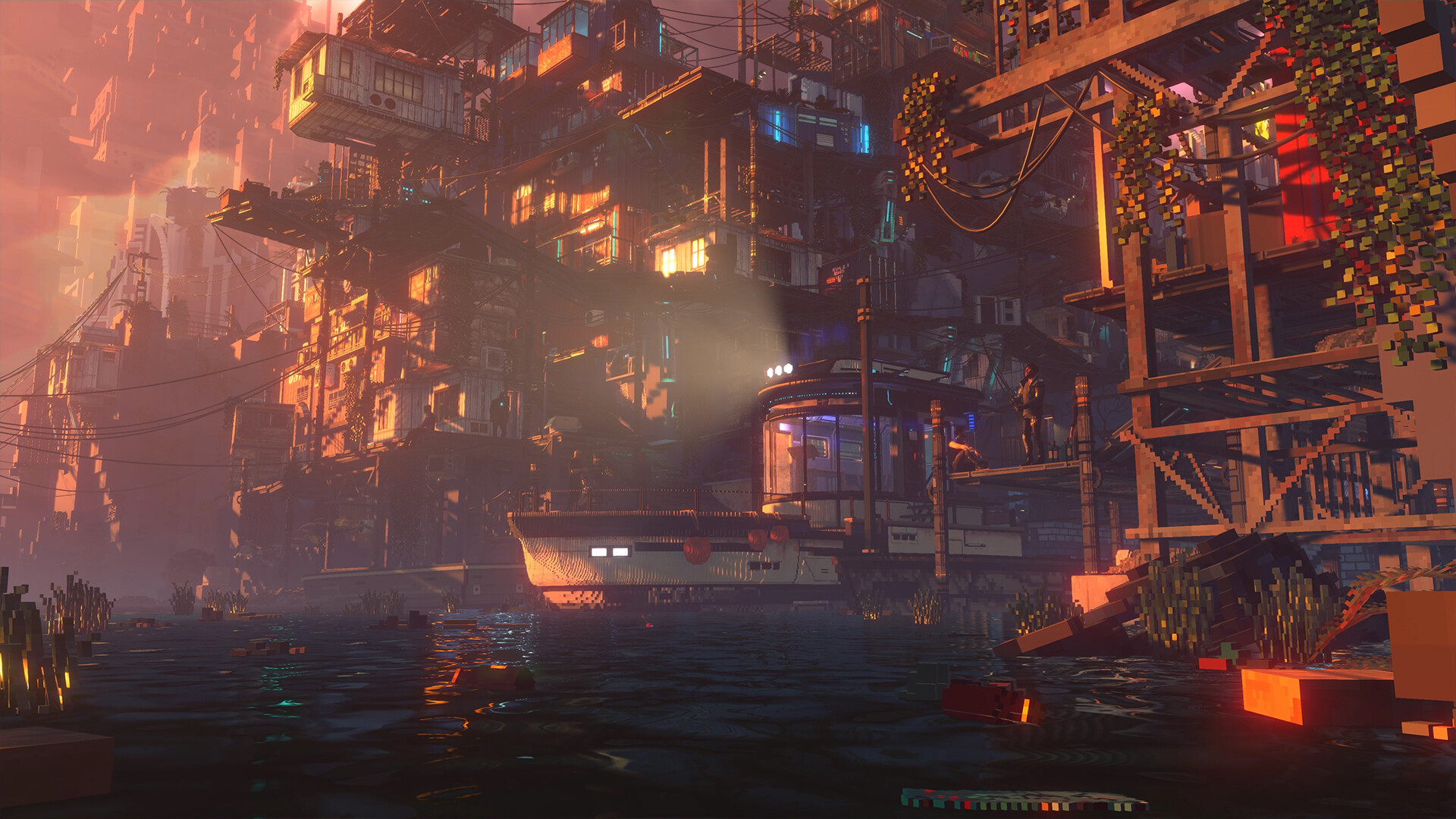
Your personal boat is docked near the lower levels of the city and provides access to the waterways that run beneath and between the city's support structures. Piloting the boat is a hands-on experience: you steer in first person through narrow channels, under bridges, and past the industrial infrastructure of the city's underside. The boat is your primary tool for fishing, but it also is a transportation option for reaching areas that are easier to access by water than by foot or train.
Your boat stays docked wherever you leave it. If you park at a pier near an unfamiliar district, explore on foot, and come back hours later, the boat will be exactly where you left it. This persistent positioning makes the boat useful as a mobile staging point for exploration.
Boat travel is slower than the train and does not have the convenience of taxi fast travel, but it opens up parts of the city that are otherwise difficult or impossible to reach. The waterways have their own atmosphere and points of interest, making boat trips a mix of transportation and exploration.
HOVAs in the Skyline
HOVAs are the flying vehicles that fill the skies of the city. They are the same model family that Cloudpunk drivers piloted in 2020, and the HOVA taxis described above are an automated subset of them. In Nivalis you do not pilot a HOVA yourself. This is a deliberate design choice by ION LANDS to reinforce the street-level perspective. In the predecessor game, you saw the city from above through a HOVA windshield. In Nivalis, you look up at the HOVAs from the ground, occasionally stepping into one as a passenger when you take a taxi to an elevated district.
Transportation Summary
Method | Speed | Cost | Notes |
|---|---|---|---|
Walking | Slow | Free | Best for exploration and nearby destinations. Full interaction with environment. |
Subway | Medium | Fare | Centered on Metro Hub. Cutscene on first ride, then quick-travel via map. |
HOVA Taxi | Fast | Fare | Automated air-taxi service using HOVA vehicles. Required for elevated districts like Skyhigh Gardens. Cutscene on first ride, then quick-travel after. |
Personal Boat | Slow-Medium | Free | First-person piloting. Persistent parking. Access to waterways and fishing. |
HOVAs (Skyline Only) | N/A | N/A | Same vehicle family as HOVA taxis. Player never pilots one outside the automated taxi flow. Visible in the city skyline. |
The 2 AM Curfew
No matter how you get around, your day has a hard limit. The 2 AM curfew means you need to be back at your apartment by that time. Once 2 AM hits, your character rests, and the next day begins with a new morning. This is not a punishment mechanic. It is a pacing tool that forces you to plan your days and make choices about how to spend your limited hours. Do you make one more fishing run, or do you spend the evening at a bar building a relationship with a contact? You cannot do everything, so you have to decide what matters most today.
The curfew also ties into the daily routine system. Each morning, you wake up in your apartment and receive a newspaper summary of what happened in the city overnight. This gives you context for the new day and might surface opportunities or problems that need your attention.