

Business Management
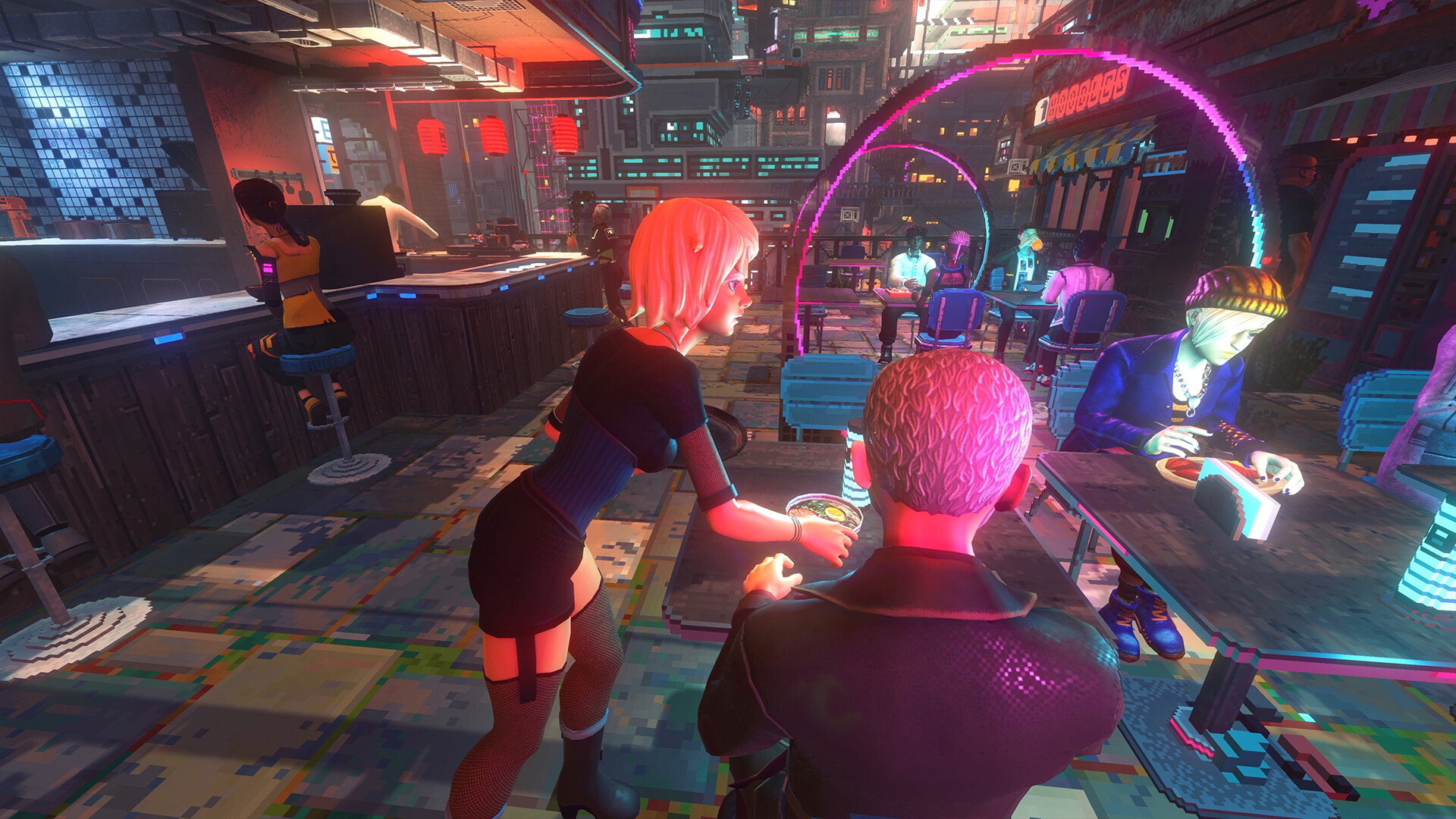
Business management is the central gameplay loop in Nivalis. The game begins when you inherit a run-down noodle bar from Thaddeus Carminus, a 92-year-old man who has spent decades feeding the lower levels of the city. From that single cramped counter, you can expand into a network of food stalls, stim stores, bars, full-service restaurants, and nightclubs. Each business type brings its own challenges, customer expectations, and profit margins.
Success is not guaranteed. The economy in Nivalis is dynamic, meaning prices shift based on supply and demand within each neighborhood. A dish that sells well one week might lose its appeal if too many competitors start offering something similar. Neighborhood-based price fluctuations mean that the same ingredient can cost different amounts depending on where you buy it and when. The trick is staying ahead of trends, keeping your costs under control, and knowing when to pivot. Advertising matters in a crowded market, and the connections you build with characters across the city can make or break your fortunes.
Starting Out: The Noodle Bar
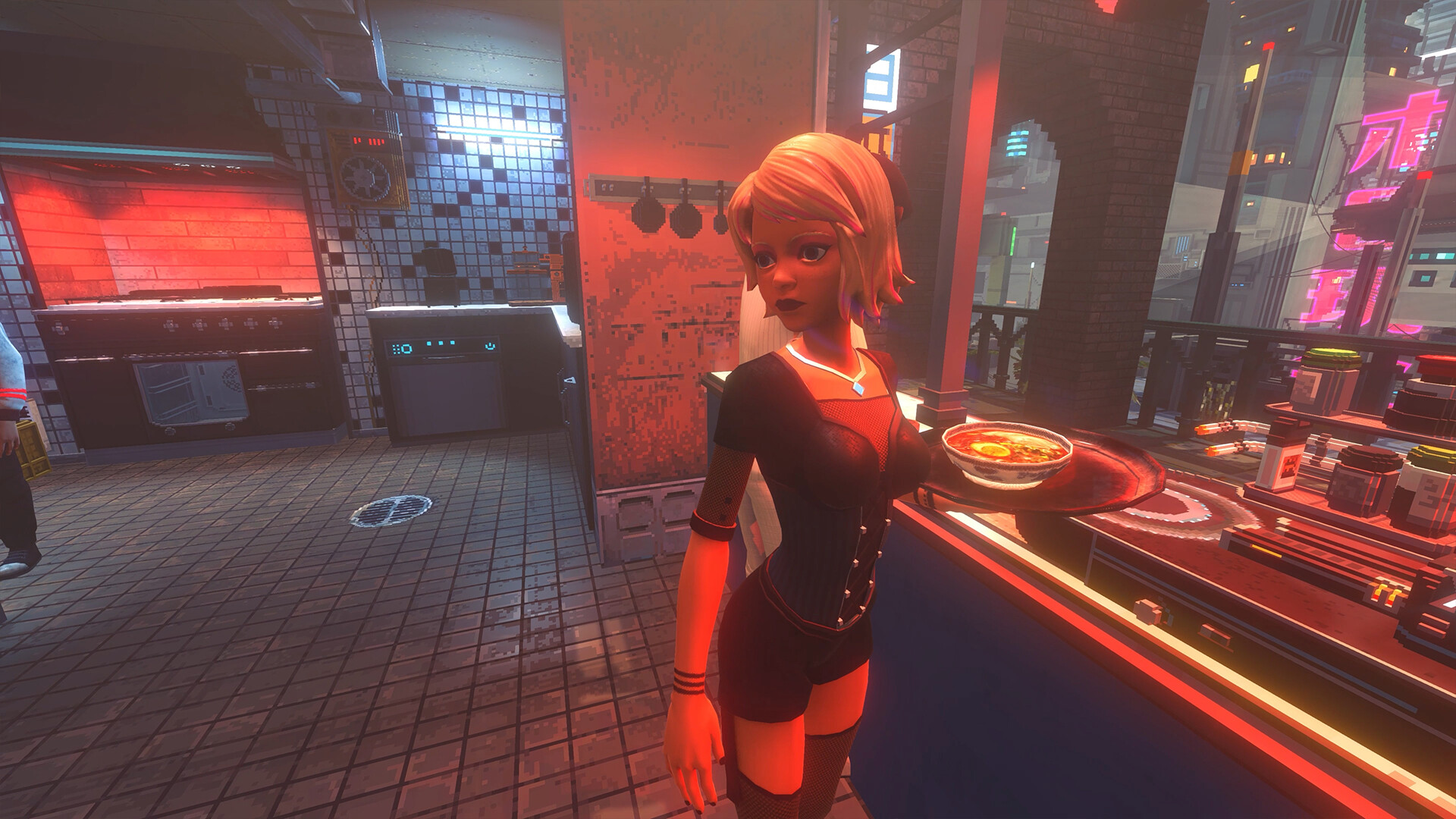
Your first business is the noodle bar left to you by Thaddeus Carminus. It is not in great shape. The equipment is old, the menu is limited, and the location in Meridian Market is far from prime real estate. But it is yours, and it comes with one major advantage: Banor, a 64-year-old former restaurant owner who agrees to stay on as your first employee. He knows the business, knows the neighborhood, and can teach you the basics of running a food operation. Pre-release footage and promotional art show a noodle bar named Ramen Noir with Banor on its staff roster and a storefront terminal reading "OPEN 10:00 to 22:00", which is consistent with Ramen Noir being this inherited bar, although no first-party text has stated the connection.
In the early hours of the game, the noodle bar is a tutorial for the management interface. You learn how to set menu items and prices, manage a single employee's schedule, track your daily income and expenses, and arrange the limited furniture and equipment you have. As you earn money and build your reputation, you can invest in upgrades, expand the space, or start saving for your next venture.
Business Types
The published material names food stalls, noodle stands, stim stores, bars, restaurants and nightclubs as business types; a seventh specialty-shop type appears in earlier wiki text but has not been confirmed. Each type is expected to differ in startup cost, customer demographics and gameplay considerations. Customers arrive in real-time from across the city based on your reputation, location, and what you are serving.
Business Type | Description |
|---|---|
Food Stalls | Small street-level counters with minimal overhead. Low startup cost, limited menu capacity, and a high-volume, low-margin model. Good for building initial capital. |
Noodle Stands | A step up from food stalls with more menu flexibility. Your starting noodle bar falls into this category. Can serve a wider range of dishes and support a small staff. |
Stim Stores | Sell stimulant products to the city's workforce. Different customer base than food businesses. Demand tends to spike during certain hours as workers look for a boost. |
Specialty Goods Shops (unconfirmed) | Sell curated goods and niche products. Customer base is smaller but willing to pay premium prices for items they cannot find elsewhere. |
Bars | Serve drinks and cocktails. Evening and nighttime traffic is strongest. Atmosphere and layout matter more here than in food-focused businesses. |
Restaurants | Full-service dining establishments with higher expectations for food quality, ambiance, and service speed. Require more staff and larger spaces, but profit margins are substantially better. |
Nightclubs | The most expensive and complex business type. High overhead, large staff requirements, and demanding customers, but the revenue potential is the highest in the game. |
Venue Levels and the Manager Role
Each venue you own has a level that increases as you hit performance milestones; earlier wiki text listed revenue targets, customer satisfaction thresholds and consecutive days of profitable operation, but the exact milestones have not been published. Higher venue levels unlock new options for that location, including better equipment, expanded seating, and access to premium ingredient suppliers.
At level 3, a venue unlocks the ability to hire a Manager. Managers are a special staff role that changes how a business operates. A Manager can restock ingredients across multiple locations, saving you the time of personally hauling supplies between your greenhouse, shops, and restaurants. They also boost staff efficiency and morale, meaning your regular employees work faster and stay happier. If you own a greenhouse, your Manager can collect harvested goods and distribute them to whichever business needs them most.
Hiring a good Manager is expensive, but the time savings alone make it worthwhile once you are juggling more than two or three locations. Without a Manager, you will spend a significant portion of each day on logistics. With one, you can focus on expansion, cooking, or relationship building.
The Management Interface
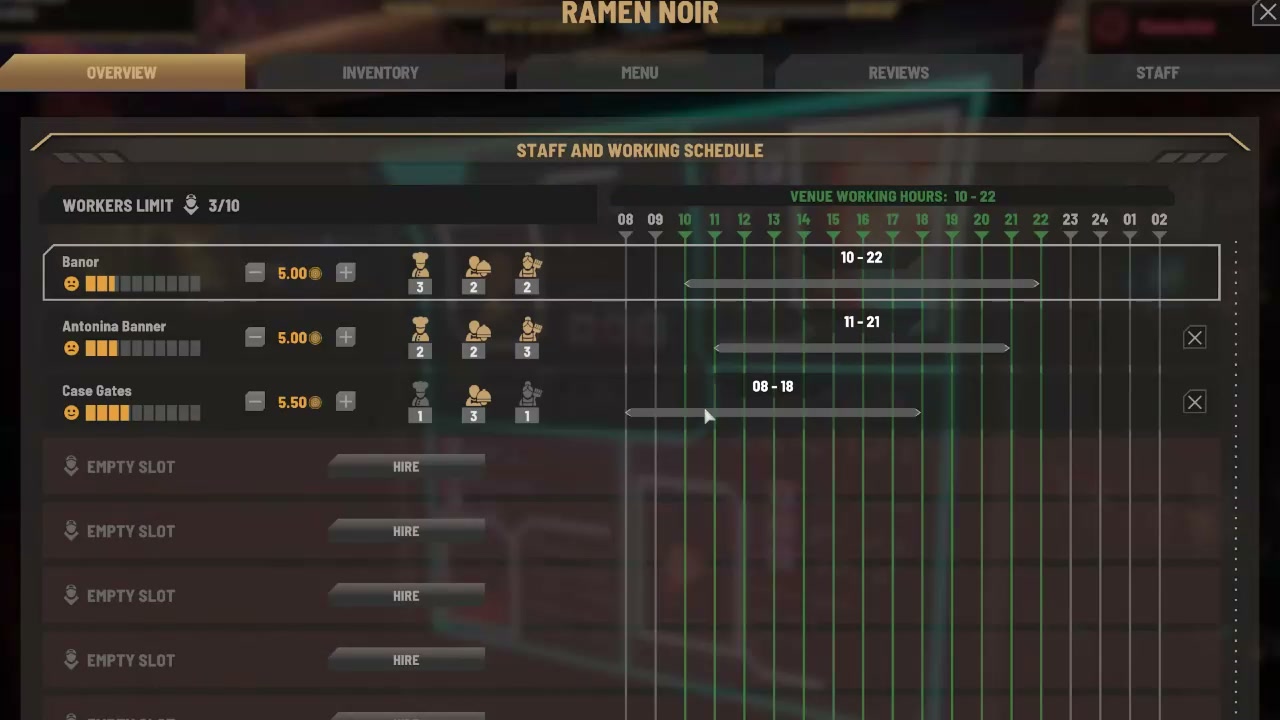
Every business you own is controlled through a unified management interface. An official gameplay video published in September 2026 shows the venue screen with five headings: Overview, Inventory, Menu, Reviews and Staff. The functions listed in the table below are described from published devlogs and store text, and some of the finer details in it have not been confirmed; no Finances or Layout heading has been shown in footage, and the interface can still change before launch.
Area | Function |
|---|---|
Finances | Tracks income, expenses, profit margins, and cash flow over time. Shows daily and weekly summaries. Alerts you to problems like operating at a loss or running low on funds. |
Inventory | Displays current stock of ingredients, beverages, and supplies. Items have shelf lives, so perishable goods will spoil if not used. You can set automatic reorder thresholds or manage stock manually. |
Menu | Set which dishes and drinks to offer, at what price. Each item has a base cost tied to its ingredients and a suggested price range. Whether a menu item can be promoted as a signature dish has not been described in first-party material. |
Staff | Hire, fire, and schedule your employees. Whether staff skills affect service speed and quality, and whether overwork lowers performance, has not been described in first-party material. You can set shifts, assign roles, and at level 3, hire a Manager. |
Layout | Arrange furniture, equipment, seating, and decorations within your business space. Layout affects customer flow, seating capacity, and overall ambiance. A well-designed space can increase customer satisfaction and spending. |
Staff and Working Schedule
The same footage shows the staff side of the interface in detail. A panel headed "STAFF AND WORKING SCHEDULE" lists each worker on a row with an hourly wage and minus and plus buttons to adjust it, three skill icons with a rating under each, a small face beside a ten-segment bar, and a shift bar on an hour ruler that runs from 08 through midnight to 02 under a "VENUE WORKING HOURS: 10 - 22" label. Shift bars are dragged to change a worker's hours. Unfilled rows read "EMPTY SLOT" with a "HIRE" button, and a "WORKERS LIMIT" counter read 3/10 for the venue shown. The roster in that footage, three workers on a save six days in, is a showcase state rather than the starting one, in which Banor is the only employee. The skill names and the meaning of the bar are not printed on screen. See Staff and Employees for the full breakdown.
Two smaller interface details appear in the same video. A task panel on the right of the HUD lists the venue and an outstanding job, "Ramen Noir / Restock ingredients", and a shopping list opens from the HUD with a single key and has a matching button inside shop windows, so restocking can be planned from the street rather than from the venue screen.
Customer System
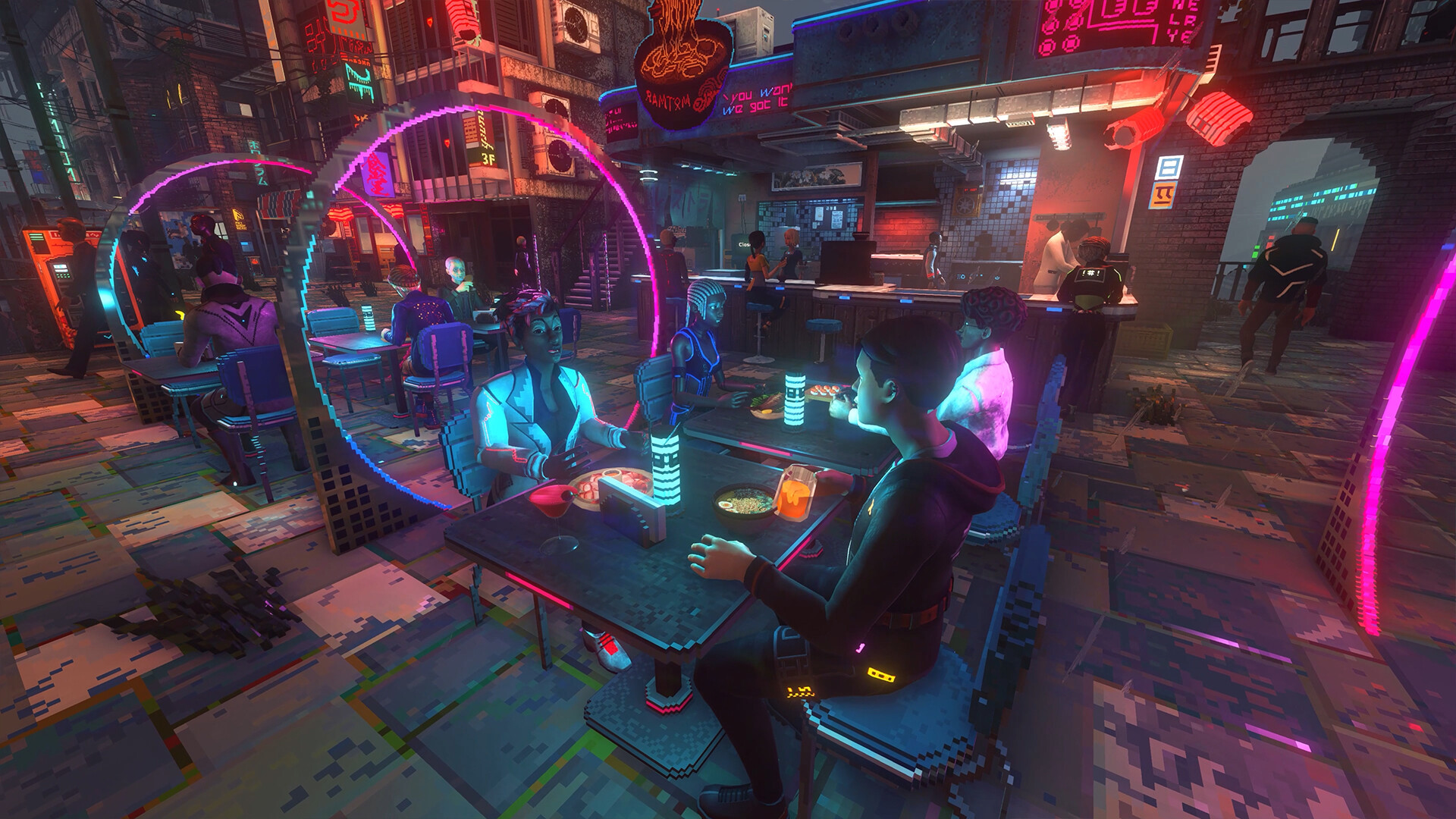
Customers in Nivalis are not abstract numbers on a spreadsheet. They are characters who walk in from across the city in real-time, sit down, order, eat, and leave. Their satisfaction depends on food quality, service speed, pricing, and the atmosphere of your establishment. Happy customers come back and spread the word. Unhappy customers do not, and in a city where word of mouth travels fast through the lower levels, a string of bad reviews can tank your business.
The types of customers you attract depend on your business type, location, and the time of day. Food stalls near transit hubs see heavy lunch traffic. Bars and nightclubs pull crowds after dark. Weather also plays a role: rain drives foot traffic indoors, which can be a boon or a problem depending on your capacity. See Daily Life and Routine for more on how weather affects the city.
Achievement Points and Expansion
As you hit milestones in your business operations, you earn Achievement Points. These points are not just cosmetic rewards. They function as a progression currency that unlocks access to new areas of the city and new business opportunities. A food stall owner who has proven themselves in the lower levels might earn the right to open a restaurant in a more affluent district, for example. This system ties business success directly to world exploration, giving you a concrete reason to keep pushing your operations forward.
Black-Market Energy Trading
Not all business in Nivalis happens through legitimate channels. The city runs on electricity, and demand for power spikes dramatically at night when the neon signs, entertainment districts, and residential heating all compete for the same grid. This creates an opportunity for those willing to trade on the black market. You can buy energy at lower daytime rates and sell it at inflated nighttime prices, pocketing the difference.
Energy trading is risky. Getting caught by CorpSec can lead to fines or worse. But the margins can be enormous, especially during cold snaps or storms when heating demand pushes prices even higher. It is one of several ways the game lets you choose between playing it safe and taking chances for bigger rewards.
Advertising and Competition
In a city full of food vendors, bars, and entertainment venues, standing out takes work. Advertising matters. The specific mechanics have not been fully detailed, but the developers have confirmed that how you promote your businesses affects customer awareness and foot traffic. Word of mouth from satisfied customers is one form of organic advertising. Your connections with NPCs and factions can also funnel customers your way, or steer them toward competitors if relationships sour.
Competition is real. Other businesses in the city operate alongside yours, and they are not static. If you dominate a particular food niche, expect imitators. If you raise prices too high, customers will go elsewhere. The dynamic economy means the market is always shifting, and staying profitable requires constant attention.
Sabotage and Rival Operations
Competition does not have to stay polite. Once the city is asleep you can move against a rival directly, slipping past the security systems that guard their premises during the 2 AM curfew and sabotaging their operation. It is framed as one of the two ways to grow: you either build your own business up legitimately, buying and growing your own ingredients, or you push a competitor down.
The catch is symmetry. The developers have been explicit that whatever you can do to a competitor can be done to you as well, so a sabotage-heavy playstyle is a choice about the kind of city you want to operate in rather than a free win. Getting caught also runs into the same enforcement problem as black-market energy trading, since CorpSec exists precisely to keep that sort of thing in check.
Sabotage is also optional. Asked on the official forum in September 2026 whether the game could be played without breaking the law, a developer replied: "It's not a big deal. It won't impact on you if you want to play this way." Building your own venues up through cooking and sourcing is a complete way to play, not a handicap.
Tips for New Owners
Keep a close eye on your Inventory tab early on. Spoiled ingredients are wasted money, and running out mid-service means lost customers.
Do not over-hire. Staff wages eat into thin margins quickly, especially at food stalls and noodle stands.
Experiment with your menu. Some combinations of dishes attract different customer types, and finding a niche can set you apart from competitors.
Reinvest profits into layout upgrades before expanding to a second location. A well-run single business beats two poorly managed ones.
Pay attention to the time of day when setting staff schedules. Lunch and dinner rushes need full coverage, but you can run a skeleton crew during off-hours.
Build the menu around a recipe that customers respond to. Whether a menu item can be promoted as a signature dish has not been described in first-party material, but the developers have said that restaurants are defined by the recipes you unlock.
Push toward venue level 3 on your first business before opening a second. The Manager role saves enormous time once you are running multiple locations.