

Fishing
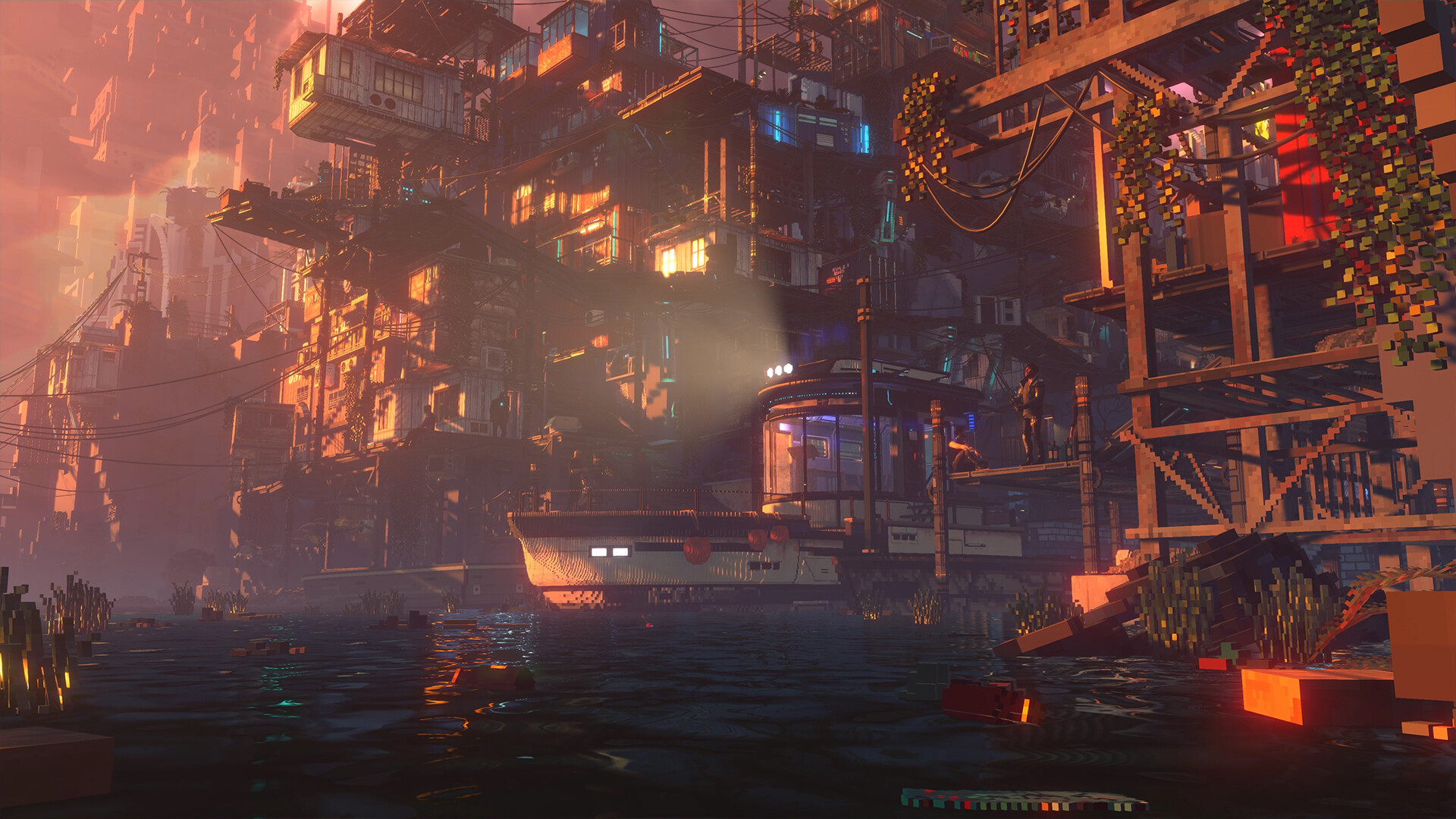
Fishing in Nivalis is not a side activity you do for relaxation between business meetings, though it can serve that purpose too. It is a core part of the supply chain that feeds your restaurants, stalls, and bars. The fish and aquatic ingredients you pull from the water go straight into your dishes and onto your menus, making fishing trips a direct investment in your business success. It also is one of the game's primary exploration mechanics, giving you access to parts of the city that are difficult or impossible to reach on foot.
Your Personal Boat
Early in the game, you gain access to a personal boat docked near the city's lower levels. This boat is your ticket to the waterways that run between and beneath the massive support pillars holding Nivalis above the sea. The boat is not fast or flashy. It is a working vessel, small enough to navigate the cramped passages that larger craft cannot enter.
You pilot the boat yourself in first person, steering through narrow channels, under bridges, and past the industrial underbelly of the city. The waterways are not just functional paths to fishing spots. They are their own explorable environment, full of details that tell you about life at the lowest level of a vertical city. Rusted infrastructure, makeshift docks, graffiti on the support columns, and the occasional other boat passing by all contribute to the atmosphere.
An official gameplay video published in September 2026 shows this from the wheel: a first-person view over a dashboard, rain running down the glass, offshore rigs and another vessel on the horizon, and a rod cast from the boat at sunset. In that footage the boat is under way rather than moored.
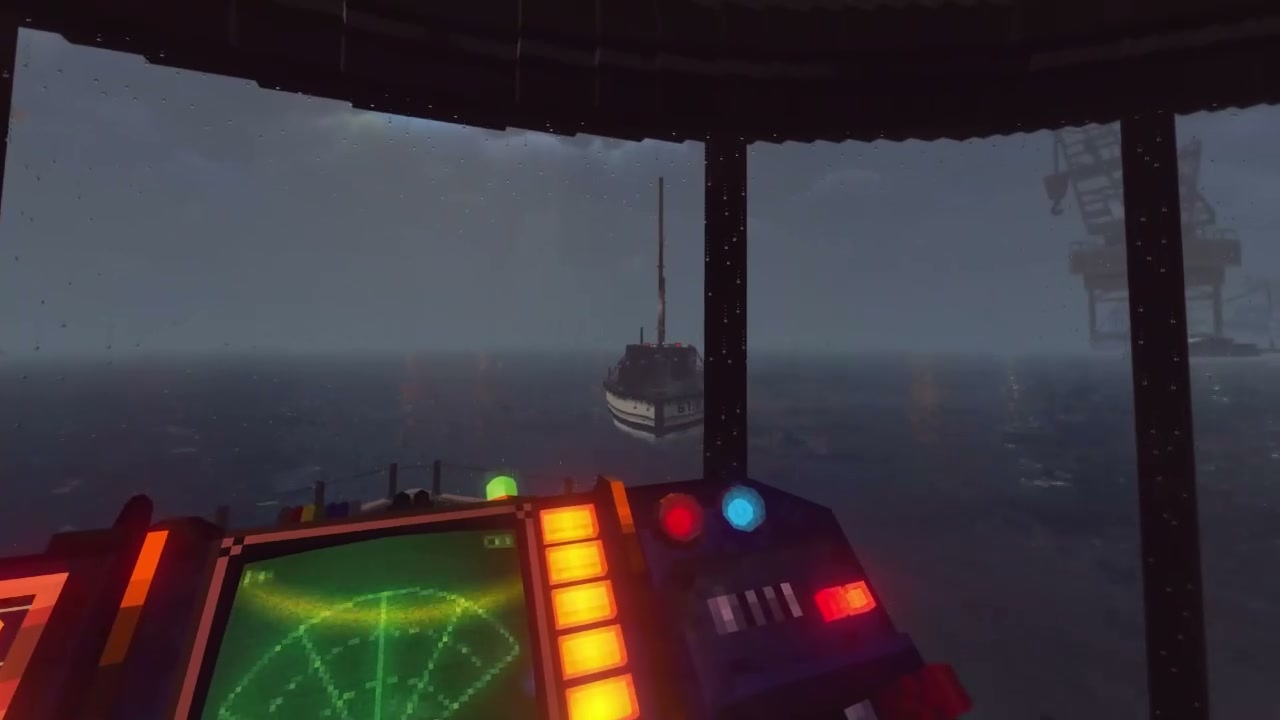
Your boat stays docked wherever you leave it. If you park at a fishing spot and take a stairway up into a nearby district on foot, the boat will still be there when you come back. This persistent positioning means you can use the boat as a staging point for exploring the lower city, docking at different locations and returning to it later rather than always having to start from the same home dock.
How Fishing Works
When you reach a fishing spot, you can drop a line and wait for a bite. The mechanics are straightforward but not mindless. Different areas of the waterways hold different catches, and the time of day and weather conditions can influence what shows up. You will not find the same selection of fish in every channel, which encourages you to explore new routes and revisit old ones under different conditions.
Caught fish go into your inventory as raw ingredients. From there, you can bring them back to your kitchen and turn them into dishes using the cooking system. Fresh fish is a high-value ingredient. Dishes featuring freshly caught seafood command better prices on your menu and tend to get stronger customer reactions than those made with store-bought equivalents.
A Living Underwater Simulation
The waters beneath the city are not a static backdrop. More than 1,000 individually simulated fish can appear on screen at the same time, each with its own physical representation in the world rather than being a flat texture or a spawn that only exists when you cast a line. This is part of what gives the waterways their sense of being a living environment: the fish are present and moving around you as you pilot your boat, not conjured the moment you start fishing.
Because each of those fish is a real object in the water rather than a result rolled the moment you cast, fishing is not driven by random chance in the way many games handle it. The fish swim in colorful shoals, individually simulated to follow one another or to track your bait, so the catch on your line is the same fish you watched circling the surface moments earlier. Reading the water and positioning your bait near the species you want matters more than waiting for a lucky roll.
Simulating that many objects at once is demanding, so the fish are also a showcase of the game's optimization work. The fish emit their own light, and that light is rendered at one-fourth resolution to ease the load on the graphics card while still contributing to the glow of the canals at night. The result is a dense, atmospheric underwater scene that holds up performance-wise even with a thousand-plus light-emitting creatures in view.
Fishing and Business
The connection between fishing and business management is direct. The fish you catch can be cooked into dishes that stock your restaurant fridges and freezers. If you are running a seafood-focused menu, regular fishing trips become a necessary part of your routine. Running out of fresh fish means pulling items from your menu or substituting with lower-quality store-bought alternatives, both of which affect customer satisfaction.
There is an economic calculation to fishing as well. Time spent on the water is time not spent managing your businesses, cooking, or building relationships. A short fishing trip that nets a few high-value catches is more efficient than a long expedition that fills your hold with common fish. Learning which spots produce the best returns for your time is part of mastering the system.
Exploration
Beyond the practical benefits, fishing trips double as exploration. The waterways give you access to parts of the city you cannot easily reach on foot or by train. Some of the explorable areas in the city are best accessed by boat, and the canals themselves contain points of interest that reward curiosity. Navigating the water at different times of day reveals different sights: the neon reflections at night, the fog rolling in during early morning, the rain hammering the surface during storms.
All water levels in the city are explorable. You are not limited to a single canal or a predetermined route. The waterways branch, loop, and descend, and following them to their edges can reveal hidden spots that most residents of the city never see. The persistent boat parking system supports this: dock your boat at an unfamiliar pier, explore on foot, and come back to the boat later to continue your journey by water.
The Ocean and Its Mysteries
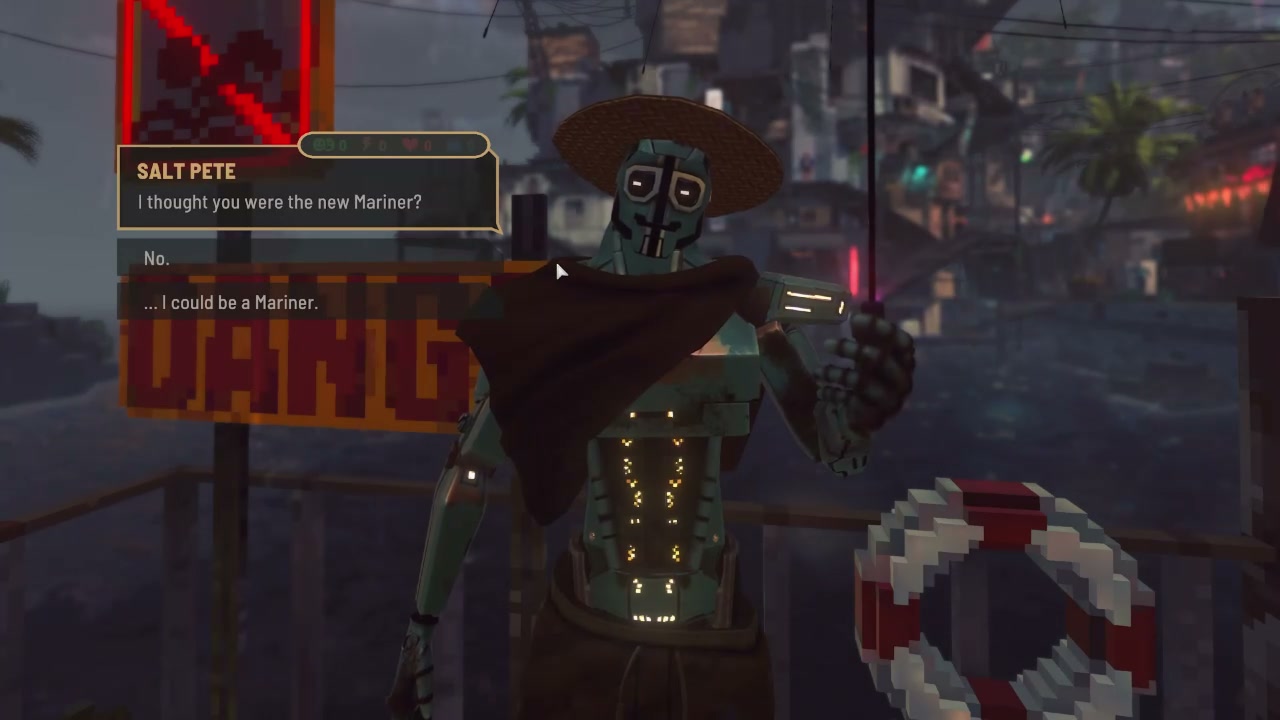
The city of Nivalis sits above the ocean, and the waters below hold more than just fish. Salt Pete, a character associated with the Calypso Island port area, has his own views on what lives beneath the surface. According to Salt Pete, the ocean contains "sentient slime, junk HOVAs and ancient, God-like AIs dreaming dark dreams." How much of that is tall tales from an old sailor and how much is rooted in the setting's lore is part of the mystery. In pre-release footage he greets the player with "I thought you were the new Mariner?", with "... I could be a Mariner." offered as one reply, and points out a boat he calls "The Putter". Mariner reads as a role or title and The Putter as a boat name; neither has been explained in text, and the footage does not say where the exchange takes place.
The Cloudpunk games established that the world beyond the city is vast and largely unknown. The ocean in particular was hinted at as containing remnants of older technology and possibly older forms of intelligence. Whether Nivalis will let you encounter any of these deep-sea elements directly or keep them as atmospheric flavor remains to be seen, but the ocean is clearly more than just a source of fish. It is part of the larger world-building that connects Nivalis to the Cloudpunk universe.
A Moment of Calm
There is a meditative quality to the fishing gameplay that stands in contrast to the bustle of running a business. The waterways are quieter than the streets. The pace slows down. It is the game giving you permission to take a breath, even while you are technically still working. Many players will find that fishing trips become one of their favorite parts of the daily routine. The combination of first-person boat navigation, atmospheric sound design, and the visual beauty of the lower city's water-level views makes fishing something you might do even when your fridges are already full.
The developer leans on that reading too. The boat is described as both your tool and your refuge, the perfect place to rest after a long day at sea, which gives the vessel a second job beyond transport and tackle: it is somewhere you stop, not only somewhere you travel in. The same pitch runs from quiet daytime fishing through to the gentle rhythm of the sea at sunset, so the hour you pick to go out is presented as part of the appeal rather than purely a modifier on what bites, and the docks are framed as a different side of the city rather than a working margin of it. As of 13 September 2026 it has not been said whether resting on the boat is a distinct mechanic, something that restores energy or passes time the way sleeping in your apartment does, or whether the refuge language describes tone alone.