

Overview
Lord of Mysteries ships a detailed character creator. The player starts with a blank Beyonder, sets a face and voice configuration, names the character, and chooses an opening Pathway from the six playable at launch. The point that governs everything downstream: the player is not Klein Moretti. They are an original Beyonder who shares the world with Klein and tells their own story.
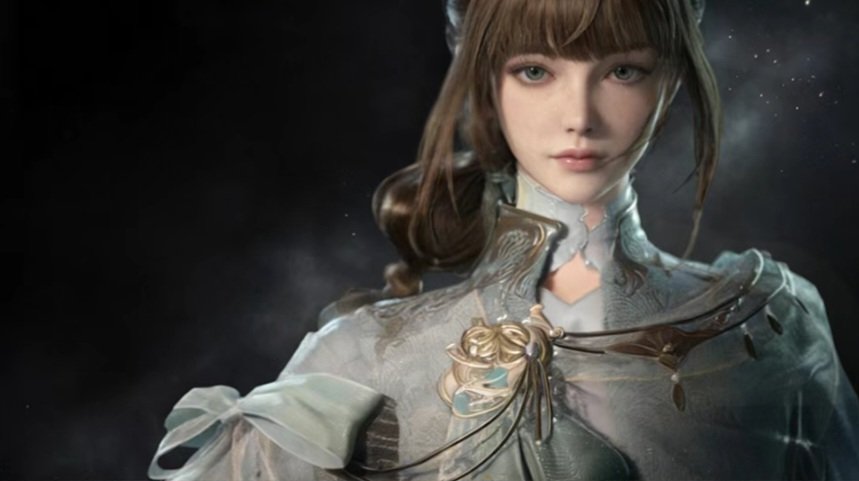
Character creation opened before the servers did. A pre creation window ran from midday on August 19 to 22:00 on August 20, 2026, with each account able to pre create one character on each of two servers. That window filled fast enough that the studio had to raise capacity and open extra server groups twice before launch day.
Pathway Selection
Six Pathways are playable, all confirmed and all live. Choosing one sets the starting Sequence 9 archetype, the Acting Method checklist, the starting potion type, and the character's first weapon and ritual prop set.
Pathway | Deity line | Party role at a glance |
|---|---|---|
Seer 占卜家 | The 愚者 (Fool) line | Ranged damage and crowd control |
Apprentice 学徒 | The 门 (Door) line | Melee damage with the highest mobility in the roster |
Spectator 观众 | 空想家途径 (Visionary Pathway) | Healer and mental support |
Warrior 战士 | 黄昏巨人途径 (Twilight Giant Pathway) | Tank and frontline protection |
Bard 歌颂者 | 太阳途径 (Sun Pathway) | Melee physical damage and party purification |
Mystery Pryer 窥秘人 | 隐者途径 (Hermit Pathway) | Ranged damage and control through occult knowledge |
One launch availability note: the Spectator is selectable as female only at present. The studio has stated that a male Spectator is not yet available and will be added later, so this is a missing content item rather than a design rule. There is no blanket gender lock on Pathways, and the Warrior is confirmed playable as female.
The Pathway choice is not framed as permanent in the long run, but changing class is not in the launch build. Reporting says the feature is expected to arrive alongside the Assassin Pathway and to require a character at Sequence 4 or higher. Adjacent Pathway advancement is a separate concept covered on Acting Method. See Pathway Roles for how the six map onto group content.
Face and Appearance
The creator's depth sits in the face. It covers head shape, jaw, brow ridge, eye shape and colour, nose, ears, lip thickness, cheek volume, hair, facial hair, eyebrow style and skin tone. Sliders work continuously rather than snapping to presets, and each parameter carries both an East Asian and a European baseline so the same control reaches either target without locking the character into one look.
Player reports from the live build state that customisation covers facial features only and that body shape sliders are not offered, with costumes previewed separately. This has been a recurring complaint in launch discussion. It is player reporting rather than a published statement, so it is recorded here as reported.
The PC build's pre creation flow adds share and import options on top of the face controls, so a face can be passed between players rather than rebuilt by hand. Players also report a character motion feature that learns short uploaded clips and reproduces the movement in game.
Voice
Voice options ship with a full Mandarin Chinese set. Voice pitch sits on a slider so presentations between presets are reachable, and a muted option removes the player character's voice while leaving story NPCs voiced. No other language track has been announced for the Chinese client, and no global release has been announced. See CN vs Global.
Naming
Reporting on the live client gives the naming rules as: names must be unique per server, must use more than one Chinese character, and cannot contain numbers or Latin letters. Test build accounts described broader latitude, including Latin script names, so this may be a change between builds or a reporting error; it has not been reconciled against a published rule and is recorded here as reported rather than confirmed.
Naming a character after a canonical figure has a designed response rather than a silent rejection. In the launch build the game reacts to a player claiming a canonical identity; in the Crimson Test, naming a character The Fool sent the player straight back to the login screen. Names in the surname and given name fields are both used by NPCs depending on context.
The Pre-Creation Minigame
Before the creator proper, a short minigame frames the character's entry into the world as signing a fourteen year employment contract with Black Thorn Security. Completing it rewards a Black Thorn branded iron rice bowl, playing on the Chinese idiom for a secure job, and a fine gold contract prop. The joke sets up the campaign's opening, in which the player is hired as a Night Watcher with no interview at all through Leonard's intervention.
Cosmetics at Creation
Completing character creation permanently grants the 「焕然衣新」 outfit set, with no pull and no payment required. It goes straight into the wardrobe. A further Pathway exclusive outfit is granted free when the character reaches Sequence 8, and a large block of appearance items is claimable from server open. See Monetization for the full free and paid split.
The wardrobe leans on European classical dress: top hats, formal gowns, occult accessories, gas lit tailoring, gothic ritual jewellery and sigil embroidered coat linings, with East Asian and other silhouettes reachable through the same system. Cosmetic ambition is treated as a legitimate playstyle in its own right. The studio's framing on the time budget is direct: spend two hours on the face and a full day on outfits, and "before entering the game, make sure to customise a suitable face, that is very important."
Settings Chosen at Creation
Two choices made during account and character setup carry into play, and both can be changed afterwards.
Setting | Chinese name | What it does |
|---|---|---|
Combat operation mode | 操作模式 | Classic (经典模式) uses mouse hover targeting and casting; Action (动作模式) is reticle based with the cursor hidden. The studio's guide notes that players coming from other MMOs usually just take Classic |
Game lock | 游戏锁 | A secondary password gating key actions, framed explicitly as protection against mistakes when an account is shared between several people |
See Combat System for the rest of the control options.
Re-Customisation
A free re customisation token is granted at the end of the introductory campaign. Later re customisations are sold through the store for a moderate fee. A Pathway change token, if and when class change ships, is a separate and much rarer item.
Historical: The Test Builds
The Crimson Test of February 2026 exposed an earlier version of the creator, and the wiki previously recorded that only three of its six Pathways were publicly confirmed. All six are confirmed and playable in the launch build. Test build character data does not carry over, and players who took part in either closed test were told to uninstall the old client and clear its data before installing the launch build.