
Loading...
Loading...
Vice City
April 5, 2026 at 07:36 AM
Added Additional Confirmed Districts table and Transportation section
Vice City is the primary urban center of Grand Theft Auto VI, located within Vice-Dale County in the state of Leonida. It is the GTA universe's version of Miami, returning to the series for the first time since Vice City Stories (2006). Unlike the 1980s-era Vice City of previous games, GTA VI depicts the city in the modern day.
Rockstar's official GTA VI website, published alongside Trailer 2 in May 2025, describes Vice City under the tagline "Everything in Excess":
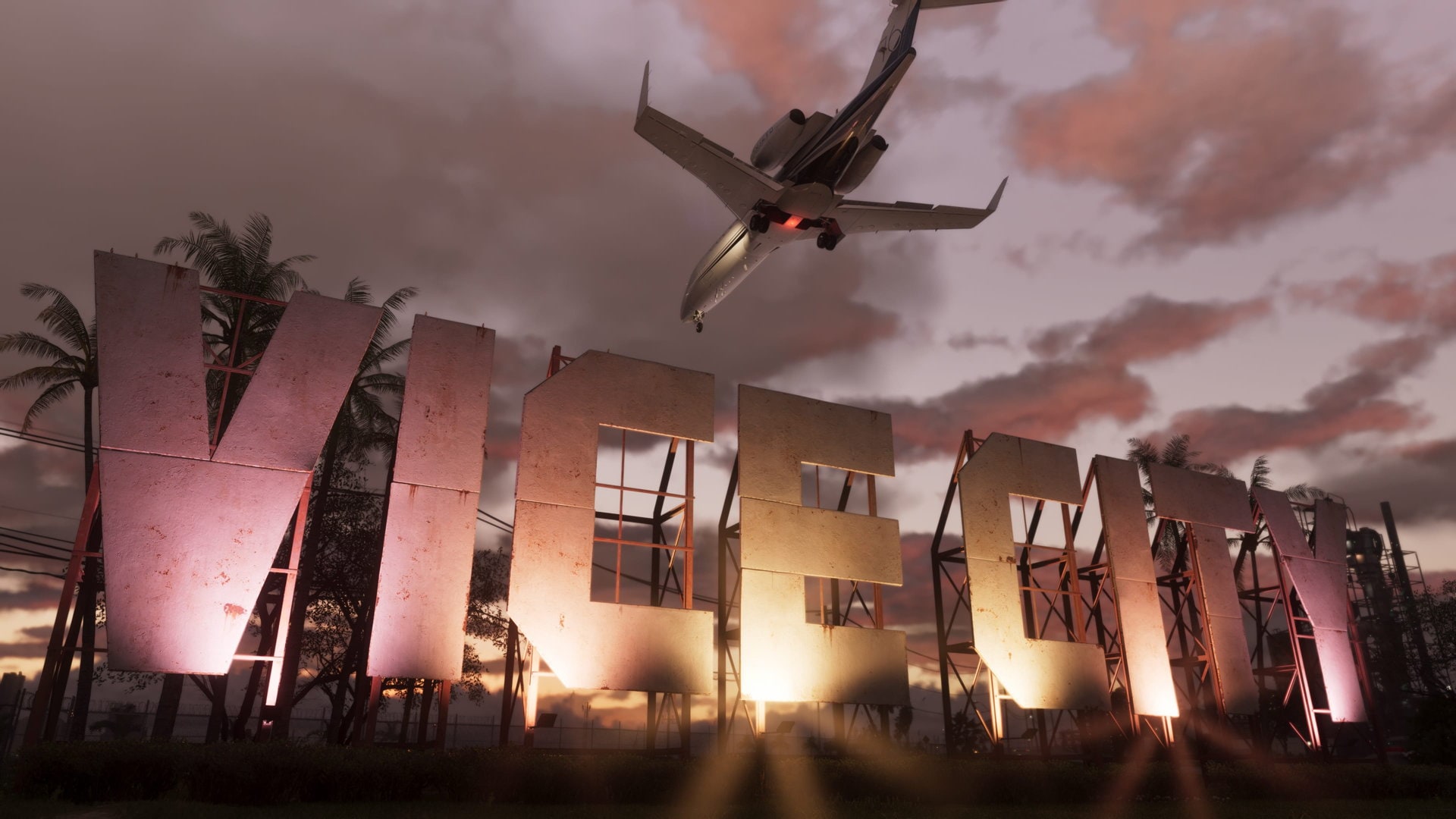
"We're a long way from the '80s, but Vice City is still the sun and fun capital of America. The glamour, hustle, and greed of America captured in a single city. Each neighborhood has something to offer, from the pastel art deco hotels and bright white sands of Ocean Beach, to the bustling panaderias of Little Cuba and the bootleg brands of the Tisha-Wocka flea market, out to the VC Port, the cruise ship capital of the world."
This description establishes four named locations within Vice City (Ocean Beach, Little Cuba, the Tisha-Wocka flea market, and VC Port) and sets the tone for the city as a place defined by excess and contrast.
Vice City is divided into multiple distinct neighborhoods, each with its own visual identity, architecture, and population. The following have been confirmed through official materials and trailer footage.
The beachfront strip inspired by Miami's South Beach is the most visually iconic area of Vice City. Rockstar's description highlights "pastel art deco hotels and bright white sands." The area is lined with neon signs that light up at night. The beach is populated with sunbathers, volleyball players, and street performers. This area serves as the postcard image of Vice City.
Inspired by Miami's Little Havana, this district features Latin American cultural influences. Rockstar specifically mentions "the bustling panaderias of Little Cuba" on the official website, pointing to bakeries and food culture as part of the neighborhood's identity. The area has family-owned businesses, street vendors, and a lively residential atmosphere contrasting with the tourist-focused beachfront.
The Tisha-Wocka flea market is named on Rockstar's official website, described as the home of "bootleg brands." The name is believed to be a fictional take on the real-world Opa-locka Indoor Flea Market in Opa-locka, Florida. Tisha-Wocka may also function as a neighborhood name beyond just the market itself. The area represents the more working-class, off-the-tourist-trail side of Vice City's economy.
Returning from GTA: Vice City (2002), Little Haiti is a lower-income neighborhood with Haitian and Caribbean cultural influences. The district has a grittier feel compared to the polished beach areas.
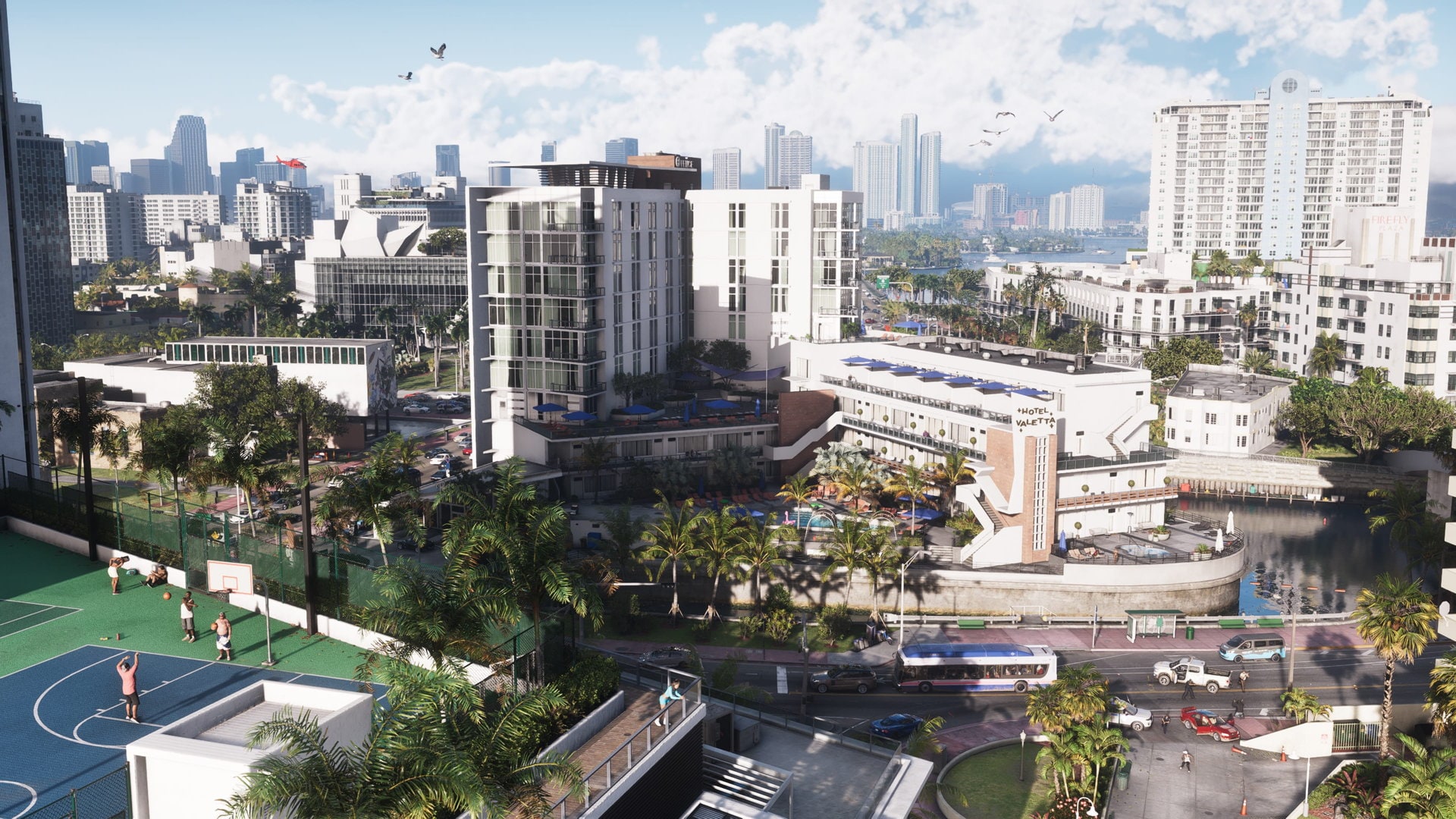
Washington Beach is a residential and mixed-use area between the commercial beach strip and interior neighborhoods. The Venetian Islands are an upscale chain of islands connected by causeways, inspired by Miami's Venetian Islands and Star Island. Luxury homes and yachts are visible in these areas.
Trailer footage shows areas resembling Miami's Brickell financial district (high-rise towers, modern architecture) and the Wynwood arts district (murals, converted warehouses, trendy establishments). These represent the modern development side of Vice City.
Rockstar's official description calls VC Port "the cruise ship capital of the world." The port features container yards, cranes, industrial waterfront, and cruise ship terminals. It is visible in aerial trailer shots as a large commercial shipping and tourism hub.
A full commercial airport with terminals and runways, visible in aerial trailer shots. The airport connects Vice City to the outside world and has been a landmark in the series since the original Vice City in 2002.
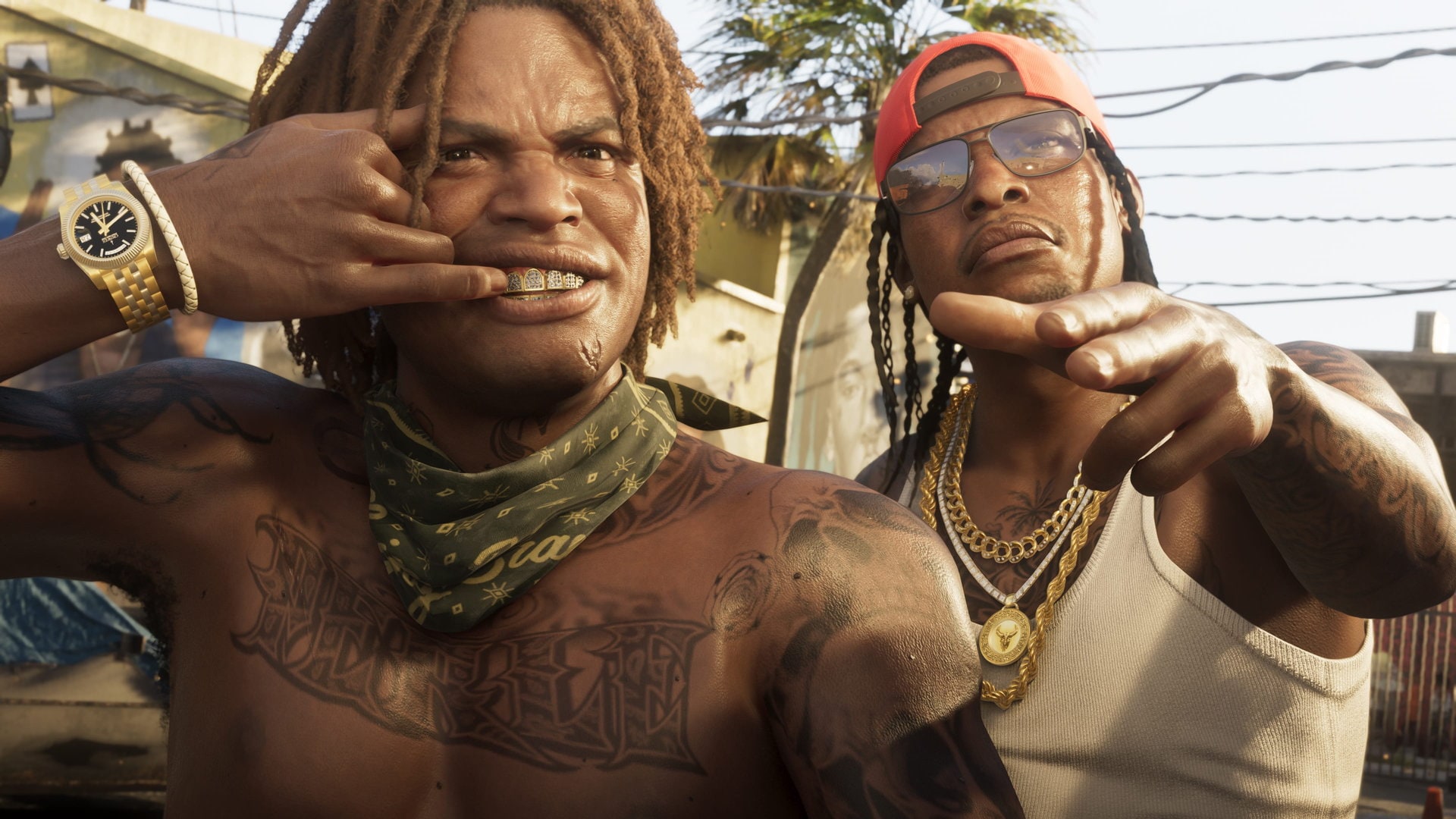
Boobie Ike's strip club, the Jack of Hearts, is a named location appearing in both trailers. It is also connected to Only Raw Records, the music label Boobie runs with Dre'Quan Priest.
A row of colorful Art Deco hotels along the Ocean Beach beachfront, directly inspired by Miami Beach's historic Art Deco district. The buildings are illuminated with neon at night, creating the signature Vice City skyline.
An elevated rail system is visible in Trailer 2. At approximately the 0:45 mark, a blue and silver train runs along an elevated track above a street, and at 1:51 a train is seen departing a station. Community analysis has identified this as the Vice City Metro Mule (VCMM) system. Whether players can ride the metro as transportation (similar to the train in GTA: San Andreas) has not been confirmed.
GTA VI appears to feature a significantly higher number of enterable interior locations compared to previous entries. Stores, restaurants, bars, clubs, gyms, and other businesses are visible with detailed interiors in trailer footage. The Phil's Ammu-Nation commercial in Trailer 2 shows a gun store interior. Community analysis has suggested hundreds of enterable locations across the city, though Rockstar has not confirmed an exact number.
Vice City's nightlife is prominently featured in both trailers. Neon-lit streets, packed nightclubs, strip clubs, and bar scenes dominate the night footage. The city transforms after dark, with the Art Deco buildings and commercial strips illuminated in color. The Jack of Hearts and various unnamed clubs and bars are recurring settings.
Beyond the officially described areas, trailer analysis and the 2022 leak have confirmed additional Vice City districts. Highway signs, building names, and visible landmarks in both Trailer 1 and Trailer 2 footage reveal a city that extends well beyond the core neighborhoods, with returning locations from the original 2002 GTA Vice City alongside entirely new areas.
District | Real-World Inspiration | Description |
|---|---|---|
South Beach, Miami | Beachfront district with art deco architecture, dense crowds, and nightlife | |
Wynwood, Miami | Arts and culture hub with street murals and converted warehouses | |
Downtown Miami | Business and financial center; home to Sahara Arena and Sinfrontera National Bank | |
Overtown, Miami | Working-class district near the Interstate 404/97 interchange | |
Venetian Islands, Miami | Upscale island neighborhood with luxury waterfront properties | |
Washington Avenue, Miami Beach | Legacy district returning from the original GTA Vice City (2002) | |
Ekanfinaka | Possibly Hialeah | First revealed in 2022 leak on highway signs; adjacent to Belville |
Belville | Unknown | Adjacent to Ekanfinaka per highway signs from 2022 leak footage |
Hamlet | Unknown | Confirmed district within Vice-Dale County |
Rockridge | Unknown | Features the Rockridge Community Resource Center |
Leaf Links | Fisher Island / Star Island | Golf course area, returning name from original Vice City |
Vice City features a comprehensive transportation network. The Vice City Metro provides a public rail transit system connecting key districts across the metropolitan area. Major highway corridors include Interstate 97 (I-97) and Interstate 404 (I-404), which intersect near Crosstown and provide high-speed road connections between Vice City, the Grassrivers region, and the broader State of Leonida. Vice City International Airport serves as the main aviation hub, located on the outskirts of the metropolitan area. Together, these systems offer players multiple ways to traverse the map, whether by rail, highway, or air travel.
Vice City first appeared in Grand Theft Auto: Vice City (2002), set in 1986 and starring Tommy Vercetti. It returned in Vice City Stories (2006), set in 1984. Both games captured Vice City during the 1980s cocaine trade era with a pastel-colored, synth-music aesthetic. GTA VI's modern-day Vice City retains the Art Deco architecture and beach culture but updates the world to reflect contemporary Miami, including social media culture, modern vehicles, and present-day fashion.