

Overview
Stockyard is a district in Vice City part of Vice-Dale County in the state of Leonida. The neighborhood is GTA VI's equivalent of Miami's Wynwood Arts District, a once-industrial area that has been transformed into a lively cultural hub filled with street art, murals, galleries, and creative businesses. Stockyard's name references the area's working-class origins as a warehouse and meatpacking district before its gradual gentrification into one of Vice City's trendiest neighborhoods.
The district is characterized by its colorful exterior walls covered in large-scale murals and graffiti, converted warehouse spaces housing galleries and studios, and a mix of old industrial architecture alongside newer trendy establishments. This blend of gritty industrial roots and polished creative enterprises gives Stockyard a distinctive visual identity that sets it apart from the beachfront glamour of South Beach or the corporate towers of Downtown Vice City.
Geography and Location
Stockyard is situated on the mainland side of Vice City, positioned inland from the waterfront districts. The neighborhood occupies a relatively compact area defined by its grid of wide streets and low-rise warehouse buildings. The terrain is flat, consistent with Vice City's coastal plain geography, and the streets are wider than those found in the barrier island districts. This reflects the area's industrial past when large trucks needed access to loading docks and warehouses.
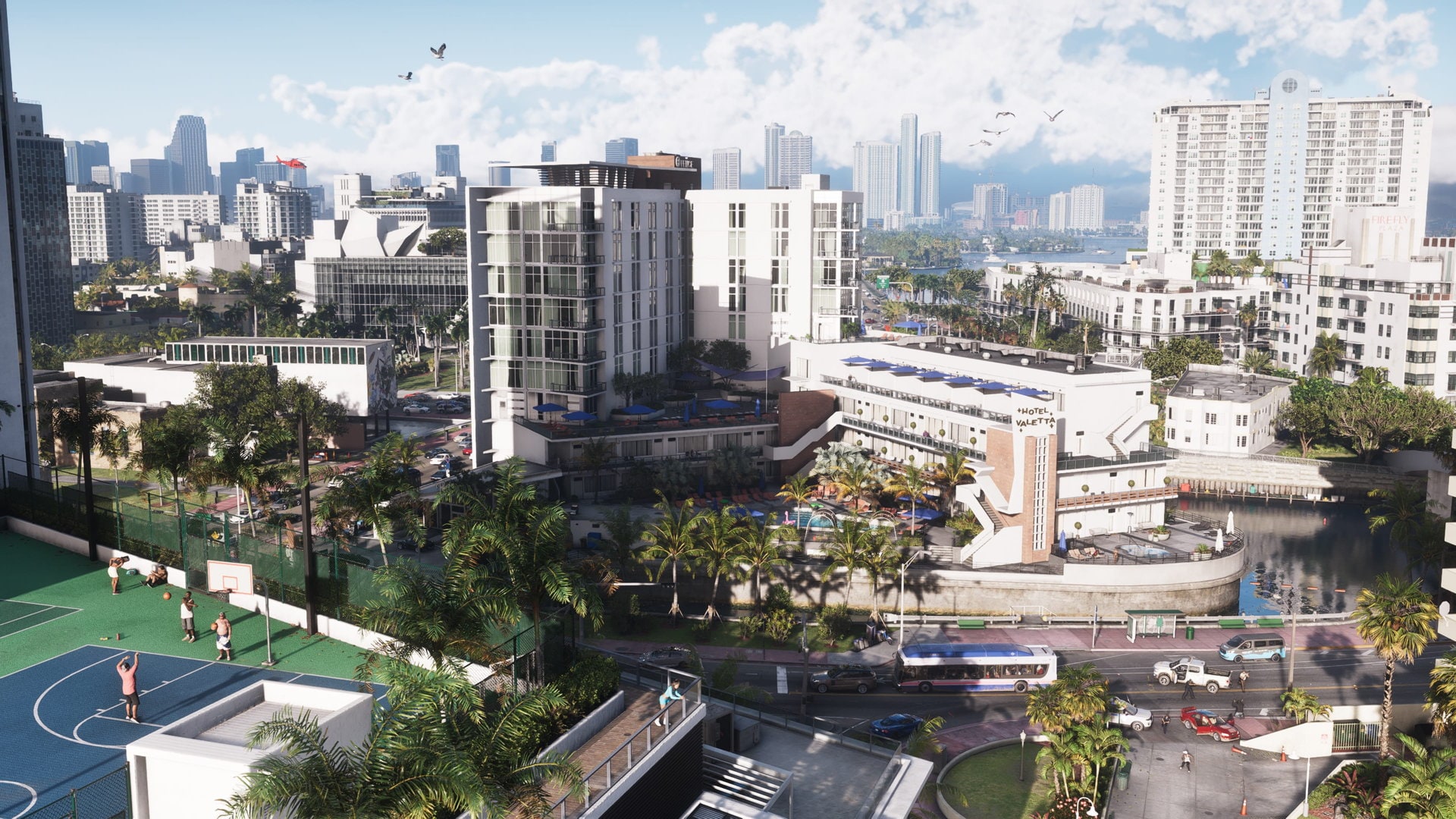
The district sits roughly between Downtown Vice City to the east and the more residential neighborhoods further inland. Crosstown borders Stockyard to the south, creating an interesting contrast between the two neighborhoods: Stockyard's trendy galleries and cafes juxtaposed against Crosstown's working-class character.
Mural-covered walls and converted industrial buildings are the dominant architectural features. Many buildings retain their original warehouse facades, with roll-up metal doors, exposed brick, and loading bays, but the interiors have been repurposed as art galleries, restaurants, and boutique shops.
Points of Interest
Stockyard contains several notable locations tied to the arts, culture, and the district's evolving identity.
Location | Type | Description |
|---|---|---|
Mural Walls | Public Art | Large-scale street murals covering the exteriors of warehouse buildings throughout the district. These murals depict a variety of subjects, from abstract designs to portraits, and give Stockyard its signature colorful aesthetic. |
Converted Warehouse Galleries | Art & Culture | Former industrial spaces repurposed as contemporary art galleries. These may function as interiors the player can enter, potentially tied to side activities or property acquisition. |
Street Art Alleyways | Public Art | Narrow alleys between warehouse buildings covered in graffiti and smaller-scale murals. These provide unique visual backdrops and may serve as shortcuts or hideout locations. |
Trendy Restaurants and Cafes | Food & Drink | Upscale eateries and coffee shops that have moved into the district as part of the gentrification wave. Outdoor seating areas spill onto the sidewalks, creating a lively pedestrian scene. |
Boutique Retail Shops | Shopping | Small independent shops selling clothing, vintage goods, and local crafts. These businesses occupy converted ground-floor warehouse spaces. |
Music Venues | Entertainment | Intimate live music venues and bars housed in old industrial buildings. Likely connected to the nightlife and entertainment scene in Vice City. |
Culture and Identity
Stockyard represents the tension between authenticity and commercialization that defines gentrifying neighborhoods in modern cities. The district's origins as a working-class industrial area are still visible in its architecture: loading docks, metal siding, exposed ductwork, and concrete floors. But layered on top of this industrial skeleton is a curated creative scene of galleries, boutiques, and restaurants that cater to a wealthier clientele.
This duality is reflected in the NPC population. During the day, the streets are populated by a mix of artists, tourists with cameras, young professionals, and the occasional holdover from the neighborhood's rougher past. The street art that covers nearly every available wall surface is the district's most defining visual feature, turning Stockyard into an open-air gallery that changes appearance as new murals are painted over old ones.
GTA VI's tradition of satirizing American culture through its fictional brands and parodies is likely on full display in Stockyard. The district is a natural setting for jokes about overpriced avocado toast, performative activism, and the commodification of counterculture, themes that Rockstar Games has historically explored with biting humor.
Criminal Activity
Stockyard's gentrification has not entirely erased its rougher elements. The district's warehouse buildings, alleyways, and relatively low police presence compared to tourist zones like South Beach make it a potential location for illicit operations. Drug deals, underground markets, and gang stash houses could exist alongside the legitimate art galleries and cafes.
The neighborhood's proximity to Crosstown means that criminal elements from that working-class district may spill into Stockyard, creating friction between established operations and the encroaching gentrification. This type of neighborhood-level territorial conflict is consistent with GTA VI's emphasis on gangs and factions operating across Vice City.
Real-World Inspiration
Stockyard is based on Wynwood, a neighborhood in Miami that underwent one of the most dramatic gentrification transformations in the United States. Originally known as a warehouse district, Wynwood began its transformation in the early 2000s when developers Tony Goldman and others started commissioning large-scale murals on warehouse walls. The Wynwood Walls project, launched in 2009, turned the neighborhood into an internationally recognized street art destination.
The name "Stockyard" references Wynwood's earlier identity. Before the art scene arrived, the area was home to garment manufacturing, storage facilities, and various blue-collar businesses. The district was sometimes referred to as "El Barrio" by the Puerto Rican community that lived there for decades. Rockstar's choice of the name Stockyard preserves that industrial heritage while giving the location its own fictional identity.
Today, real-world Wynwood is known for Art Basel Miami satellite exhibitions, the Wynwood Walls outdoor museum, and a rapidly expanding food and nightlife scene. GTA VI's Stockyard appears to capture this modern identity while also acknowledging the neighborhood's layered history.
Trivia
The district's name, Stockyard, evokes the meatpacking and warehouse industries that historically defined the area before gentrification.
Stockyard's murals may change over time in-game or feature different designs depending on story progression, mirroring the ever-rotating street art of real-world Wynwood.
The contrast between Stockyard and neighboring Crosstown reflects the real-world dynamic between Wynwood and Overtown in Miami, where rapid gentrification borders persistent poverty.
Street art and graffiti have been part of the Grand Theft Auto series since its earlier entries, where players could spray over rival gang tags. Stockyard may offer an evolution of this mechanic.