

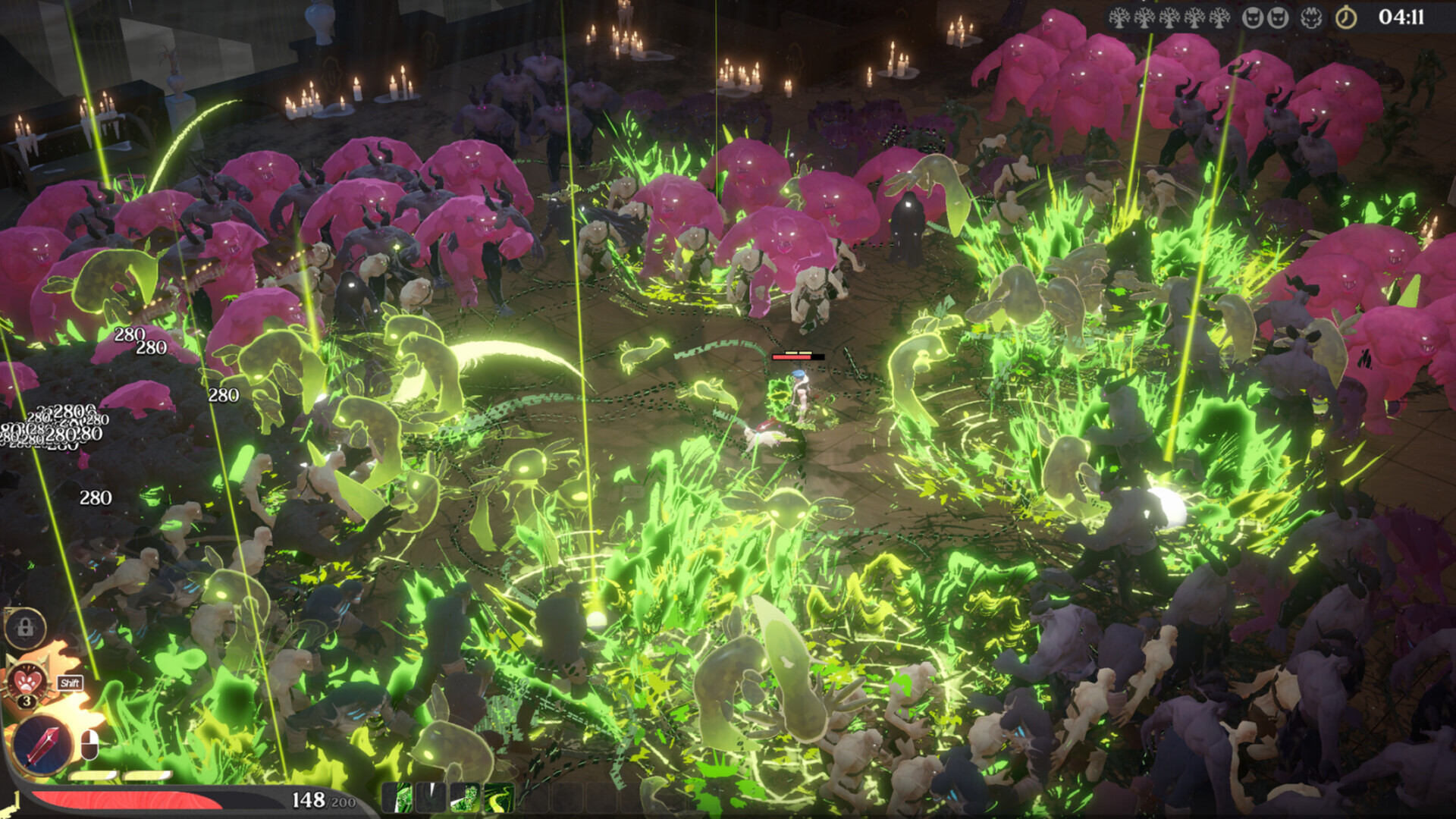
Ember and Blade combines three familiar action styles into one loop: the relentless horde-clearing of a survivors-like, the patterned precision of soulslike boss fights, and the randomized power growth of a roguelite. The studio sums up the blend as hack-and-slash action, roguelite progression, and survival-horde pacing, driven by randomized angelic blessings and sword-and-magic combos. The result is a game where you carve through endless demons one moment and study a single deadly boss the next, while your build shifts from run to run.
The Survivors-Like Core
Much of the moment-to-moment play is built on surviving against the swarm. Battlefields teem with demons, and the waves grow steadily larger and more dangerous the longer you last. Fenrix's job is to keep cutting, keep moving, and stay alive against numbers that only increase. This horde pacing gives the game its one-versus-many fantasy of carving through endless enemies. The mechanics of those waves are covered in Enemies and Demon Hordes.
Soulslike Boss Duels
Set against the chaos of the hordes are the game's marquee fights: deliberate, patterned duels against the Judicators of Fate. These bosses wield immense power and devastating attacks, and they cannot be brute-forced. They demand that you learn their patterns, time your reactions, and commit to a strategy. This is the soulslike side of the design, and it provides the game's biggest tests of skill. See Combat for how attacks and timing work in these encounters.
Roguelite Run Structure
Ember and Blade is structured around runs rather than a single continuous campaign playthrough. Falling in battle is not a game-over screen; instead, each fall is the start of another run, and resurrection brings deeper secrets and a fresh chance to twist fate. Because the powers you gain are reshuffled each time, your path is never the same twice. The full rhythm of death, rebirth, and escalation is detailed in The Run Loop.
Sword and Magic
Combat is a mix of sword and magic, woven into combos that flow between melee strikes and ranged attacks. Rather than picking one style, you blend them, swinging in close while reaching out with spells to control space and crowds. This dual approach feeds both the horde-clearing and the boss duels. The weapons and tools behind it are described in Combat.
Resource Management
The game also asks for strategic resource management as part of its survival pacing. Surviving a long run is not only about reflexes; it is about making smart choices with what you have, including which Blessings to take when angels offer them. Picking the right gifts at the right time is what separates a run that snowballs from one that stalls out.
What Makes a Run Unique
The single biggest source of variety is the angelic blessing system. Each run, angels grant a choice of heavenly blessings that reshape your powers, so the build you finish with is rarely the build you started planning. On top of blessings, the wider progression system layers Awakening Skills, weapon-enhancing Runes, and Arcana combinations, giving runs even more room to diverge. Together these systems mean that two players, or even the same player twice, can come out of Ember and Blade with very different ways of fighting.
Three Sources of In-Run Power
Within a single run, power comes from three separate places rather than one. Understanding which is which makes the moment-to-moment decisions easier to read.
Source | How It Arrives |
|---|---|
Blessings | Essence Shards collected in the field drive level-ups, and each level-up offers a choice from one of the eight angels |
Shrines | Power held in shrines placed in the world, released to turn a battle in your favour |
Arcana | Cards combined through Shay that add rules and effects on top of a build |
Those sit on top of the permanent layer carried between runs, covered on Progression and Builds. The game itself is built in Unity 6.3 LTS, and the development team presented its visual and large-battle optimisation work at Unity's Seoul developer conference in July 2026. The studio frames the scale it is chasing as one versus one thousand; how it achieves that is covered on Development and Technology.