Progression in Ember and Blade is built around a flexible growth system that lets players develop Fenrix in varied ways rather than following a single fixed path. The protagonist becomes stronger through a layered set of systems, and the way those systems combine is what gives the game its build variety. Because this is a roguelite at heart, much of that growth is shaped run to run inside the The Run Loop.
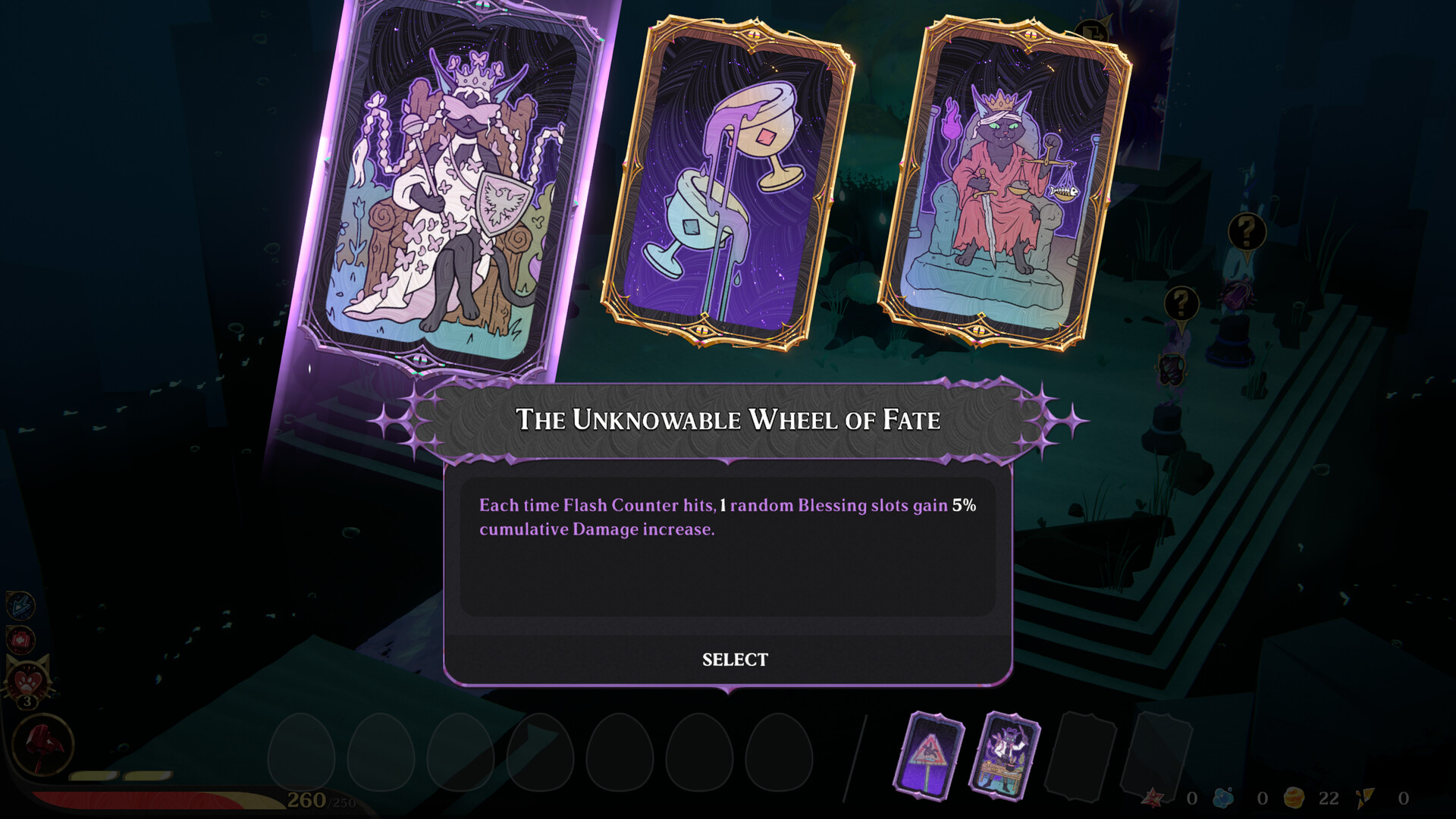
The Four Pillars
The progression toolkit is made up of four named systems, each contributing differently to a build.
System | Role in a Build |
|---|---|
Randomized angelic gifts offered during a run that reshape your powers; the layer that changes most from attempt to attempt. | |
A character-growth layer that helps define Fenrix's longer-term capabilities. | |
Weapon-enhancing upgrades that strengthen and tailor your tools. | |
A combination-based system for stacking and pairing elements of a build. |
Blessings are the most run-specific of the four. Awakening Skills, Runes, and Arcana round out the broader shape of a character, and the developers have presented all four together as the heart of how builds are assembled.
Flexible Character Growth
The stated goal is flexibility. Rather than locking players into one optimal route, the systems are designed so that Fenrix can grow in different directions depending on the choices a player makes. This supports the game's emphasis on variety and ties directly into the promise that no two runs feel the same. The exact unlock paths, full lists, and stat values for each system have not been published, so this page describes how the pieces fit rather than presenting a complete catalogue.
Build Variety
Build variety comes from the interplay of the four pillars. A run leaning on aggressive Blessings plays very differently from one shaped around defensive choices, and the weapon focus enabled by Runes can push a build toward a particular style. Layering Arcana combinations and Awakening Skills on top deepens those differences further. The result is a system that rewards experimentation across many runs.
Currencies and the Grace of the Arbor
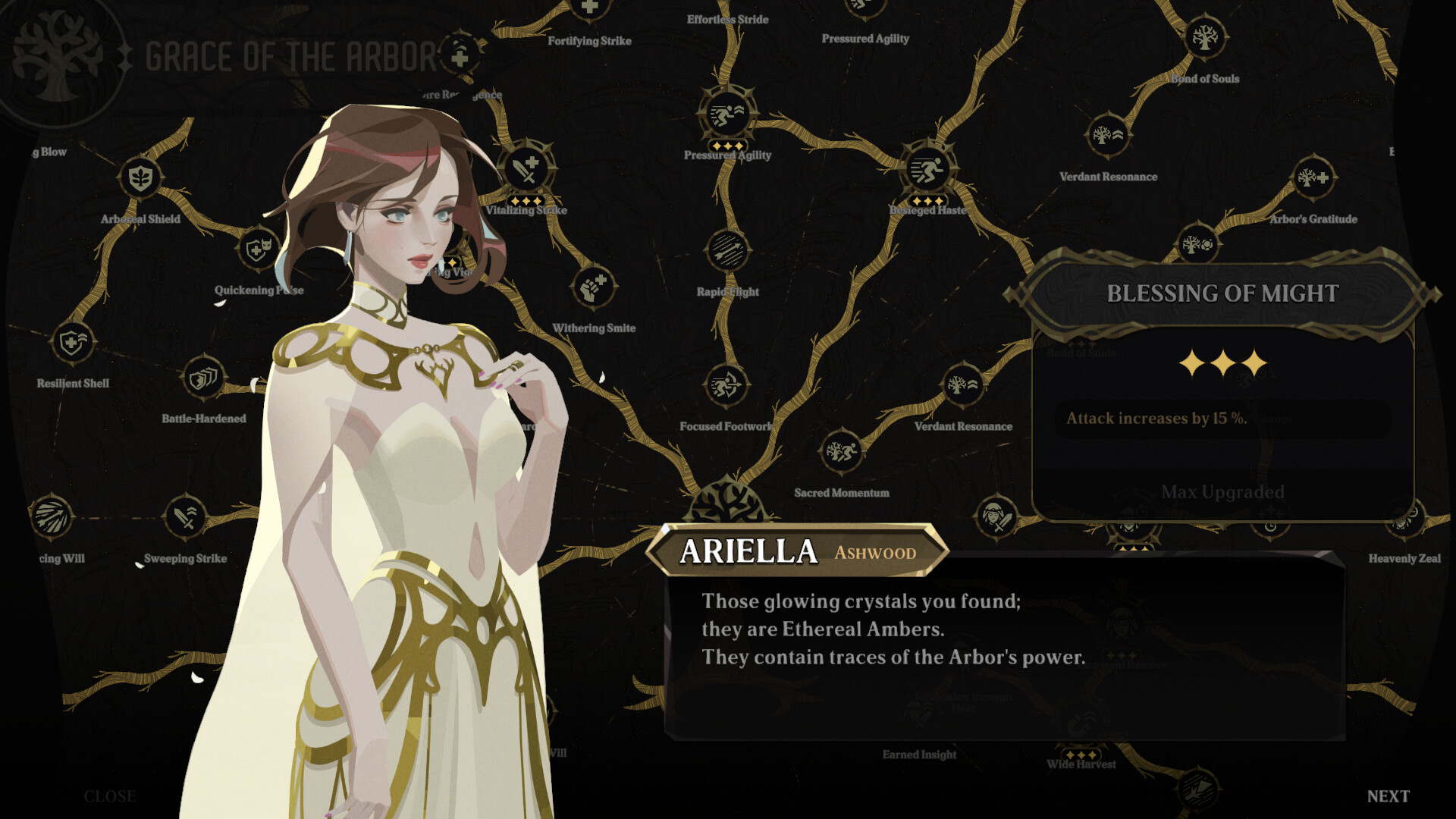
Underpinning the four pillars is a set of resources, each tied to a different part of progression. The headline long-term system is the Grace of the Arbor, a branching node tree that starts dormant and is awakened node by node by investing Amber. Each node unlocked strengthens core stats, opens new Blessing options, or grants longer-term perks, and because Amber is limited, players choose between specializing down one path or spreading across several. The main resources the developers have outlined are below.
Currency | How to Obtain | Used For |
|---|---|---|
Amber | Dropped by bosses, or obtained through Arbor purification | Strengthening stats through the Grace of the Arbor |
Dew | Dropped by treasure monsters, or through Arbor purification | Unlocking and recharging Artifacts |
Claynite | Purchased from a hideout | Crafting relics in the Workshop |
Shard | Dropped by monsters, found in breakable props, or through Arbor purification | Consumed when leveling up to select Blessings |
Blood Crysts | Dropped by bosses | Enhancing weapons in the Forge |
Adapting Builds Per Run
Because blessings are offered fresh each run, builds are not static. Within the The Run Loop, players adapt their choices to the situation in front of them, the hordes they are facing and the Judicators of Fate ahead. For players who want to extend that experimentation, New Game Plus layers additional challenge onto the same world, giving builds more room to be tested and refined.
The Three Meta Stations
The between-run layer is organised around three named stations in the sanctuary, each spending a different thing and each run by a different resident. Splitting them this way means a build is shaped before a run starts as well as during it.
Station | Run By | What It Does |
|---|---|---|
Grace of the Arbor | The Arbor itself | Amber recovered on expeditions is returned to the great tree to permanently raise Fenrix's abilities |
Pea's Workshop | Pea, the sanctuary's resident prankster | Crafts Relics, which are equipped before setting out to shape the coming expedition |
Keke's Magic Forge | Keke, the sanctuary's meticulous maid | Fits Ariella's Runes, tracked down by Keke, to push weapons past their normal limits |
The framing the studio uses for the loop is expedition and return: resources come back from a run, and they are spent growing stronger alongside the sanctuary's residents. Death is presented as preparation for the next expedition rather than a failure state, which is the same idea the run loop is built on. The Rune side of this is covered in detail on Runes.
Inside the Grace of the Arbor
Demo build footage shows what the Arbor screen actually looks like. It is titled Grace of the Arbor and presented as a branching web of named nodes rather than a plain list, with tiers marked in stars up to three. A fully upgraded Blessing of Might node reads as a flat fifteen percent attack increase, which gives a sense of the scale these permanent upgrades work at. Node names visible in that footage include Arboreal Shield, Vitalizing Strike, Besieged Haste, Verdant Resonance, Bond of Souls and Arbor's Gratitude, so the tree mixes defensive, offensive, mobility and resource-gain branches.
The currency has a fuller in-game name too. Ariella identifies the glowing crystals recovered on a run as Ethereal Ambers, describing them as containing traces of the Arbor's own power, which is why returning them to the tree is what raises Fenrix's baseline. As with any pre-release build, individual node names and percentages should be treated as provisional.