

The Global Map is the turn-based grand-strategy layer of Dust Front RTS that sits above the real-time battles. It is where you measure the value of your power: where you decide which fronts to push, how your economy grows, and how your veterans move between fights. It connects directly to the core loop, to Technology and Doctrines, and to the armies you carry from one battle to the next.
Where the real-time layer decides whether a single battle is won or lost, the global map decides which battles are worth fighting and turns your victories into lasting strength. Both layers feed each other constantly.
A Two-Layer Strategy
Dust Front RTS is two strategy games stacked together. Below the global map are the real-time engagements where you deploy a base and command an army. Above it is the strategic view: a territory map divided into colored zones, a turn counter, and the long campaign that ties every battle into a single war. Buildings you raise in battle also matter here, because the same factories, refineries, and storage feed the wider effort. The developer has described the global mode as the engine of the game, with the player fighting for territories, taking part in text events, establishing an economy, and creating garrisons.
The Global Economy
Mining and production within the territories you hold feed a strategic economy. The more ground you control and the better you develop it, the more your war machine can afford. The economy is the quiet foundation under everything else: it pays for new research, new construction, and the units you bring to the front.
Mining and production inside your territories drive the strategic economy.
Resources accumulate over the campaign rather than only within a single battle.
Holding and developing more ground steadily widens what you can build and research.
The Capital Sector
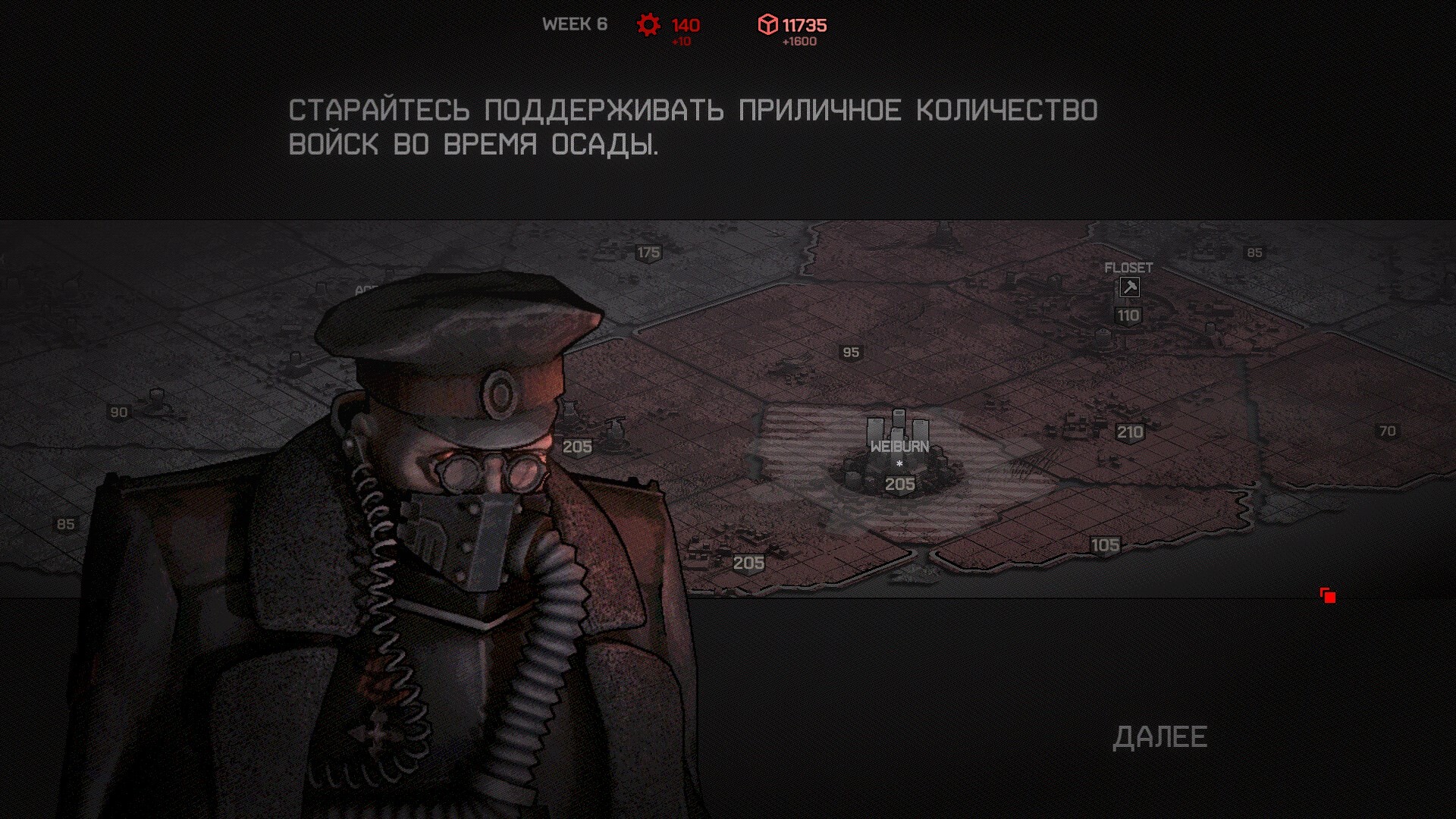
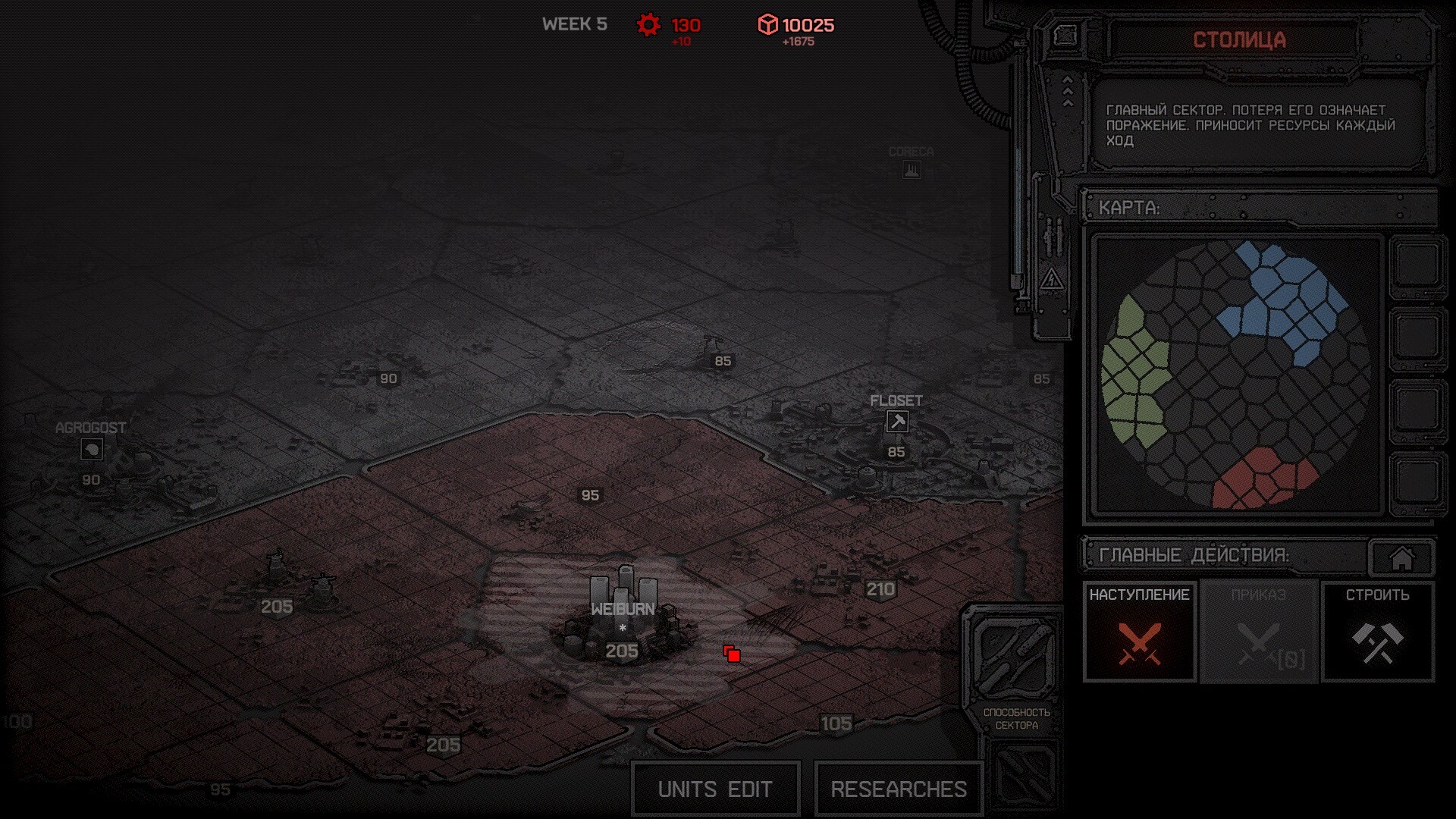
One territory stands above the rest: the Capital sector. It generates resources each turn, acting as the heart of your strategic income. It is also a point of failure. If the Capital sector is lost, the campaign is over, so protecting it shapes how far forward you can afford to commit your armies.
Strategic Buildings
Some structures are raised from the global map rather than during a battle, and they carry capabilities that reach across the whole war. Buildings of this kind usually generate their own tasks in the surrounding territory, whether to capture them, eliminate them, or defend them.
Structure | What it does |
|---|---|
Missile silo | Destroys entire sectors from the strategic map. |
Siege fort | Bombards neighbouring territory from the global map; in a real-time battle it is a stronghold carrying heavy anti-aircraft guns. |
Airport | Bases the heavy bombers you call in during missions from the tactical ability panel. |
These are ordinary campaign construction rather than the three faction superweapons described under Superweapons; a missile silo is something you build, while a superweapon is an asset a faction already holds.
Events
Captured regions are not static. As the campaign unfolds, news happens through mini-dialogs that you take part in, often delivered by an officer commander figure who offers strategic advice. Your responses steer how these moments resolve.
Two kinds of visitors can appear in your regions:
Merchants, who offer resources for trade.
Mercenaries, who offer unique units you would not otherwise field.
These encounters give the strategic layer texture: a steady stream of choices that can reshape your economy or reinforce your army between major battles. Special sectors and events can also hand you blueprints, the per-unit modifications covered under Blueprints and Upgrades.
Technology Branches
From the global map you reach into research. Technology branches unlock new units and buildings, then let you improve and equip them with more modern means of destruction. Progress is organized into doctrine trees that specialize your forces in different directions. Blueprints are installed here as well, between battles rather than during them. For the full picture, see Technology and Doctrines.
Garrisons and Veterans
Troops are not disposable between battles. On the global map, units gain ranks as they fight, and you decide how to use those veterans. A seasoned force can move as a strike group, carrying its experience from one engagement to the next, or it can stay behind as a defensive garrison to hold ground you have already taken.
Because veterans persist, you can lead the same core of troops from the start of the campaign to its finish, building up commanders and crews that grow more capable the longer they survive. When you push into a neighbouring sector, part of the assembled army deploys immediately and the rest arrives as reinforcements. See Units and Armies for more on how forces are organized.
Simultaneous Planning and Turn-Based Movement
The strategic layer runs on a plan-then-resolve rhythm. You issue your orders, and major actions resolve on the next turn. Because you and the enemy commit during the same planning phase, you have to anticipate enemy maneuvers and position yourself to be in the right place at the right time, rather than simply reacting after the fact.
Strategic actions available from the map include offensives, orders, and construction, alongside access to unit editing and research. Each turn also brings in per-turn resource income from the territory you hold.
Weeks, Turns, and Territory
Campaign progression is tracked on a week-based timeline shown by a turn counter, so the war advances in measured steps. The world itself is presented as a territory map divided into colored zones. Those zones are irregular polygons of differing shape and size rather than cells of a regular grid, and their colour marks which of the contesting factions holds the ground. As weeks pass, the lines on that map shift with every offensive you launch and every position you defend.
Element | What it does |
|---|---|
Capital sector | Generates resources each turn; losing it ends the campaign |
Territories | Irregular map sectors whose mining and production feed the strategic economy |
Week / turn counter | Tracks campaign progression in measured steps |
Events | Mini-dialogs, merchants, and mercenaries in captured regions |
Strategic buildings | Missile silo, siege fort, and airport raised from the map itself |
Garrisons | Veteran troops that move as strike groups or hold as defensive garrisons |
Research access | Technology branches, blueprints, and unit editing reached from the map |
Plan ahead, anticipate the enemy, and be in the right place at the right time.