

The battlefields of Dust Front RTS are not fixed scenery. The ground deforms, almost every object on the map can be shot apart, surfaces burn, gas pools and detonates, and the weather changes while a fight is running. The developer has written about these systems at length in his own devlog, presenting them as the answer to a specific problem: how to make a flat, open battlefield feel alive without falling back on the narrow chokepoints of older strategy games. This page covers those systems; for how they sit inside the wider loop, see the Gameplay Overview.
Deformable Ground
Terrain in Dust Front is dynamically deformable. Pits open up where explosions and hits land, and you can dig into the ground yourself. Vehicle tracks work individually against that surface, so a chassis rides over bumps and settles into dips rather than sliding across a flat plane, and infantry adjusts to the deformed ground as it moves.
Elevation is not cosmetic. Differences in height affect whether units can find each other, and a unit sitting in one pit cannot shoot a unit sitting in another. The developer has said the plan was deliberately to avoid a battlefield built from high ground and low ground joined by narrow entrances, because those chokepoints felt wrong for battles between large armies. Wide fields came first; the deformation system is what keeps them from being featureless.
The developer has also said that because the map can be reshaped, he is willing to bring small areas of high and low ground back, but only if the paths through them can be forced open.
Destructible Objects
Nearly everything on the map can be destroyed or shot. Almost all objects leave behind some variation of wreckage, and some break apart in stages rather than vanishing at once. Objects in the mutant biome have their own destruction animations.
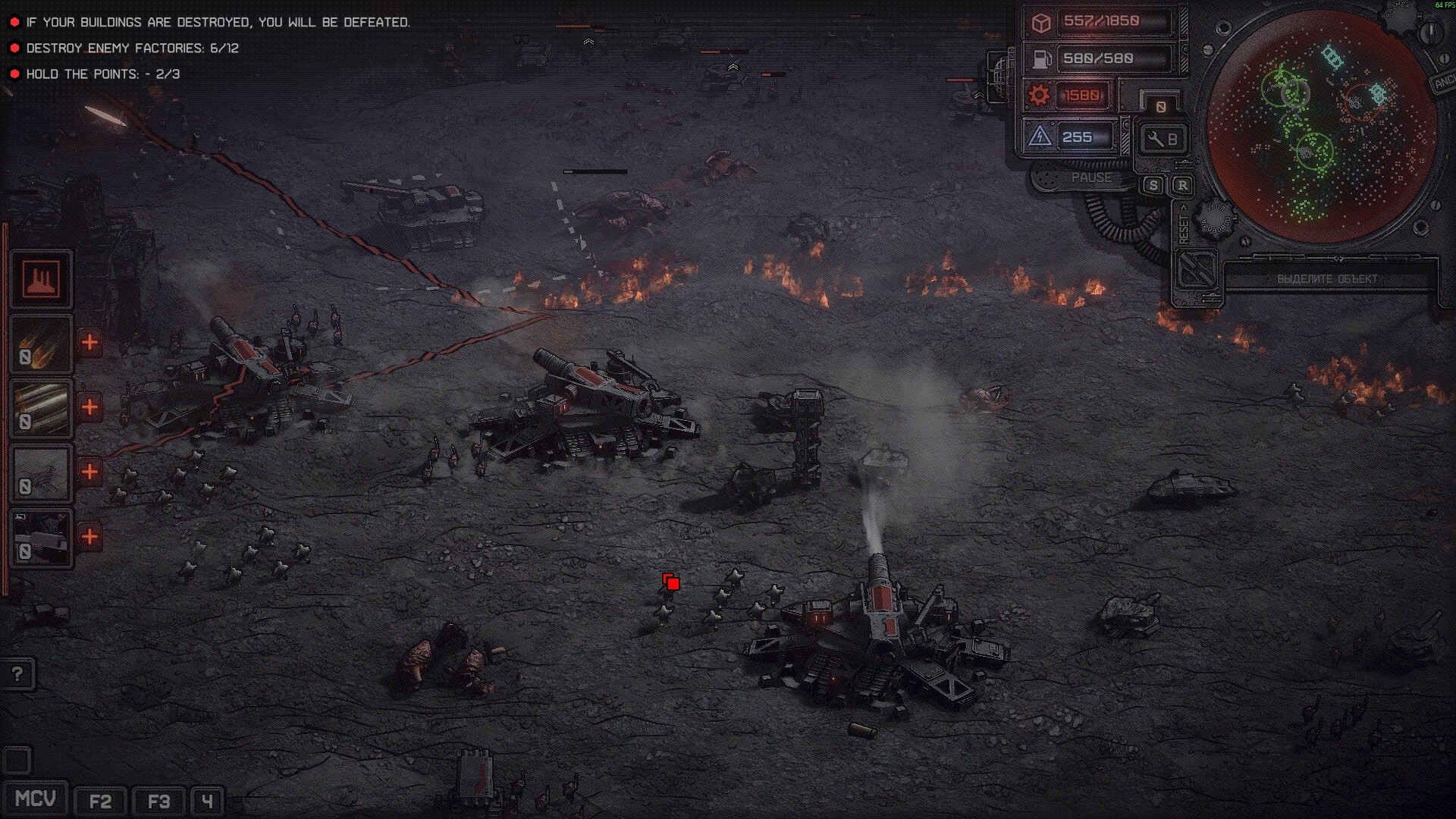
The clearest worked example is the pipework that runs through the industrial maps. The pillars carrying large pipes have their own hit points. When a pillar goes down the pipe falls, and a falling pipe can crush units standing underneath it and leave a hulk that blocks the road. That blockage is not permanent: destroying the fallen pipe section clears the route again.
Behaviour | Effect in battle |
|---|---|
Separate hit points on supports | Pipe pillars can be targeted individually to bring a span down |
Falling debris | A collapsing pipe can destroy units beneath it |
Persistent wreckage | Fallen sections leave a hulk that blocks movement until cleared |
Sequential destruction | Some objects break apart in stages rather than all at once |
Biome-specific animation | Objects in the mutant biome have their own destruction animations |
Fire and Gas
Fire is a system rather than an effect. Flames adjust themselves to the terrain, and every unit has its own resistance to burning. Gas clouds run through the same system, and igniting one produces a volumetric explosion.
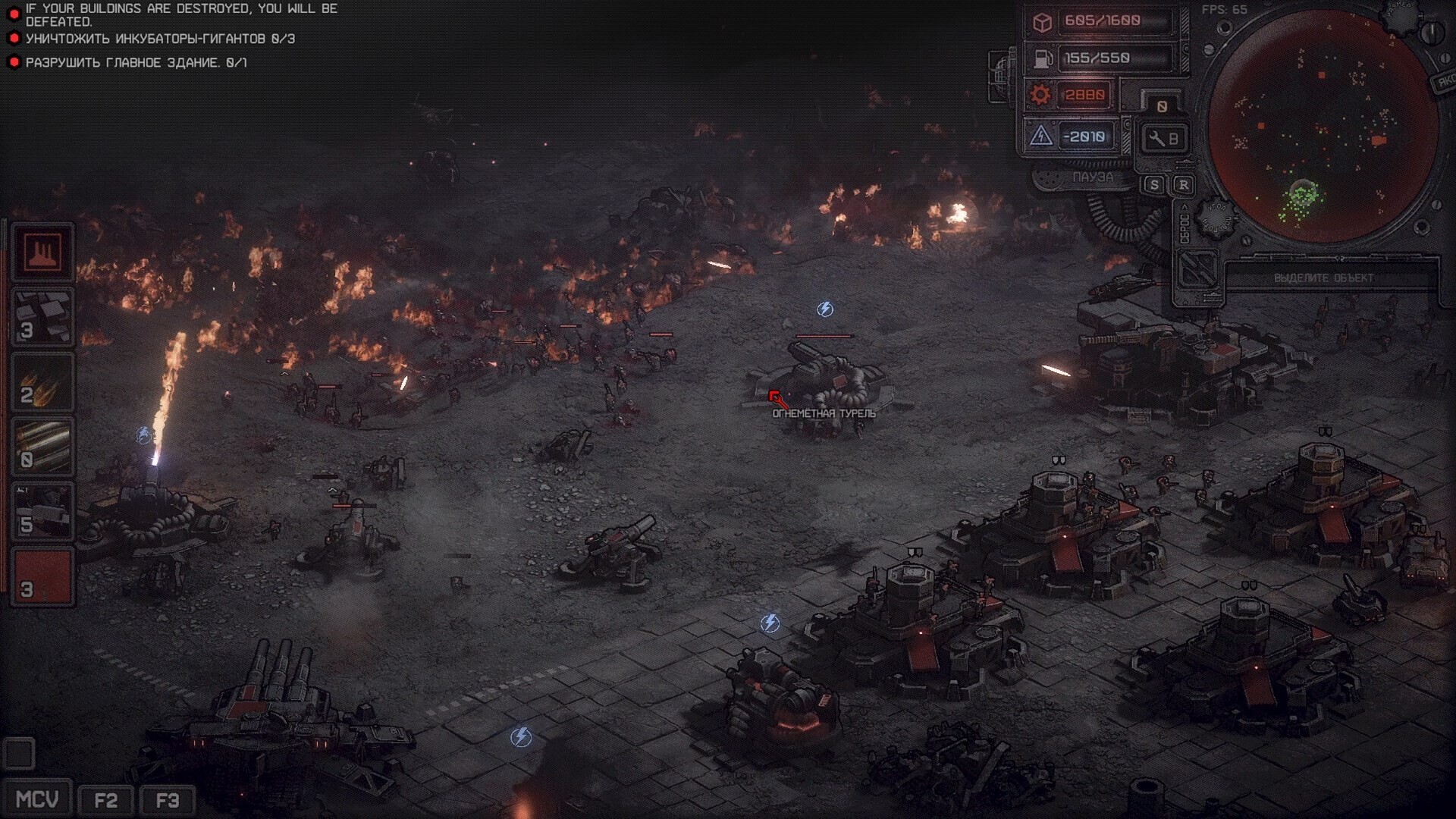
Because these are systemic interactions rather than scripted set pieces, they connect to the rest of the game in ways you can act on. Shells can be incendiary. Mortars can carry a gas payload. Fire can be put out by filling the burning ground back in, or by destroying a neutral building that holds a fire-suppressing mixture. Rain shortens how long a surface keeps burning.
The developer has been candid that gas is difficult to use deliberately and that the visual effects can be improved, while noting it can be entertaining when it works. Units sheltering inside garrisonable structures no longer take environmental damage from flame or gas after a demo fix.
Weather
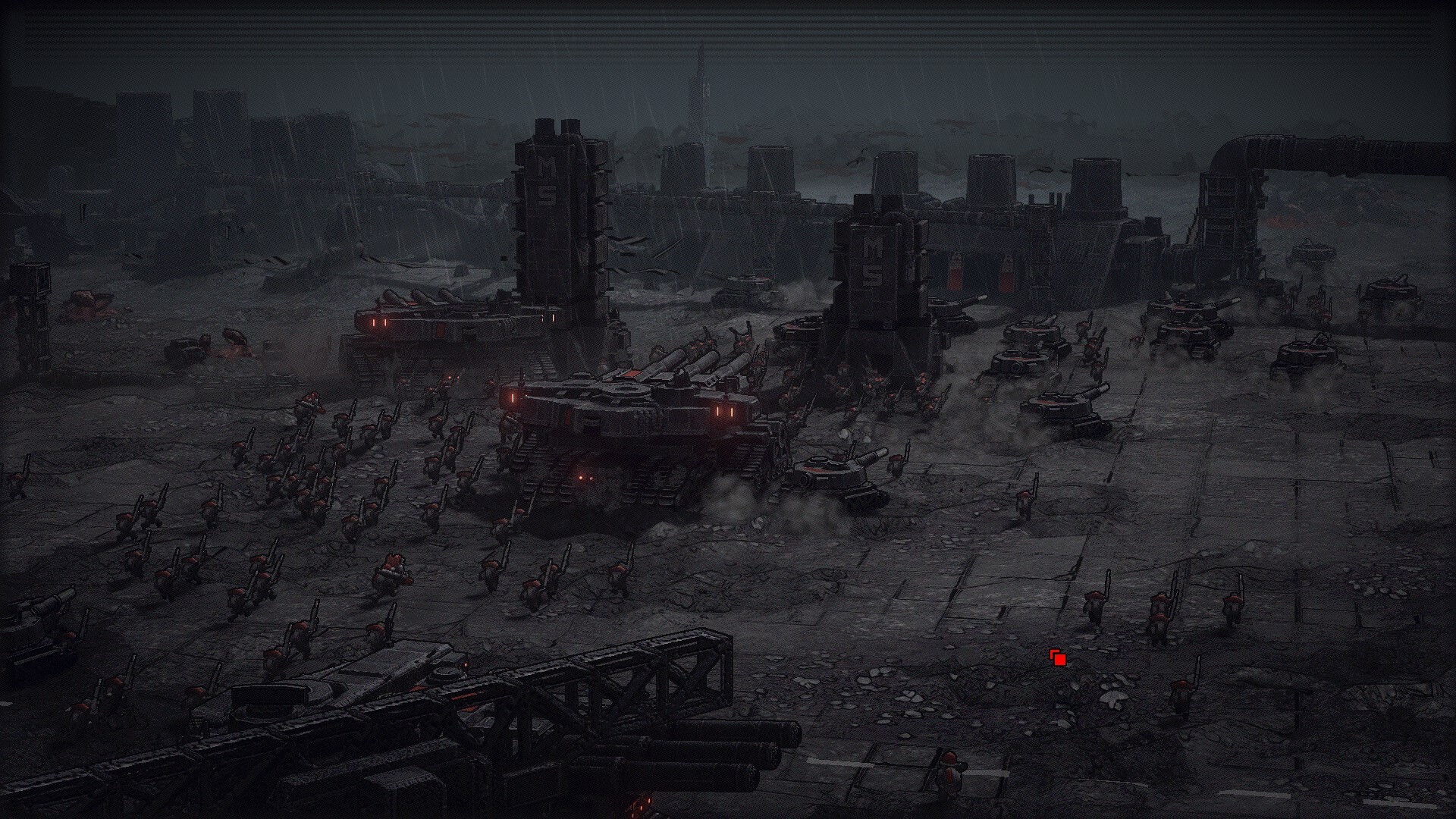
Conditions can change over the course of a single battle. Storms, radioactive emissions, and falling space debris all make their own adjustments to a prolonged fight. Weather also interacts with the systems above: lightning during a storm can set off gas clouds, so a field you have seeded with gas becomes a hazard to you as well as to the enemy.
Procedural Battlefields
The starting landscape is generated procedurally, like the rest of the map, together with civilian buildings and small objects. What varies most between sectors is the biome and how the sector is filled. Pre-made pieces of map are sometimes used as well, so the terrain is not purely machine-made. The demo runs a fixed mission type over one of these procedurally varied maps, which is why repeated attempts play out differently without changing the objective.
Why It Matters
These systems are the reason positioning holds weight in a game with open fields and large armies. Cover appears and disappears as the fight goes on, roads close and reopen, and a burning or gassed stretch of ground can be as much of an obstacle as a defensive line. Combined with the vehicle handling described under Units and Armies and the tactical pause covered under Controls and Interface, they push battles toward deliberate manoeuvre rather than raw speed.