
Loading...
Loading...
Carpathian Mountains and Vale Sangora
September 11, 2026 at 02:18 AM
Removed a night rooftop shot and a vampire court shot, kept the valley town view and added a mountain road view (Image cleanup 2026-09-10)
This page covers the real-world setting and the historical period The Blood of Dawnwalker is built on: the Carpathian Mountains, the fourteenth century, and the Black Death. For the fictional valley itself, its geography, its regions and its politics, see Vale Sangora.
The game takes place in Vale Sangora, a fictional valley in the Carpathian Mountains, in AD 1347. The publisher describes it as a mysterious region in the Carpathians, and the date places the story exactly at the point the Black Death reached Europe.
The valley is encompassed on all sides by the Carpathians and accessible solely through narrow gorges, and only during the summer months. That isolation is the load-bearing piece of the premise: it is why vampires can rule in the open without the outside world intervening, and why a thirty-day deadline cannot simply be solved by leaving.
The choice of 1347 is not decorative. The plague is the lever that puts vampires in charge of the valley, because their blood cures it, and the historical record of what the Black Death did to fourteenth-century Europe is what makes that bargain legible.
When | What |
|---|---|
Long before 1347 | The valley is settled for its silver. Saints Mihai and Tyna are venerated. The mines that later shape Coen's life are cut into the slopes. |
Before the plague | The valley is ruled by Skender Dragosti, a human lord remembered as a tyrant who answered the first news of plague with massacres. |
Roughly two years before the game | Brencis and the Vrakhiri arrive, depose Skender, and offer their blood as a cure. |
AD 1347 | The game begins. Coen has thirty days before the coronation. |
For the political consequences of that arrangement, the blood tax and the worship of the vampires as saviors, see Brencis and Factions.
The region has the deepest roots in European vampire folklore of anywhere on the continent, and the game leans on that rather than on the Western literary tradition. Romanian and Balkan undead traditions, Slavic folk belief and Polish demonology all sit underneath the world's supernatural population. See Vampire Mythology.
Rebel Wolves is based in Warsaw, and the studio has said the environment work drew predominantly on Romania and the territory around it, deliberately staying inside the Carpathian region because building styles are shaped by the weather and terrain they sit in. The result is meant to feel recognisable without being a reproduction: an original valley rather than a real one, in a real mountain range.
The mountain setting gives the world its range of biomes. Forests, plains, peatbogs, swamps, meadows, high passes and cave systems all sit inside one valley, along with medieval settlements and the ruins of older ones. The further south the terrain runs, the more dangerous it gets, which is both a geographical fact about the valley and the game's difficulty gradient. See Exploration.
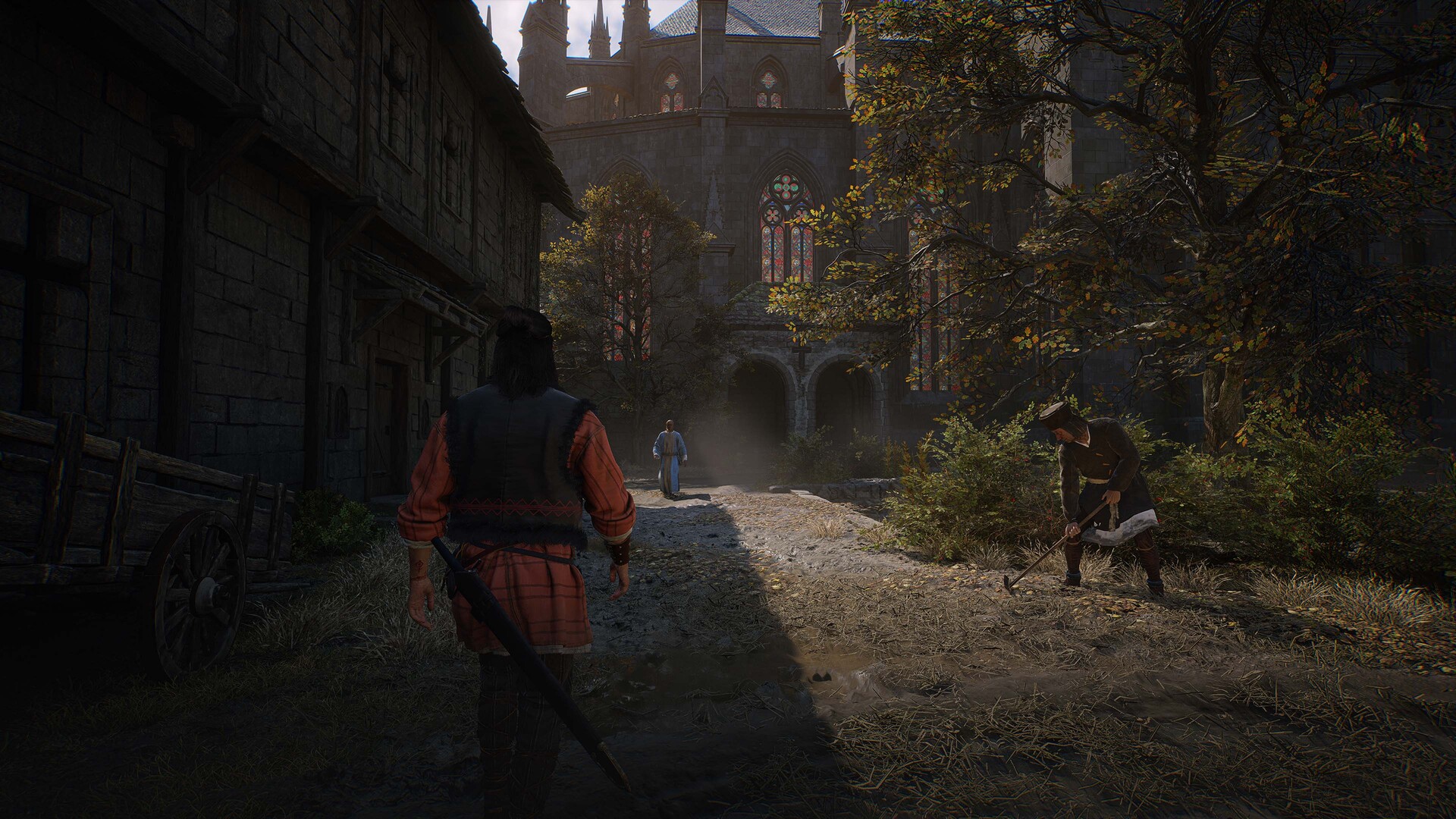
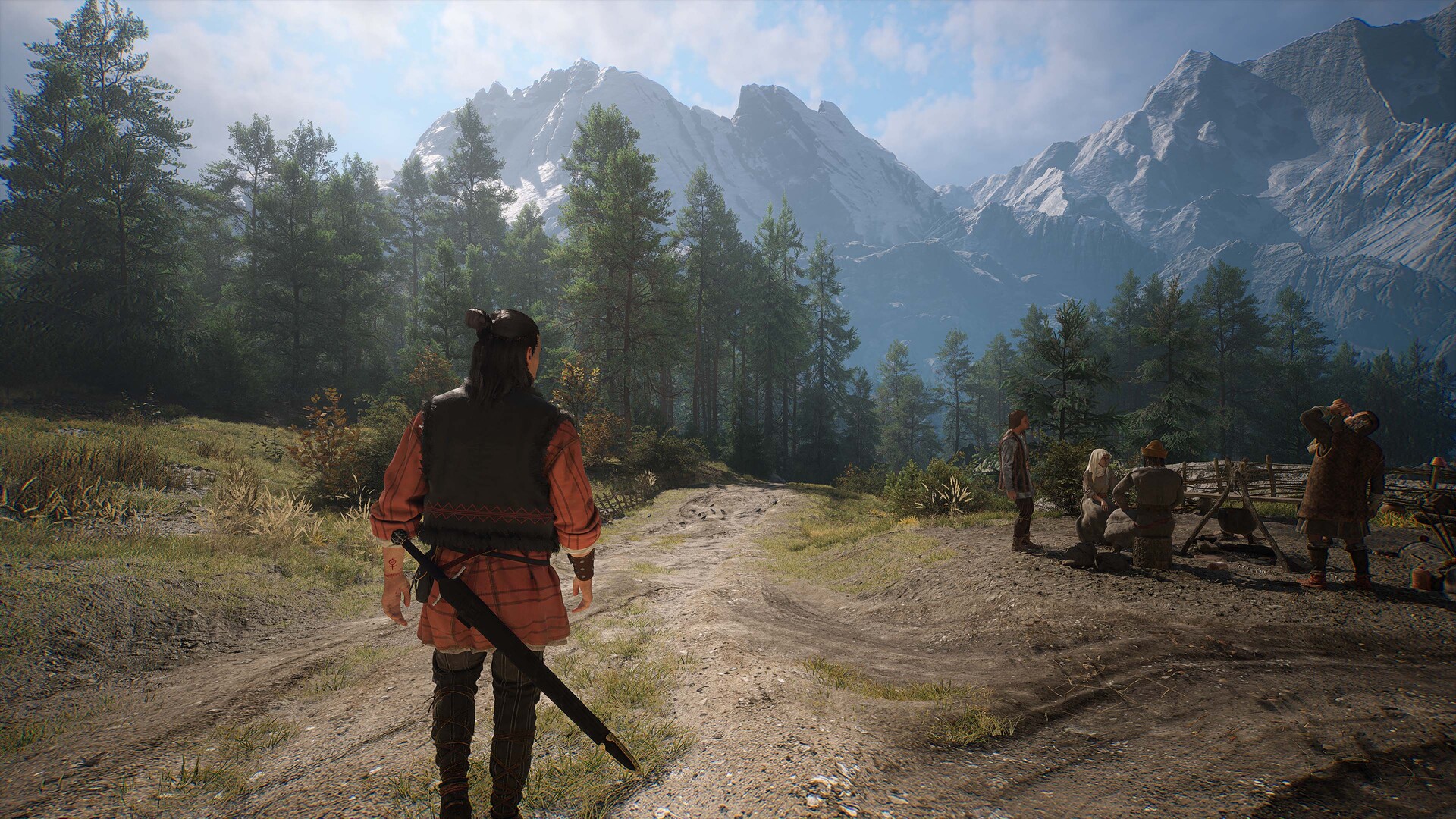
The seasonal closure of the gorges is geography rather than a convenience of the plot. A Carpathian valley reachable only in summer is an ordinary enough thing; what is unusual is who took advantage of it.
The Carpathian setting transforms between day and night. During the day the valley reads as a living medieval world of markets, craftsmen and travellers. At night it becomes hostile territory held by vampires and their agents, and Coen's own transformation follows the same clock: human by day, vampiric after dark. Vertical spaces, and the rooftops of the capital in particular, only open up once he has his night abilities. See Vampire Combat and Night Abilities and Dawnwalkers.
This page deliberately stops at the mountain range and the century. The named places inside the valley have pages of their own.
Place | Page |
|---|---|
The valley as a whole, its regions and its politics | |
The only true city | |
The wealthy district under the castle | |
The poor quarter | |
The castle on the crags | |
The mines that drew settlers to the valley |