Loading...
Loading...
Law System
March 14, 2026 at 01:01 PM
Added 7 internal cross-links
Crimson Desert has a law system that tracks criminal behavior across Pywel's towns and cities. Harmful actions toward residents and their property have real consequences, ranging from fines to imprisonment. Pearl Abyss has described the system as "another piece of the combat and progression puzzle" rather than a simple morality meter. Criminal behavior offers temporary strategic advantages but generates escalating risks.
Before committing crimes against NPCs, players must first equip a criminal mask. This mask serves as a gameplay gate: pickpocketing, attacking civilians, and other criminal actions are only available while wearing it. The mask must be acquired during gameplay, though the specific method of obtaining it has not been detailed. Removing the mask returns the player to normal NPC interactions.
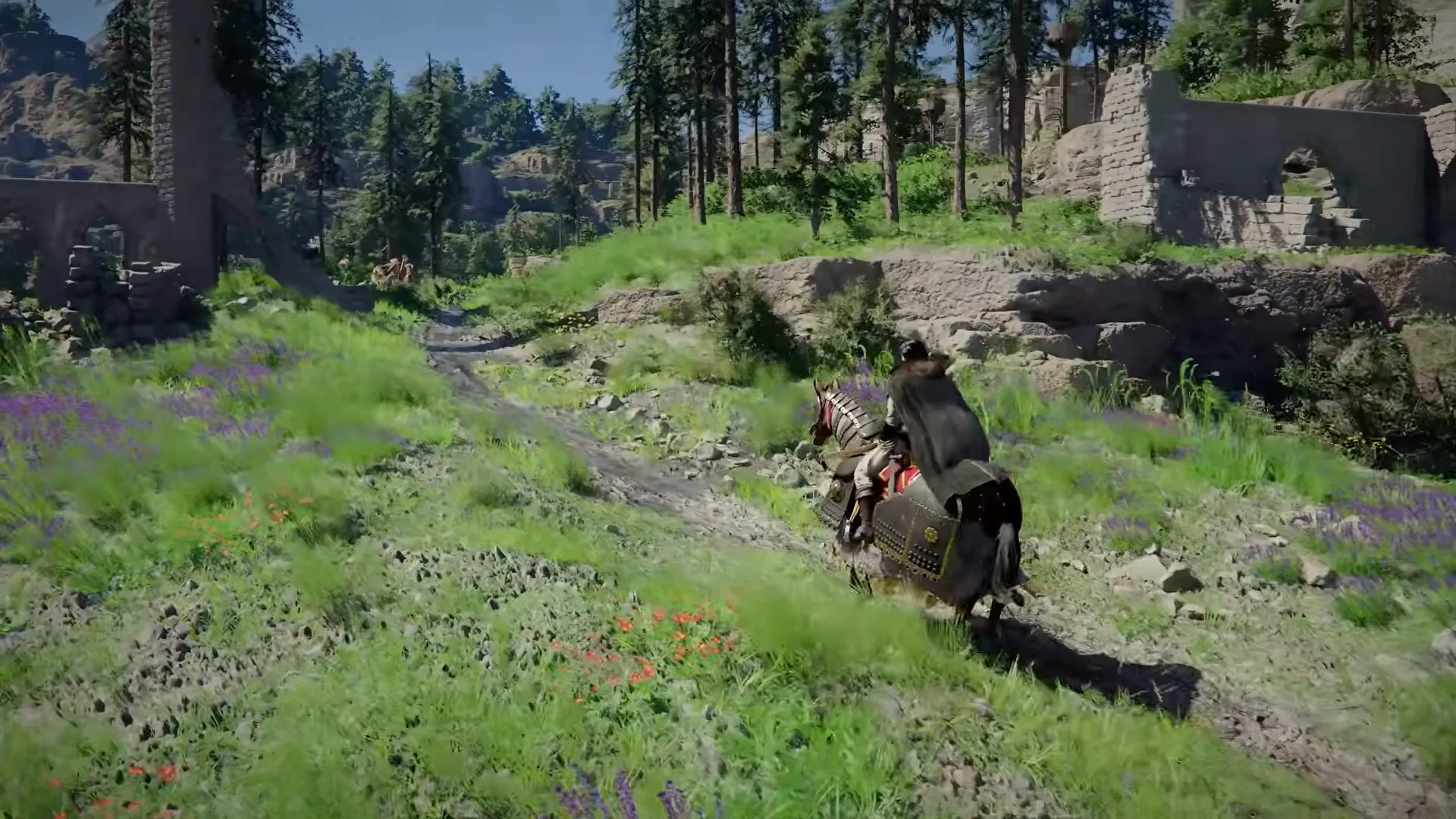
The following actions are recognized as crimes. Criminal activity escalates from petty theft through intimidation to full-fledged violence.
Crime | Description | Contribution Penalty |
|---|---|---|
Pickpocketing | Stealing directly from NPCs while wearing the criminal mask. Awards stolen goods such as coin pouches. | -5 Contribution EXP (minor) |
Theft | Stealing items from the world, including goods from vendor stalls. Even taking something as small as a piece of dropped fruit triggers a red "Crime: Theft" overlay on screen. | -5 Contribution EXP (minor) |
Threatening | A "Threaten" option exists under the NPC interaction menu, allowing players to intimidate NPCs for information or compliance. | Varies |
Bullying | An escalation step between petty theft and violence. Includes shoving and intimidation of civilians. | Moderate |
Assault | Attacking NPCs and civilians while wearing the criminal mask. Requires the mask to initiate. | -30 Contribution EXP (serious) |
Horse theft | Kicking someone off a carriage and stealing horses. Shown in pre-release footage as an available criminal action. | Moderate to serious |
The escalation path typically follows: pickpocketing and stealing, then bullying and intimidation, then full-fledged conflict. Each step increases the severity of guard response and reputation penalties.
Crimes reduce Hernandian Contribution, a reputation metric that tracks the player's standing with regional factions. The HUD displays two metrics: Contribution (current standing level) and Contribution EXP (progress toward the next tier). Penalties range from -5 Contribution EXP for minor offenses like petty theft to -30 Contribution EXP for serious crimes like assault.
Low Contribution in a region restricts NPC interactions and limits access to certain towns or services. Vendor prices increase, quest availability changes, and some NPCs refuse to deal with the player entirely. Positive actions like completing quests, paying alms, and helping NPCs rebuild the Contribution over time.
Committing a crime places a bounty on Kliff's head. A wanted poster appears on screen showing the character's face and the current bounty amount. The wanted posters are rendered as individual sheets with full paper physics when inspected. Repeated offenses raise the bounty value, making guards and residents progressively more aggressive.
A "Bounty Notice" marked "Arrested" appears in the top-right corner of the screen when crimes are committed. Bounty status persists until cleared through arrest, paying fines, or other means. While wanted, active bounty status affects NPC interactions and restricts access to certain towns and services.
When crimes are committed, guards and patrols become hostile. The system deliberately creates overwhelming opposition: players face dozens of enemies simultaneously when wanted, making escape difficult without serious preparation. Guards have sophisticated detection capabilities beyond standard vision cones, described in hands-on previews as possessing impressive awareness at range.
With a high enough bounty, an entire town can turn hostile. Both civilians and guards refuse to deal with the player, and guards actively attempt to arrest or fight the player. The number of guards that respond is deliberately overwhelming, so fighting through a wanted situation is rarely viable.
If guards take Kliff down, the player is arrested and placed in a wooden holding cell. Serving jail time clears the current bounty, though the player loses time in the process. Getting arrested is one of the primary ways to clear wanted status for players who cannot afford to pay fines. Specific details about sentence duration, inventory impact, and escape mechanics have not been fully detailed in pre-release coverage.
Several methods exist for dealing with an active bounty.
Method | Details |
|---|---|
Pay the fine | The simplest approach. Pay off the bounty to clear wanted status immediately. The amount depends on the severity of accumulated crimes. |
Serve jail time | Being arrested and serving time in a holding cell clears the bounty. You lose time but keep your progress. |
Leave the area | Leaving the affected region and returning later may allow the situation to cool down, though this is less reliable than paying or serving time. |
Unlike a simple morality system, Crimson Desert's crime mechanics can be used strategically. Pearl Abyss has confirmed that players can gain additional attack power based on negative notoriety. Specific gear pieces have attack bonuses tied to the player's wanted level, meaning that notoriety "can contribute to raising your damage if you have the right gear equipped."
The developers rejected a traditional good/bad path system. Instead, criminal behavior offers temporary combat advantages but generates escalating risks from guards, bounties, and restricted access. Pearl Abyss has confirmed that the main story is built around Kliff and the Greymanes as central figures. Since the Greymanes "aren't inherently villains," there is no long-term story impact from pursuing a criminal playstyle. When asked about a full evil playthrough, developer Will Powers commented: "Would I recommend a full playthrough in that playstyle? Eh, I don't know."
The game features full stealth mechanics with enemy vision cones visible on the minimap and silent takedowns. Stealth allows players to approach crime more carefully, though hands-on previews noted that guards proved difficult to avoid due to their detection range. Players can also hogtie and deliver captured criminals or enemies for bounty rewards, serving as bounty hunters themselves.
Players can participate in the law system from the other side by accepting bounties from wanted posters on notice boards in towns. Bounty hunting involves tracking down the target, knocking them out, and carrying them to a guard to turn them in. Finding a guard while carrying an unconscious bounty target can be tricky, adding a practical challenge to the process.
The villages and cities feel alive with NPCs reacting to unlawful behavior. Harmful actions against innocents turn residents and guards hostile, while accumulated criminal history affects how NPCs interact with the player over time. Notably, some NPCs can pickpocket the player as part of the living world simulation, turning the crime mechanic in both directions.
Save before experimenting with crime. The consequences are real and can lock you out of vendor access in a town you need.
Guards are numerous and tough. Trying to fight your way out of a wanted situation is rarely worth it unless you have specific notoriety-boosting gear.
The regional reputation hit from crimes affects vendor prices, quest availability, and NPC willingness to interact.
If you accidentally commit a crime, paying the fine immediately is usually the cheapest option before the bounty escalates.
Consider keeping notoriety-scaling gear in your inventory if you plan to use the crime system strategically for combat bonuses.