

The story of Cinder City unfolds in a post-apocalyptic, alternate-history version of Seoul, picking up roughly nine months after an apocalyptic event quarantined the city. The setting is defined by a striking premise: 23rd-century technology intersects with the 21st century, layering advanced machinery and futuristic systems over a recognizable modern city. Against this backdrop, players take on the role of a futuristic knight whose personal quest drives the narrative. This page covers the world, its premise, and the central story hooks shown so far.
An Alternate-History Seoul
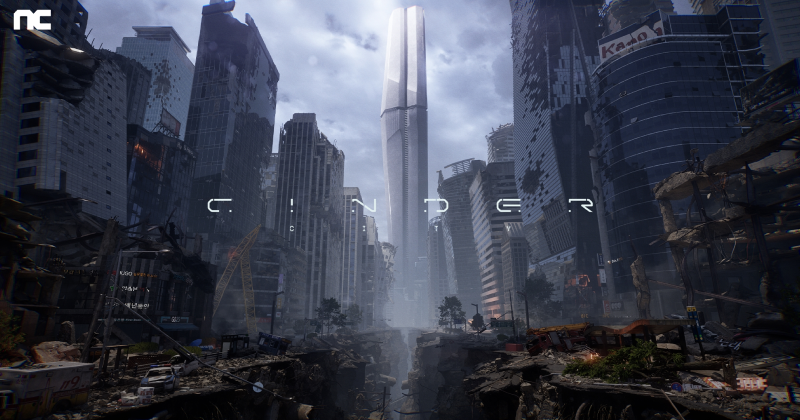
Rather than inventing a wholly fictional location, the game reimagines Seoul itself. The city has been reshaped by apocalypse and by the arrival of technology far ahead of its time, producing a world where the familiar and the futuristic exist side by side. Real-world signage and Korean cameos surface throughout the showcased builds, including “safety first” signs and references to Seolleung Station. The alternate-history framing means real places anchor the experience, grounding the science-fiction elements in a city players may recognize. The physical layout of this world, including specific districts and the open world's scale, is detailed on the Seoul Open World page.
23rd-Century Technology Meets the 21st
The defining concept of the setting is the collision of two eras. The studio traces the world's backstory to a single event in the 23rd century that alters the course of 21st-century history, leaving Seoul in ruins. In Bae's framing, a catastrophic event caused spacetime itself to mix, and large mega-corporations evacuated the city to somewhere safer. From their distant refuge they manufacture weapons and machines and smuggle them back to armed factions still active in the ruins, fuelling the conflict the player walks into. The result is a world where advanced machines, including the giant mechs encountered in combat, feel at home among the modern streets and structures left behind. NCSOFT returned to that backstory in a cinematic trailer premiered on August 25, 2026, presented as a prequel that follows a single character through the collapse of the 21st-century world. The studio frames the 92-second piece as an introduction to the core worldview and the start of the narrative, and describes the ruined capital it depicts as a dystopian Seoul.
The Futuristic Knight
Players step into the role of a Knight, officially called a Cinderknight, a cybernetically enhanced super-soldier whose suit clears hazardous areas for regular fighters. The Knight framing pairs naturally with the game's emphasis on grounded combat and high-stakes encounters, casting the player as a capable figure navigating a dangerous world. The first hero shown by name, Seven, carries the campaign demo, dropping into Seoul “Crysis style” in the opening cinematic before the hands-on begins. A second hero, Angel, was first revealed in the November 14, 2025 NC Cinema trailer alongside three other heroes standing against a giant boss. Two further heroes, Arang and Zaiper, have also been named in pre-launch coverage, with roughly eleven heroes appearing across the concept artwork revealed so far.
The Search for a Missing Daughter
At the heart of the narrative is a deeply personal hook tied to the first playable hero: Seven is searching for his missing daughter, Joi, a quest that opens in the Samseong-dong district. That quest gives the campaign emotional weight and a clear driving purpose that runs beneath the larger conflicts of the world. The search frames the early hours through the city, and per the studio is intentionally left unresolved at the end of Seven's 5 to 6 hour campaign so the conclusion can play out in the shared open world rather than the tutorial-style story mode. Each hero is being designed with their own perspective and storyline within the same Seoul setting, with the city itself treated as a single narrative space that different characters illuminate from different angles.
Brutal Choices
The story is framed around brutal choices. As players pursue their goal, they face difficult decisions that fit the harsh, post-apocalyptic tone of the setting. The combat options reinforce this tone: a downed enemy can be finished with a bullet, kicked while incapacitated, or spared and walked past, with the choice left to the player. The emphasis on hard choices suggests a narrative that does not shy away from consequence, asking players to weigh their options in a world where easy answers are scarce.
Threats in the World
The Seoul of Cinder City is contested by several distinct factions and lifeforms. Armed human “rebels” backed by smuggled mega-corp gear roam the surface and serve as the most common open-world enemy. Mechanical threats range from squad-sized walkers up to the giant mech bosses showcased in the Opening Night Live trailer. Indoors, in lightless areas like abandoned hospitals and subway tunnels, players face Creatures, mutated humans that have transformed into close-range monsters and are vulnerable to fire. The criminal side of the conflict has a named face in the Hyde group, cast as a maniacal organization that stands among the principal human threats alongside the roaming rebels. For named G-STAR encounters and how the different enemies behave in combat, see Combat and Gunplay.
Tone and Themes
Taken together, the post-apocalyptic alternate history, the clash of centuries, the Knight protagonists, and the personal stakes of each hero establish a tone that is both grand and intimate. The studio has described the genre on-site as a “cinematic tactical shooter” to underline the narrative weight it wants the campaigns to carry. The world is vast and dangerous, yet the stories stay focused on individual missions. For how this setting connects to moment-to-moment play, see Gameplay Overview, and for a general introduction to the game see Cinder City.