

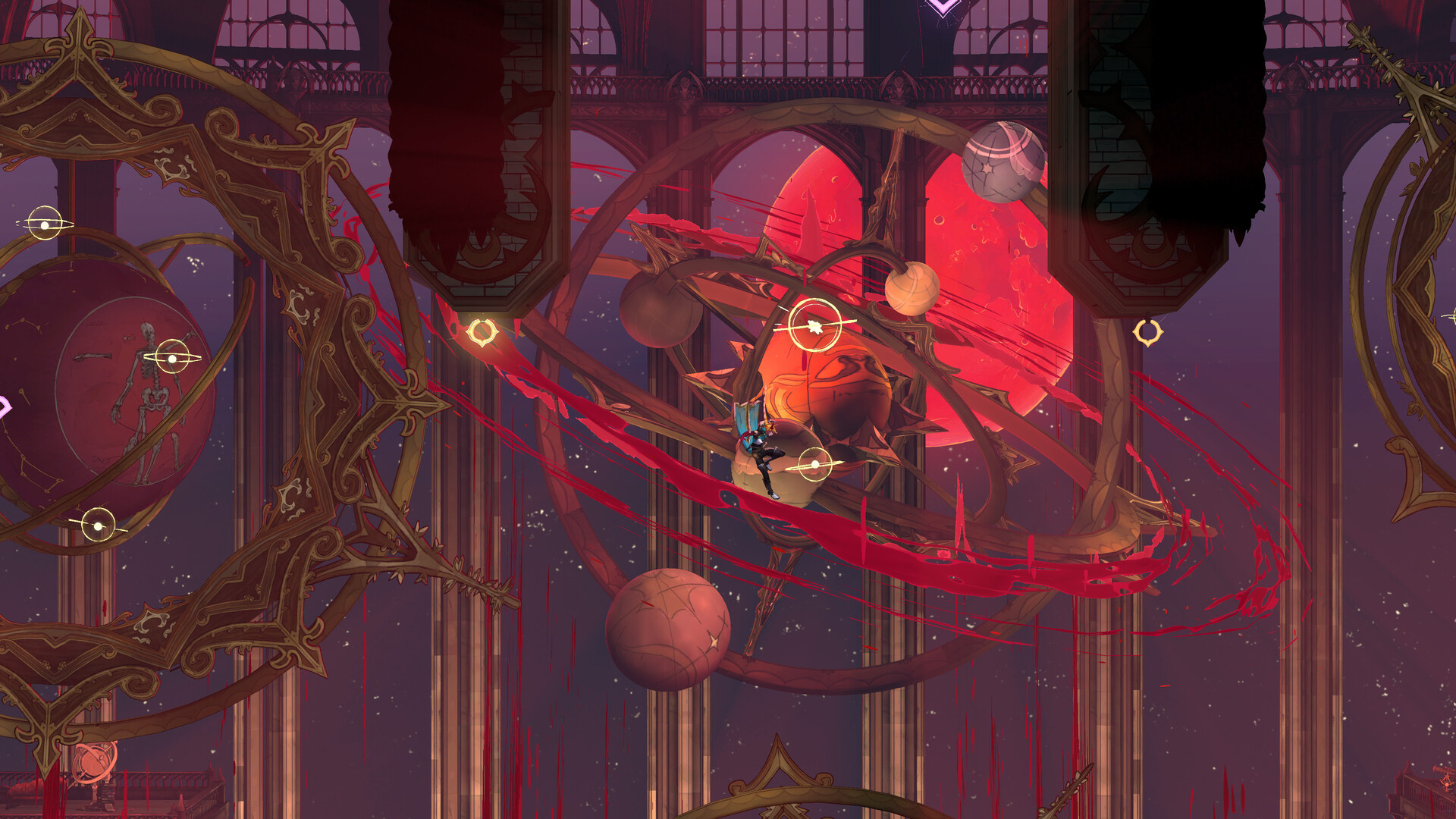
Castlevania: Belmont's Curse is built around one large connected map rather than a sequence of stages. Paris opens up around Rose as she gains abilities, and the game shows her places she cannot reach yet long before she can reach them. Konami's own framing is a massive map with destructible secret walls and clearly visible areas that stay inaccessible until a particular skill is in hand.
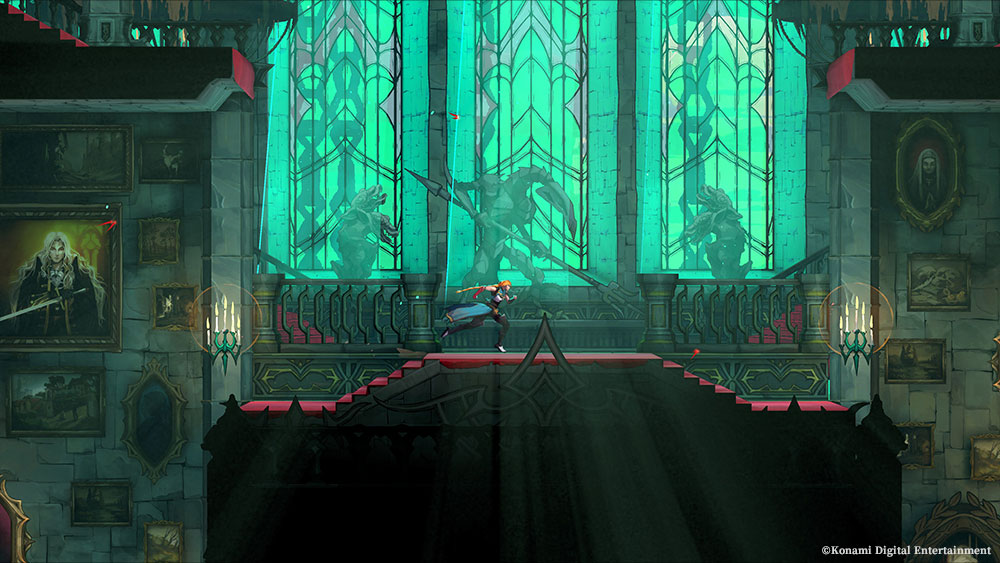
The map is non-linear and large enough to get lost in. There are no waypoints and no guide arrows anywhere in the game. Direction comes from the level design itself, from the clues spirits give out, and from a colour scheme that gives each district its own palette so players can orient by what a place looks like.
District Colours
Per-district colour identity is a deliberate navigation device rather than decoration. The palettes confirmed from the preview build:
Area | Palette |
|---|---|
The burning streets | Orange and pink |
Church gardens | Green |
The Catacombs | Blue |
Ancient Roman ruins | Yellow and green |
The prison tower | Bright yellow |
Secrets and Optional Content
The city hides several distinct categories of thing, and they are not all the same kind of secret.
Secret type | What it holds |
|---|---|
Cracked walls | Break when struck. Common in the streets of Paris. |
Illusory walls | A separate category from breakable ones. |
Alternate routes | Routes back through areas Rose has already crossed. |
Optional zones | Whole zones off the critical path. |
Challenges and encounters | Optional platforming challenges and long combat encounters that pay out real rewards rather than filler. Most Relics come from these. |
Navigation puzzles | Side areas built as puzzles that end in a chest. |
Hidden food | Health-restoring meat behind breakable walls. |
Enemies double as traversal geometry. Any enemy can be grappled, and some secrets are only reachable by using one as a swing point, which means a room can be a platforming puzzle and a fight at the same time.
Mirror Rooms and Checkpoints
Mirror rooms are the save points. Saving at one also restores health and refills the three healing flasks, and it respawns the enemies and resets the collectables in the surrounding area, so a mirror is a reset as well as a rest. Checkpoints are separate and generously spaced through each area, and passing one refills flasks as well.
There is no meaningful penalty for dying. Rose returns to the nearest checkpoint, the enemies come back, and nothing is lost. Fast travel points exist and are labelled on the map screen alongside the save rooms.
Markers and the Map Screen
The map supports player-placed custom markers. Nouaille has described the moment the design clicked for the team as the moment he instinctively opened the map to mark areas he knew he would come back to once he had new abilities, and said that was when they stopped testing mechanics and started playing a Castlevania game.
Movement That Opens the Map
A wall jump, a floor slide and a ledge grab are available from the start. The whip swing arrives after the first major boss and turns the vertical layout into something Rose can cross directly; see Whip and Traversal for anchors and grappling. There is no double jump in the preview build, though the level design points at spaces one would open, and the team declined to confirm whether it exists. Dodging, invincibility frames and the backflip belong to the fight rather than the map and are covered on Combat and Controls.
Verticality
The stated design intent is a city crossed from below the streets to the rooftops, with interior and exterior spaces linked into each other rather than kept apart. In practice that means the sewers, the catacombs beneath the city, the streets, the interiors of towers and churches, and the roofs above them all connect. Places are listed on Setting and Locations.
The Three-Key Gate
The opening section resolves into a single structural lock. Three bosses hold three keys, and those keys open one large door into the Catacombs. Opening it is where the July 2026 hands-on build ended, and the team has said that build is the opening of the finished game.
Beyond that point the shape of the game is not public. Nouaille has said that everything changes once the player reaches the castle and that he hopes the new structure surprises people, so the layout described here should be read as the first stretch of the game rather than as the whole of it.