

Overview
The tradition of ghost-eating is one of the most distinctive and visceral aspects of Zhong Kui's mythology. From the founding legend of Emperor Xuanzong's Dream through centuries of painting, woodblock prints, and folk literature, Zhong Kui is depicted more than defeating evil spirits but physically consuming them. He tears ghosts apart, gouges out their eyes, swallows them whole, minces them, and pickles them. This tradition directly informed the Chinese New Year 2026 Video for Black Myth: Zhong Kui, which reimagined ghost-devouring as elaborate cooking.
The Founding Image
The ghost-eating motif originates in Emperor Xuanzong's dream. When the large ghost (Zhong Kui) seized the small ghost thief in the dream, the specific action described was that he "gouged out its eyes with his right index finger and swallowed them." This is not ambiguous. The very first appearance of Zhong Kui in recorded mythology involves him eating part of a ghost.
Court painter Wu Daozi's famous painting, commissioned immediately after the dream, established this image as canonical. The composition showed Zhong Kui grabbing a small ghost with his left hand while his right index finger gouges out the ghost's eyes. Every subsequent depiction of Zhong Kui carries this DNA.
Evolution in Art and Literature
Over the centuries, the ghost-eating motif grew more elaborate and more grotesque. In various literary and artistic depictions, Zhong Kui:
Tears ghosts into chunks and eats them raw
Swallows small ghosts whole, live and struggling
Minces ghost-flesh with his sword before consuming it
Pickles ghosts in jars for later consumption
Gouges out eyes as a preferred delicacy
Devours ghosts by the handful during feasts attended by his demon retinue
The escalation served a purpose. The more thoroughly Zhong Kui destroyed evil spirits, the more effective he was as a protective symbol. A figure who merely defeated ghosts might let them return. A figure who ate them ensured permanent destruction.
Protective Folk Traditions
Zhong Kui's ghost-eating image became a protective talisman in Chinese folk religion. During the Lunar New Year, portraits of Zhong Kui were hung on household doors to ward off evil spirits. The practice began at the imperial court, where Emperor Xuanzong bestowed Zhong Kui paintings on ministers at year's end, and spread to common people over subsequent dynasties. By the Song dynasty and beyond, mass-produced woodblock prints of Zhong Kui had become standard New Year decorations.
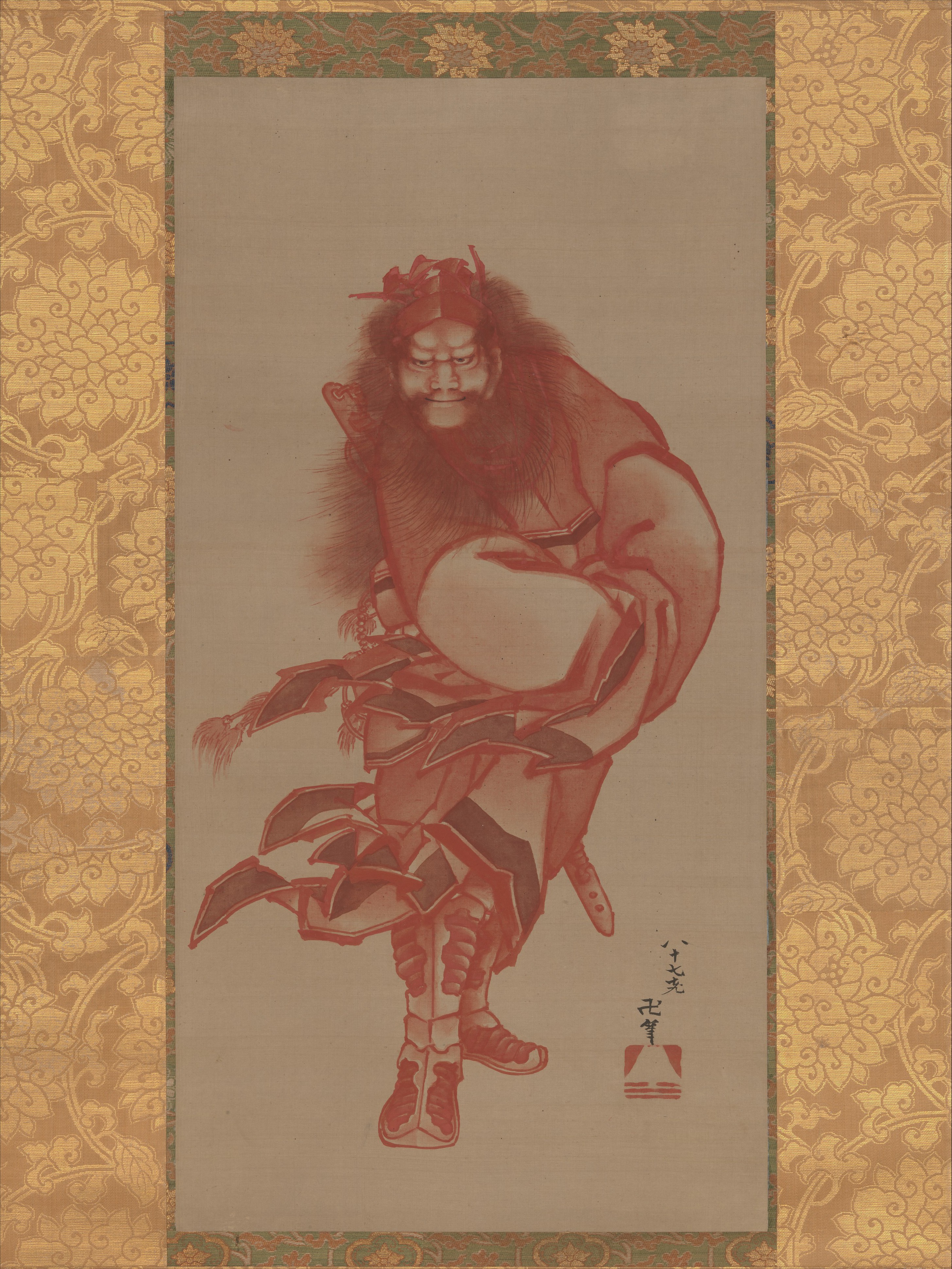
The fifth day of the fifth lunar month (Dragon Boat Festival) was another occasion for displaying Zhong Kui images. In Chinese folk belief, ghosts fear the color red, so Zhong Kui is often depicted wearing red clothes in prints intended for domestic protection. The ghost-eating imagery reinforced his role as guardian: this is a being that both confronts evil and consumes it entirely, leaving nothing behind.
Zhong Kui in art
The ghost-eating theme appears across major works of Zhong Kui painting. From Gong Kai's Yuan dynasty handscroll showing captured demons being carried off (presumably to be eaten) to Qing dynasty prints showing Zhong Kui mid-feast, the motif persists for over a thousand years. Different eras and different artists emphasized different aspects of the consumption: some focused on the violence of the act, others on the festive, almost celebratory atmosphere of the ghost-eating banquet.
The CNY 2026 Video
The Chinese New Year 2026 Video released by Game Science takes the ghost-eating tradition and reinterprets it as literal cooking. Instead of Zhong Kui tearing ghosts apart with his hands, a woman prepares yaoguai in a kitchen: dicing meat with blinking eyes, chopping a giant grasshopper, using a demon baby for herb harvesting. The final product is served as a bowl of monster ramen.
Producer Feng Ji called the short a "Zhong Kui experiment on the tip of the tongue," language that frames cooking as a direct extension of the ghost-eating mythology. Whether this translates into a Cooking System in the actual game is unconfirmed, but the thematic connection is deliberate.
Timing and Symbolism
The video's release during Chinese New Year was intentional and loaded with historical resonance. For centuries, invoking Zhong Kui during the Lunar New Year was a way to cleanse the home of evil spirits and ensure a safe year ahead. Game Science released their ghost-cooking video on February 10, 2026, during the New Year holiday, connecting their marketing to a folk tradition that stretches back to the Tang dynasty. The message was clear: this game understands its source material, and it is willing to lean into the stranger, darker corners of Zhong Kui's mythology.