

This article is incomplete
Some sections are missing or need additional details. Help improve it by contributing.
Overview
The cooking system is a speculated gameplay mechanic in Black Myth: Zhong Kui, teased through the Chinese New Year 2026 Video released by Game Science on February 10, 2026. The six-minute in-engine short depicted an elaborate sequence of yaoguai (monsters and spirits) being prepared as food, drawing a direct line between Zhong Kui's mythological habit of devouring ghosts and a potential in-game crafting or buff system. Whether cooking will actually appear as a playable mechanic remains unconfirmed.
The Chinese New Year 2026 video
The video opens on a woman in a rustic kitchen surrounded by supernatural ingredients. Over six minutes, she prepares a feast using yaoguai parts and whole creatures. The scenes are graphic and deliberate: slabs of meat with blinking eyes are diced on a chopping block, a giant grasshopper is chopped apart with steady precision, and a tiny demon baby is used as a living herb harvester, plucking ingredients with its small hands. The sequence builds toward a final dish that appears to be a bowl of monster ramen, steam rising off a rich broth thick with unidentifiable cuts of spirit-flesh.
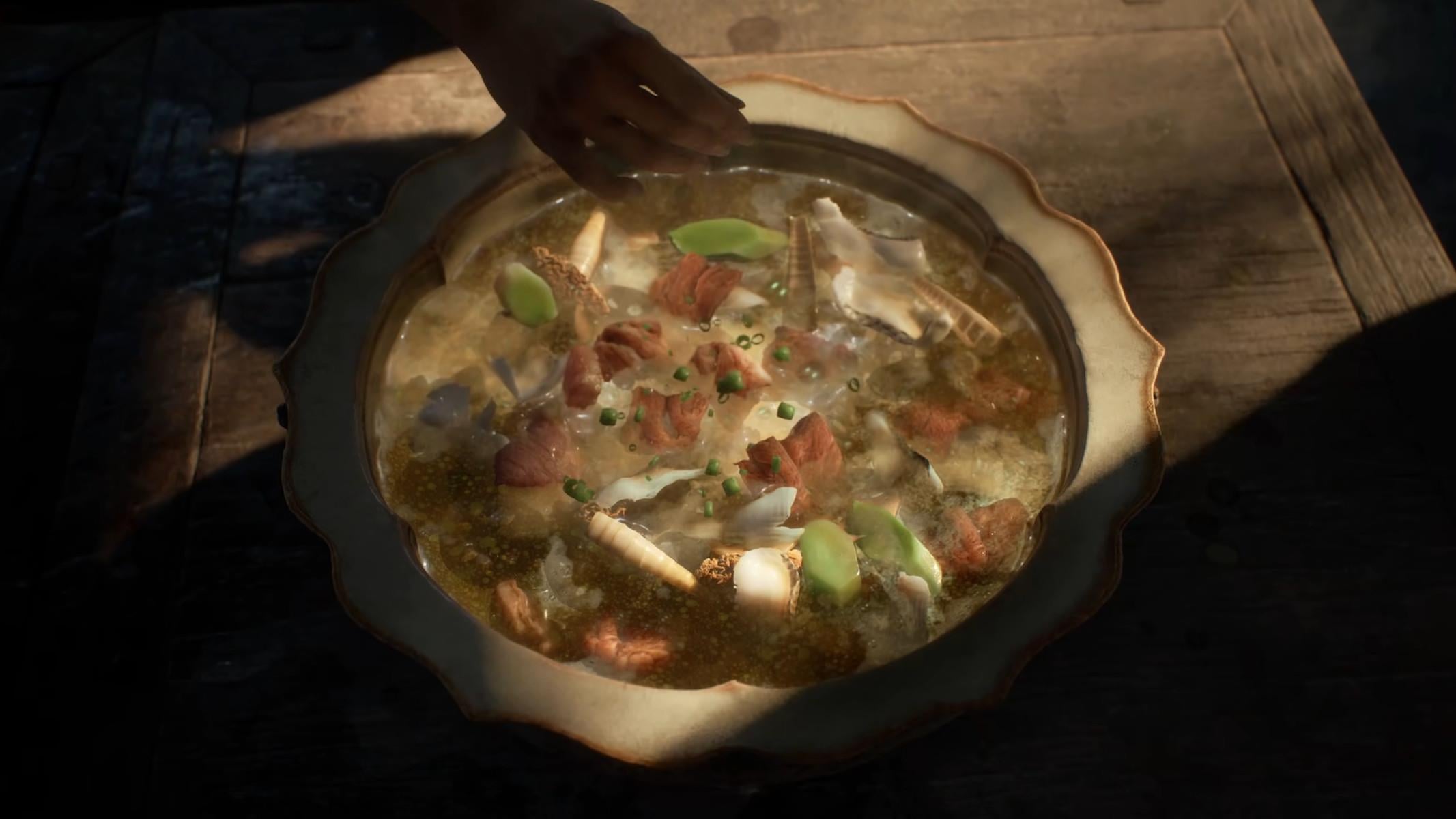
The meal is served to a hooded figure seated at a wooden table. His identity is not revealed. The camera lingers on the bowl, the chopsticks, the steam. The tone is oddly domestic, almost tender, set against the grotesque reality of what the food actually is.
Producer Feng Ji described the short as a "Zhong Kui experiment on the tip of the tongue," language that explicitly frames the cooking imagery as connected to the game's identity. He suggested the final product will combine monster hunting with cooking in some form, though he stopped short of confirming specific mechanics.
Non-Canon Disclaimer
Game Science attached an explicit label to the video stating it was "non-canon and for entertainment purposes only" and that it does not represent confirmed gameplay. This is an important caveat. The video may be a thematic exploration, a mood piece, or a proof of concept rather than a preview of a finished system. Everything described here should be understood as speculative until Game Science confirms otherwise.
Mythological Roots
The cooking imagery is not arbitrary. It draws directly from Zhong Kui's mythology, where ghost-eating is one of his defining traits. In the foundational legend of Emperor Xuanzong's Dream, Zhong Kui seizes a ghost thief, gouges out its eyes, and swallows them whole. Across centuries of folk literature and art, the ghost-eating motif escalated: Zhong Kui tears ghosts into chunks, minces them, pickles them for later consumption, and devours them by the handful. He does not merely defeat evil spirits. He eats them.
This positions cooking as a natural extension of the character's identity rather than a bolted-on survival mechanic. If Zhong Kui eats ghosts in mythology, then preparing ghost-meat as food in the game is a logical creative choice.
Comparisons to Other Media
Several outlets compared the video's tone and premise to the anime and manga series Delicious in Dungeon (Dungeon Meshi), which follows a party of adventurers who cook and eat the monsters they encounter in a dungeon. Both properties treat monster cuisine with a mix of horror and culinary reverence. The comparison is surface-level, since Zhong Kui's ghost-eating tradition predates the manga by centuries, but it does help frame the concept for audiences unfamiliar with Chinese folklore.
Potential Gameplay Implications
If cooking does appear as a gameplay system, several forms are plausible based on the video and on established action RPG conventions:
Mechanic | Effect |
|---|---|
Buff crafting | Preparing meals from defeated yaoguai parts to gain temporary stat boosts or elemental resistances before difficult encounters. |
Resource loop | Hunting specific monsters to harvest ingredients, creating a reason to revisit earlier areas and fight particular enemy types. |
Health restoration | A cooking-based healing system as an alternative to traditional potions or resting mechanics. |
Narrative integration | Cooking as a story device, possibly tied to feeding souls, interacting with NPCs, or progressing through specific questlines. |
None of these are confirmed. The game is very early in development, and the cooking imagery may evolve, shrink, or disappear entirely before release. What is clear is that Game Science considers the ghost-eating theme central enough to Zhong Kui's identity to build an entire promotional video around it.
Timing and Tradition
The video's release during Chinese New Year was not coincidental. For centuries, Zhong Kui portraits have been hung on household doors during the Lunar New Year as protective talismans. Emperors bestowed Zhong Kui paintings on ministers at year's end. Releasing a Zhong Kui-themed video during this period connects Game Science's marketing to a folk tradition that stretches back to the Tang dynasty.