

Who is Zhong Kui
Zhong Kui (钟馗) is a deity in Chinese Taoism and folklore, regarded as a vanquisher of ghosts and evil spirits. He is called the "Demon Hunter" (捉鬼天师) and the "King of Ghosts" (鬼王). In Black Myth: Zhong Kui, he gives the game its name, a shift from the Monkey King of the first game to a very different kind of mythological figure. Game Science has not said who the player controls: the studio refers only to "the protagonist" and has never named that character. The distinction matters here, because in the first game the player does not control Wukong but the Destined One, so a title naming a mythological figure does not by itself settle who is played.
Origin Myth
The earliest extant account of the Zhong Kui legend appears in the Bumenxi Bitan (Supplementary Notes to Dream Pool Essays) by Northern Song polymath Shen Kuo (1031-1095), written around 1088-1095 CE. The story involves Emperor Xuanzong of Tang (reigned 712-756 AD).
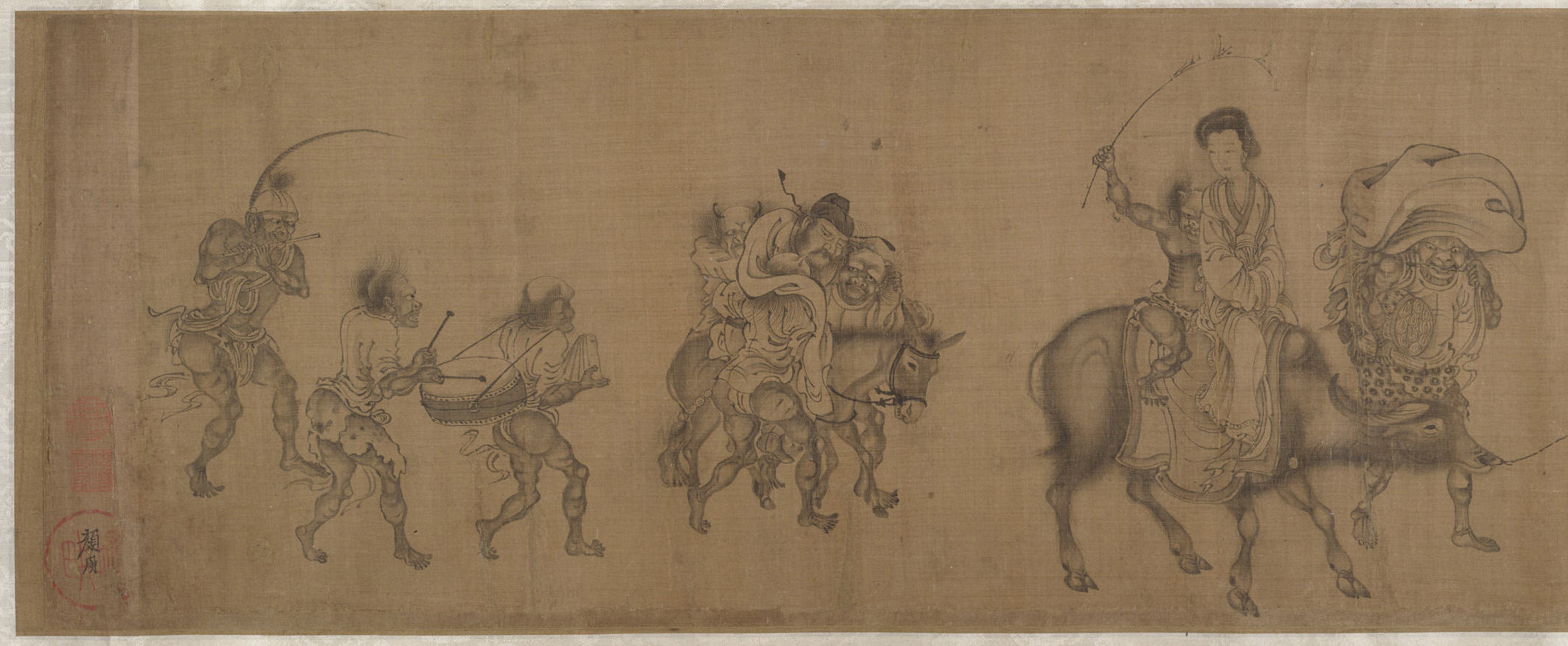
According to this account, Zhong Kui traveled to the Tang capital Chang'an with his friend Du Ping to sit for the Imperial Examinations. He received the highest score, earning the title of Zhuangyuan (top scholar). But the emperor stripped him of honors because of his disfigured appearance. Described in various sources as having a square face, fish-like eyes, and unkempt hair. Humiliated, Zhong Kui killed himself by repeatedly hurling himself against the palace steps until his head was broken.
After death, he entered Youdu, the capital of the Chinese underworld. Yanluo Wang (the King of Hell) recognized his intelligence, bravery, and sense of justice. Rather than condemning him, Yanluo Wang granted Zhong Kui the title of "King of Ghosts" and tasked him with hunting demons and maintaining order among the dead.
Emperor Xuanzong's dream
The story that made Zhong Kui famous throughout China involves Emperor Xuanzong's illness. During the Kaiyuan reign, the emperor returned from supervising military exercises on Mount Li, fell ill with malaria, and remained unwell for over a month. One night he dreamed of two ghosts.
The first was a small ghost called Xuhao ("wasteful expenditure"), wearing red trousers, shod on one foot with the other shoe dangling from his belt, carrying a bamboo fan. This ghost snatched Consort Yang's purple sachet and the emperor's jade flute and ran about the hall. Then a larger ghost appeared: a massive figure in a battered official's cap and tattered blue robe, one sleeve stripped away, both legs bound in hide, hair disheveled, beard bristling. He seized the small ghost, gouged out its eyes, and swallowed them whole.
The emperor asked who he was. The figure replied: "My humble name is Zhong Kui. Once a failed candidate in the imperial military examination during Emperor Gaozu's Wude reign. I dashed my head against the palace steps and died. Emperor Gaozu bestowed upon me a green robe and honorable burial. In gratitude, I swore to rid Great Tang of every Xuhao ghost."
Xuanzong woke drenched in sweat, his malaria cured. He summoned the court painter Wu Daozi (regarded as the greatest Tang dynasty painter, known as the "Painting Saint") and commanded him to paint Zhong Kui's image exactly as seen in the dream. Wu's painting was so accurate that the emperor marveled: "It seemed wrought from firsthand sight." Xuanzong then issued an imperial edict commanding his subjects to hang Zhong Kui's portrait at New Year. The tradition spread throughout China.
Powers and Abilities
In mythology, Zhong Kui commands over 80,000 ghosts and demons. He is law enforcement for the spirit world. Hunting rogue ghosts, capturing escaped demons, and maintaining order between Youdu and the mortal realm. His traditional weapons are a ghost-slaying sword (specifically a Dipper Sword (七星剑) engraved with the Big Dipper constellation) and sometimes a fan with a red bat perched on its tip (the bat, 蝠 fu, is a homophone for fortune, 福 fu).
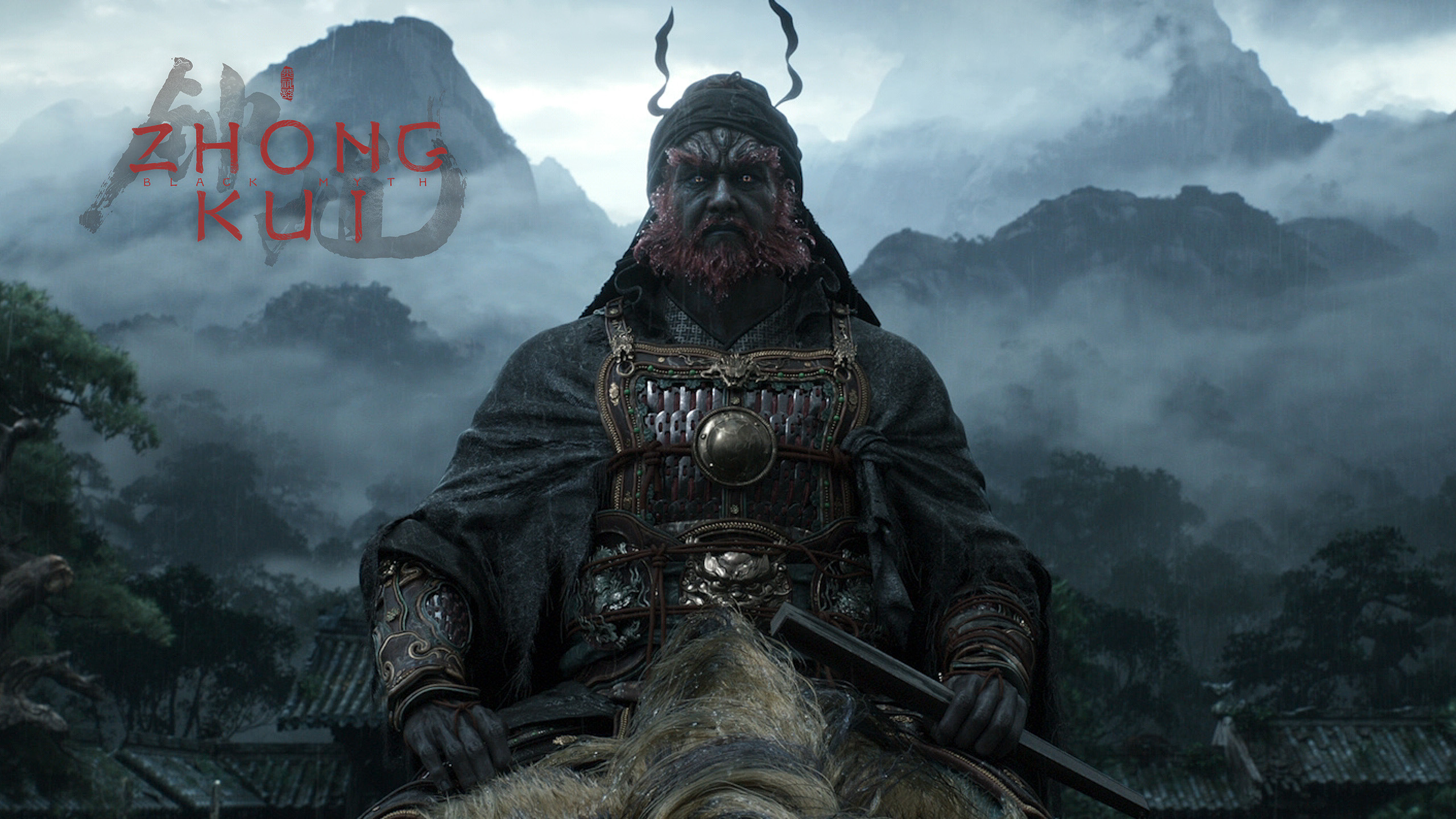
He often travels with a retinue of smaller ghosts and demons who serve as attendants. The Gamescom trailer showed these attendant goblins carrying Zhong Kui's massive sword for him. A detail pulled straight from classical paintings. He was also shown riding his signature tiger mount.
Appearance in the Game
Game Science's version of Zhong Kui keeps his traditional black beard but modernizes the rest. In the Gamescom trailer, he wears blue-black mechanized armor with shoulder guards designed after the flying eaves of Tang Dynasty Chang'an architecture. His face is partially obscured, and the design is darker and more armored than the traditional robed figure.
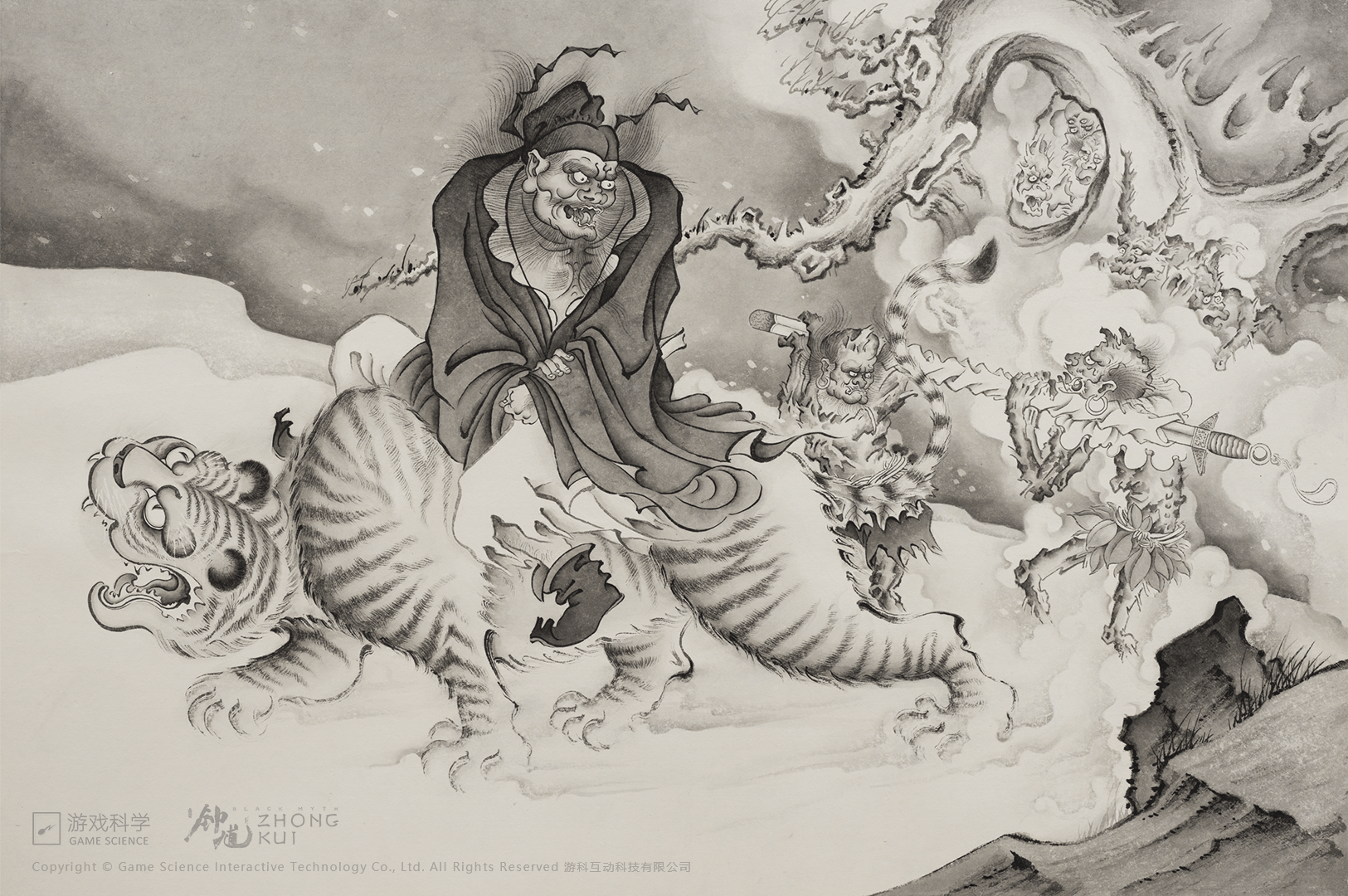
Yang Qi, Game Science's art director, conceived the character after dreaming of "a strange man with a black face and a red beard" on a balcony. He identified the image as matching Ming dynasty depictions of Zhong Kui riding a tiger.
Cultural Significance
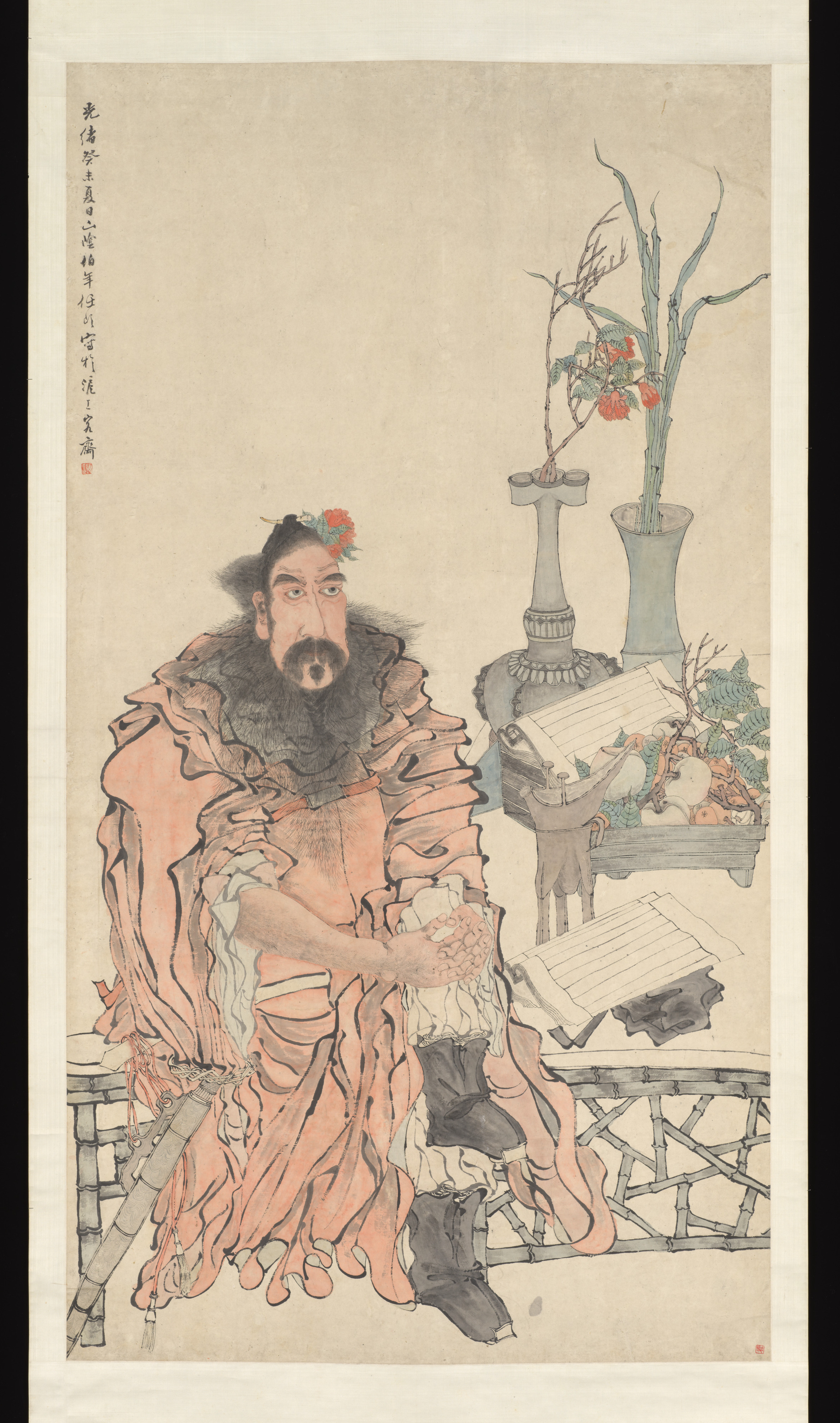
Zhong Kui's image has been displayed in Chinese households for over a thousand years, typically near doorways to ward off evil spirits. He is especially prominent during Lunar New Year and the Dragon Boat Festival (Duanwu), when painting Zhong Kui with cinnabar at noon is believed to ward off evil. Paintings, woodblock prints, and porcelain figures of Zhong Kui remain common across China, Taiwan, and other East Asian countries. In Japan, he is known as Shoki (鍾馗).
One theory traces his name to an ancient Shang dynasty (~1600 BCE) exorcism tool. Originally a mask called "zhongkui" used to repel evil spirits, which eventually evolved into a hammer and then a personified deity. His dance tradition originated from Nuo dance (傩舞), an ancient ritual for expelling plagues. The earliest Chinese exorcism dance bronze mask, from the Western Zhou Dynasty (~3,000 years old), is preserved in Henan Yuzhou.
In the Song and Yuan periods, Daoism formalized Zhong Kui's status, honoring him as "Sage Lord Who Bestows Fortune and Guards the Household." Despite his massive cultural footprint in East Asia, he is far less known internationally than Sun Wukong. Black Myth: Zhong Kui is the first major AAA game to center on this character.
See also: Zhong Kui in Art, Zhong Kui in Other Media.
Key Relationships
Du Ping Zhong Kui's closest friend. After the suicide, Du Ping arranged a proper burial. Zhong Kui later gave his sister in marriage to Du Ping as an act of gratitude.
Yanluo Wang The King of Hell who appointed Zhong Kui as King of Ghosts. Where the living emperor rejected Zhong Kui for being ugly, the King of Hell appointed him for being capable.
Zhong Kui's sister (阿妹, Amei). In Ming dynasty plays, she married Du Ping at Zhong Kui's arrangement. The famous painting tradition "Zhong Kui Marrying Off His Sister" (钟馗嫁妹) depicts this ghostly wedding procession.