Loading...
Loading...
Character Classes
August 18, 2026 at 03:25 AM
Removed Ashley from the playable Hero list, noted that Cinderella's class has never been published and that the Outlaw label belongs to her banner Motive, and corrected the composition notes that treated Resonance as a party bonus
Every playable character in Silver Palace has a class attribute that broadly defines their role. Six classes exist: Hero, Guardian, Outlaw, Victim, Saviour, and Witness. The class affects a character's base stats, their position in team composition, and potentially their synergy with Catalysts and Resonance effects.
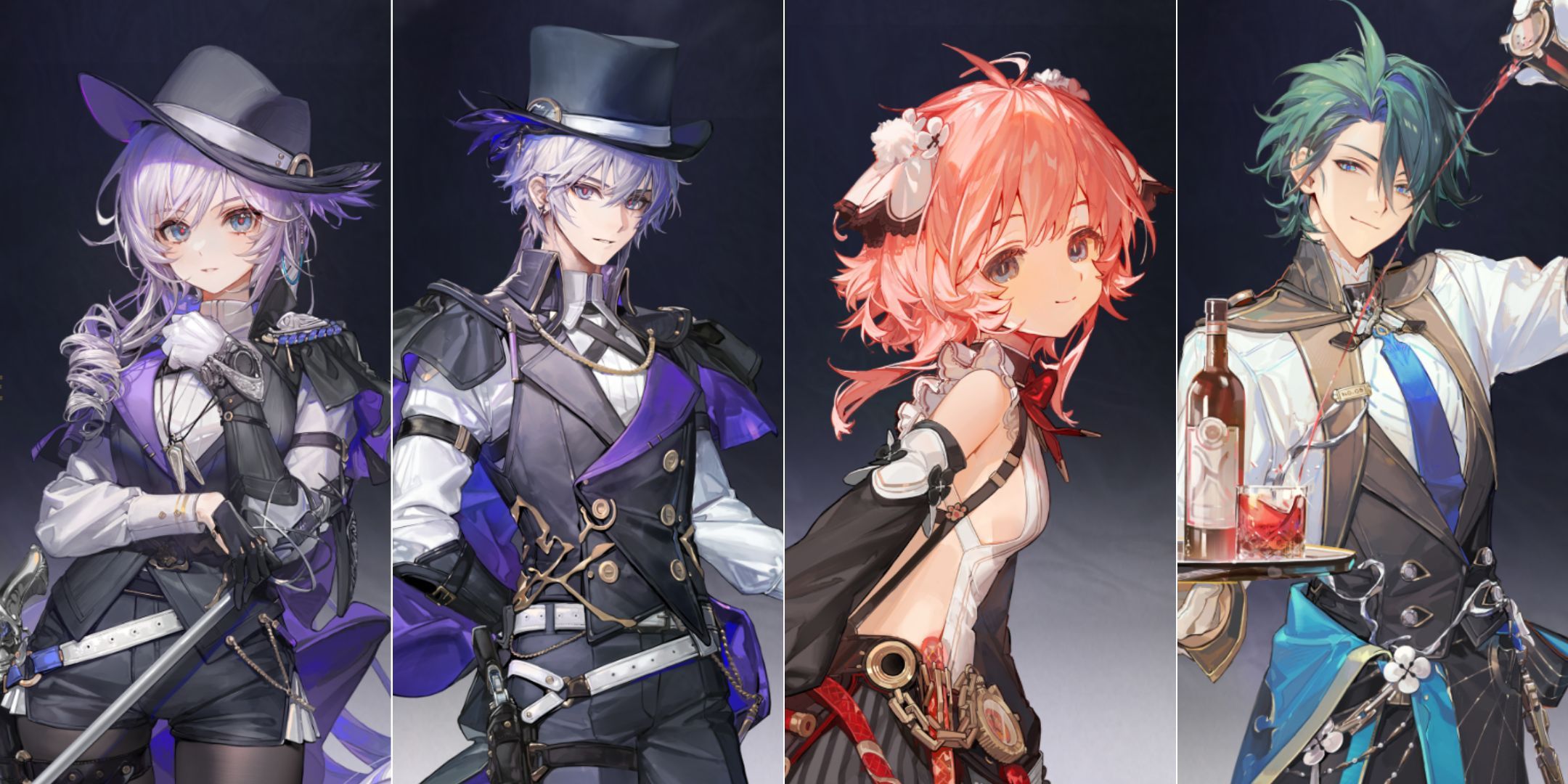
The Hero class is associated with damage dealing. Characters with this attribute include the Detective, Cinderella, and Alf. Hero-class characters tend to have aggressive movesets with high damage output.
Guardians are durable front-line characters. Lorin and Firtho are both Guardians. They have enhanced durability compared to other classes and can absorb damage while protecting squishier teammates.
Witnesses fill support and utility roles. Argos and Cynthia II are Witnesses. The class name may connect to the investigation theme, suggesting these characters contribute to evidence gathering or have unique dialogue options during cases.
These three classes have been named in beta data but no playable characters with these attributes appeared in the Monotype Beta. Their gameplay effects and role definitions are unknown. The class names follow a detective fiction naming convention, with each term relating to a role someone might play in a criminal investigation.
With four party slots and six classes, players can mix different class types for varied team strategies. A balanced team might include one Hero (DPS), one Guardian (tank), and two Witnesses (support), but the flexible party system allows for any combination the player prefers.
The following observations come from the seven characters playable during the Monotype Beta (January 13 to 18, 2026). Outlaw, Victim, and Saviour archetypes had no playable carriers and are described elsewhere only by name.
Class | Beta Carriers | Combat Pattern | Party Slot Notes |
|---|---|---|---|
High-output DPS, finisher-focused, scales with Silverdrip windows | Primary swap target; almost always slotted as the burst damage hub | ||
Tank durability, AoE crowd control or DOT pressure | Front-line; one Guardian per team is typical | ||
Support, buff propagation, off-element synergy | Flex slot; buff propagation makes it a natural partner for whichever character is carrying the fight | ||
Outlaw | None in beta | Unknown | No public detail; mechanics unconfirmed |
Victim | None in beta | Unknown | No public detail; mechanics unconfirmed |
Saviour | None in beta | Unknown | No public detail; mechanics unconfirmed |
Each character equips up to three Catalysts, and effective Catalyst loadouts trend toward the character's class profile: DPS Catalysts on Hero, mitigation Catalysts on Guardian, buff-and-trigger Catalysts on Witness. The Silverdrip System rewards swap-heavy play, so two-front compositions (Hero + Guardian) plus two Witness flex slots maximize Ambush windows.
Three party patterns dominated beta tier-list discussion:
Balanced Standard: Hero + Guardian + Witness + open slot. The most forgiving template for new players because it keeps each archetype represented and lets the open slot adapt to fight requirements.
Burst Rotation: Two Heroes + Witness + Guardian. Trades the second support for a second damage hub, which suits fights that reward committing to a long uninterrupted rotation.
Single Element: Same-element pairs or triples. Cinderella and Alf, both Ignis, were the most-discussed pairing during the first test. The draw is concentrated damage of one type rather than a composition bonus, since Resonance fires per character on that character's own Reactor attribute and does not check the rest of the party.
The Dichotomy Beta roster filled two of the three classes that had no playable character in the first test. Only Victim is still unrepresented.
Class | Playable carriers | Status |
|---|---|---|
Hero | The Detective, Alf, Rex | Established |
Guardian | Lorin, Firtho, Gratia | Established |
Witness | Argos, Cynthia II, Grimm | Established |
Outlaw | Bentham | First carrier in the second beta |
Saviour | Red Rose, Gucia, Captain Kaboom | First carriers in the second beta |
Victim | None | Named only; no playable character yet |
The distribution is informative on its own. Saviour picked up three carriers at once across three rarities and three elements, which suggests a broad support or sustain role rather than a niche one, while Outlaw arrived with a single four-star. Neither class has had its mechanical definition published, so the entries above record who carries them, not what they do. Cinderella, a playable five-star character in both closed betas, is deliberately absent from the table: no official listing has ever stated her class. The five-star Motive that shipped on her limited-time banner is labelled Outlaw, which is a property of the Motive rather than of the character, and community listings that give her an Outlaw identity appear to have taken it from there.
The class system's deeper mechanics are not yet public. Outstanding questions include: do classes affect base stat curves uniformly across rarities; do certain Catalysts only trigger for specific classes; can Outlaw, Victim, and Saviour characters carry the same elements as confirmed classes or are some element-class combinations exclusive. Future beta rounds or launch documentation should clarify these.