

The campaign is the centerpiece of Warhammer 40,000: Dawn of War IV. It is built from more than 70 campaign missions spread across four full campaigns, one for each of the launch Factions. Every campaign can be played solo or in two-player co-op, and all four feed into a single overarching story set on the war-torn world of Planet Kronus. For the events and lore behind the campaign, see Story and Setting; for the named figures who drive it, see Characters.
Four Faction Campaigns, One Story
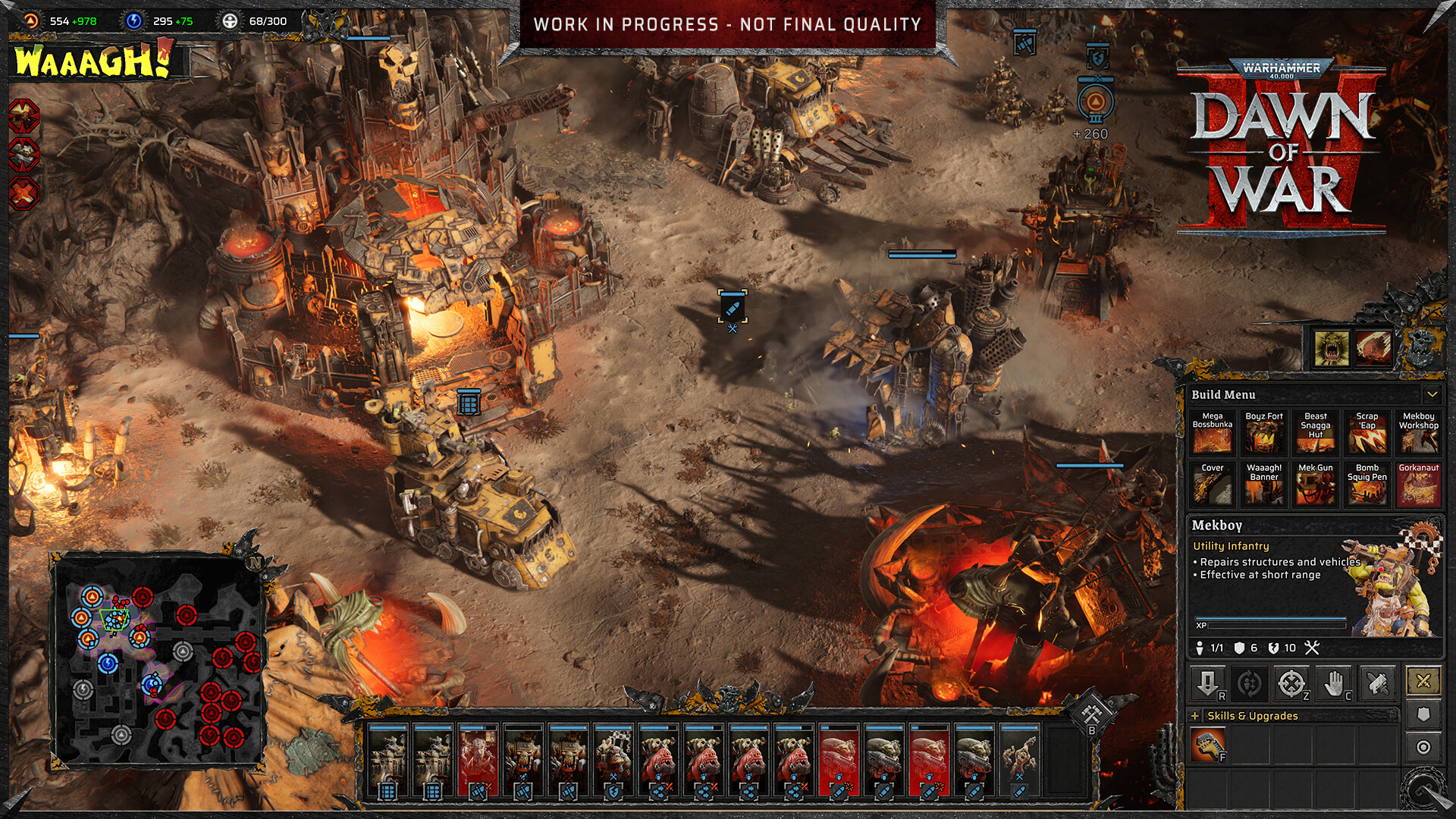
Rather than a single linear story mode, the game offers four complete campaigns, one each for the Space Marines, the Adeptus Mechanicus, the Necrons, and the Orks. Each campaign follows its faction's own perspective on the war for Kronus, yet all of them connect into one larger narrative. The result is that the same conflict can be experienced from four very different points of view, with each faction's story adding another layer to the events unfolding on the planet.
Campaign | Faction Perspective |
|---|---|
Space Marines campaign | The Blood Ravens, stranded on Kronus and rebuilding their Chapter, uncover a threat to the wider sub-sector. |
Adeptus Mechanicus campaign | An expedition pursues a discovery on Kronus that turns out to be far more dangerous than a tomb. |
Necrons campaign | The ancient Necrons awaken to the intrusion on their world and respond to the gathering factions. |
Orks campaign | A brutal, battle-hungry horde joins the fight for Kronus. |
Solo or Co-op
Every one of the four campaigns is fully playable solo or in two-player co-op. The campaign content does not change based on player count: the same missions, story, and structure are available whether you play alone or alongside a partner. This makes co-op a way to share the entire campaign experience rather than a separate side mode.
Non-Linear Structure and Choices
KING Art describes the campaign as non-linear with long-reaching decisions, meaning the choices players make can carry consequences across the story rather than affecting only a single mission. The studio has framed this as a campaign where decisions matter over the long run, not just moment to moment.
According to pre-release previews, the non-linear structure is built around a world map from which players pick the missions they take on. Those previews describe non-linear paths and side objectives, with player choices said to affect narrative elements and even which missions appear. Coverage also points to a choice of one of two Commanders for each campaign, letting players pick which battlefield leader they bring into the fight. These specifics come from pre-release coverage and should be treated as described rather than as finalized detail.
World map mission select: Pre-release previews describe choosing missions from a world map rather than a fixed mission order.
Non-linear paths and side objectives: Coverage describes branching routes and optional objectives within the campaign.
Choices that shape the story: Player decisions are described as affecting narrative elements and which missions appear.
Two-Commander choice: Each campaign is described as often offering a choice between one of two Commanders.
Who Writes It
The campaign's story is written by John French, an author for Games Workshop's in-house fiction imprint. KING Art confirmed this when it introduced the game's cast, alongside a reminder that the seventy-plus missions can be played solo or with a friend. The performers voicing those missions are listed on the Voice Cast page.
Cinematics
The campaign is presented with a heavy dose of cinematic storytelling. It features over 40 minutes of fully animated in-game cinematics, alongside a separate CGI intro for each campaign. Together these set the tone for each faction's story and carry the overarching narrative between missions.
Beyond the Campaign
The campaign is not the only way to play. The persistent Crusade Mode offers a separate meta-campaign centered on the fight for Planet Kronus, extending the war beyond the scripted story. For the full picture of how the campaigns connect and what is at stake, see Story and Setting.