

This article is a stub
It lacks sufficient information and needs to be expanded. You can help by adding more content.
WARDOGS does not explain itself in much depth, and several of its most important systems are easy to miss for the first few hours. This page is the short version of what a new player needs to know before the systems start paying off.
What Actually Wins a Match
One hundred players are split across three teams. Every thirty seconds, whichever team has the most players inside the Control Zone earns a point, and the first team to one hundred points wins. That is the entire win condition.
Two things follow from it, and they are the two things new players most often get wrong. First, the unit of scoring is players present, not kills, so standing in the zone doing very little contributes more than a high kill count somewhere the zone is not. Second, the count is taken again every half minute, so ground has to be held rather than taken. A squad that clears the zone and then leaves to chase kills hands the next tick straight back.
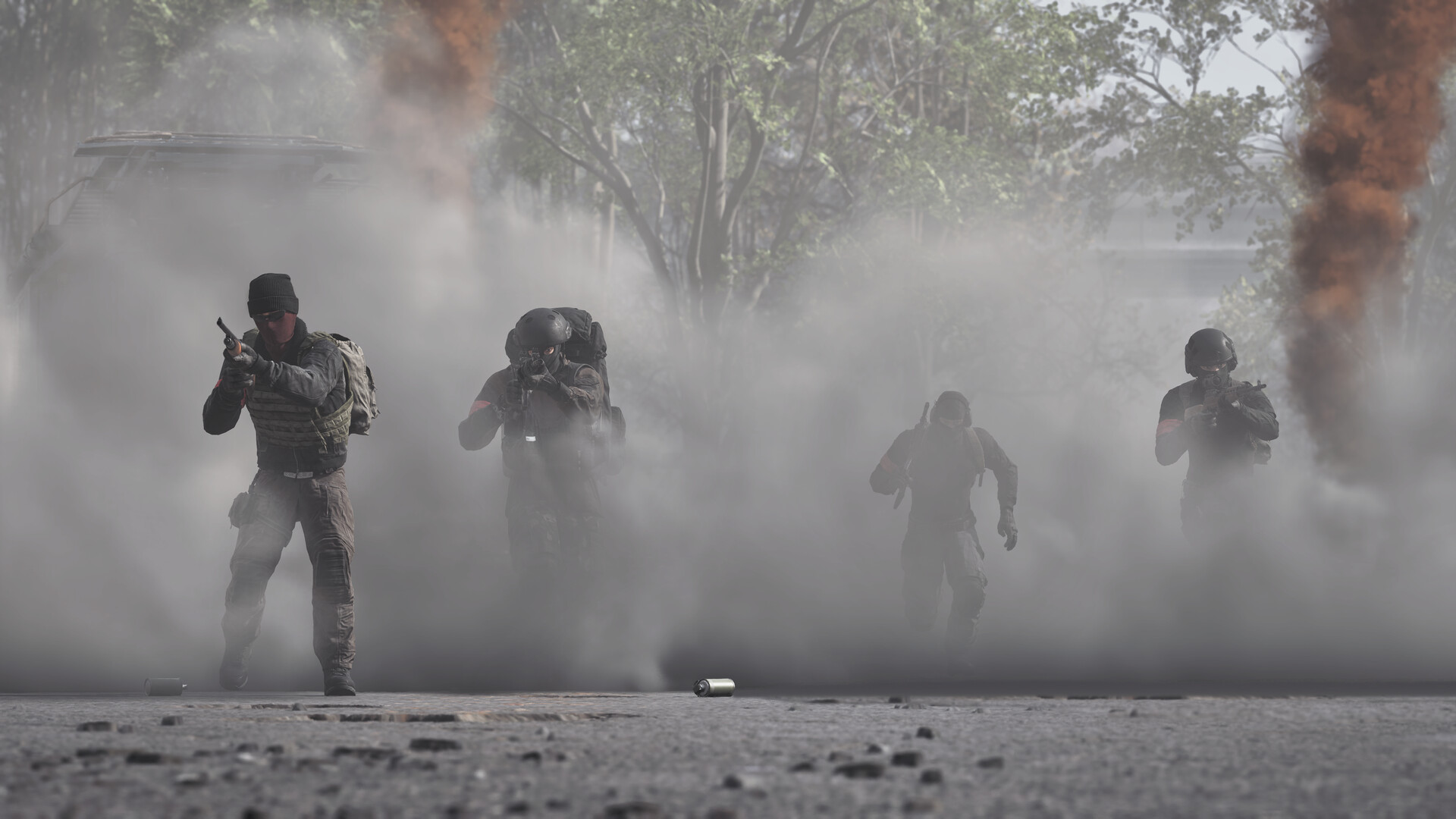
There Are Three Teams, Not Two
This changes almost every fight. While your team fights one enemy, the third is somewhere else, usually watching. Committing everything to one engagement is how a team loses the zone to a side that was not even in the fight. Sometimes the correct move is to let two enemy teams grind each other down and take the zone afterwards.
The three sides are Lonestar, Valkyra and Manticore. They play by identical rules with no asymmetric abilities, so a colour tells you who to shoot and nothing else. See Factions.
Your First Cash
Every account starts with $10,000, and the balance carries between matches rather than resetting. That makes early spending a real decision rather than a formality.
The most common early mistake is buying an expensive loadout, dying thirty seconds later, and having nothing left. A cheap reliable kit that does its job is usually the better buy. Save the large purchases for moments where they change something: your team needs anti-vehicle, needs transport, needs logistics, or is making a push that a vehicle would carry.
The other half of the economy is that teamplay pays. Reviving, transporting teammates, spotting, supplying and holding the zone all earn cash, and players can tip each other on top of that. A new account short on money will build a balance faster by ferrying people to the fight than by trying to win gunfights with gear it cannot afford. See The Cash Economy.
Picking a Job
There are no classes. You buy into a role each life, so the question is not what you are but what the team is missing right now.
If your team... | Buy |
|---|---|
Is short of bodies in the zone | A reliable primary, enough ammunition and basic utility. Get there and stay useful |
Keeps losing people it could have saved | Medical equipment. Keeping players on the objective beats walking them back to it |
Has no answer to enemy armour or aircraft | Anti-vehicle equipment. Nothing else in a kit substitutes for it |
Is spawning a long way from the fight | A transport vehicle. One of the best paid jobs in the game |
Needs to hold a chokepoint | Building equipment and a forward operating base |
Has plenty of everything | Optics and a marksman kit, used to spot and call targets rather than to farm kills |
Roles and the six progression tracks behind them are covered under Combat Roles.
Building, Briefly
Building runs through hammers, in three tiers, each unlocking more than the last. The thing worth knowing early is that building is not only about walls. The Large Hammer unlocks mortars, anti-air, repair and refuel stations, and drill rigs, and a drill rig can pull the Hot Zone toward ground your team already holds. A new builder who learns the drill rig contributes far more than one who spends a match putting sandbags down. See Fortifications and Structures and Towers and Drills.
The Hot Zone
Inside the Control Zone sits a smaller Hot Zone that moves during the match. Players in it count double toward their team's presence and earn double cash. Reading where it is drifting, and being there before it arrives rather than chasing it, is one of the clearer differences between new and experienced players.
Talk
The game uses proximity voice, and it is not restricted to your own team, so nearby enemies can hear you as well. Useful information is short: where enemies are, what vehicle is coming, which direction the push is from, whether you need a medic. Listening matters as much as talking, because gunfire, engines and footsteps arrive before the people making them do.
Common Early Mistakes
Mistake | Why it costs |
|---|---|
Treating kills as the score | The score is a head count in the zone taken every thirty seconds |
Spending the whole balance on one life | Cash carries between matches, so a bad buy sets back more than one game |
Taking the zone and immediately leaving | The next tick goes to whoever is standing there, not to whoever cleared it |
Forgetting the third team | Two teams fighting is an opportunity for the one that is not |
Driving a full transport into a prepared position | A vehicle is a large purchase and it takes its passengers with it |
Building a drill rig and never bringing fuel | Without fuel it does nothing at all |
Wandering off alone as a new player | Sticking with a squad means more firepower, more revives and faster learning |
Before You Buy
Two practical points that are not gameplay. The game is online only, with no offline or single player mode, so it needs a connection and a populated server. Linux is not officially supported: the developers have said Proton compatibility is still being worked on and have advised refunds for anyone who bought expecting it. Hardware requirements are under System Requirements.