
Building is one of the three things WARDOGS is built on, alongside the objective and the economy, and it is the one the game explains least. A player who buys a forward operating base without knowing what a hammer is will put walls up and wonder what they were for. This page covers the tools and the catalogue; the strategic picture is under Base Building and Destruction.
The developers have published the hammers, the forward operating base and the deployable munitions by name, and the Season 2 patch notes of 14 October 2026 added build costs for much of the catalogue. The structure table below was first documented by players from the launch build; where the studio has since named an entry, that is said.
The Three Hammers
Construction runs through a hammer, and there are three tiers of them. Each tier unlocks everything below it and adds its own options, and the higher tiers also build faster. Both the Medium and Large Hammers are bought, and the Large Hammer sits in two places at once: it unlocks on the Support track and is also sold by a vendor, at separate prices.
Hammer | Season 1 price | What it adds |
|---|---|---|
Small Hammer | Not published | Basic infantry protection: sandbag walls, barbed wire, simple barriers, small barrier blocks and observation structures |
Medium Hammer | $25,000 on the Support track | Everything above plus doors, gates, larger barrier walls, loudspeakers and the pieces needed for a proper perimeter |
Large Hammer | $75,000 on the Support track, $2,400 from a vendor | Heavy construction and the weapon emplacements: bunkers, recon towers, heavy walls, indirect fire shelters, mortars, anti-air and repair and refuel stations, plus drill rigs |
Both the Large Hammer vendor price and the forward operating base vendor price were raised when Season 1 opened, which the studio said it did specifically so that buying either would be more of a choice. The Medium Hammer went from $10,000 to $25,000 and the Large Hammer from $25,000 to $75,000 on the Support track in the same pass.
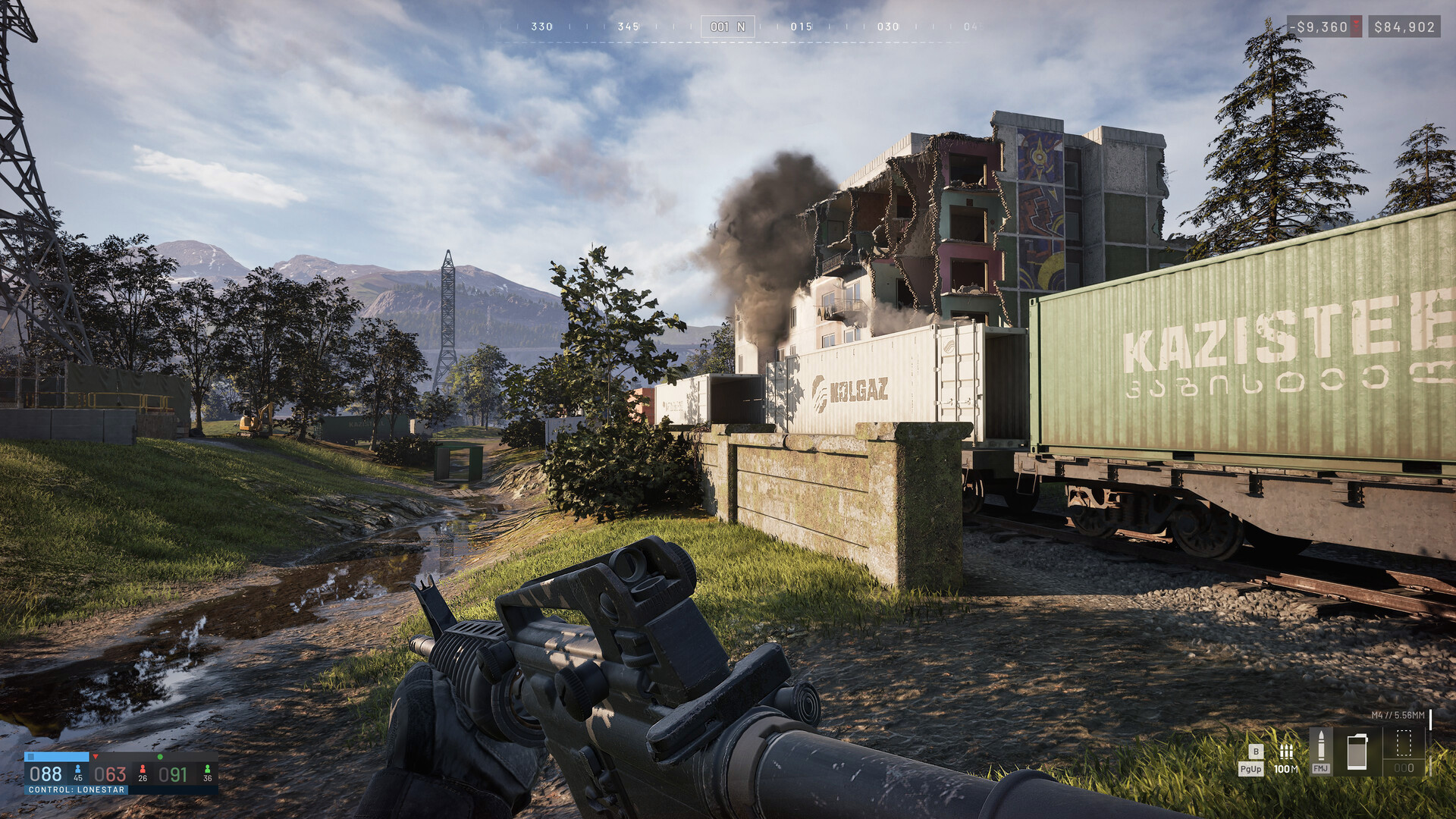
The Forward Operating Base
The forward operating base is the anchor everything else hangs off. It is bought from a vendor rather than unlocked on a progression track, and its price rose from $2,500 to $7,500 at the start of Season 1. A base supplies the structures around it, and the supply types are not interchangeable: fuel in particular is what powers a drill, so a base with a drill rig and no fuel is an expensive ornament.
Named Structures
The structures below are named by players from the launch build. They are grouped by what they do rather than by hammer tier, since the tier that unlocks each one is not published for every entry.
Category | Structures |
|---|---|
Infantry cover | Sandbags, barbed wire, hedgehogs, small and large barrier walls, heavy walls |
Perimeter | Doors, gates, bunkers |
Observation | Recon towers |
Indirect fire | L81 Mortar, indirect fire shelters |
Anti-air | Anti-air systems, surface to air missile systems, a close-in weapon system |
Logistics | Repair stations, refuel stations, supply crates |
Objective | Drill rigs |
Communication | Loudspeakers, used to broadcast faction propaganda |
Many entries in that table now appear in the studio's own text. A balance hotfix on 2 October 2026 named the CIWS, the close-in weapon system, and set it to destroy the Havoc in around 6 seconds instead of 12, after the studio said it had overcorrected in the patch before. The Season 2 notes then named the Vanguard CIWS, the Talon 9K-SAM, the L81 Mortar, the Stingray, the Hot Zone Magnet, the Bremmer wall, the crow's nest, the air raid shelter, the bunker, doors, gates, tank traps, barbed wire, sandbags, foundations, the repair and refuel station and the Drill Rig.
Mortars and Indirect Fire
The L81 Mortar is the shorter ranged half of the game's indirect fire, covering the ground the Artillery Tank cannot reach. Players report a range of up to roughly 700 metres, up to three shells loaded at a time, an ammunition cost of 30 supplies per shell, and a build cost of around 91 building supplies. Those are observed values rather than published ones, and the build cost in particular is out of date: the Season 2 notes give the mortar's build cost as 150 supplies in Season 1 and 600 from Season 2.
Because the game gives map coordinates, players range mortars by arithmetic rather than by walking rounds onto a target: marking the gun and the target, taking the difference in each axis, and treating the two as the sides of a right angle triangle. The advantage is not accuracy so much as concealment, since a ranging shot tells every enemy on the map roughly where the gun is.
Deployable Munitions
Separately from built structures, players can carry deployable munitions: 155mm and 122mm rounds and flares. All three were changed at the start of Season 1 to take up more room in a loadout, which made carrying them a real trade against the rest of a kit rather than a free addition.
Tearing Structures Down
Everything on this page can be destroyed, and the effort varies enormously by structure and by tool. Players have measured heavy barrier walls as taking several times the explosives that a gate does, with fragmentation grenades and grenade launchers being poor choices against anything substantial. The counterpart to building, and the weapons used for it, are covered under Base Building and Destruction and Loadouts and Arsenal.
Update 0.1.2 on 30 September 2026 changed two things about tearing structures down. Critical spots on buildables no longer reappear in the place a player has just hit, get pushed into corners or jump to the far side of a structure; they now favour a spot the player can reach from where they stand. Rewards for destroying a buildable now scale with how far it had been built, so destroying a freshly placed schematic no longer pays in full.
Season 2 Building Changes
Season 2, which went live on 15 October 2026, added three buildables and made a full pass on build costs, build speed and durability, aimed at making structures a considered investment rather than something to spam. The studio said the Talon, Mortar and Drill Rig were rebalanced to be slower to build and more expensive to keep active, without removing creative strategies or putting hard limits on what players can do.
Buildable | Description | Built with | Build supply cost |
|---|---|---|---|
MG Nest | A manned M2 Browning emplacement | Large Hammer | 650 |
Large Shelter | A large metal shelter for covering key assets or keeping the rain off | Medium Hammer and above | 250 |
Wooden Step | A step, made of wood | Small Hammer and above | Not listed |
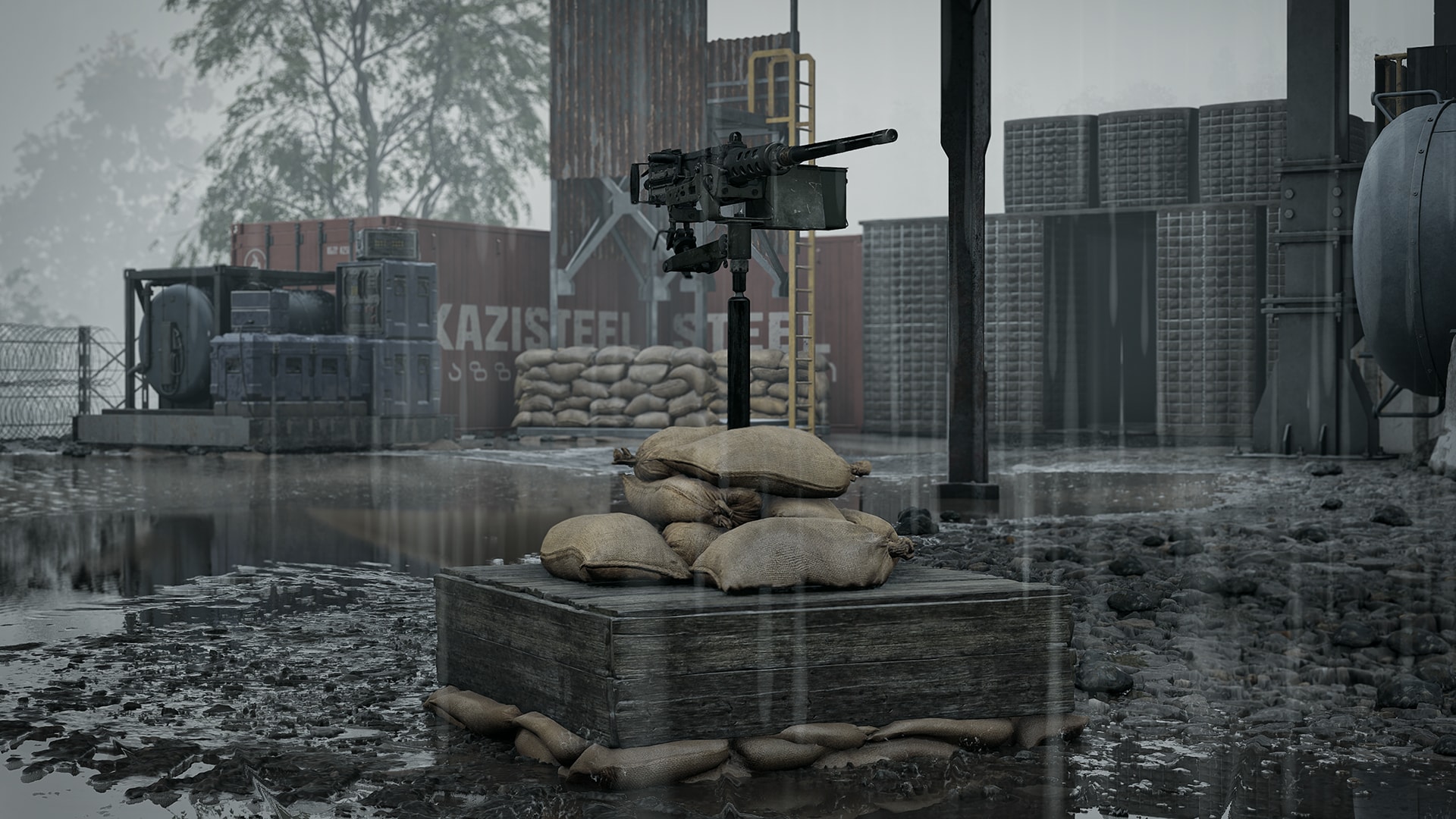
The shelter's description ties into the season's rain weather preset, which comes through roofs that have been destroyed.
Build Costs
Costs are in building supplies. Destroying a buildable now pays cash equal to its build supply cost, scaled by how far it had been built.
Structure | Season 1 | Season 2 |
|---|---|---|
Wood Base | Not listed | 15 |
Bremmer wall | 15 | 32 |
Door | 22 | 80 |
Gate | 85 | 200 |
Large Shelter | New | 250 |
Air raid shelter, bunker and crow's nest | 100 | 200 |
L81 Mortar | 150 | 600 |
Stingray | 150 | 650 |
MG Nest | New | 650 |
Talon 9K-SAM | 1,000 | 650 |
Vanguard CIWS | 1,500 | 1,200 |
Hot Zone Magnet | 2,250 | 2,750 |
Build Speed
The Medium Hammer contributes less per swing.
Critical spots give a smaller bonus than before.
The Large Hammer's build rate per swing is unchanged.
Weapon Emplacements
The Talon's reload rose from 2 to 5 seconds, and its restock from munition supplies from 50 to 200.
The Mortar's restock from munition supplies rose from 75 to 150, to cut the shots per pallet drop-off, and a new firing animation, with the shell dropped into the tube as it fires, slows its rate of fire.
CIWS cannon damage against structures was retuned: it now shreds light cover and struggles against heavy fortifications.
The Vanguard CIWS takes 2.25 times longer to destroy the Spawn Vehicle.
Drill Rigs
Drill rigs need 2,000 fuel to activate (was 1,500), run for a maximum of 300 seconds rather than 375, which the studio says matches the capturable towers, hold up to 10,000 fuel (was 7,500), and have a substantially longer cooldown after spawning, so a destroyed rig cannot be replaced at once. See Towers and Drills.
Other Changes
Barbed wire and sandbags can be placed on top of Bremmer walls.
Barbed wire no longer pays cash or XP for kills.
Foundations fit properly against slopes, stairs and walls.
Unfinished buildables collapse as soon as they lose a support instead of floating.
Tank traps can only be placed on a defined set of surfaces.
Doors and gates can no longer be breached with a hammer, while the Halligan Bar can now breach both.
Building for the Fight You Are Having
The practical advice players give each other is to build against the problem in front of them rather than to a template. Enemy helicopters call for anti-air, enemy armour for defensive positions and anti-vehicle planning, an assault on an enemy position for mortar support, and vehicles that keep running dry or coming back damaged for refuel and repair stations. If the Hot Zone is far away and the team wants it closer, that is what a drill rig is for, as covered under Towers and Drills.
The other consistent piece of advice is to protect the expensive structures. A drill rig or an anti-air system sitting in the most exposed part of a base is a purchase waiting to be deleted.