
Loading...
Getting Started
June 7, 2026 at 09:17 PM
Added a note on the playable demo and the September 24, 2026 launch
This page introduces how to approach Valor Mortis for the first time. It is a demanding first-person Soulslike, so the early hours are about learning its rhythm rather than rushing forward. Death is expected and built into the loop, and most progress comes from understanding the systems below before pushing deeper into the world. Ahead of the September 24, 2026 launch, a playable demo offers a hands-on way to try these systems across two levels built to showcase the game's combat and traversal.
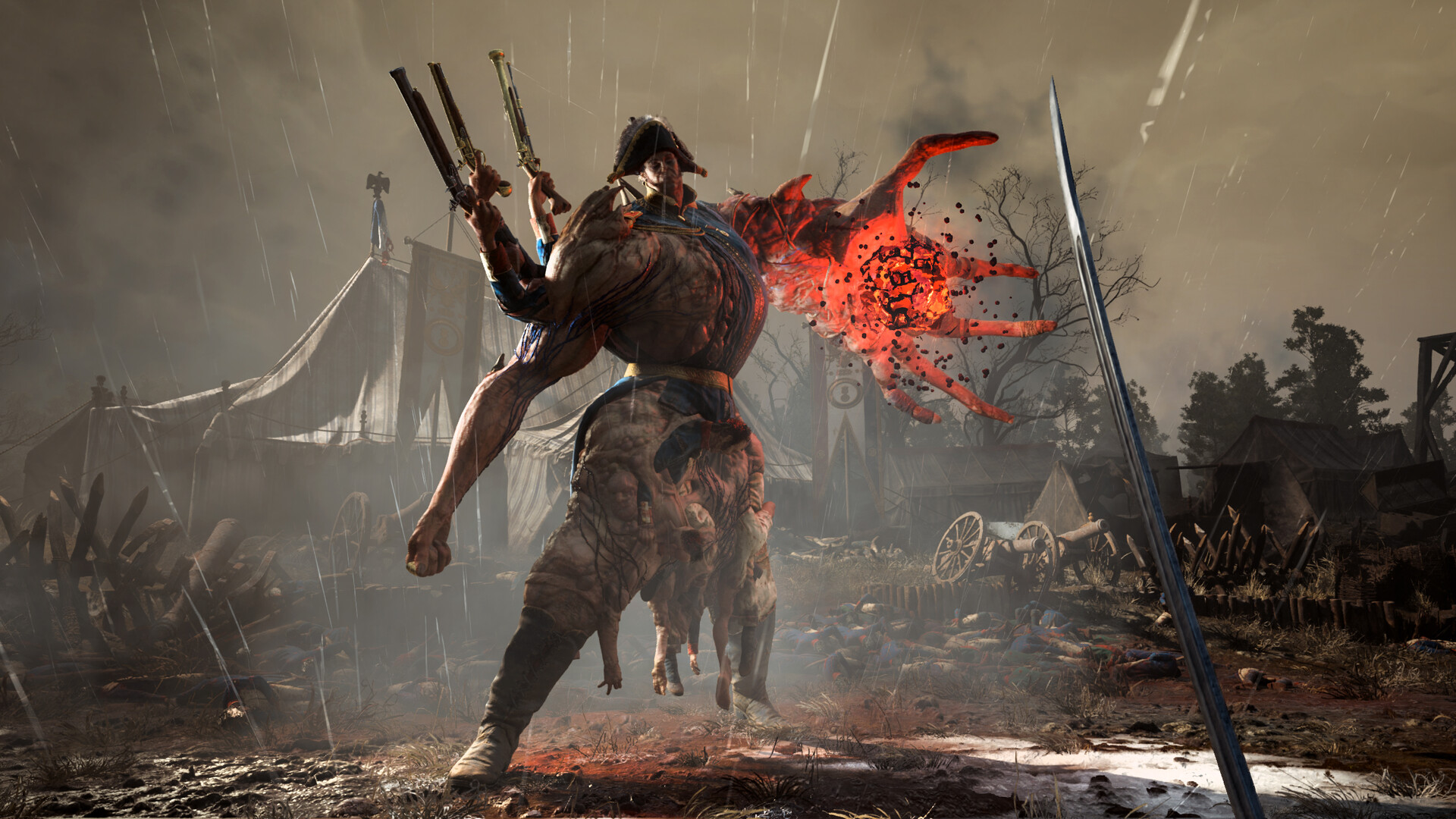
The game follows a familiar Soulslike structure. You explore a dangerous, interconnected world, fight through corrupted enemies, and reach a lantern to lock in your progress. Along the way you collect a currency used to grow stronger, and when you die you lose what you were carrying until you can return to where you fell. Combat is the heart of the experience, and the Combat page covers the moment-to-moment mechanics in detail.
Lanterns are the anchor points of the world. They act as checkpoints where you respawn after death, and they are also where you spend resources to upgrade your character. Reaching a new lantern is meaningful progress, so treat each one as a small goal. Because they serve as both your safe harbor and your upgrade station, it is worth pushing carefully toward the next lantern rather than overextending into unknown territory.
The upgrade currency is gathered from the world and from defeated foes, and it is spent at lanterns to improve your character. Because this currency is dropped on death, recovering it is a recurring part of the loop. The full breakdown of how this works lives on the Catalysts and Progression page. Healing comes from a refillable flask that tops up when you rest at a lantern, so timing your retreats to a lantern is part of the strategy.
In broad terms your kit splits into a right-hand melee weapon and an off-hand tool. The starter sabre is the basic melee option, with the rapier added later for players who want a higher-skill thrusting weapon that rewards precise parries. In the off-hand, a flintlock pistol handles ranged threats while supernatural Transmutations such as Fire give you area-of-effect pressure. The Weapons page details what is currently confirmed.
Most early-game deaths come from reading enemies wrong rather than from poor aim. Watch each foe through one full attack chain before committing to your own offense. Once you know the windups you can decide whether to block, parry, or dash out of the way. Common soldiers fall quickly to a clean parry-and-punish, while elite enemies and bosses ask for sustained pressure on their weak points.
Beyond combat the game leans on a Metroidvania-inspired structure. The main path is mostly linear, but optional areas are gated by abilities you unlock as you progress, and breaking through destructible barriers can lead to accessories, lore pieces, and optional mini-bosses. The Traversal page covers the grapple-hook and wall-running tools used to reach those spots.
The most useful adjustment for new players is to think about each room rather than each enemy. Plan an entry, pick a defensive tool for the lead foe, and decide what you will do if a second threat appears. Even when you die, what you carried back to the previous lantern is still yours, so steady incremental progress is much more reliable than long aggressive runs. The Setting and Story page gives the wider context that makes the loop emotionally legible.