

A free demo covered two of these levels between June 7 and September 8, 2026, and is no longer available. Its first level, Chapter I: Revival, was a refined version of the playtest battlefield that taught combat and ended in the General Lothaire boss fight. Its second was Chapter VII, where the broken bridge to the Lighthouse had to be crossed with transmutation traversal, and where the rapier, the musket, a shield Transmutation and the corrupted villagers all first appeared. The studio has since said both were bespoke recreations rather than the shipping versions of those chapters, and that the full game will be better tuned than the demo was, so treat demo guidance as a rough guide rather than a map. The Demo page records it in full.
The Core Loop
The game follows a familiar Soulslike structure. You explore a dangerous, interconnected world, fight through corrupted enemies, and reach a lantern to lock in your progress. Along the way you collect a currency used to grow stronger, and when you die you lose what you were carrying until you can return to where you fell. Combat is the heart of the experience, and the Combat page covers the moment-to-moment mechanics in detail.
Lanterns
Lanterns are the anchor points of the world. They act as checkpoints where you respawn after death, and they are also where you spend resources to upgrade your character. Reaching a new lantern is meaningful progress, so treat each one as a small goal. Because they serve as both your safe harbor and your upgrade station, it is worth pushing carefully toward the next lantern rather than overextending into unknown territory.
Catalysts and Healing
The upgrade currency is gathered from the world and from defeated foes, and it is spent at lanterns to improve your character. Because this currency is dropped on death, recovering it is a recurring part of the loop. The full breakdown of how this works lives on the Catalysts and Progression page. Healing comes from a refillable flask that tops up when you rest at a lantern, so timing your retreats to a lantern is part of the strategy.
Your Loadout
In broad terms your kit splits into a right-hand melee weapon and an off-hand tool. The starter sabre is the basic melee option, with the rapier added later for players who want a higher-skill thrusting weapon that rewards precise parries. In the off-hand, a flintlock pistol handles ranged threats while supernatural Transmutations such as Fire give you area-of-effect pressure. The Weapons page details what is currently confirmed.
Reading Enemies
Most early-game deaths come from reading enemies wrong rather than from poor aim. Watch each foe through one full attack chain before committing to your own offense. Once you know the windups you can decide whether to block, parry, or dash out of the way. Common soldiers fall quickly to a clean parry-and-punish, while elite enemies and bosses ask for sustained pressure on their weak points.
Movement and Exploration
Beyond combat the game leans on a Metroidvania-inspired structure. The main path is mostly linear, but optional areas are gated by abilities you unlock as you progress, and breaking through destructible barriers can lead to accessories, lore pieces, and optional mini-bosses. The Traversal page covers the grapple-hook and wall-running tools used to reach those spots.
Mindset
The most useful adjustment for new players is to think about each room rather than each enemy. Plan an entry, pick a defensive tool for the lead foe, and decide what you will do if a second threat appears. Even when you die, what you carried back to the previous lantern is still yours, so steady incremental progress is much more reliable than long aggressive runs. The Setting and Story page gives the wider context that makes the loop emotionally legible.
No Difficulty Settings
Come in expecting one difficulty and only one. No playable build has offered an easy mode or a difficulty selector, and the studio has talked about keeping it that way at launch, so do not count on the game getting easier because you changed a setting. Early deaths are normal and are how you learn a room. The tools that actually make fights more manageable are all inside the game: upgrading at Lanterns with Catalysts, sharpening your parry timing, and using Transmutations and weak points to open enemies up. Treat each death as information about what to do differently next time.
About That First Boss
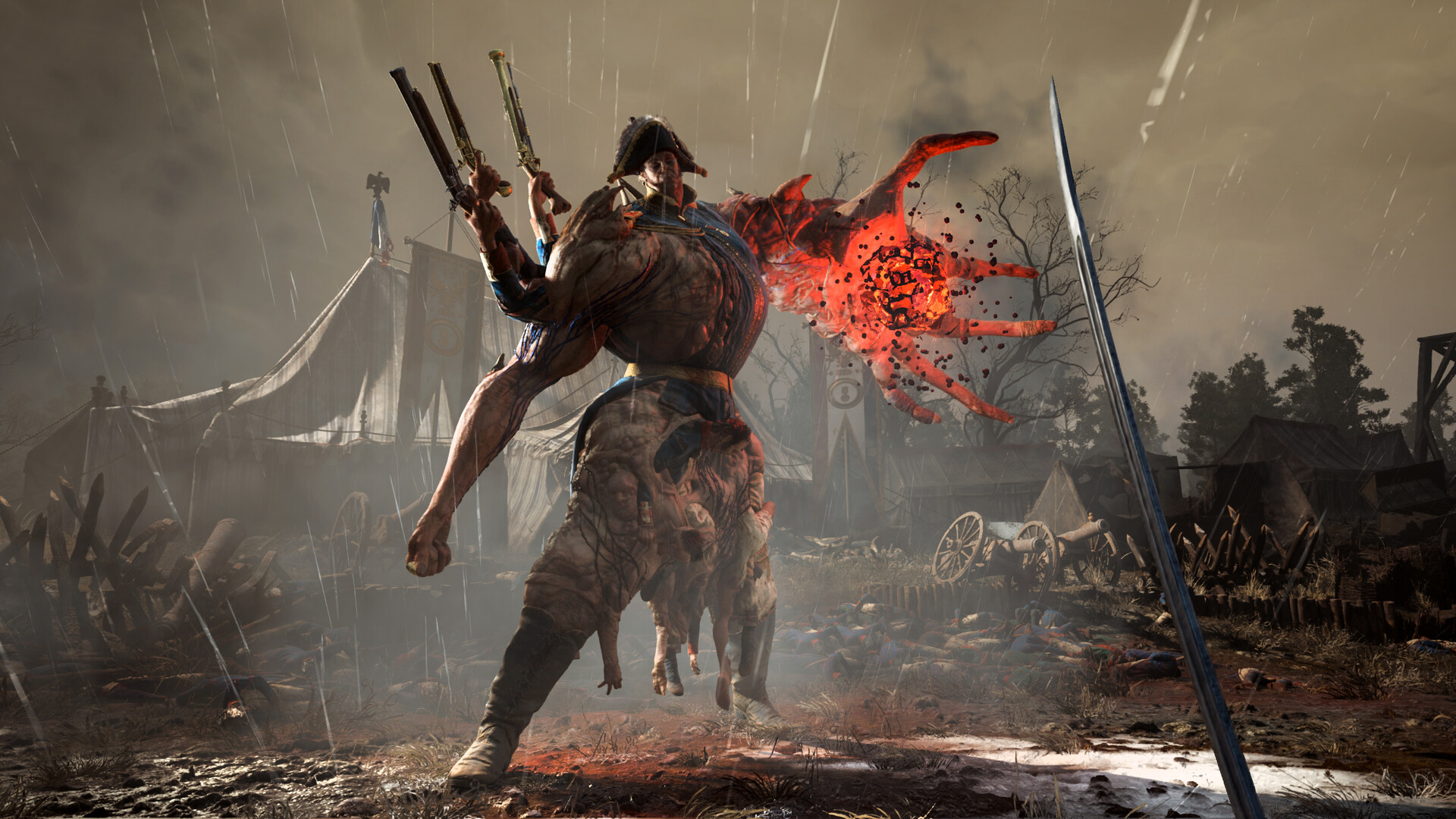
If you played the demo and bounced off General Lothaire, the finished game changes the situation rather than the fight. In the demo he closed Chapter I, roughly thirty minutes in. The studio has since said that in the full release he is the boss at the end of Chapter II, on the reasoning that thirty minutes is not long enough to get comfortable with first-person Soulslike combat, and that by Chapter II you will have more time with the mechanics and a levelled-up character behind you.
The practical read for a new player is that the opening is meant to teach, not to gatekeep. If a fight feels impossible in the first hour, the likelier problem is that you have not yet found the lantern upgrades and the parry timing the encounter assumes.
Where to Play and What It Costs
The digital base game launches at $39.99, €39.99 or 149.99 zł; the Deluxe Edition is $59.99, €59.99 or 199.99 zł and adds a major story DLC planned for 2027 plus cosmetic packs. Xbox Game Pass availability starts on release day for the announced PC, console and cloud platforms, subject to the subscription plan. Xbox Play Anywhere is also listed. A boxed PC edition opened for pre-order in June, with its recommended price lowered to 39.99 US dollars in July. Editions and Availability has the full breakdown.
What You Cannot Look Up Yet
As of September 13, 2026 the game has not shipped and there is no public build, so nothing on this page comes from the finished version. Specific numbers do not exist anywhere: no upgrade costs, no stat values, no chapter running times, no total chapter count. Treat the advice here as a way of approaching the game rather than an optimal route, and expect it to be rewritten once the shipped game is in hand.
What the launch overview adds
The studio describes a 20-hour story. That is a campaign estimate, not a speedrun target or a promise about completionist play. The September overview confirms side quests, secrets and branching routes, so look for shortcuts that make returning to a lantern safer.
Late preview builds also include passive accessories called Ambers, equipped at lanterns as William levels up. They supplement skill-tree upgrades rather than replace them. Catalysts and Progression covers the current distinction.