
The Dual Frontline Battle System is Tides of Annihilation's signature combat mechanic. It allows Gwendolyn to summon, command, and merge with Spectral Knights during real-time combat. The system is the central differentiator between this game and other action titles in the genre.
How it Works
Players can bring four spectral knights into battle, arranged as two sets of two. Each set pairs a primary knight with a secondary knight, and directional inputs swap between the sets. Knights can be summoned at any point during combat, including mid-combo, allowing them to extend attack chains or cover defensive gaps.
The Loadout in the August 2026 Build
The first playable build, shown at the Chengdu Playtest in August 2026, put numbers on the system. Five knights were available in the demo pool. Four of them could be equipped at once, split into two primary slots and two secondary slots, with the player free to switch between the pairs at any point in a fight. Several independent hands-on accounts describe the same shape, and it matches how the studio described the system when the game was first shown in China.
The studio has since confirmed that the arrangement is not a demo simplification. Asked in September 2026 whether players should settle on a few knights or rotate constantly, Ary Chen said the team wants players combining different fighting styles, and described the finished game as one where the player configures two sets of knights, each set holding a primary and a secondary, with a very wide range of combinations available and the choice driven by what each knight can do. The two-pair shape, in other words, is the shipping design rather than a slice of one.
The two slot types are not interchangeable labels. A primary knight sets the shape of Gwendolyn's offence and carries a dozen or more attack moves of its own. A secondary carries two, and exists to do one job: pull aggro, slow an enemy down, or open a parry. Most knights sit in one slot or the other, but at least one, Palamedes, can be fielded in either, with a different kit in each.
Slot | What it does | Move count |
|---|---|---|
Primary knight | Sets the shape of Gwendolyn's offence and leads the combo strings | A dozen or more attack moves |
Secondary knight | Called in for one job, such as drawing aggro, crowd control, or opening a parry | Two attack moves |
Set swap | Rotates which primary and secondary pair is live, without opening a menu | Available at any point, including mid-combo |
Finished game | Confirmed in September 2026 to keep the same two-set structure, each set pairing a primary with a secondary. | Not stated |
On a controller the split reads clearly. One face button drives Gwendolyn's own attack, another calls the primary knight, and a shoulder trigger calls the secondary. A modifier button turns each of those into the corresponding skill, so Gwendolyn's heavy attack and each knight's special sit on the same inputs as their basic versions. The directional pad rotates between the two pairs, and pressing both sticks fires a burst attack once its gauge is full. What a given input produces also changes with how many attacks preceded it, whether Gwendolyn is grounded or airborne, and where she is standing relative to the enemy.
Knights Outside Combat
The knights are not only a combat system. Away from a fight their abilities are the traversal and puzzle toolkit. One knight fires an arrow that strings a zipline across a gap or releases a suspended platform. Palamedes breaks through walls, lifts heavy statues, and sets them down where Gwendolyn can climb them, and a separate boost sends her up to ledges she cannot otherwise reach. In the August 2026 build the puzzles were themed to whichever museum wing they sat in, so one gallery posed riddles while another turned into a lit board game the player had to cross.
This is also why the loadout choice matters outside a fight. A route can be gated behind an ability that is only available while the knight who owns it is equipped, which rewards returning to a place once the roster has grown. The level design around it is hand-built rather than open, so the revisiting is local rather than a single connected map.
Summoning
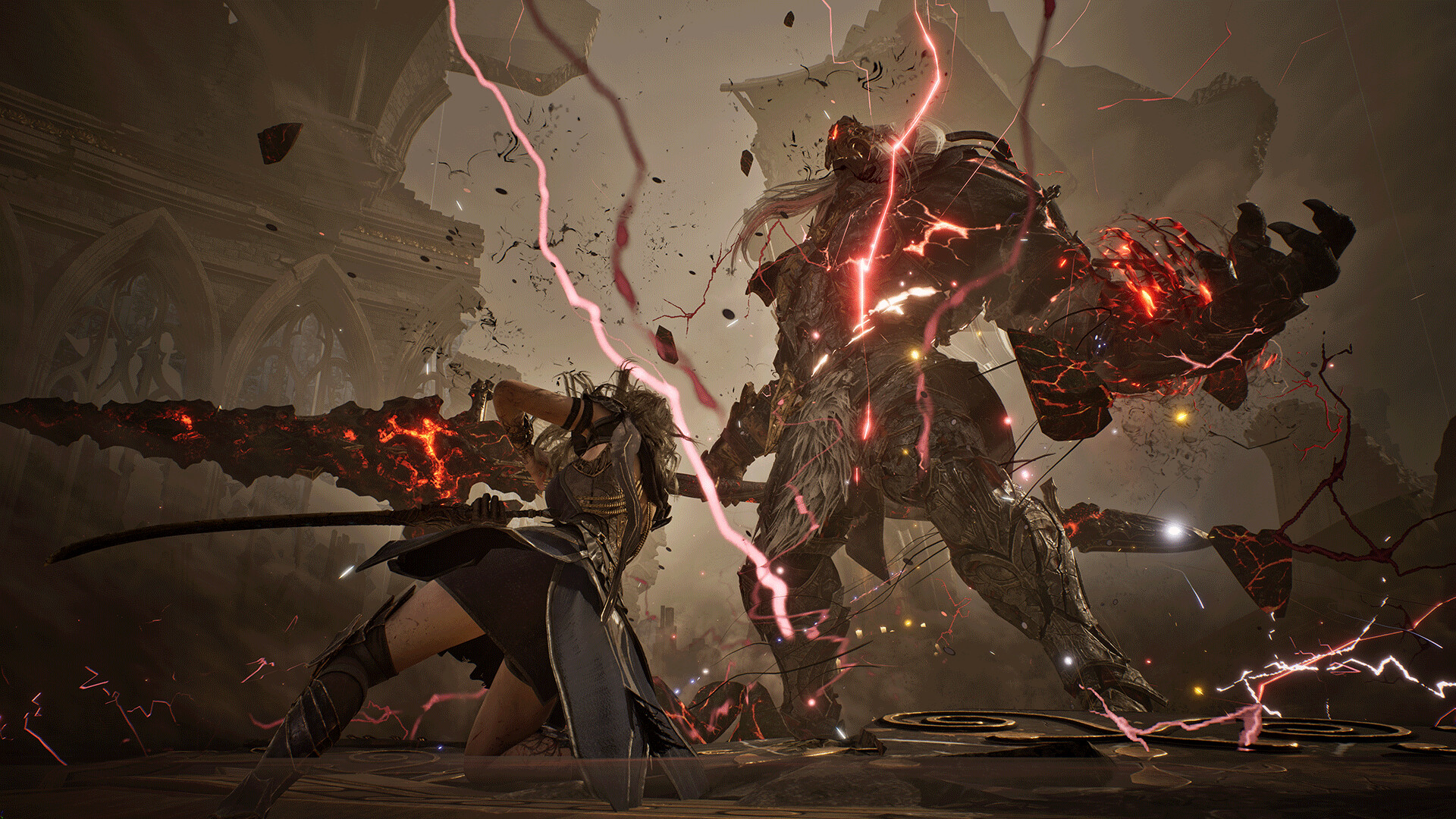
When summoned, a spectral knight materializes alongside Gwendolyn and fights semi-autonomously. Each knight has a unique combat style and elemental affinity. Confirmed elements include lightning (Sir Lamorak), fire (Palamedes), and ice (knight identity unconfirmed). Knights can imbue Gwendolyn's weapons with their elemental energy, adding elemental damage to her attacks.
Partnered State
Gwendolyn can absorb a spectral knight, merging into a single combat unit. In Partnered State:
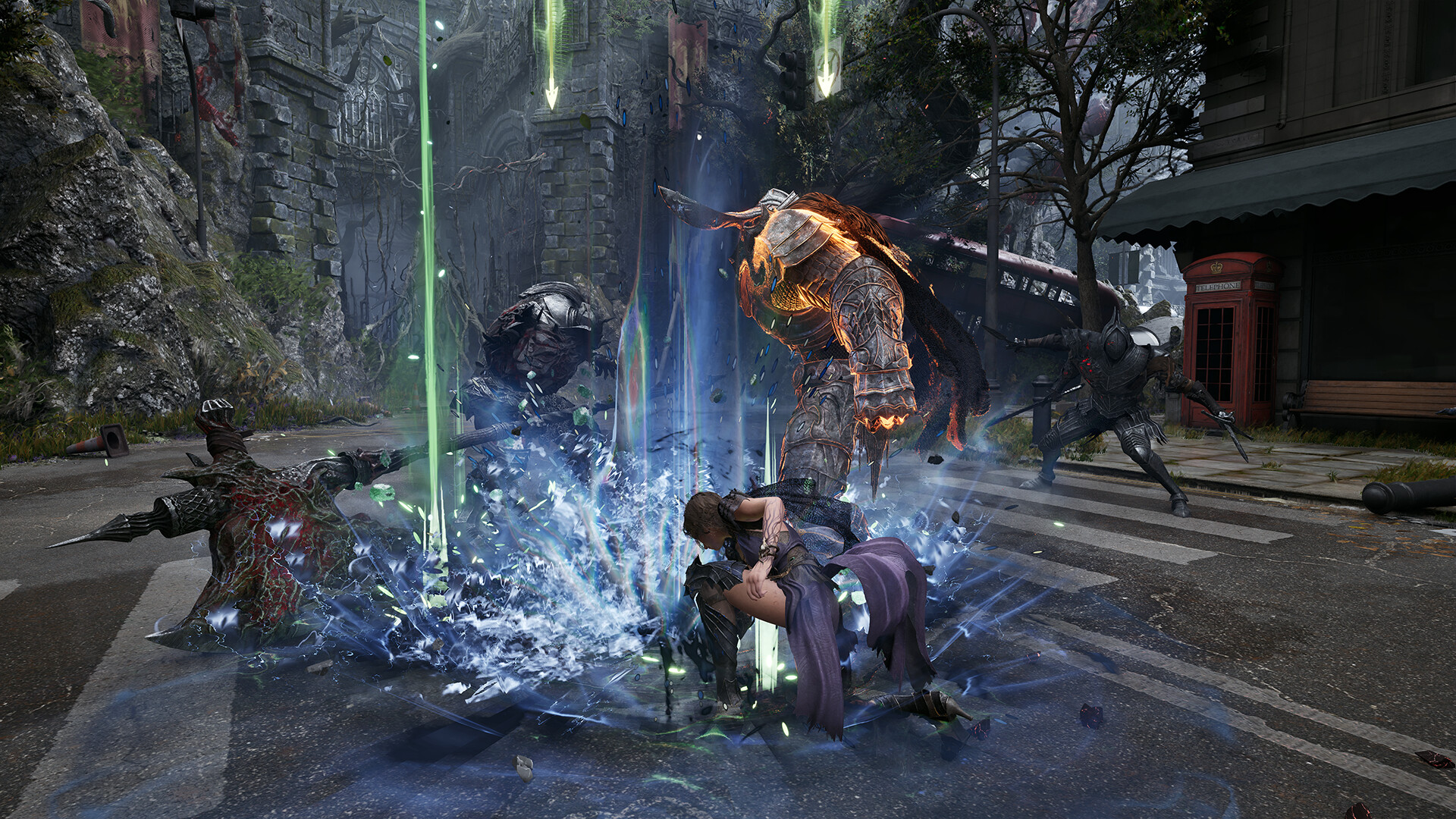
Mobility is enhanced, with faster movement and new traversal options
Attacks become synchronized combos between Gwendolyn and the absorbed knight
The knight can parry powerful enemy attacks that Gwendolyn cannot block alone
Visual effects change to reflect the merged elemental affinity
Ranged Knights
Some spectral knights specialize in ranged combat. They fire projectiles that can explode after a delay or create swirling domes of continuous damage. Combining ranged knights with Gwendolyn's melee creates opportunities for pincer tactics against groups.
Not every knight is a melee specialist. Some confirmed roster members fire projectiles that explode after a short delay or build a swirling dome of continuous damage on the ground, allowing the player to commit to a ranged playstyle without giving up the summoning system. Pairing a melee knight with a ranged knight in the same set is one of the loadouts the developers have highlighted as a baseline approach for new players.
Combat Philosophy
The developers position the combat as Devil May Cry-inspired rather than Souls-like. The emphasis is on stylish, fast-paced action with deep combo systems. The game includes selectable difficulty modes for accessibility, and enemies whose stagger bar has filled can be finished with a dedicated execution. The DMC influence shows in the combo counter, aerial juggles, and emphasis on variety over repetition.
Knight Sets and Swapping
Players bring four spectral knights into a fight, organized as two interchangeable pairs. The directional inputs swap between pairs in real time, so an entire combat loadout effectively contains two full lineups that can rotate without returning to a menu. The intent is to let one set cover offensive coverage while the other handles defense, mobility, or ranged threats, with both pairs available without an interruption to the combo flow.
Mid-Combo Summoning
Summoning is not gated behind an animation lock-out. According to Eclipse Glow Games, knights can be called into the fight at any time during combat, including during the middle of an active combo, which lets the player chain a melee string into a knight follow-up or a ranged burst without dropping their attack. The producer has framed this as the core of the game's stylish action identity rather than a niche advanced technique.
Elemental Imbuing
Each confirmed knight carries an elemental affinity that they can pass to Gwendolyn. When a knight imbues her weapon, the next several attacks gain that element. Pre-release trailers show Sir Lamorak wreathing her sword in red lightning before she lands a finishing strike, and a separate clip shows Palamedes applying fire and breaking through a magical barrier. A third element, ice, has been observed in trailer footage tied to an unnamed knight whose launching attack starts an aerial juggle.
Partnered State Integration
At any point during a fight, Gwendolyn can absorb the active knight into a Partnered State. Movement becomes faster, attacks synchronize with the absorbed knight, and certain heavy enemy attacks become parryable through the merged form. Swapping is locked while a Partnered State is active, so committing to a merge is also a commitment to that knight for the duration of the buff.
Why It Matters
The Dual Frontline Battle System is the mechanic Eclipse Glow Games has placed at the front of every gameplay reveal. It is the answer to the question of why a single-player action game built around one playable character would still feel like a squad. By rotating four knights, swapping mid-combo, merging at will, and switching elements per encounter, the player effectively pilots a small team without giving up the cohesion of one protagonist. Getting Started walks through the same loadout from a first-time player's point of view.