

London is the primary real-world setting of Tides of Annihilation and one of the two main playable spaces in the game, standing opposite the mystical realm of Avalon. The game drops the player into a modern, recognisable version of the British capital that has been gutted by an otherworldly invasion. Streets, bridges, tube tunnels, and famous landmarks are still identifiable, but each has been scarred, twisted, or folded by forces pouring across from the other side. London is the city Gwendolyn is fighting to take back, and the ground on which most of the human side of the story plays out.
Overview
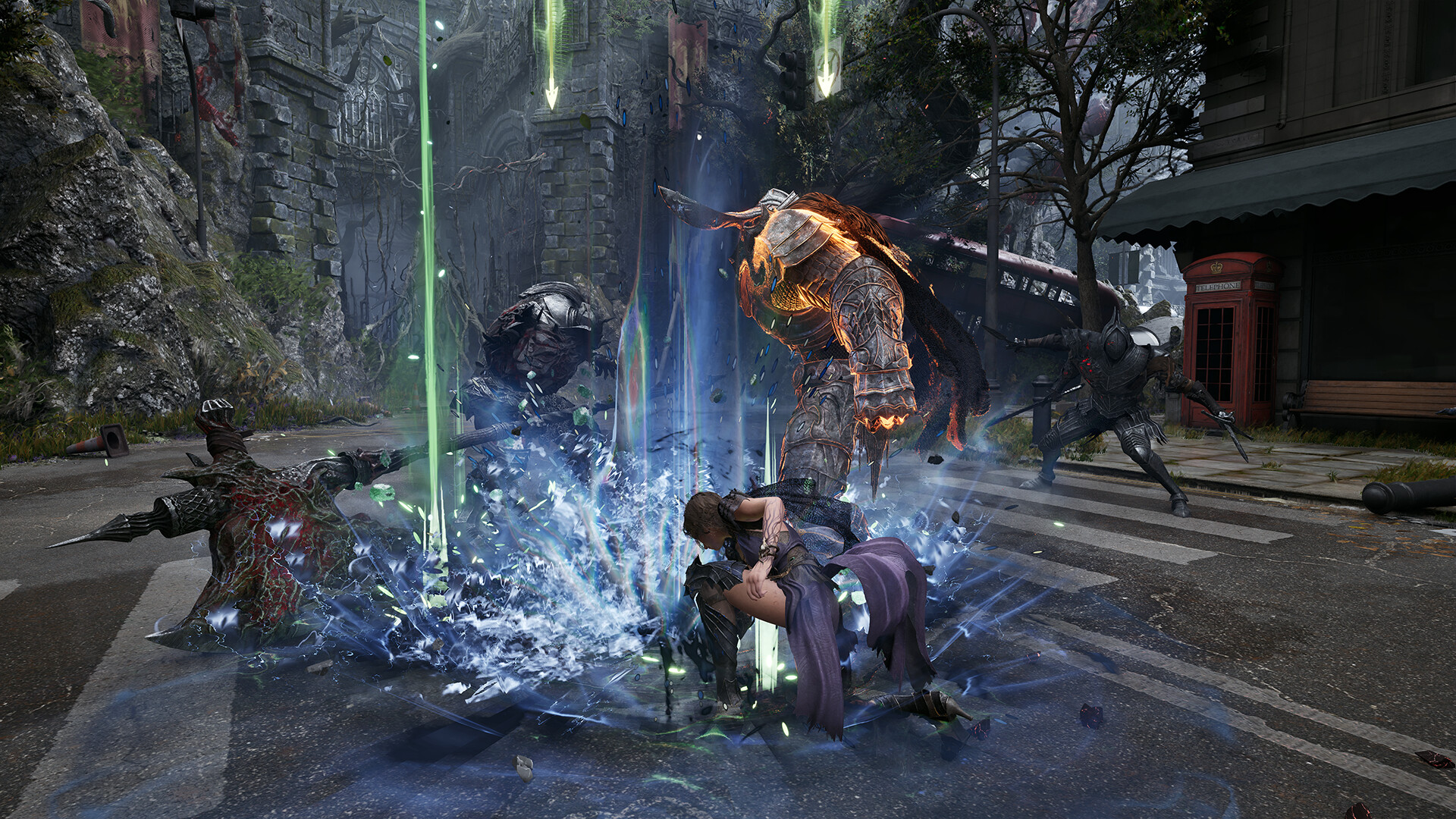
The developers describe London as a sprawling battleground where modern ruins coexist with echoes of a medieval past. It is structured as a series of interconnected zones rather than a traditional open-world sandbox, with non-linear exploration routes linking iconic districts and landmarks. Each district has been transformed in a different way, giving the city strong visual variety. Twisted urban streets, collapsed bridges, flooded underground networks, and vertical rooftop paths all appear in footage shown so far. The Dual Frontline Battle System is built around the overlap between the mortal city and the folded spaces that have punched through it, so most combat takes place on London streets even when the arena itself starts to bend.
London as the Main Setting
Marketing material and developer interviews consistently frame London as the main setting, not a hub or a prologue zone. The reveal trailer in February 2025 opens on the city skyline, and subsequent gameplay footage returns to London streets as the default playable space. The choice of a real, present-day city sharpens the contrast with the invasion's supernatural violence: collapsed office blocks and modern signage share the frame with round towers and spectral knights, and the developers lean into that tension as the central aesthetic of the game.
Notable Landmarks Seen in Trailers
Several real London landmarks have been confirmed as playable or set-piece locations through trailers and promotional footage.
Landmark | How It Appears in the Game |
|---|---|
Big Ben | Shown looming under a cursed sky in trailer footage, its familiar outline framed against the fallout of the invasion. It is a visual anchor for the shattered city. |
The Thames | Featured across promotional material, with the water presented as no longer behaving like an ordinary river. The riverbanks are part of the traversable cityscape. |
Tower Bridge | Revealed in trailer footage as one of the iconic landmarks warped by the invasion. One of the clearest structures identifiable in the broken city. |
The London Underground | Featured in the Year of the Horse promotional trailer as an explorable interior environment. Tunnels and station areas appear among the spaces Gwendolyn moves through. |
The London Eye | Recognisable in skyline shots from promotional material, used alongside Big Ben to place the city visually. |
The Great Russell Museum
The first playable slice of the game, put in front of press and the public in August 2026, takes place entirely inside one London building: the Great Russell Museum, the game's version of the British Museum on Great Russell Street. It is divided into Egyptian, Japanese and Chinese wings, and the invasion has left each one acting less like a gallery than like a door into somewhere else. Enemies and music change with the exhibit you are standing in, down to the instruments the score reaches for. Gwendolyn goes there after a Grail Shard and finishes the level facing Mordred, by which point the museum has become an Egyptian desert with the Great Pyramids standing behind it.
It is the most thoroughly documented location in the game so far, and it doubles as a hub: optional fights, instanced challenge realms and rest points all sit inside it. That makes it the clearest available answer to how London is actually structured to play, as opposed to how it is framed in trailers.
That slice travelled. The same museum level was the public demo at gamescom in Cologne from 26 to 30 August 2026, so every hands-on account published so far describes the same building. Through 11 September 2026 the Great Russell Museum is the only part of London anyone outside the studio has played, and the districts, bridges and tunnels described elsewhere on this page are still trailer material rather than tested ground.
Invasion and Mirror Space Overlap
The state of London in the game is defined by what the invasion did to it. Forces from Avalon tore a passage between realms and poured into the mortal city, shattering districts, collapsing infrastructure, and leaving survivors scattered across the wreckage. Gwendolyn is framed as the lone survivor of this attack, which establishes London at the start of the story as a city emptied of most of the people who once lived in it.
The studio has a name of its own for what happened, and uses it consistently in its press material: the Outworld invasion. Its Chinese-language description of the setting is blunter still, framing the game as present-day London and the otherworld overlapping in the same space rather than as two maps you travel between.
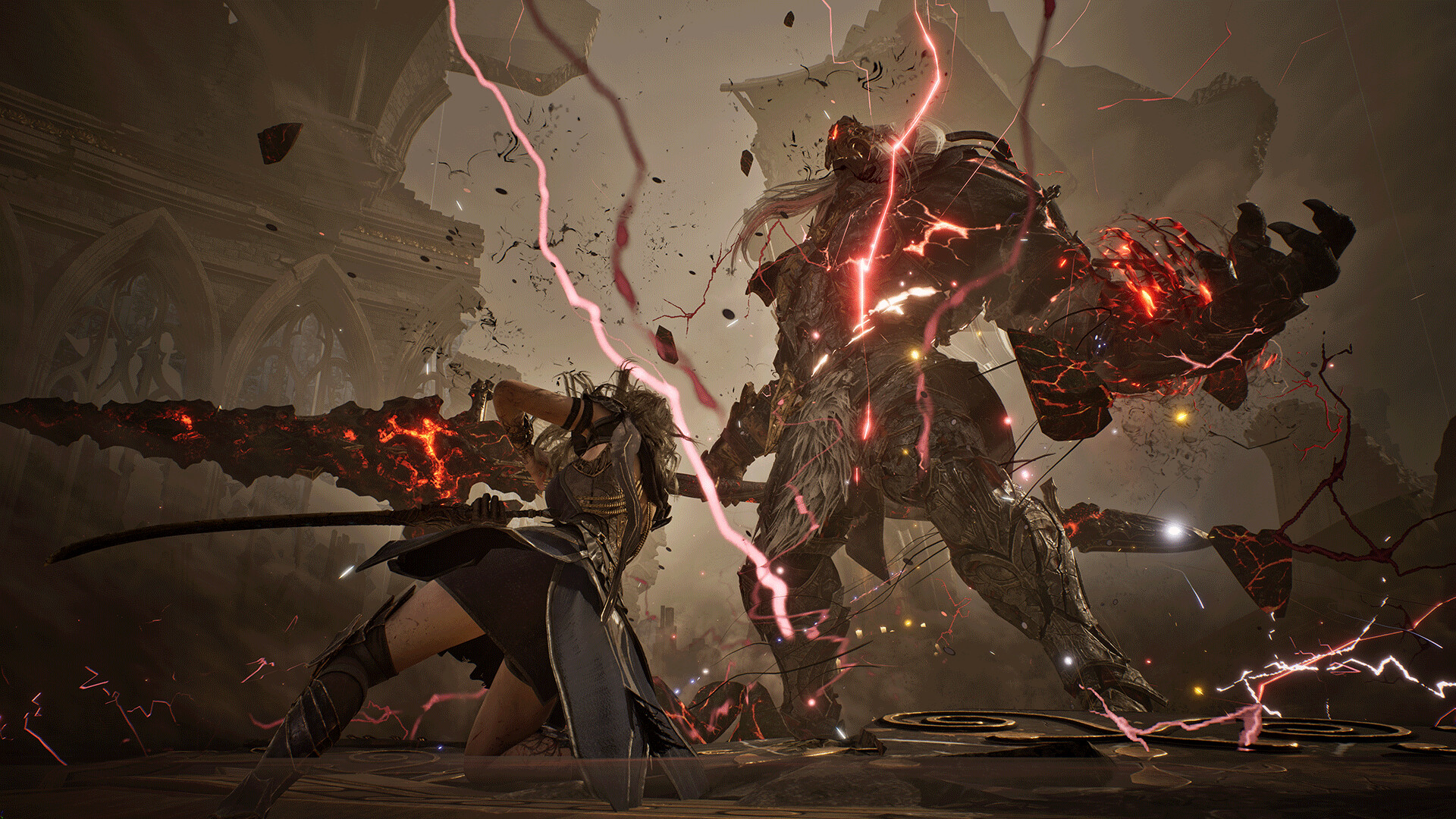
On top of the physical destruction, large portions of London now sit inside the Mirror Space Folded Realm. The Folded Realm folds mortal spaces onto mystical ones so the two overlap in the same place at the same time. A street can exist in both forms at once, with reflections, duplicates, and alternate geometries appearing around the player as they move, and combat arenas can flip between the London side and the folded side mid-fight. The Colossal Knights are the most obvious physical trace of the invasion: towering entities that move through the skyline, act as dynamic landmarks, and serve as climbable, vertical levels in their own right.
Gameplay in London vs Avalon
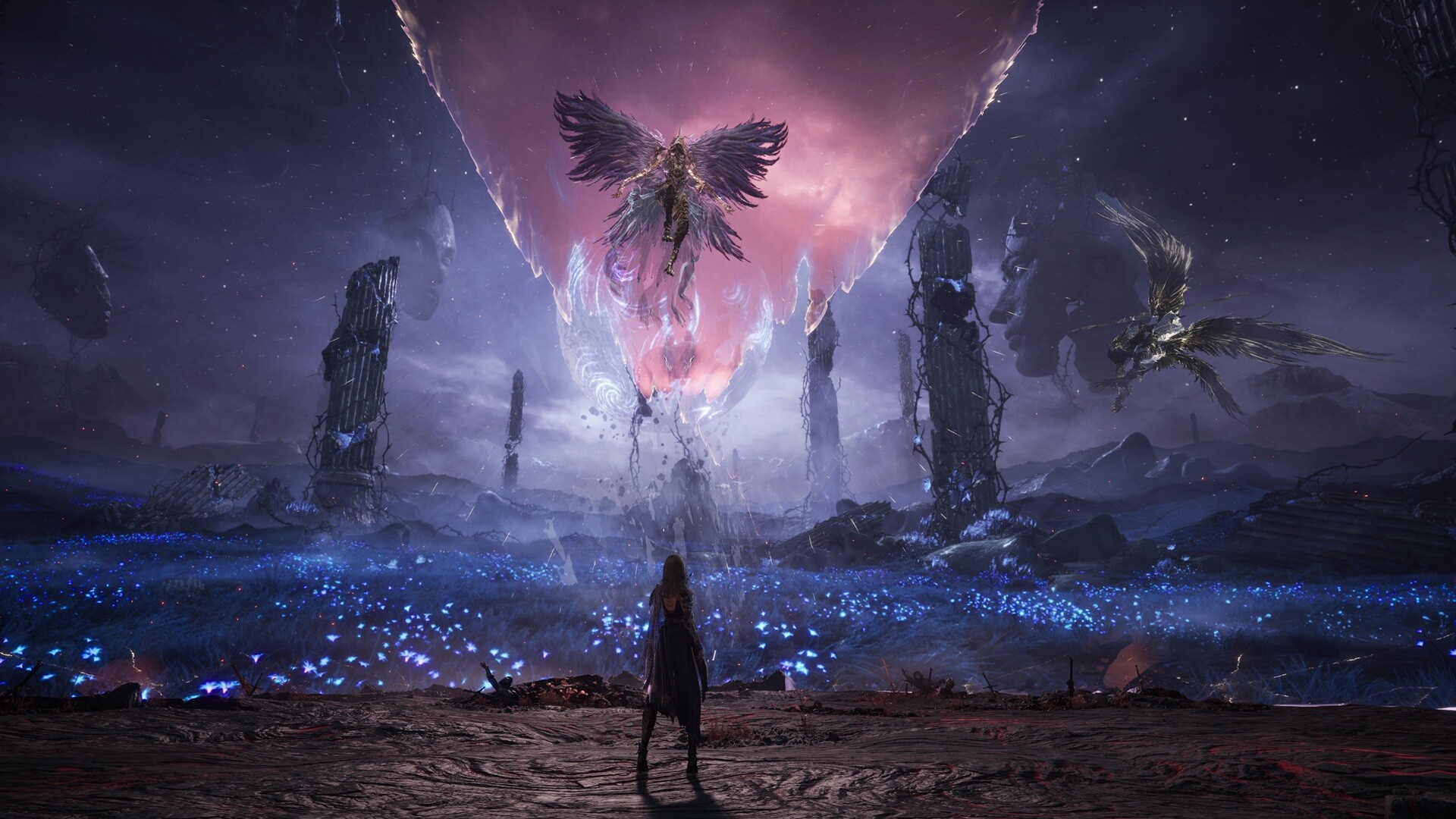
London is the grounded side of the split: modern architecture, recognisable geography, survivor encounters, and a dense layout of interconnected districts. It carries most of the game's exploration, side content, and traversal through identifiable real-world spaces. Avalon, by contrast, is the surreal, dimension-bending side where folded architecture and mirrored set pieces take over, and where most boss fights against the demi-god sisters play out. The two sides are tied together by the Mirror Space overlaps that bleed one into the other, and by Gwendolyn's ability to cross the veil with her Spectral Knights in tow. The Dual Frontline Battle System was built with this split in mind, so a fight that begins on a London street can shift into a folded arena without breaking pace.
Why London Was Chosen
Tides of Annihilation is the debut title of Eclipse Glow Games, a Chinese studio based in Chengdu, with investment from Tencent. The decision to centre the game on a real Western capital rather than a fictional fantasy country ties into the studio's broader creative framing. Co-CEO Ary Chen has said that because the legend of King Arthur is a Western story, a Chinese studio tackling it has to think about how to reinterpret the culture and tell a good story with it. Setting the modern half of the game in London, the capital most closely associated in the popular imagination with that legend, is part of that reinterpretation. The development team has said it travelled to London to conduct small-scale playtesting and on-location research, visiting historic sites in person so the in-game version of the city could lean on firsthand reference.
The research behind that went further than a scouting trip. The team has described working with the Academy of Arts and Design at Tsinghua University on the game's art direction, and visiting the British Museum, Buckingham Palace and Westminster Abbey in the company of local writers, scholars and museum directors.
Gwendolyn's Connection to the City
London is not an abstract battlefield for Gwendolyn. It is the city she is from and the home she is trying to save. Story material frames her fight as deeply personal: the invasion killed the people she knew, fractured her family, and left her as the lone survivor with the power to push back. Her campaign is bound up with her search for her sister and her refusal to hand her home over to the court of Avalon. The Partnered State mechanic and the Dual Frontline Battle System both reinforce that she is never alone while fighting for the city, but her confrontations with Mordred and the sisters of Avalon are framed as the cost of holding that ground.