

This article is incomplete
Some sections are missing or need additional details. Help improve it by contributing.
This guide covers what new players should know about Tides of Annihilation based on pre-release information. The game has not launched yet, so this page covers confirmed features and what to expect. It will be updated with gameplay tips after release. A large part of what follows was confirmed in August 2026, when the game became playable for the first time at the Chengdu Playtest.
What Kind of Game is This?
A fantasy hack-and-slash action-adventure built on Unreal Engine 5
Combat inspired by Devil May Cry, not Dark Souls, with selectable difficulty
Set in shattered London and mythical Avalon
Heavy Arthurian mythology throughout the story and characters
About 30+ hours of gameplay, a figure the developers gave in 2024 and declined to restate in September 2026
Single-player and bought once, with no free-to-play or gacha layer
Multiple difficulty options, confirmed by the studio, ranging from a standard setting to a considerably harder one
Core Concepts
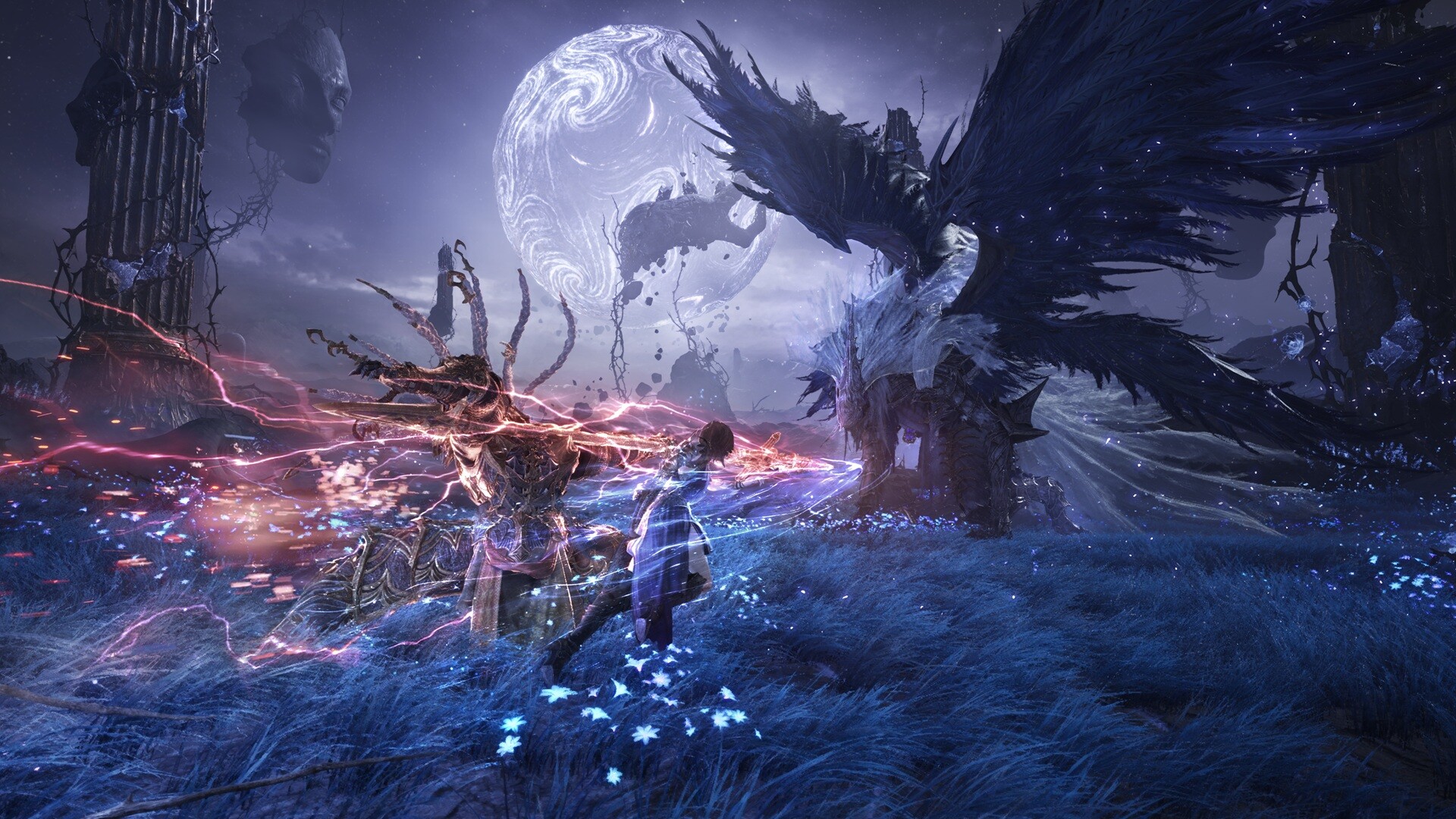
The Dual Frontline Battle System is the central mechanic: summoning and fighting alongside spectral knights
Spectral Knights are ghostly versions of the Knights of the Round Table with unique combat styles and elements
Gwendolyn is the protagonist, and her companion Niniane transforms into her sword
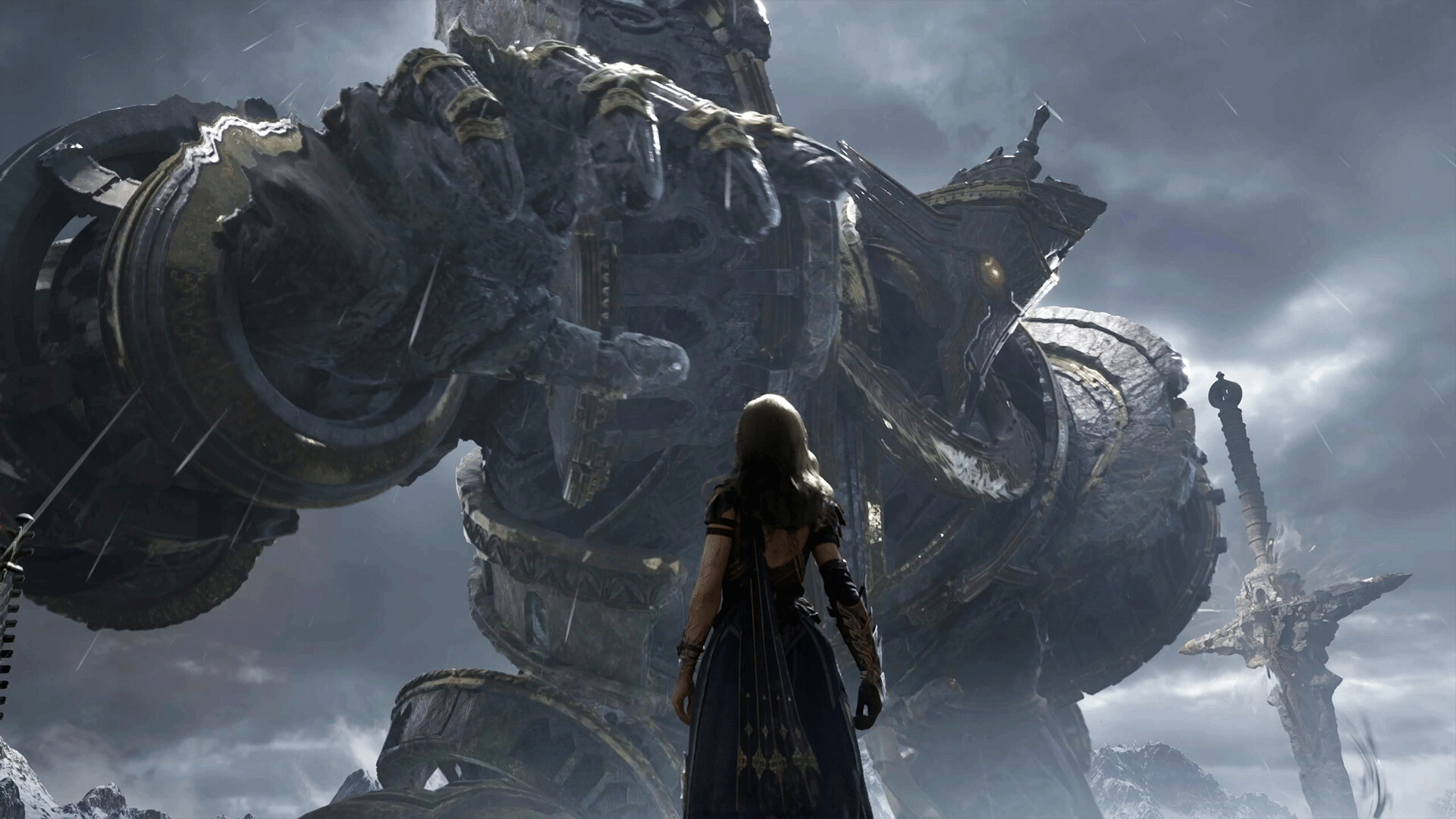
Colossal Knights are massive entities you climb and explore, leading to boss fights
The demi-gods of Avalon are the primary antagonists behind London's destruction
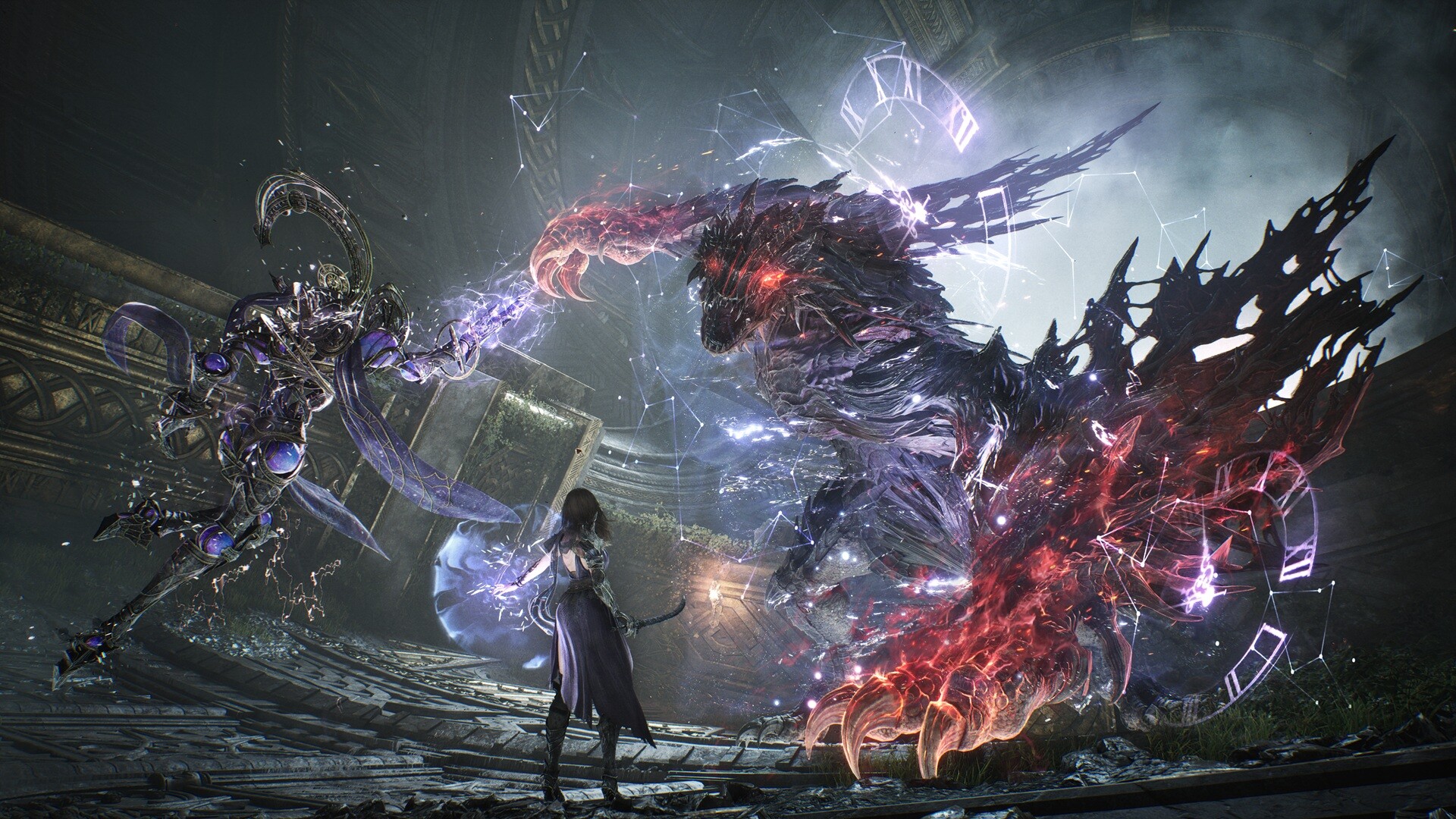
Combat expectations
If you have played Devil May Cry, Bayonetta, or similar character action games, the combat pace will feel familiar. Expect:
Fast combos with light and heavy attacks
Real-time knight summoning woven into combo chains
Elemental system (lightning, fire, ice) applied through spectral knights
Aerial combat and juggles
Multiple difficulty settings, so you can tune the challenge to your preference
Colour-coded telegraphs: a red flash means parry, a yellow flash means jump or dodge
A stagger gauge on enemies that opens an execution once it empties
No stamina bar, so strings are limited by recovery and spacing rather than by a resource
Gear and Cosmetics
Earlier coverage described armour in Tides of Annihilation as purely cosmetic. The first playable build did not work that way. Weapons and armour carry their own affixes, and a separate set of equippable badges with a limited number of slots can change a build outright, sometimes with a drawback attached. What is true is that there is no gear power curve to grind: equipment changes what a build does rather than how large its numbers are, and hands-on players saw no visible stat growth. Outfits, hair styles and makeup are the genuinely cosmetic layer and are collected through optional content. Progression is still mostly about which Spectral Knights you have and how well you use them.
Those outfits are collected as named Regalia sets, and the attire menu previews each one on the character model. They are the one part of the loadout you can pick purely on looks. Everything else in a build, the sword, the armour and the badges, changes what the build does.
Platforms
PS5, PS5 Pro, Xbox Series X|S, and PC (Steam and Epic). The PS5 Pro version supports higher resolution, ray tracing, and 60fps via PSSR. The PC version supports NVIDIA DLSS 4.5 with Multi Frame Generation and full path tracing at launch.
First Steps
The opening of the campaign teaches the basics: how to swing the sword, how to call a single spectral knight into the fight, and how to enter a Partnered State. New players should expect the early hours to function as a layered tutorial. The full Dual Frontline Battle System unlocks gradually as knights are recruited, so the four-knight, two-pair loadout is not available immediately.
Combat Fundamentals
Concept | What To Know |
|---|---|
Combo flow | Light and heavy attacks chain into combos. Mid-combo summoning is encouraged from the start. |
Knight summons | Spectral Knights appear semi-autonomously and apply elemental damage. Each knight has a unique combat style. |
Partnered State | Absorbing a knight via Partnered State merges Gwendolyn with that knight, unlocking new attacks and a dedicated parry. That comes from pre-release footage rather than from play: hands-on accounts of the August 2026 build do not describe the merge at all. |
Dodging | Standard dodge mechanic. Carry-on-back dodge through Partnered State extends the dodge distance with some knights. |
Difficulty | Multiple options, confirmed by the studio. The producer has described the standard setting as the one where the pleasure is building knight combos and pressing an advantage, and the hardest setting as the one where a fight turns into a question of reading each enemy's moves and using each knight's particular characteristic to answer them. No published account describes the selection screen or what else the settings change. |
Telegraph colours | A red flash marks an attack that has to be parried. A yellow flash marks one that has to be jumped or dodged; several wide ground attacks can only be cleared by leaving the floor. |
Stagger and executions | Wearing an enemy's stagger gauge down opens an execution, with a range of finishing animations. |
Dodge limits | A third dodge in a row carries a long recovery, and neither dodging nor parrying works while airborne. Space evades out rather than chaining them. |
Rest points | Checkpoints refill healing flasks, respawn defeated enemies, allow equipment and knight changes, and act as fast travel. |
Stamina | There is no stamina bar. |
Exploration
The world is laid out as a series of interconnected zones across London and Avalon, rather than a single open-world map. Verticality matters: Colossal Knights offer climbable surfaces, and rooftop traversal is part of the city layout. Side content includes hunting for Grail Shards that drive both the story and the long-tail rewards. Knights matter outside fights too: one strings a zipline across gaps with an arrow, Palamedes breaks walls and lifts heavy objects into place, and another boost reaches high ledges. Some routes are only open while the knight who owns the ability is equipped, so it is worth coming back to a place once the roster grows.
Two things to expect beyond the playable slice. The studio has said the finished game contains semi-open areas to explore, so the single hand-built level the public has played is not the whole shape of it, and it has said new puzzle content arrives at different stages of the campaign rather than staying at the demo’s observation-and-reasoning level. Your companion Niniane also volunteers puzzle answers quickly, so if you want to solve something yourself, expect to move before she speaks.
Building A Knight Loadout
Four knights fit into one fight, arranged as two pairs. Each pair holds a primary knight, who shapes Gwendolyn's own offence and carries the bulk of the moveset, and a secondary knight, who is called in to do one job such as pulling aggro, slowing an enemy down, or opening a parry. The two pairs swap freely in the middle of a fight, even mid-combo, so a loadout is really two lineups. A reasonable starter build pairs a primary that covers your preferred range with a secondary that answers your weakest situation. The August 2026 playtest handed players five knights to pick four from, and the fastest way to learn the system was to read each pairing as a plan rather than to look for a best knight.
Progression Tips
Read your gear. Weapons, armour and badges all carry effects, and badge slots are capped, so a build is defined by what you leave out.
Only swords have been shown so far. The developers have named four weapon types, but the playable build carried swords alone, in several variants with different abilities.
Try every spectral knight at least once. Each Partnered State plays differently.
Pay attention to enemy tells. Pre-release footage shows heavy attacks being answered through Partnered State, but hands-on accounts of the August 2026 build do not describe the merge, so treat that as footage rather than as a rule of play.
Difficulty is selectable. Multiple options are confirmed by the studio, though nothing has been published about what any one of them changes.
Watch the flash colour, not the animation. Red means parry, yellow means jump or dodge.
Do not spam the dodge. The third one in a row leaves you exposed.
Use rest points before a boss. They restore flasks and let you change knights and equipment for the fight ahead.