Featured Article
This article has been recognized for its exceptional quality and comprehensive coverage.
Overview
The Witcher IV is an upcoming open-world action RPG developed and published by CD Projekt Red. It is the fourth mainline entry in The Witcher video game series and the first to feature Ciri as the playable protagonist instead of Geralt of Rivia. The game runs on Unreal Engine 5, replacing the proprietary REDengine used in previous titles. It is a single-player game with no multiplayer component.
CD Projekt Red announced the project in March 2022 under the internal codename "Project Polaris," accompanied by an image of a lynx-shaped medallion half-buried in snow. Pre-production ran from mid-2022 through November 2024, when the game entered full production. The official reveal came at The Game Awards on December 12, 2024 with a six-minute cinematic trailer produced in collaboration with Platige Image. A 14-minute real-time Unreal Engine 5 tech demo followed at the State of Unreal on June 3, 2025, running on a base PlayStation 5 at 60 FPS with ray tracing.
The Witcher IV is the first installment in a planned trilogy of new Witcher games. CD Projekt has outlined a roughly six-year development cadence for all three titles, with each sequel expected to take about three years.
Setting
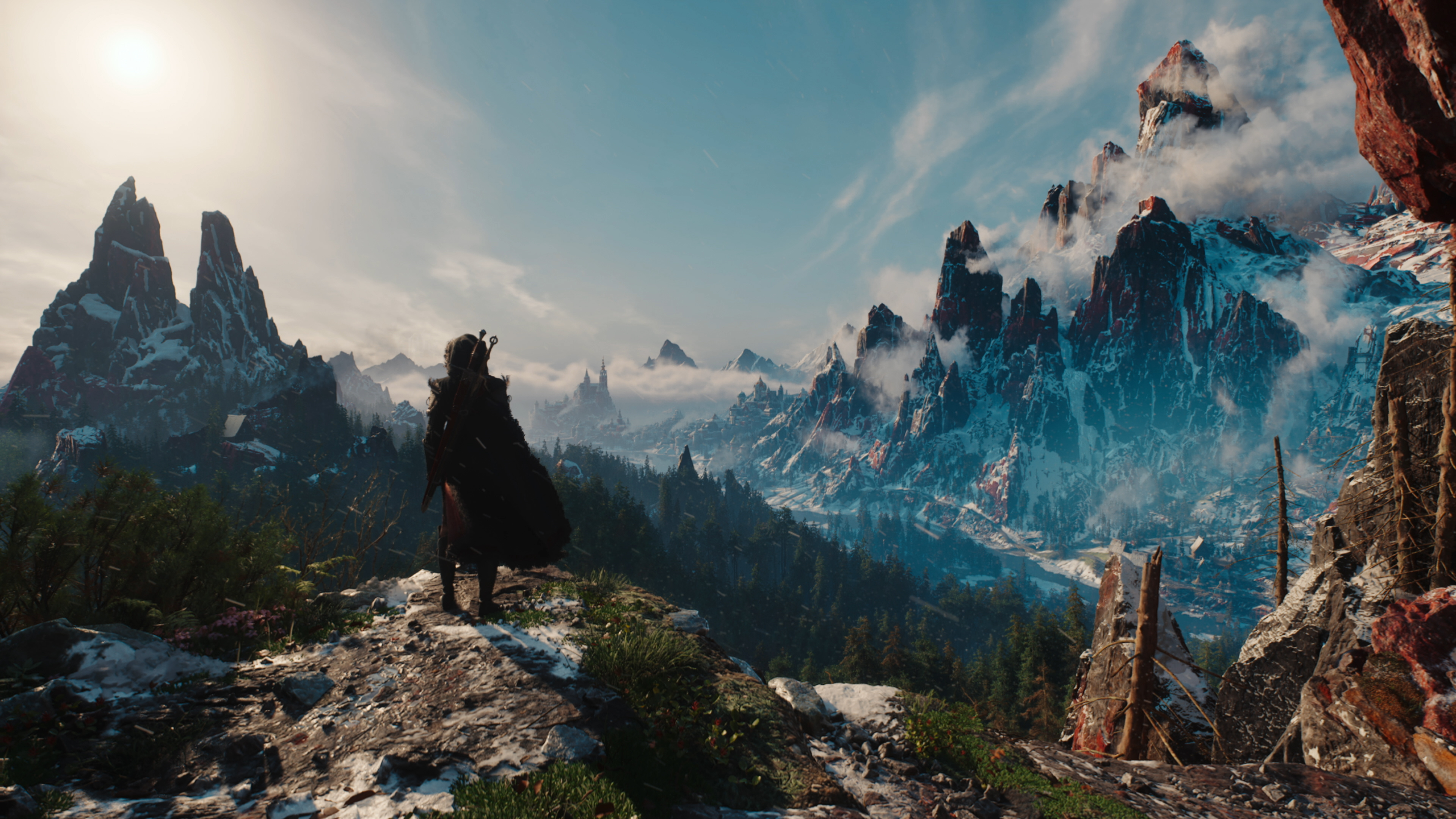
The game takes place a few years after the events of The Witcher 3: Wild Hunt. The action is set in Kovir, a wealthy northern kingdom that was mentioned in previous Witcher games and Andrzej Sapkowski's novels but never appeared in-game. Known for its mineral wealth and described in the books as having "two seasons: August and winter," Kovir offers a wilder, more sparsely populated landscape than the war-torn regions of The Witcher 3.
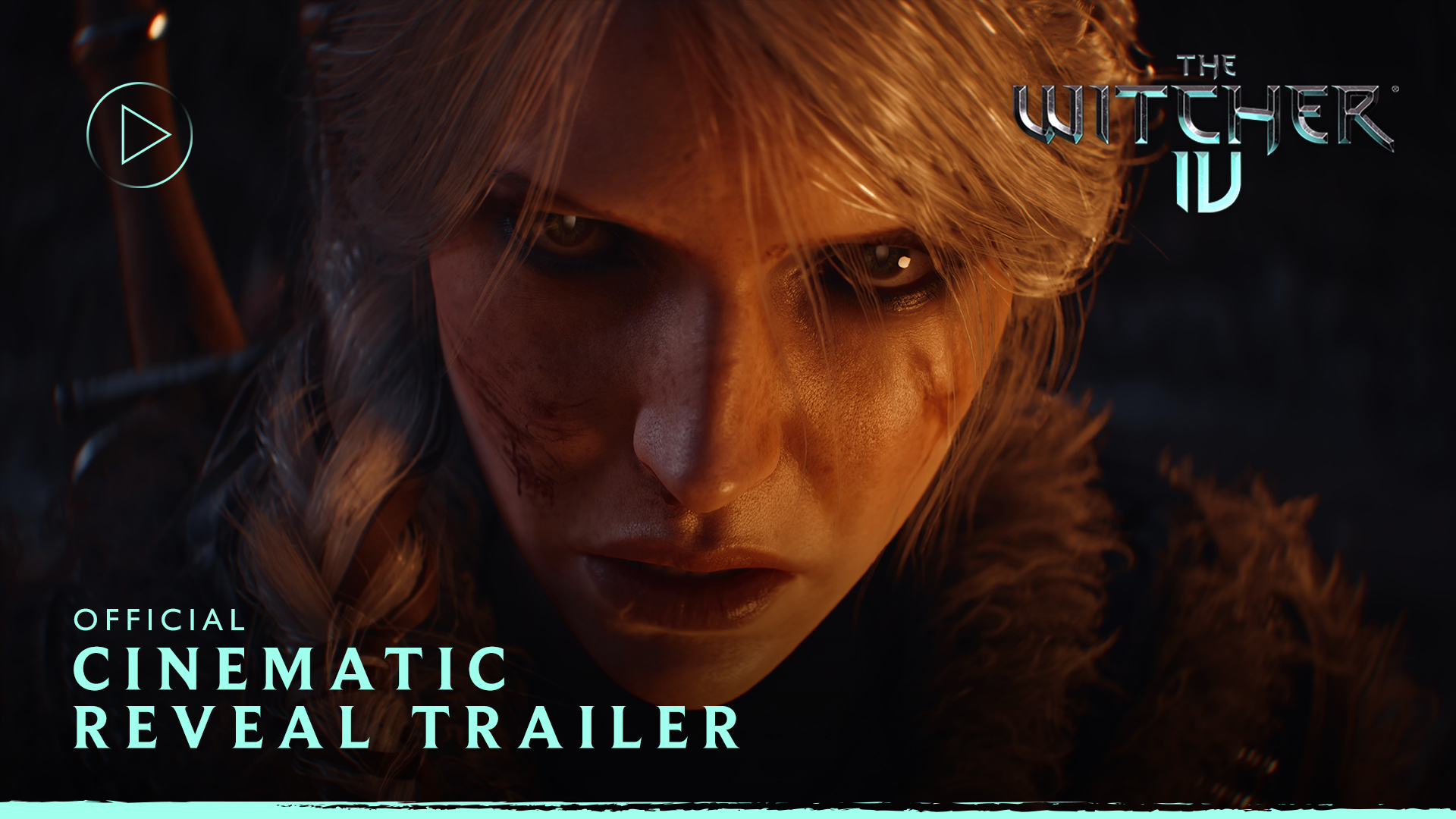
Two locations have been shown. The cinematic trailer features Stromford, a remote village where a character named Mioni is about to be sacrificed to a monster called the Bauk. The tech demo introduces Valdrest, a coastal port town where Ciri takes a contract to hunt an Imperial Manticore that has been attacking salt shipments from a nearby settlement called Korviso.
Story
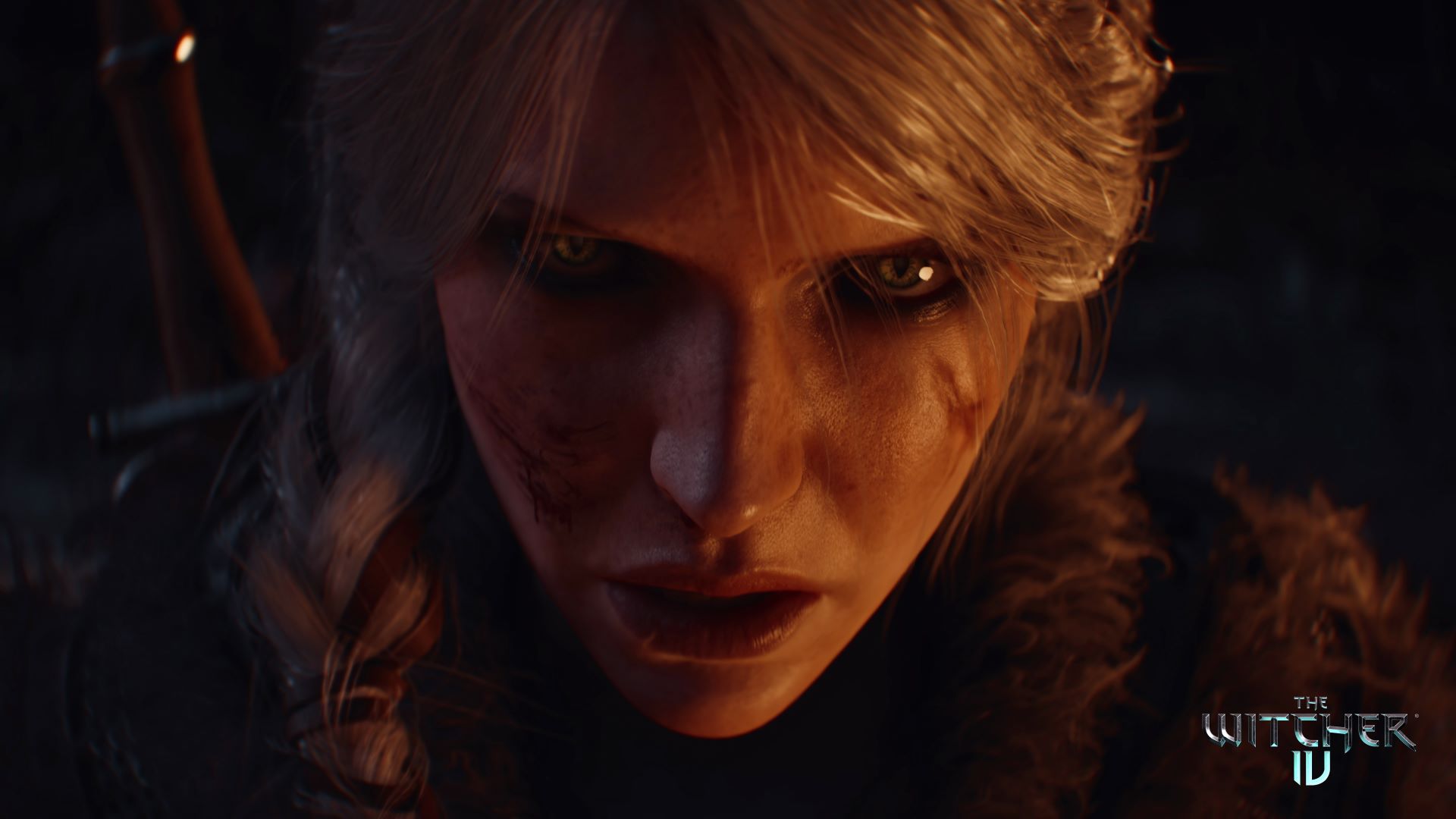
The Witcher IV follows Ciri as a fully trained witcher who has undergone the Trial of the Grasses. She wears the medallion of the School of the Lynx and carries the silver sword Zireael. Game director Sebastian Kalemba confirmed that players will experience Ciri's Trial of the Grasses firsthand during the game, witnessing her transformation.
The game picks up the Witcher 3 ending where Ciri survives and chooses the witcher's path. CDPR franchise and lore designer Cian Maher addressed the other endings directly: "There are hints in that ending that highlight the fact that she probably does not die." He added that Ciri's story will not "break any canon or even offend any canon."
Story director Marcin Blacha, who has led the narrative since the original Witcher game in 2007, is returning. The narrative is built around moral ambiguity and meaningful quest design. CDPR has promised no fetch quests, with every quest carrying narrative content. The narrative director wants consequences to be clearly visible to players rather than hidden behind obscure branching.
Gameplay
Ciri's combat style is described as "liquid" by the developers, emphasizing agility and speed over Geralt's defensive approach. She wields two swords (steel and silver), has access to witcher signs and broader elemental magic, and uses a chain weapon as her secondary tool. The cinematic trailer shows her taking a witcher potion that activates her mutations, with her eyes shifting to the witcher cat-eye form.
The open world is roughly the same size as The Witcher 3, which covered about 142 square kilometers including DLC areas. CDPR has described the scale as "90 to 100 percent" of the previous game's map. Kelpie, Ciri's black mare from the novels, is the horse companion.
Romance options are confirmed. Game director Sebastian Kalemba told GameSpot: "We want to pay a lot of attention to it and make it super compelling and very meaningful. So it's not just to make a romance for the sake of making a romance. That's not the CDPR way."
Voice cast
Ciri is voiced by Ciara Berkeley, replacing Jo Wyatt from The Witcher 3. Berkeley is an Irish actress whose credits include Normal People and Bad Sisters. CDPR stated she "truly brought Ciri to life" in the trailer. Geralt is voiced by Doug Cockle, reprising his role from all previous games.
Soundtrack
Two composers are confirmed: Marcin Przybylowicz and P.T. Adamczyk, both returning from The Witcher 3 and Cyberpunk 2077. Adamczyk composed the cinematic trailer track "No Gods, Only Monsters," with lyrics by CDPR writer Borys Pugacz-Muraszkiewicz. The track is available on streaming platforms.
Development
Development is led by game director Sebastian Kalemba, formerly CDPR's head of animation. As of late 2025, over 447 developers are assigned to the project, exceeding original targets. About 100 veterans from The Witcher 3 remain at the studio. CDPR also hired a lead designer from Kingdom Come: Deliverance 2 to work on the game.
The switch to Unreal Engine 5 was announced in March 2022. CDPR and Epic Games have collaborated on new tools including FastGeo Streaming and Nanite Foliage rendering. The tech demo ran on UE 5.6 at approximately 900p internal resolution, upscaled to 1440p via Temporal Super Resolution.
CDPR confirmed the game will not release in 2026. CFO Piotr Nielubowicz stated it "will not be released before 2027." The two planned sequels are expected to follow at three-year intervals.
CDPR has committed to not using generative AI for content creation. Joint CEO Michal Nowakowski stated: "Gen AI, to be honest, is quite tricky when it comes to legal IP ownership and so on." The studio uses AI only for internal productivity tools.
Platforms
The Witcher IV is confirmed for PlayStation 5, Xbox Series X|S, and Windows PC. No other platforms have been announced.