

Page Scope
Zhou is the name shared by both the nation and its capital city. This page focuses on the capital metropolis players explore in The God Slayer. For the wider nation, its history, and design philosophy, see Zhou Kingdom. For a more focused profile of the playable urban map, see Capital City.
Overview
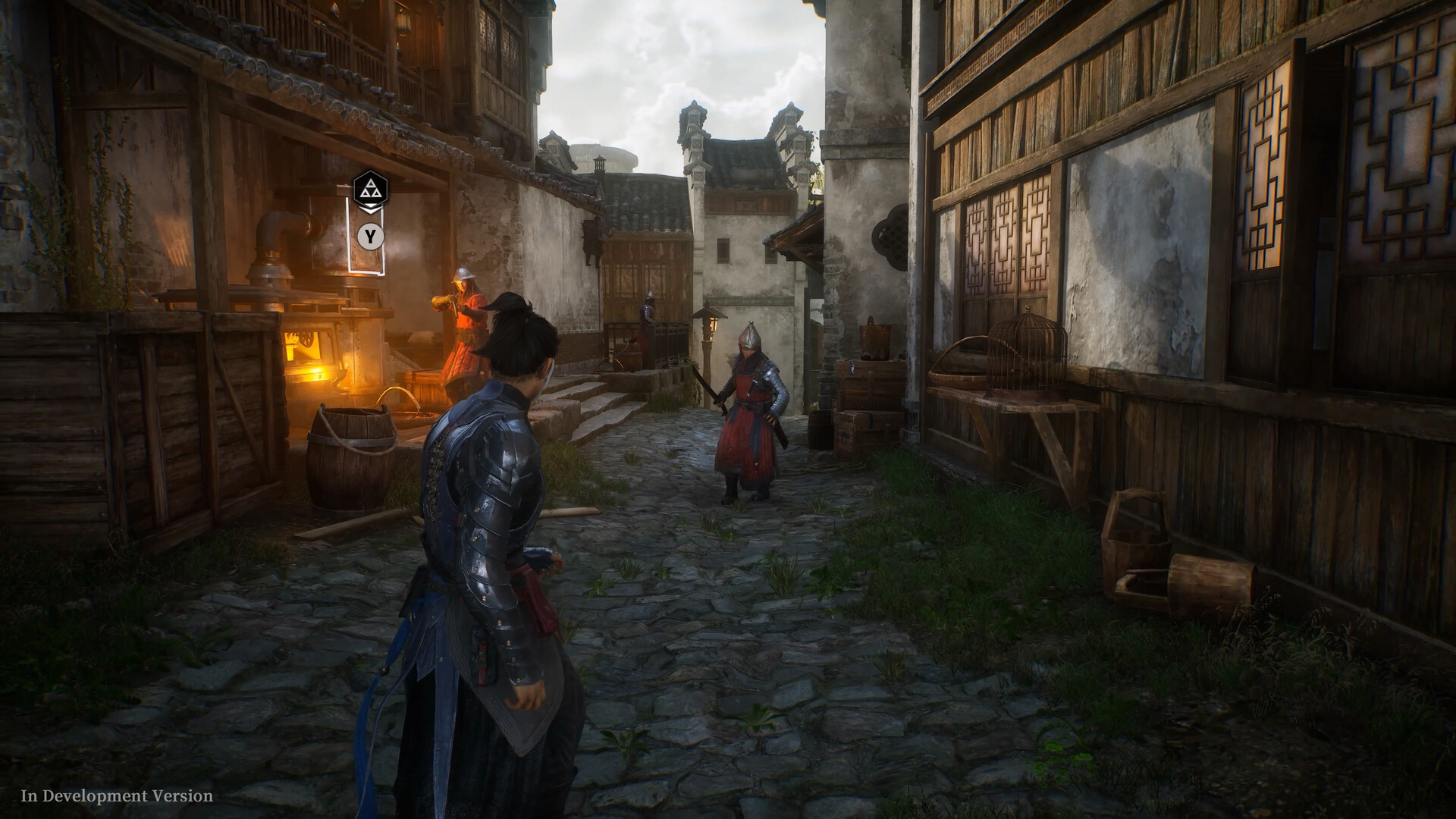
Zhou is the capital city of the Zhou Kingdom and the primary setting of The God Slayer. Situated at the confluence of two rivers emptying into the Eastern Sea, Zhou is a densely populated metropolis. The total map covers approximately 5x5 km, with the city proper occupying roughly 3x3 km. This is dense, vertically layered urban space, not empty open terrain.
Architecture and Design
Zhou's architecture draws heavily from Chongqing, China, a city known for its dramatic topography and layered urban structures. Pathea has described the aesthetic as Ming dynasty aesthetics imagined a few hundred years further on, after steam technology arrived. Sky-piercing towers rise above narrow streets. Monorails and cable cars connect different elevation levels. The design language combines traditional Chinese architectural details (tiled roofs, ornamental gates, market stalls) with industrial-age machinery: steam pipes, gear mechanisms, factory smokestacks, and mechanical conveyances.
Clothing and gear follow the same principle, pairing traditional robes with mechanical elements, and the city's vertical design sets it apart from the horizontal sprawl of Western steampunk. The result is a setting that looks distinct from the familiar London-inspired steampunk seen in most games.
Technology
Zhou's steampunk technology is visible everywhere. Airships float above streets, steamboats travel the rivers, monorails run through industrial districts, and steam vehicles share roads with pedestrians and traditional vendors. Clockwork constructs operate alongside human workers in factories and public spaces.
Districts and Social Divide
Zhou is sharply divided by class. Upper-class districts have air-conditioned homes, mechanical washing drums, and elegant steam-powered amenities. The wealthy enjoy the benefits of the city's technological advancement while remaining insulated from its costs.
Lower-class neighborhoods are dominated by soot-blackened factories, cramped worker housing, and exploitative labor conditions. The poor fuel the city's industrial engine while receiving few of its comforts. This class divide is woven into the game's narrative and reflected in the visual design of each district.
Transportation
Zhou offers multiple traversal options. For on-foot movement, elemental abilities like Fire boosters and Water glides provide fast, vertical mobility. For longer distances, the city has a functioning subway system, bus routes, and fast-travel points.
There are no player-driven vehicles. Creative director Zifei Wu has said: "Adding vehicles would be pretty much overkill" given the city's density and the player's elemental mobility options.
Beyond the City
The game world extends beyond Zhou's urban core. Areas outside the city include dungeons, underground areas, ancient temples, rice fields, and small villages. These areas offer different environmental conditions that affect elemental combat, with caves strengthening Earth abilities and open water boosting Water attacks.
Points of Interest
Named locations within Zhou include the former royal palace (now under Celestial control), the industrial waterfront district, the underground network used by the Star Fall Society, market squares, residential neighborhoods, and the factories that power the city's steam technology. Each area offers distinct visual character, enemy compositions, and exploration opportunities.
Environmental Combat
Zhou's dense urban environment plays directly into the combat system. Destructible market stalls, rooftop chase sequences (with tiles ripped loose as weapons via Earth), fights along the riverside (boosting Water attacks), and industrial zones filled with metal scrap (empowering Metal abilities) make the city itself a tactical consideration in every encounter.