

Overview
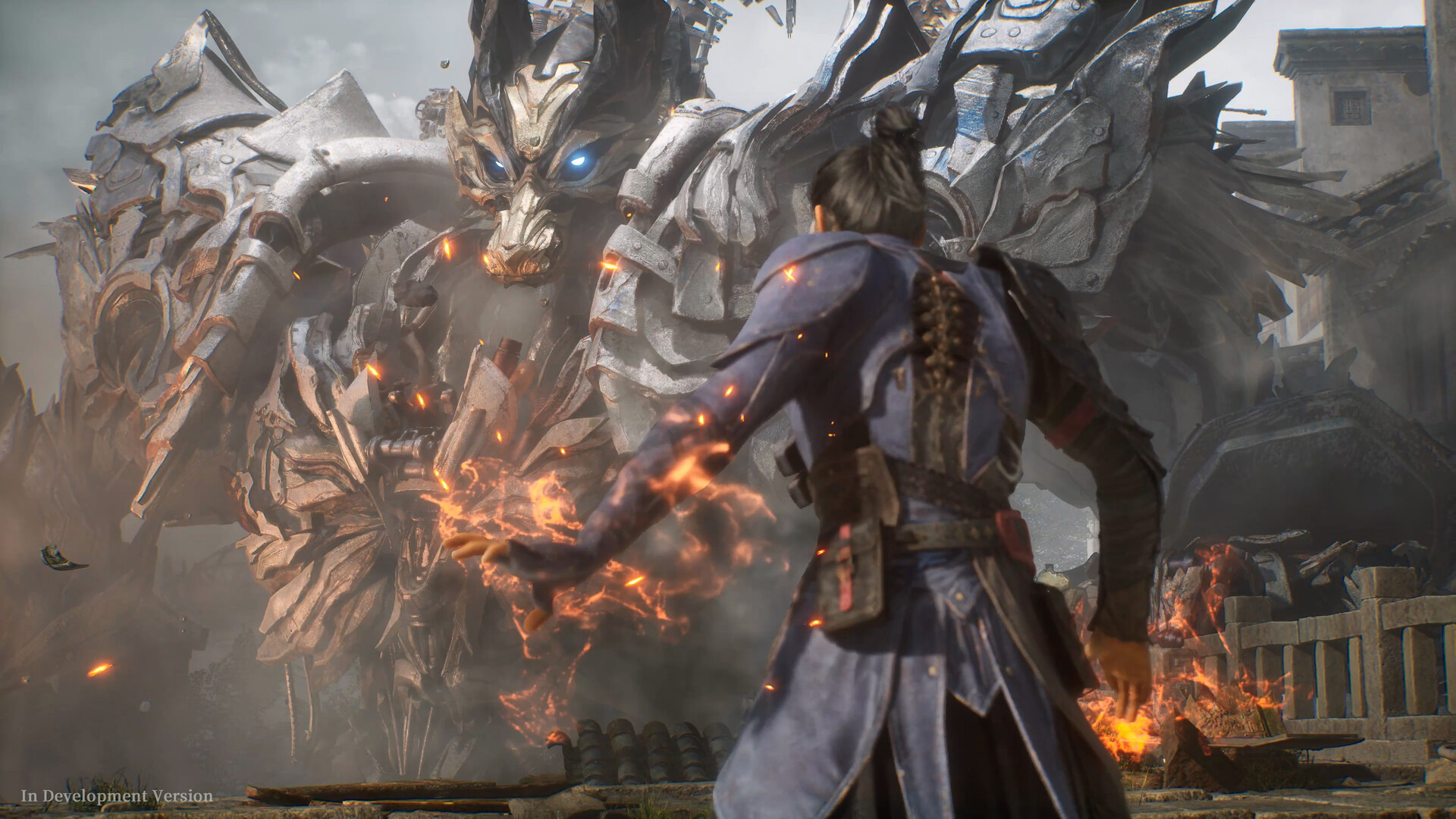
The combat system in The God Slayer blends unarmed martial arts with the five-element Elemancer system. Inspired by Jackie Chan, Jet Li, 1980s Hong Kong martial arts cinema, and games like Sifu and Batman: Arkham, the combat is designed to "direct attention to one opponent at a time, keeping the action readable, fluid, and cinematic," according to the developers. Cheng fights primarily with his fists, channeling Qi through the elements to augment every strike. Tai Chi and Kung Fu-inspired movements are visible throughout the gameplay animations.
Martial Arts Foundation
Core combat revolves around unarmed martial arts. Cheng delivers flurries of punches, kicks, and acrobatic strikes that flow naturally into elemental attacks. Players have noted a one-inch punch in Cheng's moveset. The animation system, built using motion capture from real martial artists at Pathea's in-house facility, prioritizes fluid transitions between normal attacks and Qi-enhanced elemental moves.
Weapon Pickups and Interactions
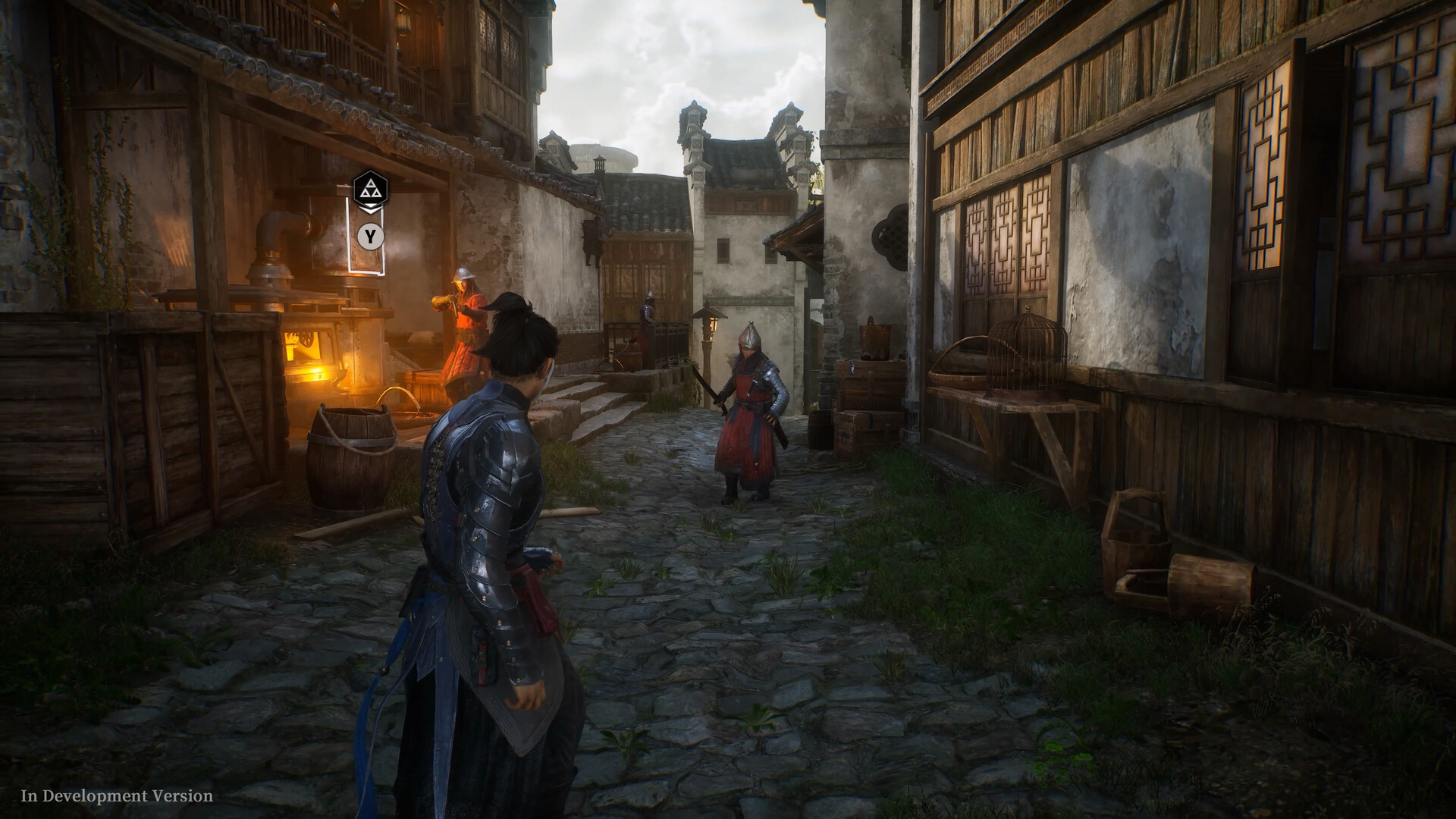
While unarmed combat is Cheng's specialty, he can pick up weapons dropped by defeated enemies. The left shoulder button serves a dual purpose: it grabs highlighted weapons from the ground and also initiates environmental interactions with designated objects. Picked-up weapons are temporary, degrading with use, but they provide situational advantages and variety.
Environmental Combat
The environment plays an active role in combat. Destructible elements, from roof tiles to wooden structures to water barrels, can be manipulated using Qi or destroyed for tactical advantage. QTE mechanics trigger for specific environmental objects during combat sequences.
The gameplay trailer included a restaurant fight where Cheng flips a table at his opponents. The developers described this table flip as "entirely unnecessary" but included it to demonstrate the level of environmental interactivity they are building. However, not everything in the world is destructible. Interactions are "designed," meaning specific elements are designated as interactable rather than everything being breakable.
Fighting near water enhances Water attacks. Fighting in industrial areas provides materials for Metal abilities. Civilian reactions add context: families at dinner react negatively when combat destruction happens nearby, giving the world a sense of consequence beyond just the fight.
Enemy Design
Enemies use their own elemental powers, requiring strategic responses. A fire-wielding enemy might be best countered with Water, while an armored foe might require Earth's raw physical force or Metal's stance-breaking attacks. Celestial enemies are the most dangerous, combining multiple elements and aerial mobility.
Qi Management
Using elemental abilities consumes Qi, which regenerates gradually and through successful melee attacks. Managing Qi expenditure is a core combat skill. Overcommitting to elemental attacks leaves Cheng reliant on basic martial arts until Qi recovers. Wood element buffs can help manage Qi efficiency.
Difficulty Scaling
The God Slayer offers two difficulty modes. Story Mode is the casual mode, in the developers' own description. Combat is forgiving, button-mashing remains viable, and players can overlevel to ease difficult encounters. Challenge Mode scales enemies with the player's level, and mistakes are punished swiftly. The developers describe it as potentially lethal in just two hits for unprepared players.