

Overview
The God Slayer and the My Time series (My Time at Portia, My Time at Sandrock) share a single connection: their developer, Pathea Games. There is no shared universe, no narrative connection, no overlapping characters, and no lore continuity between the games. They are entirely separate properties in different genres. The My Time games are cozy life simulation RPGs about building a workshop, farming, crafting, and befriending townspeople. The God Slayer is a dark, mature action RPG about overthrowing divine rulers through martial arts and elemental combat.
The Genre Shift
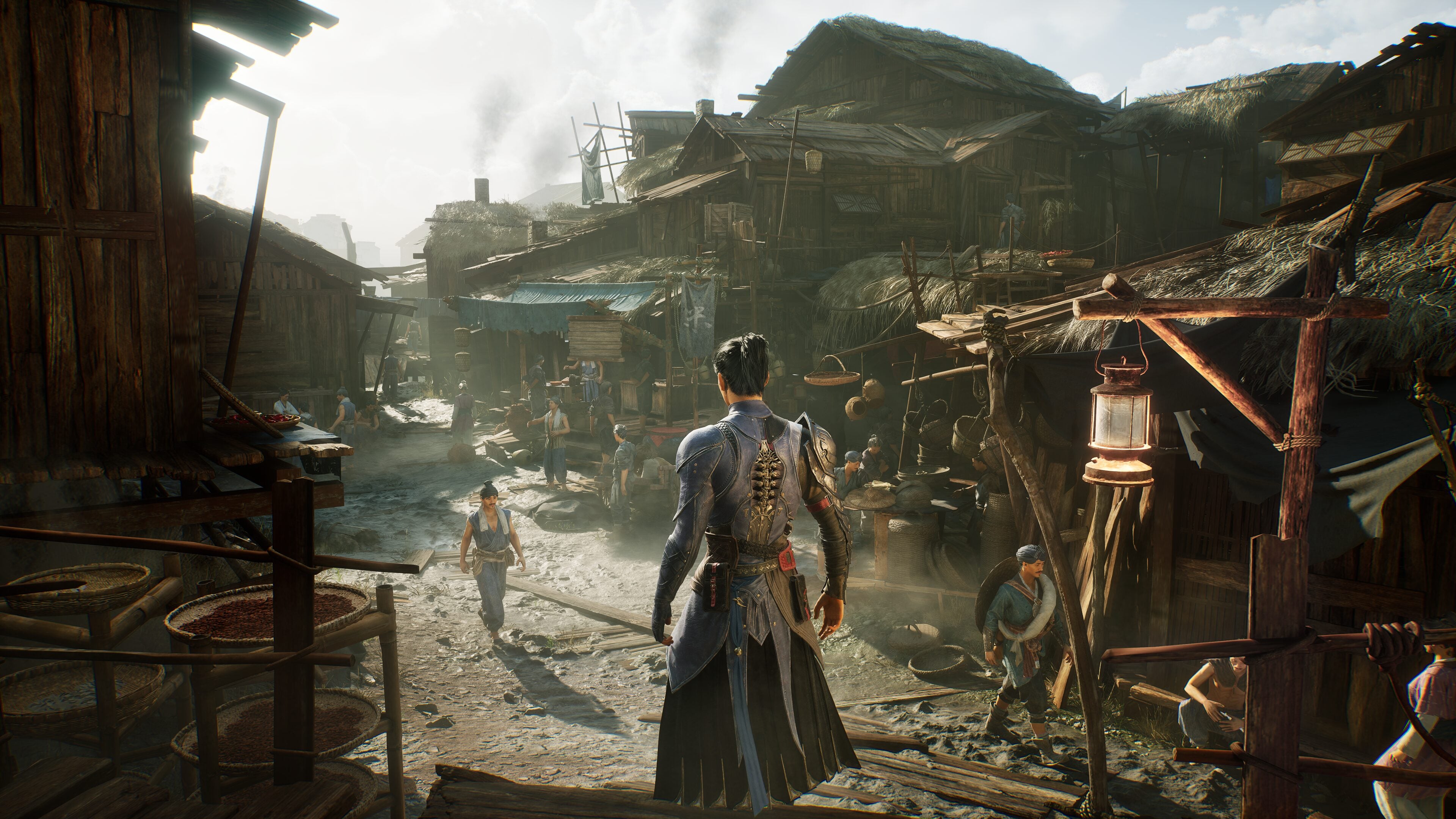
On the surface, the shift from cozy life sims to a game where, as creative director Zifei Wu put it, "the player's family is gonna die pretty much" seems dramatic. My Time at Portia is a game about building a home, raising animals, and attending town festivals. The God Slayer is a game about channeling Qi through five classical elements to fight divine beings in a steampunk city. The tonal gap is enormous.
Wu sees the transition differently. He frames the My Time games as "open-world RPGs" already, pointing out that Portia and Sandrock feature explorable worlds of roughly 2 km by 2 km, quest systems, character relationships, and player-driven progression. From his perspective, The God Slayer is an evolution of the same core philosophy (player agency in an open world) rather than a departure from it. The execution is different. The scale is larger. The tone is darker. But the foundational design thinking carries over.
What My Time Contributed
While the games share no fictional elements, the experience of developing and shipping the My Time series provided Pathea Games with practical knowledge that informs The God Slayer's development:
Contribution | Details |
|---|---|
Technical experience | shipping two commercial games taught Pathea the realities of optimization, bug fixing, platform certification, and post-launch support. My Time at Portia launched in Early Access in 2018 and went through extensive iteration before its full 2019 release. That trial-by-fire process is directly applicable to shipping a much larger action RPG |
Narrative lessons | My Time at Portia was criticized for its flat story structure. Sandrock improved with greater player agency and more impactful choices. The God Slayer's emphasis on the dual identity system and multiple mission approaches reflects lessons learned from player feedback on narrative agency |
Open-world design philosophy | building explorable worlds with NPC schedules, relationship systems, and player-driven discovery is something Pathea has practiced across multiple games. The God Slayer's NPC schedule system, where characters follow daily routines that create time-sensitive gameplay windows, is a direct evolution of the daily schedule systems in Portia and Sandrock |
Community management | the My Time series has an active community that provided years of feedback. Managing that relationship gave Pathea experience in responding to player expectations, a skill relevant to launching a game in a new genre with a new audience |
Darker Personal Stakes
Wu's comment that "the player's family is gonna die pretty much" signals the tonal distance between the two properties. In My Time at Portia, the player inherits a workshop and builds a comfortable life in a friendly town. In The God Slayer, Cheng's family was killed during The God Fall, and his personal stakes are survival and vengeance against divine oppressors. The narrative maturity is aimed at a different audience: players who want emotional weight and moral complexity rather than warmth and comfort.
This tonal shift also extends to the game's content. The God Slayer carries content warnings for partial fantasy violence, use of alcohol, and use of tobacco or references. None of these themes appear in the My Time series.
Studio Identity
The God Slayer could reshape how the gaming public perceives Pathea Games. Currently, the studio is known almost exclusively for cozy sims. My Time at Portia earned over 130 million yuan in revenue, with 95% coming from overseas markets, establishing Pathea's commercial viability. Whether The God Slayer can find a comparable audience will determine whether Pathea is seen as a versatile studio capable of working across genres or as a cozy sim developer that took a one-time creative risk.
Wu has positioned the project ambitiously. The China Hero Project support from Sony, the Unreal Engine 5 foundation, the in-house motion capture studio, and the scope of the game's systems all signal a studio committed to competing at a higher tier than the My Time series occupied. The My Time games proved Pathea could ship and sustain commercial products. The God Slayer will test whether those capabilities translate to a different type of game.
Common Misconceptions
Because the studio name is the same, some players and press have assumed connections that do not exist. To be clear:
The God Slayer does not take place in the My Time universe
No characters, locations, or lore elements are shared between the properties
The "My Time" brand is not associated with The God Slayer in any way
The games target different audiences, different platforms (My Time launched on Switch; The God Slayer is current-gen only), and different market segments
The only connection is Pathea Games itself: the same studio, the same creative director in Zifei Wu, and the accumulated experience of building games over more than a decade of operation.
Pathea has given a concrete reason for the change in tone. The studio has said the My Time games were limited by needing a happy ending, to the point that it could not kill off characters: an earlier attempt to do so upset players enough that the studio went back and saved the character. When it came to choosing a follow-up, most of its developers asked for something bigger and darker, and it deliberately picked a direction it saw nobody else working in.