

Overview
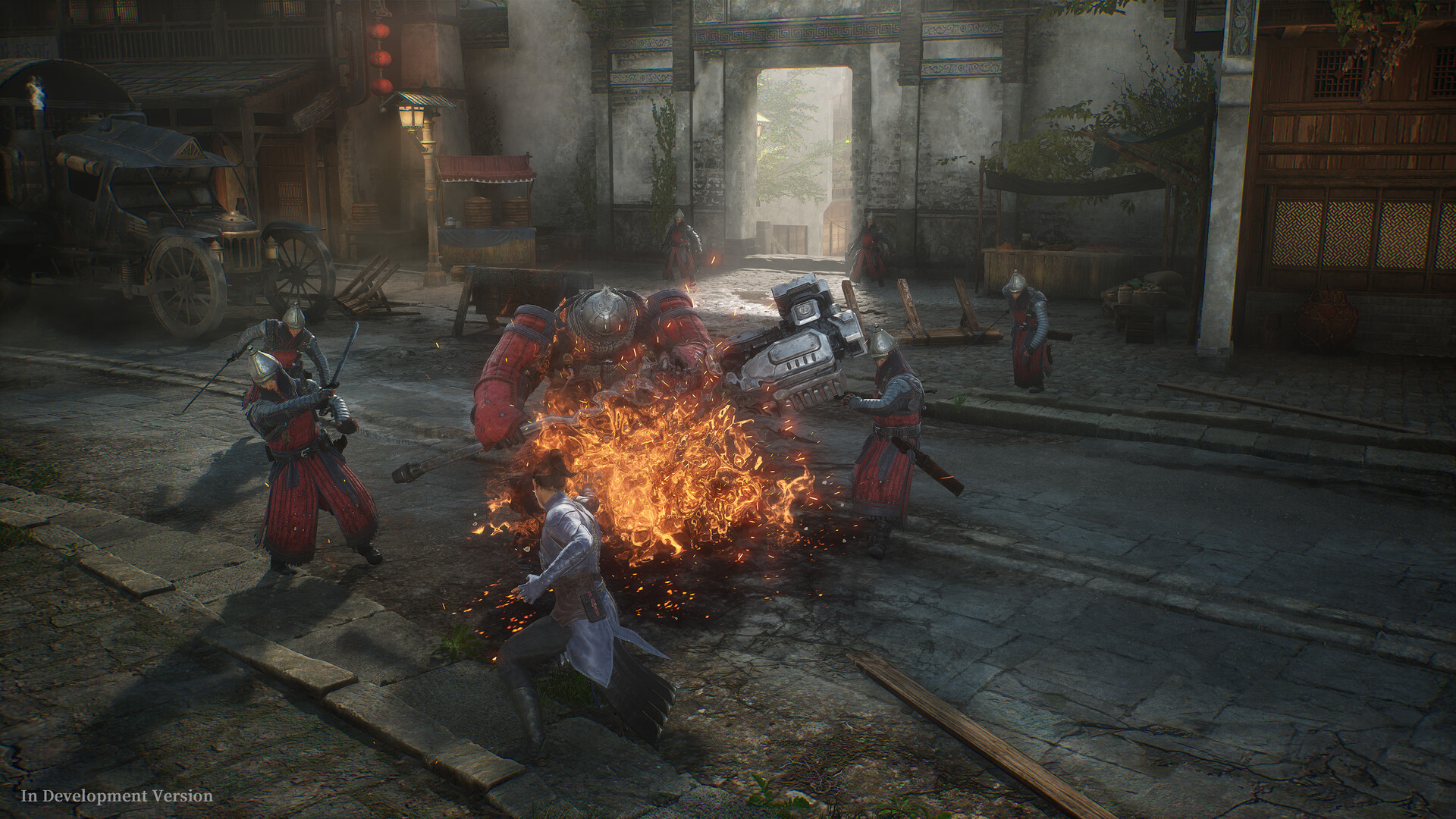
The Zhou Kingdom is described as being "at its height in steam technology." Steampunk technology permeates every aspect of life in the capital city, from massive infrastructure projects to household conveniences. The game's aesthetic replaces the Victorian-era London trappings common in Western steampunk with traditional Chinese architectural and cultural elements, creating a visual identity Pathea has described as Ming dynasty aesthetics imagined a few hundred years further on, after steam technology arrived.
Transportation Technology
The capital's transportation network reflects a civilization that has mastered steam power at scale:
Technology | Description |
|---|---|
Airships | large steam-powered vessels that float above the city's streets, visible throughout the skyline and adding to the world's sense of technological achievement |
Steamboats | travel the two rivers that define the capital's geography, connecting waterfront districts and providing both passenger and cargo transport |
Monorails | elevated rail lines that cut through industrial districts, providing rapid transit between major areas of the city |
Steam vehicles | ground-level vehicles that share roads with pedestrians, market stalls, and traditional transportation |
Subway system | underground rail connecting major districts, offering fast travel for both NPCs and the player |
Bus routes | regular service throughout residential and commercial areas |
Despite this array of public transit options, creative director Zifei Wu has confirmed that there are no player-driven vehicles. Cheng's Fire element abilities provide high-mobility traversal (the developers described fire-based traversal as already overpowered, since Fire arrives at the start of the game and doubles as the main traversal tool), and the city's density makes the combination of elemental movement and public transit sufficient for getting around.
Domestic Technology
Steam technology extends into the homes and daily lives of Zhou's wealthier citizens:
Technology | Description |
|---|---|
Air-conditioned homes | steam-powered cooling systems keep upper-class residences comfortable |
Mechanical washing drums | automated laundry devices powered by steam machinery |
Mechanical appliances | various household conveniences that reduce manual labor for those who can afford them |
This domestic technology is not evenly distributed. The class divide in the capital means that these comforts are concentrated in wealthy districts. Workers in the industrial areas produce the machinery and fuel the factories but do not enjoy the benefits of their labor. This asymmetry is both a narrative theme and a visible feature of the game world: walking from a prosperous neighborhood into a factory district, the player can see the technology shift from polished convenience to grimy industrial output.
Industrial Infrastructure
The industrial backbone of Zhou's steam civilization consists of soot-blackened factories where workers labor in difficult conditions. These factories produce everything from the mechanical appliances enjoyed by the wealthy to the ammunition and machinery used by Celestial enforcers. Smokestacks, steam vents, brass piping, and gear mechanisms are visible throughout the industrial zones, creating a visual environment that contrasts sharply with the traditional pagodas and ornamental gates found in residential and cultural districts.
Architecture
The fusion of traditional Chinese architecture with industrial technology defines the capital's visual identity. Pagodas sprout brass pipes. Market stalls sit beneath monorail tracks. Ornamental gates frame views of factory smokestacks. Tiled roofs are interrupted by steam vents. This is not a world where technology replaced tradition; the two coexist, sometimes harmoniously and sometimes in jarring contrast.
Clothing and personal equipment follow the same principle. Characters wear "traditional robes with mechanical elements," and the city's "vertical design" distinguishes it from the flat, horizontal layouts of Western steampunk cities. The result is a setting that looks and feels distinct from any existing steampunk game.
Technology and Class
The distribution of technology mirrors the Zhou Kingdom's social hierarchy. The Celestials sit at the top, commanding the most advanced technology and using it to enforce their rule. The wealthy class enjoys steam luxuries in their daily lives. The middle class has access to public infrastructure (transit, markets, basic services). The lower class labors in factories, producing the technology that others enjoy while receiving few of its benefits.
This class-through-technology divide feeds into both narrative themes and gameplay. Faction relationships with working-class NPCs and upper-class contacts open different types of mission approaches. Understanding who benefits from Zhou's technology and who suffers under it informs how Cheng navigates the city's social hierarchy.