
Loading...
Farming
February 11, 2026 at 08:28 AM
Added best early crops for profit, planter box detail (farm on boats), weed danger (2 days), animal scaling with crop tiers, water retention systems
Farming is one of the five professions. Your mentor is Graminova, a PhD botanist who teaches you the basics through her questline. The system starts simple but gets deeper as you unlock greenhouses, sprinklers, giant crops, flower hybridization, and automation.
Farming is one of the smartest-designed systems in the game. It is not just about planting and harvesting. Animals solve farming problems. Higher-level crops require higher-level animals for pest control. Everything feeds into everything else, creating a feedback loop that keeps farming from becoming tedious micromanagement.

Clear your farmland of weeds, rocks, and debris.
Till the soil with your hoe.
Sow seeds purchased from shops or found while exploring.
Water the crops daily (or let rain, sprinklers, or water retention systems do it).
Apply fertilizer for better yields if you have it.
Harvest when ready.
Crops grow fast. Most take about one in-game day to reach harvest. Some crops need special setups: cucumbers need trellises, rice needs paddies, mushrooms need shade, and some plants need planting boxes.
If you want fast income early on, these three crops are the best investments:
Wheat -- Grows fast, low seed cost, consistent income. Also useful as a cooking ingredient for stamina meals.
Garlic -- Good profit margin relative to seed cost. Reliable moneymaker.
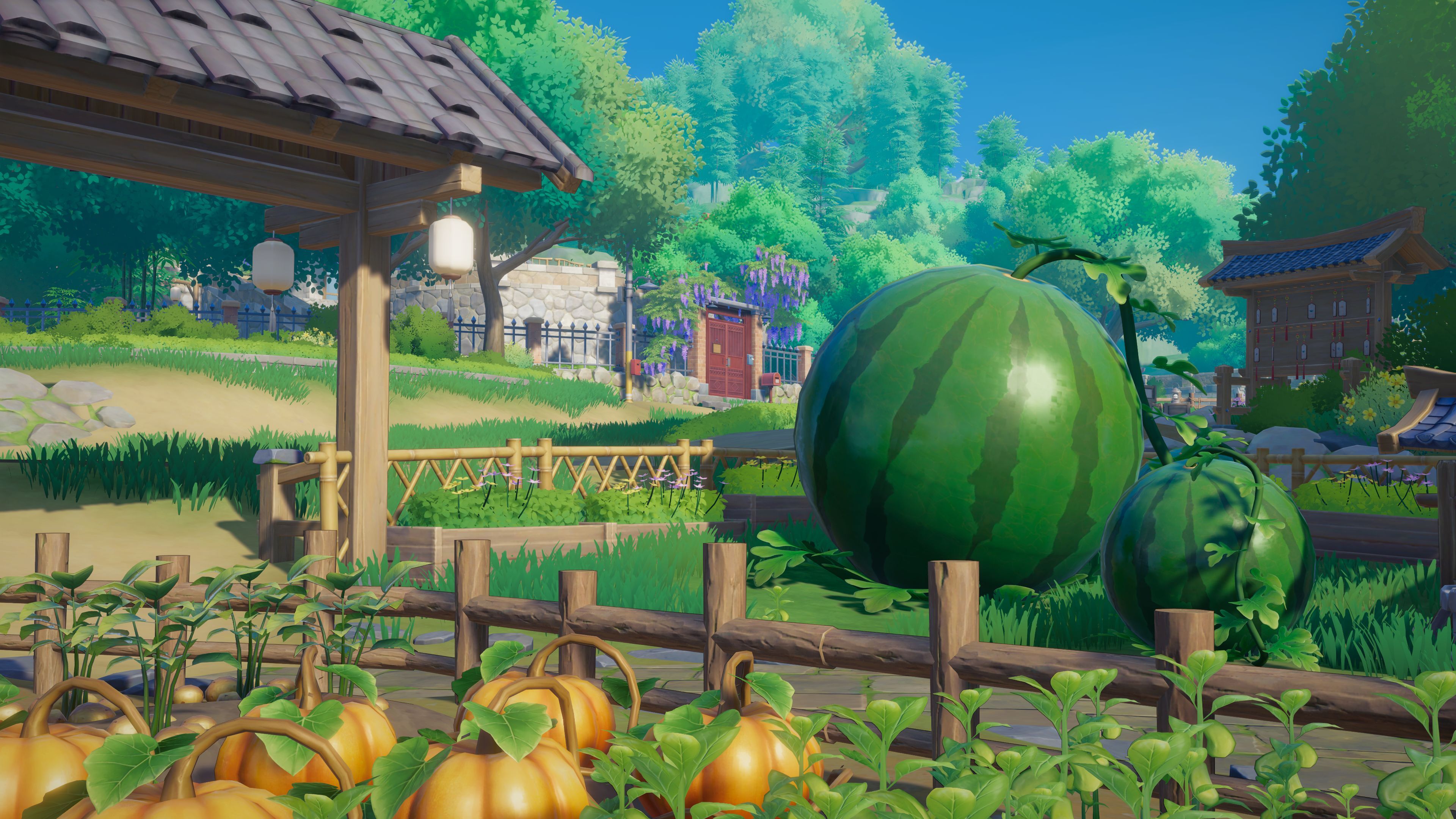
Watermelon -- Higher value per harvest. Plant in a 3x3 grid for a chance at a giant watermelon worth significantly more.
Planter boxes let you grow crops anywhere you can place furniture, not just in tilled soil. This means you can farm on your houseboat, on your private island, or in creative locations. Combined with the building system, you could set up rooftop gardens or boat farms.
The game has nearly 100 crop types. Types include:
Grains (wheat, rice)
Fruits (strawberries, watermelons)
Vegetables (cucumbers, assorted produce)
Fruit trees (long-term investment, produce across seasons)
Climbing plants (need trellises)
Mushrooms (shade-grown)
Flowers (decorative, trade value, and hybridization)
Four seasons: Spring, Summer, Fall, Winter. Each crop has a growing season. Seasonal crops sell for high prices. Rain waters crops automatically.
Plant the same crop type in a 3x3 grid and they have a chance to merge into a single giant crop. Giant crops yield significantly more than nine individual harvests. They can be sold for big profits or crafted into seasonal crop-themed furniture for your home.
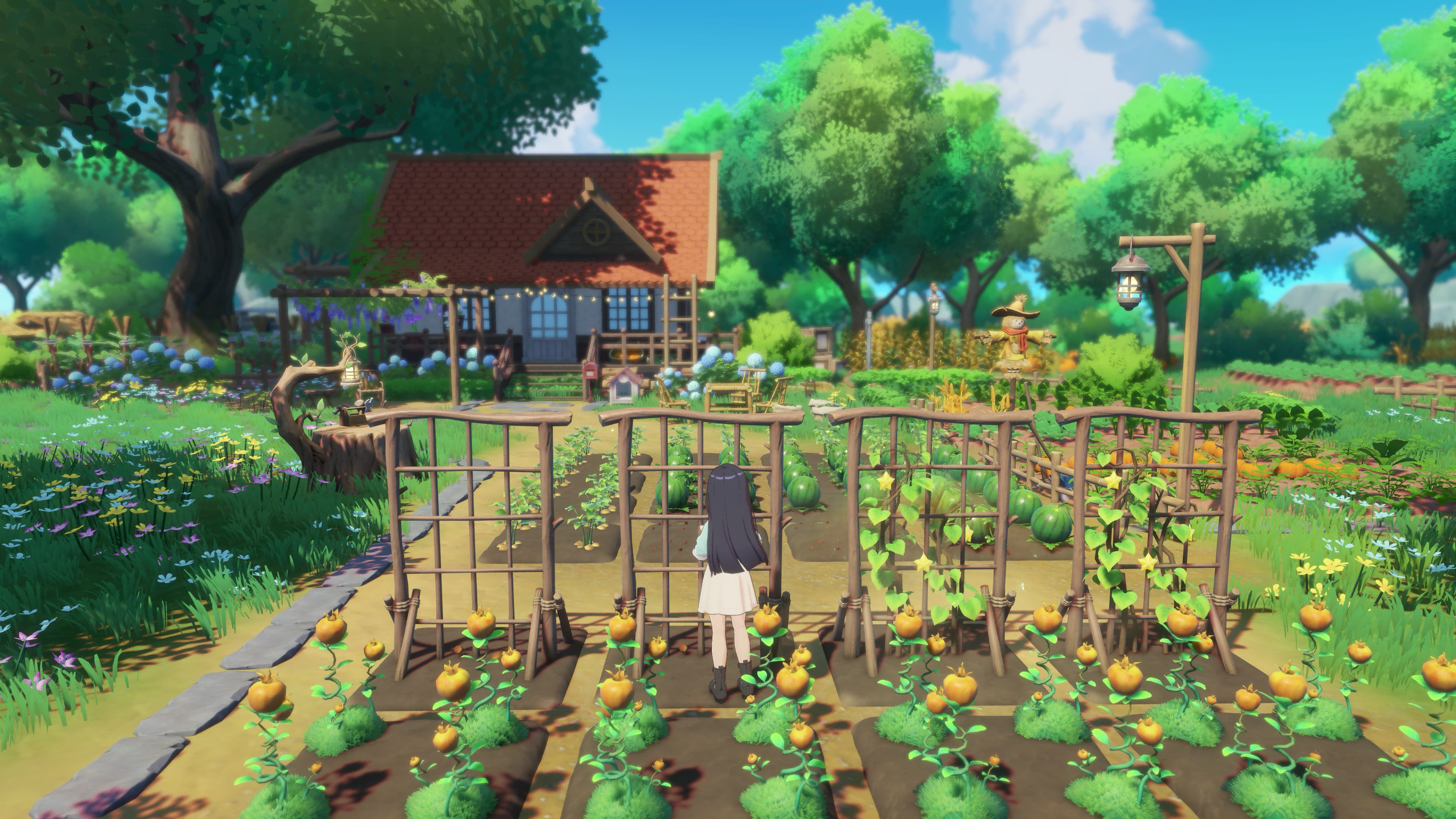
Flowers have a cross-pollination system. The three base colors are red, yellow, and blue. Leave empty plots between flower beds and rare hybrid flowers can grow in those gaps.
Crossbreeding unlocks hybrid colors including pink, orange, green, purple, brown, and black.
Your crops are not safe just because you watered them. Weeds can kill your crops within two days if left unpulled. Pests and snails also threaten your harvest. This is where your ranch animals become essential:
Rabbits eat grass and weeds, keeping your fields clear.
Chicks hunt bugs that damage crops.
Ducks eat snails.
As you unlock higher-level crops, you need higher-level animals to deal with pests that affect those plants. Animals breed on their own and produce materials you can sell or craft with. They scale alongside your farming skill. This symbiotic relationship between ranching and farming is one of the game's smartest design decisions.
Some crops drop everlasting seeds when harvested. These are seeds that never stop growing. Replant them immediately without buying new seeds.
Greenhouses unlock as you progress and let you grow any crop regardless of season, including rare crops that are otherwise unavailable. See Building for construction details.
Later in the game, farming goes from manual to automated. You unlock automatic sprinklers for watering, fertilizer boxes for auto-applying fertilizer, smart robots for harvesting, and water retention systems that reduce daily watering needs. Automated mining and logging also become available. In the beginning farming is manual, but later the gameplay shifts to feel more fresh and varied.
Sell at shops in town for full Starshell value, or use the Instant Shipping Box for about 50% of the price.
Start with wheat, garlic, and watermelons for fast early income.
Start Graminova's questline early for farming skill upgrades.
Get rabbits, chicks, and ducks as soon as you can for pest control.
Pull weeds within two days or they will kill nearby crops.
Try 3x3 grid planting for giant crops once you have space.
Leave empty plots between flowers for hybridization.
Use planter boxes to farm in creative locations like your houseboat.
Prioritize greenhouse and sprinkler unlocks.