

Rewinding Cadence opens at the end. The player wakes up not at the start of a hero's journey but at its failed conclusion, with the world already breaking under the weight of a prophecy called the Sunblight Tide. The story is built around the discovery that the ending is not the end and that a single forty-two-day window has been carved out of fate to give one person a chance to undo what has already happened.
The Premise
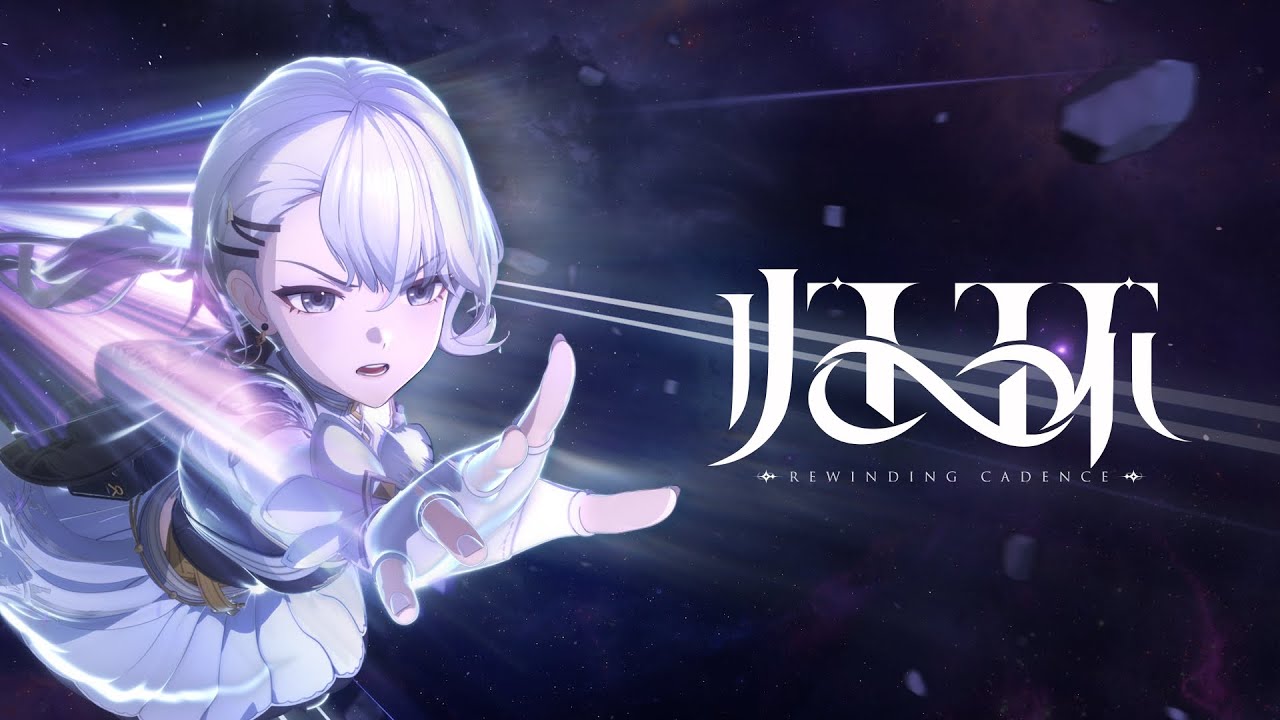
The Returner arrives back in time to a moment forty-two days before the world's destruction. They are not a stranger to this period. They have lived through it before, and the world has fallen each time. The first major narrative beat is a contract with Chu, a humanoid spirit who can grant the power to rewind time but cannot stop the apocalypse alone. Chu's role is part guide, part battle partner, and part anchor: while the world resets, the bond with Chu carries memory forward, which is what keeps the loop from turning into an amnesiac groundhog day.
The Sunblight Tide Prophecy
The Sunblight Tide (also rendered in some translations as the Corroding Tide) is the doomsday prophecy at the center of the story. The official tagline frames the conflict directly: "The Recursor shall overturn the prophecy of the Sunblight Tide, but the end is already written." The line is deliberately paradoxical. The Returner is destined to try and destined to fail, and the goal of every loop is to find the cracks in the prophecy that allow a different outcome to slip through.
The 42-Day Window
The forty-two-day cycle is both a clock and a budget. Every action the Returner takes consumes time. Travel, combat, dialogue, and rest each move the calendar forward. When the calendar hits its end, or when the Returner triggers a rewind, the world snaps back to day one and most of its state is restored. What persists across loops is the Returner's knowledge, certain bonds, and a curated set of memories, which is the engine that lets each playthrough learn from the last.
The Returner's Vow
The announcement trailer gives the Returner's vow explicitly: "No matter how many times it takes, I will rewrite the world with you." The line, spoken to Chu, sets up the cooperative shape of the story. The Returner is not a savior figure operating in isolation. They are the one with knowledge from the future, but Chu is the one with the power to reshape time, and neither can finish the job alone. The story leans on this duality across the rest of the loops, and most major scenes feature the two of them together.
Tone and Influences
Press writeups around the announcement and beta repeatedly compared the structure to time-loop fiction more broadly: stories where the time pressure is itself the central tension, the cast is forced to relive a doomed cycle, and the player learns the world by failing forward. The combat and exploration borrow from open-world action games, and the dice-based dialogue recalls tabletop role-playing games. The synthesis is a story-first action RPG where the failure state is part of the narrative loop rather than something to be avoided.
Spoiler Caution
Most concrete plot beats beyond the opening have not been published outside the closed beta, and any specifics about the antagonist behind the prophecy, the identities of recruitable companions, or the late-cycle endings should be treated as unconfirmed unless they appear in an official trailer or post-launch coverage. This article will be expanded as more story material is verified.
How the World Works
The studio published a short account of the setting's underlying rule when its first public test opened, and it is the most concrete lore statement released so far. The world is a continent called Adar (亚达尔). On it, words spoken in the spirit realm inscribe existence in the real one. Anyone who knows the true law of a concept can sing that concept out, and what emerges is a spirit body. Spirits are therefore not a separate species dropped into the setting; they are what the world does when someone understands something well enough to name it.
That rule is the reason the game's vocabulary works the way it does. Playable characters are Spirit Speakers, 颂灵者, literally those who chant spirits. The bond between a character and a spirit is a contract rather than a capture. And the calamity that ends the world is named for erosion rather than for an enemy.
The studio's own illustration of the tone is deliberately domestic before it turns: a wind spirit brings the scent of chilled watermelon as high summer arrives, and a goat that stands for treasure-hunting waits to start an adventure. Then the Erosion spreads across the land like a plague and the planet's future runs short.
The Studio's Named Reference Points
Rather than leave the influences to press comparison, the studio named them. Its letter asks the reader directly whether they were ever moved by the persistence of Okabe Rintarou or of Shinpei, the lead characters of two well-known time-loop stories, and says that keeping your memories alone while everyone else resets is a lonely thing, but that some people will still solve an apparently impossible problem through intelligence and the willingness to start over any number of times.
That is a design statement as much as a reading list. It puts the emotional weight on repetition and loneliness rather than on puzzle-solving, and it explains why the loop is framed around a vow rather than around an optimisation problem. See the time-loop system for how that framing turns into mechanics.
The Opening Choice
The protagonist begins as an amnesiac spirit speaker, and the opening forces a choice between two characters. Picking one makes the other leave immediately, and the run continues down that character's line. The choice is not cosmetic: it decides which half of the first loop the player sees.
Route | Companion | Where It Goes |
|---|---|---|
First route | Anata, a Royal Academy student | The gate of Loren City, where a corrupt official, a disguised inspector and a foreigner are in play, and then the Academy itself. |
Second route | Pata, who leads a treasure-hunting troupe | Barred from the city, the protagonist goes to the underground street and meets the head of a distant trading house and the owner of a tavern. |
Both routes end the same way. The protagonist is murdered by the companion she chose, and time rewinds. That is the structural point of the opening: the first loop is not a tutorial that the player passes, it is a death that the player is meant to walk into twice.
Sealed Loops and the Third Arc
The two routes are sealed against each other. Knowledge gained in the first cannot be carried into the second, so the second run is played without the shortcuts the first would otherwise hand over. Both are prerequisites for a third arc, in which the culprit is deduced from what the two accounts have in common rather than from anything either one states outright. A clue planted during the second route is only paid off in the third.
The game leans into the reset as presentation as well as structure. One deliberate gag stages a screen close enough to the game's own login screen to make the player think they have been dropped back to the start. A difficulty setting is offered at the very beginning, explicitly so that players who are there for the story can be. See Time-Loop System for how memory carries between cycles and Characters for the roster.
Story content in the April 2026 test build ran to more than twenty hours in total, of which roughly ten hours were implemented main story. The first death arrives about forty minutes in, unannounced.
How the Studio Describes the Structure
Away from its trailers, the studio gives a plain description of the game's shape in the age-suitability notice on its own site. It sets out a main story line and side story lines, both driven forward through dialogue and interaction, sitting alongside open-world exploration. That is the clearest official confirmation that side content is a structural part of the game rather than something observed only in a test build.
The same notice mentions one system that appears nowhere in the game's marketing: a small text-based system for interacting with strangers, described as limited in scope and managed in line with local regulations. Nothing has been published about what it looks like in play, whether it survives a loop reset, or whether a global build would carry it. It is recorded here because it is the only official indication that the game has any player-to-player layer at all.