
Loading...
Loading...
Weather System
April 23, 2026 at 11:14 AM
Added rain visual details, driving grip and tire coupling, and atmospheric mood tie-in
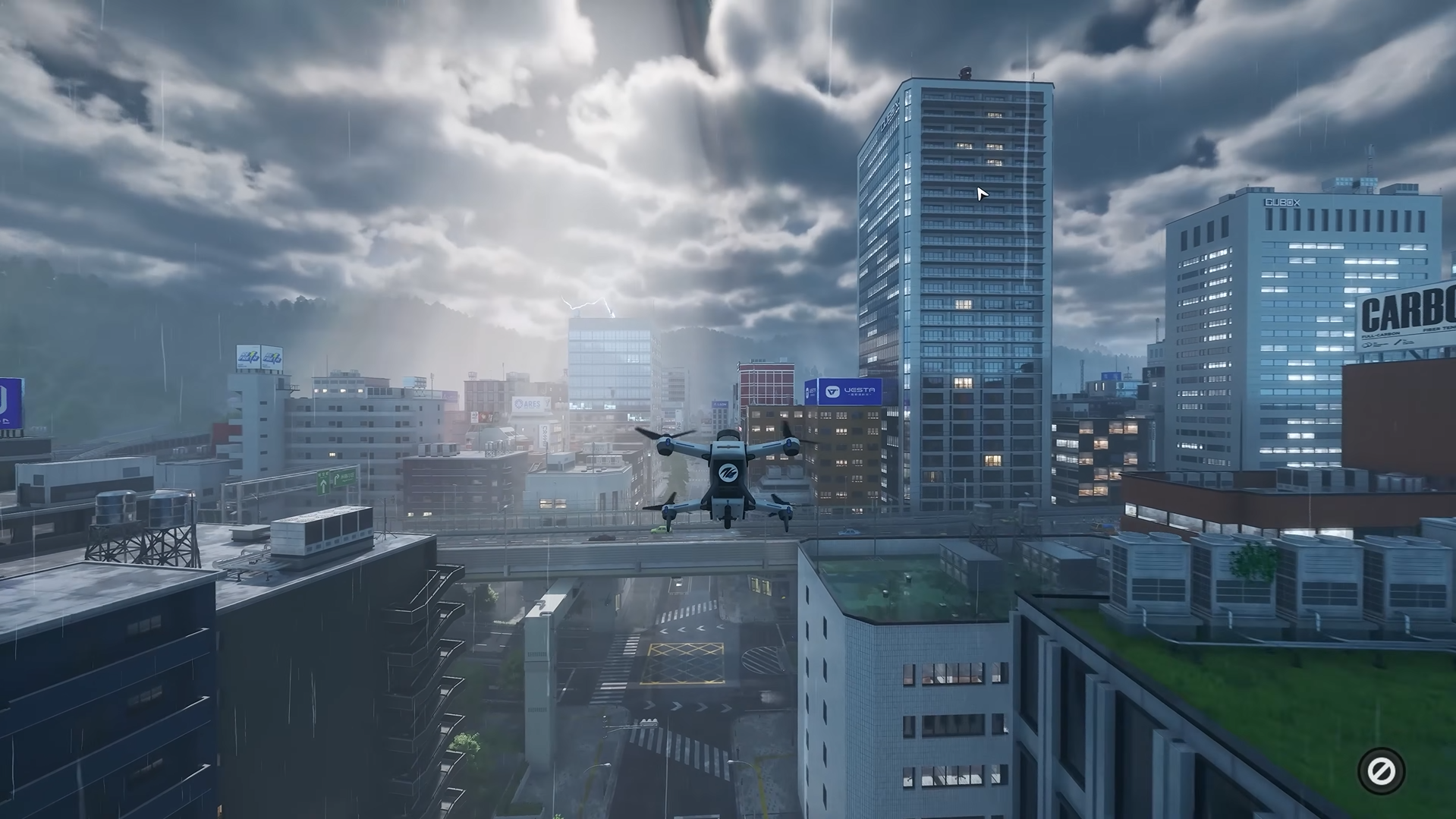
The weather system in Neverness to Everness delivers real-time environmental changes across the city of Hethereau. Rather than serving as a purely cosmetic backdrop, weather in the game directly influences driving physics, visual fidelity, and atmospheric tone. Built on Unreal Engine 5, the system leverages volumetric clouds, physically based rendering materials, and particle-driven precipitation to create an open world that feels genuinely responsive to the passage of time and changing conditions.
Weather transitions happen in real time without loading screens or hard cuts. The sky can shift from clear sunshine to overcast clouds and then to rainfall, with each stage flowing smoothly into the next. Combined with a full day-night cycle, the system ensures that no two visits to the same street corner look or feel identical.
Hethereau cycles through a range of weather conditions that each bring their own visual and gameplay characteristics. The following types have been confirmed across beta tests and developer showcases.
Condition | Visual Effects | Gameplay Impact |
|---|---|---|
Sharp shadows, vibrant textures, and detailed skylines. The city's architecture and signage are at their most visible. | Standard driving traction and full visibility for exploration. | |
Overcast | Soft, diffused lighting with muted colors. Volumetric clouds blanket the sky and reduce contrast. | Ambient mood shifts but no confirmed mechanical changes to traversal. |
Rain | Wet pavement with accurate reflections, rain particle effects, puddles that persist after storms, and visibly moist surfaces. | Reduced vehicle traction. Roads become slicker and cars are harder to control, demanding more careful driving. |
Snow | Real-time PBR snow materials with subsurface scattering. Individual snowflakes shimmer with lifelike translucence as they fall. | Snow accumulates on surfaces. Full gameplay impact details are expected closer to launch. |
Rain is the most gameplay-significant weather condition confirmed so far. When precipitation begins, streets gradually take on a wet sheen and reflections become sharper, particularly noticeable under neon signage at night. Puddles form in lower-lying areas of the road and sidewalk, and these puddles persist for a period after the storm clears rather than vanishing instantly. Surface textures across buildings, concrete, and foliage dynamically update to appear moist, adding a layer of environmental storytelling that reinforces the feeling of a living city.
The Co-Ex Test (February 2026) introduced a significant lighting engine revamp that directly improved rain rendering. Roads now reflect light sources with greater accuracy, and water physics received a notable upgrade. Reviewers reported that rain-slicked streets combined with nighttime neon lighting produced some of the most visually striking moments in the test, especially when viewed from behind the wheel during first-person driving.
Rain is one of the most common weather states players encounter while moving through the city, and its visual treatment is deliberately layered. Character clothing visibly wets down during a shower: fabric takes on a darker, damper appearance as droplets land and soak in, and the effect remains visible for the duration of exposure rather than resetting the moment the rain eases. Building sides also respond to precipitation, with water streaking down concrete and glass surfaces in thin rivulets that follow gravity and catch light as they run. At street level, reflections intensify as the road finish shifts from dry to wet, mirroring signage, vehicle headlights, and passing pedestrians with noticeably more clarity.
These effects are designed to stack rather than replace one another. Walking or driving through a downtown block during a storm, a player will simultaneously see wet character outfits, water running down nearby facades, and glossy reflections travelling across the street surface as the camera moves. The combined presentation contributes to the "supernatural city" aesthetic the weather system is meant to deliver, and it is one of the most frequently demonstrated visual features of the open world.
Snow in Hethereau uses real-time PBR (Physically Based Rendering) materials that react to the game's lighting conditions in a physically accurate manner. The developers highlighted subsurface scattering as a key technique: light passes through each snowflake and scatters within it, producing a translucent, almost crystalline appearance. This level of rendering detail means snowfall looks noticeably different under direct sunlight compared to overcast skies or the warm glow of street lamps at night.
The snow system was showcased during the Containment Test (July 2025) and represents one of the more technically ambitious visual features in the weather pipeline. Snow gradually accumulates on horizontal surfaces, adding a visible layer to sidewalks, rooftops, and parked cars as conditions persist.
The snow system also affects how the city feels to navigate. Snow-covered roads may alter vehicle handling, similar to how rain reduces traction on wet asphalt. The visual transformation of Hethereau under heavy snow, with accumulation on rooftops, parked cars, and sidewalk railings, creates a distinctly different atmosphere from the city's rain or clear-sky states.
All weather changes in Hethereau happen seamlessly without loading screens or hard cuts. The sky gradually shifts between states: clear skies can give way to gathering clouds, which thicken into overcast conditions before rain begins. Similarly, rain eases through a drizzle phase before clearing. These transitions occur in real time as players explore, meaning the weather can change noticeably during a single traversal session across the city. The seamless nature of weather transitions reinforces the game's commitment to uninterrupted open-world exploration.
Driving in Hethereau is directly affected by weather. Under clear conditions, vehicles respond predictably with firm traction on dry asphalt. Once rain begins, road surfaces become slippery, and players will notice reduced grip when cornering, braking, or accelerating hard. This mechanic adds a risk-reward dimension to vehicle traversal: driving fast through rain-slicked streets is possible but demands greater attention to steering and throttle control.
The developers have confirmed that weather variables feed into the driving simulation. During the Co-Ex Test, testers noted that rain meaningfully changed how cars and motorcycles handled, making pursuits and police chases more unpredictable. Night driving in rain was singled out as especially immersive, with headlights scattering off wet pavement and rain droplets streaking across the screen.
Weather is not just a visual layer on top of driving; it participates directly in the physics simulation. When rain begins, grip values drop and vehicles that were perfectly controllable a moment earlier can start to step out under acceleration, braking, or cornering load. Cars without sufficient grip for the surface, or cars that have not been fitted with tires matched to the current road condition, are especially prone to spinning out. Players who push speed through a wet turn on stock rubber will feel the back end break away faster than it would on dry asphalt.
To compensate, players can upgrade tires to suit specific road or terrain conditions. Investing in the correct tire compound restores usable grip on rain-slicked streets and gives drivers a wider margin of error during storms. Tire setup is therefore a meaningful choice rather than a cosmetic one, and it interacts with the kinds of activities the city throws at the player. Delivery runs under the City Tycoon system, Street Racing events on timed circuits, Taxi Driver fares with impatient passengers, and getaway driving during a Pink Paws Heist extraction all become measurably more difficult if the current weather has eaten into the grip budget and the tires on the chosen car are not up to the task.
The practical result is that choosing a car, choosing tires, and watching the sky become linked decisions. A player heading out for a race in clear weather can run a performance-tuned setup, while a player running a long delivery route during a rainstorm will benefit from a grip-focused setup that sacrifices some top speed for stability. This coupling between weather and the upgrade path means that tire selection carries real gameplay weight rather than being a superficial slot to fill.
Hethereau runs on a continuous day-night cycle that transitions gradually between time periods. Mornings begin with soft golden-hour light casting long shadows across the streets. Midday brings direct overhead lighting with strong contrast and vivid colors. As afternoon fades, the city enters a warm twilight phase before full darkness settles in and the urban landscape transforms into a neon-lit nightscape.
These shifts are not instantaneous. The sun moves across the sky and lighting conditions update in real time, meaning players can watch the transition happen naturally during a long exploration session. The revamped lighting engine introduced in the Co-Ex Test made these transitions more realistic, with improved color grading and more accurate shadow behavior at each time of day.
The weather and time systems connect directly to NPC behavior throughout Hethereau. Non-player characters follow daily schedules that respond to the current time of day. Shopkeepers open their storefronts in the morning and close at night. Pedestrians commute between residential areas and workplaces, and the density of foot traffic shifts throughout the day. Street vendors appear during peak hours, while the nightlife district comes alive after dark.
NPCs also react realistically to events happening around them. The result is a city that feels populated by inhabitants with their own purposes rather than static figures placed for decoration. This dynamic population layer, combined with changing weather and lighting, means the same neighborhood can feel entirely different depending on when you visit.
One of the most distinctive features of the weather system is its connection to anomalies. When supernatural disturbances manifest in the city, the environment undergoes a seamless, real-time transition into a far more unsettling state. The sky can darken unnaturally, strange atmospheric effects distort the surroundings, and familiar streets take on a surreal, almost nightmarish quality. Buildings may become covered in visual static, objects can float in mid-air, and the fabric of reality itself appears to warp.
These anomaly shifts happen without any loading screens, pulling the player from an ordinary rain-soaked evening stroll into a deeply unsettling supernatural encounter in one continuous experience. The development team at Hotta Studio has described this as "100% seamless gameplay," where the boundary between the normal world and the anomaly-infused version of Hethereau dissolves in real time. Anomalies can take wildly varied forms: a city block transformed into a puzzle cube, a building's blueprint turned into a perspective maze, or pocket dimensions housing hostile creatures.
The weather conditions at the time of an anomaly manifestation contribute to the atmosphere of the encounter. A clear-sky anomaly event feels different from one that erupts during a rainstorm, and these environmental layers stack to create moments that are unique each time.
Active weather conditions during an anomaly encounter can intensify the atmospheric effect. A rainstorm during an anomaly manifestation adds the sound of rainfall to the distorted environment, while snow falling through warped geometry creates surreal visual contrasts. The layering of weather on top of anomaly effects makes each encounter feel distinct, since the same anomaly type can produce very different atmospheric results depending on the weather state at the time it triggers.
The weather system takes full advantage of Unreal Engine 5 and its advanced rendering capabilities. On PC, the game supports full ray tracing and path tracing through NVIDIA RTX hardware, which enhances lighting, reflections, and shadows across all weather states. Rain reflections on wet streets become especially detailed with ray tracing enabled, as each light source produces accurate, real-time reflections on water surfaces.
NVIDIA DLSS 4 with Multi-Frame Generation is available to maintain high performance when ray tracing is active, allowing players to experience the weather system at its visual best without significant frame rate sacrifices. Even without ray tracing, the baseline rendering uses physically based materials, volumetric clouds, and particle systems for precipitation to deliver a weather system that holds up across all supported platforms: PC, PlayStation 5, iOS, and Android.
The weather system does more than modify driving physics and surface materials. It also changes how the city presents itself as a space, and rain storms in particular are staged as distinct events rather than cosmetic filters dropped over a static backdrop. When a storm rolls in, the ambient sound shifts, the quality of light dulls, reflections multiply across wet surfaces, and pedestrians, traffic, and shopfront activity all register against a visibly different environment. A street that looked bright, sharp, and open in afternoon sun reads as heavier, slower, and more contemplative once the sky has greyed over and rainfall has begun.
This atmospheric role is central to how the open world is meant to feel. The city is built on Unreal Engine 5 as a "supernatural city," and rain is one of the primary tools used to sell that identity. Players exploring the same neighborhood at different times can experience radically different moods depending on whether the weather is clear, overcast, or actively storming, and this variation feeds into the game's slice-of-life rhythm as strongly as any scripted event. A walk home through quiet rain, a late-night drive with headlights scattering off puddles, and a mid-afternoon cruise under clear skies are all legible as distinct moments within the same world.
The design intent is that weather should be experienced as a full sensory shift rather than a toggled graphical effect. Players often notice rain first through its visual flourishes, then through its impact on driving, and finally through the way it changes the feel of a familiar block. That layered perception is what keeps weather from feeling incidental and turns each storm into a small event the city moves through alongside the player.
The weather system is central to the identity of Hethereau as a setting. A rainy evening walk through the market district feels completely different from the same route under clear afternoon skies. Snow transforms rooftops and parks into quiet, softened landscapes, while clear nights allow the city's neon signs and towering billboards to dominate the skyline. Each combination of weather, time of day, and location produces a distinct mood.
This layered approach to environmental design means that players who revisit the same areas will consistently encounter new visual and atmospheric conditions. Combined with NPC routines that shift population density, the anomaly system that can twist the environment without warning, and a physics-driven vehicle handling model that responds to road conditions, the weather system ensures that Hethereau never feels like a static stage. It is a city that breathes.
