
Loading...
Loading...
The Animal Brain
September 14, 2026 at 01:24 AM
Updated internal link states after new pages were added (2026-09-12)
The animal brain is the collection of systems that decides how every creature in Planet Zoo 2 behaves, in zoos and in Wildlife Reserves alike. Frontier rewrote it from scratch for the sequel and presents it as the foundation for the more natural, more varied behaviour the game is built around. It sits underneath every animal in the game, and the welfare and management systems described under Animals and Welfare read from it.
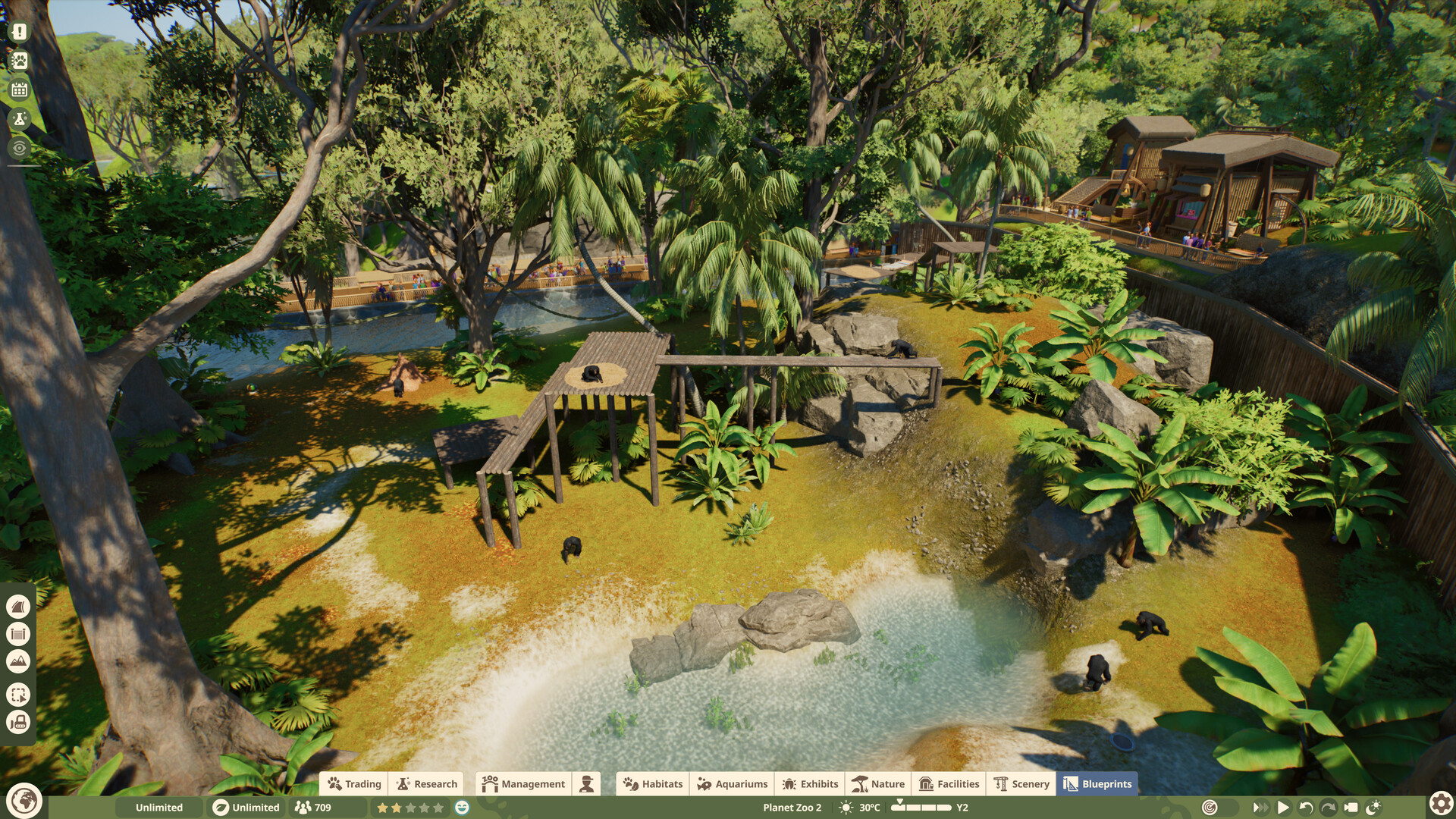
Frontier calls the core structure the reactive brain. It sorts everything an animal is able to do into four kinds of action and lets the animal move between them smoothly as its circumstances change, rather than running down a fixed list.
Action Type | What It Covers | Examples |
|---|---|---|
Routines | The default actions an animal takes when nothing is demanding its attention. | Exploring, resting, using enrichment |
Periodics | Reactions to changes in the environment, taken between routines. | Finding shelter, escaping predation |
Distractions | Reactions to a stimulus that change how the current action is being performed. | Joining a herd while exploring, answering a social call while resting |
Interruptions | Reactions to a stimulus that stop the current action outright in favour of another. | Playing with another member of the species, waking from sleep when disturbed |
How an animal feels changes how it acts. A happy, sad, angry, or scared animal performs the same action in a different manner, and the mood is readable from the animal itself rather than from a menu: a hot lion pants, an angry tiger flattens its ears. Moods also spread between animals, so a scared zebra alerts the rest of its herd to danger.
Animals react to a wide spread of stimuli, including the time of day, the weather, the current season, and the presence of predators. That reactivity reaches into courtship and breeding through the seasonal fertility described under Breeding and Nesting and under Seasons and Weather. Frontier also notes that an animal behaves differently in the wild than it does in a zoo, because the stimuli around it are not the same.
Formations are new to the sequel and sit as a layer on top of the animal brain, letting a group of animals act as one. When several animals of the same species gather closely enough they can form up with their peers, and the type of formation depends on the animals and what is happening around them.
Formation Type | Used For |
|---|---|
Migrating | Moving as a group across the habitat or reserve |
Defending | Holding ground against a threat, such as a bison ring formed against a nearby predator |
Fleeing | Escaping a threat together |
Neutral | Ordinary grouped movement with no particular pressure |
Shape, size, and density all vary by formation type and by species. Frontier gives a defensive ring of bison and a line of migrating zebra with the male at the rear as two worked examples.
A formation decides what to do by comparing the routine behaviours its members individually want. The members effectively vote on a shared action, such as resting, exploring, or grazing, and how likely an animal is to follow the group instead of its own routine depends on how sociable its species is. Frontier expects zebra and wildebeest to graze together readily, while giraffes more often do their own thing while staying near the herd.
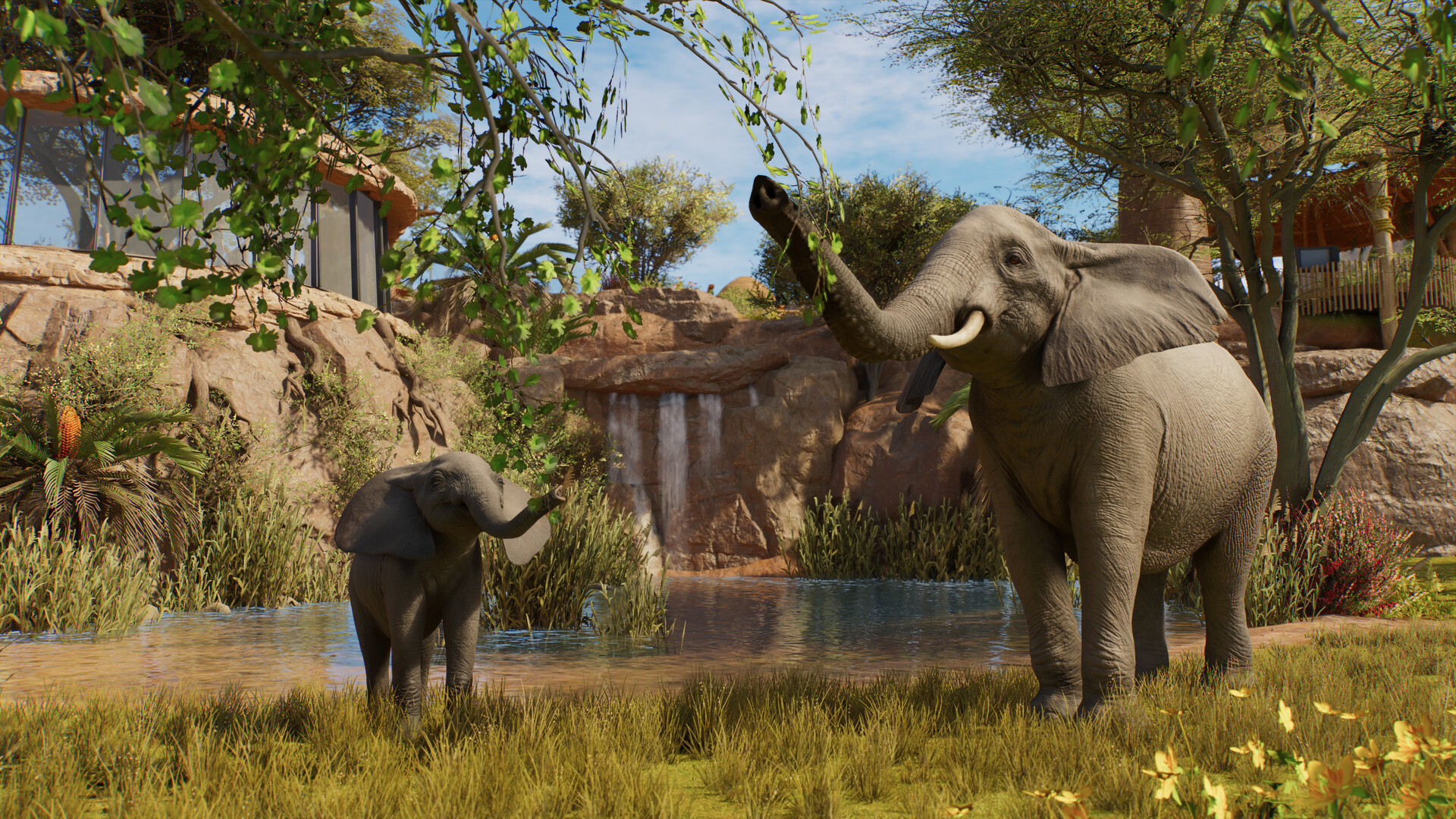
Frontier describes the biggest payoff from the rewrite as emergent, unplanned behaviour. It draws the comparison itself: in the original Planet Zoo animals repeated the same limited set of actions, while in the sequel a much wider range of actions can be carried out in different ways depending on the situation. The studio offers a playful chimpanzee knocking an enrichment item into a sleeping troop member and waking them, or a lion getting angry because its favourite scratching post was removed just as it was about to use it.
These are not only set dressing. Emergent events change how a zoo has to be managed, because the player has to react to the unexpected and keep welfare stable through it.
Birds and fully aquatic species run on the same four-part structure but draw on different pools of behaviour. Birds weigh the cost of flying against walking and arboreal species prefer to perch, while fish hold a preferred position in the water column and rest by hovering rather than sleeping. Those differences are covered under Aviaries and Aquariums.
