
Loading...
Loading...
Souls
September 7, 2026 at 01:14 AM
Added the health- and gauge-based soul drop-rate rules, the Blazing State soul bonus, the absorption bonus indicator and its defencelessness and soul-release conditions, and a hedged note on the reported fourth soul colour
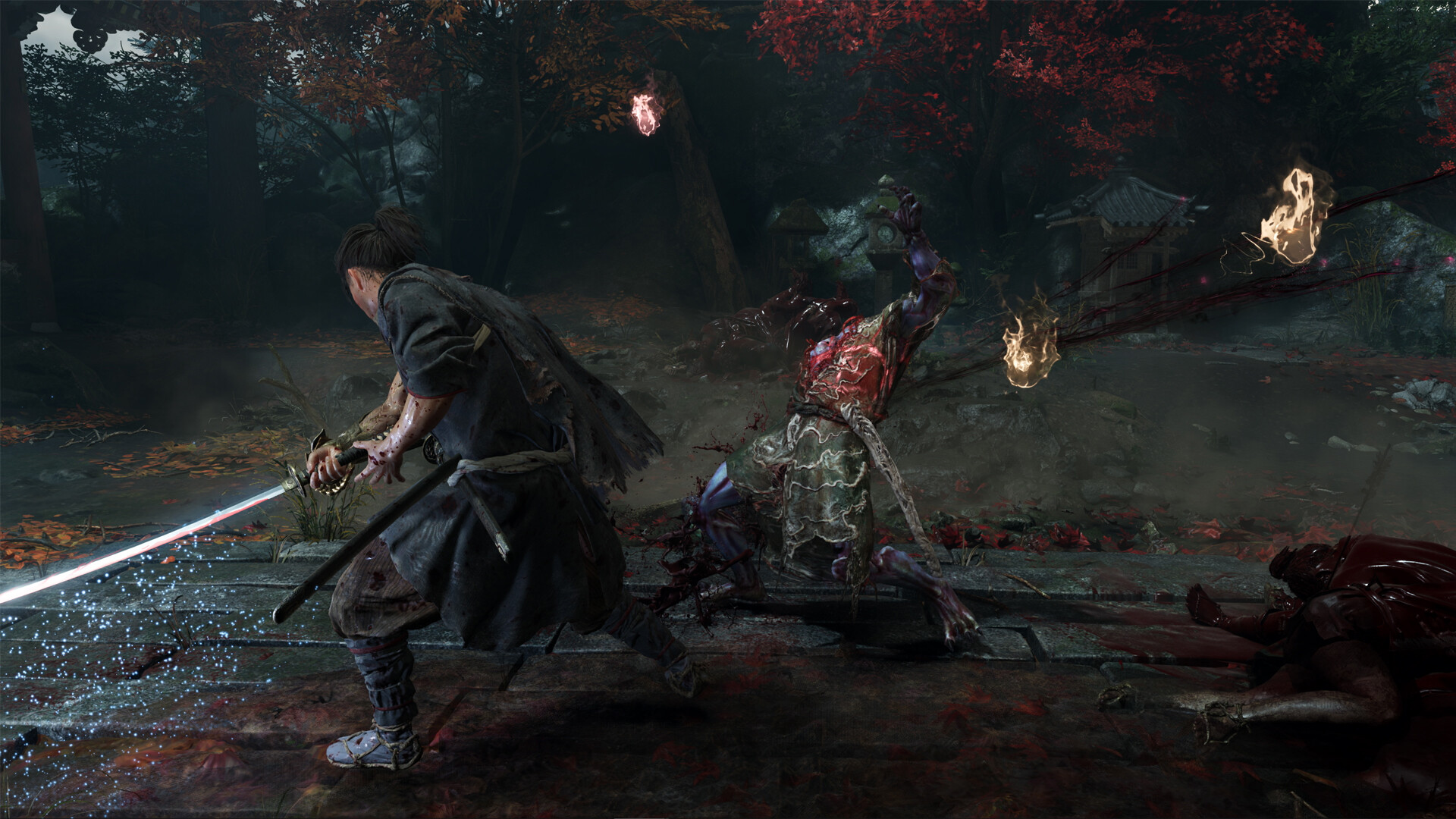
Every defeated enemy in Onimusha: Way of the Sword leaves behind souls that the Oni Gauntlet absorbs from the fallen Genma. Soul absorption is the core economic and combat loop of the series and returns here as a hands-on action. Capcom has confirmed three colours of souls, each tied to a different gameplay system. Yellow souls replenish health, red souls are spent on upgrades, and blue souls fuel the Oni Armaments, the gauntlet's special weapons. Managing which souls to grab, and when, sits at the centre of the moment-to-moment combat system.
The three confirmed soul colours and their roles:
Colour | Use | Notes |
|---|---|---|
Yellow | Replenishes Musashi's health. | Absorbed during or immediately after a fight to top up the health bar. Also generated when landing hits with Oni Armaments. |
Red | Spent on upgrades and character progression. | Functions as the long-term currency of the game. Banked across encounters and spent outside combat. |
Blue | Fills the Oni Power Gauge and powers Oni Armaments. | Required to activate the special weapons that deal large damage to enemies. Gauge depletes with each armament use. |
Yellow souls are the in-combat healing resource. Rather than dropping consumable items or relying on a separate potion inventory, the game loops healing back into the kill itself. Every enemy corpse can yield yellow souls, and absorbing them restores part of Musashi Miyamoto's health. Because the orbs hang in the arena after an enemy dies, the player picks the timing of the heal: sometimes it is safer to finish the next enemy first and sweep both kills' souls at once, sometimes a health bar is low enough that breaking off to absorb is worth the exposure.
The Oni Armaments feed the yellow soul pool directly. Landing hits with the special armaments produces additional yellow souls from the struck enemies, which creates a deliberate offensive loop. Spending blue souls to activate an armament, then using that burst to farm yellow souls, is one of the intended paths for stabilising health in a bad fight rather than retreating. Officially, the lower Musashi's health is, the more yellow souls fallen enemies release, which softens the risk of pushing through a fight while low.
Red souls are the game's long-term currency. They are spent on upgrades that develop Musashi's kit across the campaign, from weapon enhancements to character progression. Unlike yellow souls, red souls are not typically used up in the same encounter they are collected; they accumulate over play and are banked for meaningful purchases between encounters.
Because red souls are the slowest resource to spend, the strategic question is patience. Dumping red souls on the first available unlock may pay off early but leaves little for bigger purchases later. Clearing optional groups of Genma and hunting down isolated orbs on the battlefield is the main way to build a red soul reserve for the next meaningful upgrade. Finishing an enemy with a Break Issen also makes more red souls appear than a standard kill, which rewards clean executions on top of their combat value.
Blue souls fill the Oni Power Gauge, the meter that gates access to the Oni Armaments. Each Oni Armament is a distinct powerful weapon pulled from the Oni Gauntlet and used as a limited-duration ability. Confirmed armament types include a bow, dual clubs, and a spear, alongside the twin daggers called Two Celestials, which unleash a short but devastating flurry on activation. Different armaments suit different situations, so the blue soul economy doubles as a tactical toolbox.
Because the gauge depletes quickly while an armament is active, blue souls are the scarcest resource in any given fight. Spending a full gauge on a single weak Genma wastes the damage ceiling the armament would offer against a mini-boss or a dense pack. The expected pattern is to hold the gauge, then unload it when the fight spikes: elite enemies, group ambushes, and boss phases. More blue souls appear the lower the Oni Power Gauge already is, and enemies struck while Musashi is in the Blazing State generate extra blue souls on top of that.
Souls are not an abstract counter that ticks up automatically. They spawn as coloured orbs in the physical arena after an enemy dies and drift outward before fading if left untouched. The player holds the Oni Gauntlet out to draw the orbs in, which means soul absorption is an active input rather than a passive cleanup. Timing the absorption correctly is part of the tactical layer of the fight, not just a post-fight chore.
The cost of absorbing is time. While pulling souls, Musashi is not swinging, blocking, or countering, so a careless pull in the middle of a group can turn into a hit. Good absorption windows tend to come after a Break Issen or other clean finisher that opens a brief gap in the enemy's next attack. Unsafe windows, where enemies are already winding up, force the player to wait until the arena resets. The more souls Musashi absorbs at once, the greater their effect: drawing in several together triggers an absorption bonus, shown by an indicator that shifts from white to yellow to orange and finally to red as the bonus level climbs. He can move while pulling souls in, but he remains otherwise defenceless during the animation, and getting hit by a special attack, or becoming exhausted himself, makes him release blue souls, draining the Oni Power Gauge he had already filled.
Leaving orbs on the ground is not a neutral decision. Capcom has confirmed that the Genma themselves can absorb stray souls. Any orb the player does not collect in time is at risk of being claimed by a nearby enemy, and when that happens the Genma powers up, gaining access to deadlier attacks or new abilities. Ignoring a kill's souls effectively hands fuel to the other side of the fight.
This introduces a pressure that plain currency collection does not. Clearing up quickly is both a way to heal or charge the gauntlet and a way to deny the Genma the same resources. In larger fights the decision loop becomes: finish the next enemy, absorb what is on the ground, or keep pressure on a wounded foe before it can reach an orb. Sloppy play compounds; a missed orb early in a fight can create the upgraded enemy that kills the player later in the same arena.
Japanese-language material gives the resulting condition a name. An enemy that absorbs a loose soul enters a soul-empowered state, and the deadlier attacks and extra abilities belong to that state. It is the same action Musashi performs with the gauntlet, run in the other direction, which is why the fight for the orbs on the floor reads as a genuine contest rather than a housekeeping penalty.
One Genma turns that background pressure into the point of the encounter. Daidara is a towering creature with a bottomless appetite that extends to the souls Musashi has earned but not yet pulled in. Against it, the usual habit of clearing a room and sweeping up the orbs afterwards stops working, because anything left on the ground is eaten first.
That forces a live decision in the middle of a fight. Absorbing takes time, and time spent absorbing is time not spent attacking or defending, so the player has to weigh each orb against the opening it costs. The change that lets Musashi absorb souls while moving instead of standing still matters most here: it is the difference between contesting the souls and conceding them.
Because all three soul types drop from the same pool of enemies, every fight is both a spectacle and a short-form resource puzzle. A clean encounter rewards all three currencies: health to keep pushing, red souls to spend later, and a filled gauge for the next tough fight. A messy encounter leaks yellow souls to the ground, arms the Genma with upgrades, and leaves Musashi poorer on all fronts entering the next room.
Practical priorities in a live fight tend to run in this order. Yellow souls come first when health is low, because losing a life resets everything. Blue souls come second when an Oni Armament would decide the encounter, especially against elite Genma. Red souls are the last concern in the moment, since they carry over and can be collected from the arena floor after the threat is cleared. Players comfortable with Break Issen counters tend to open up more safe absorption windows, because each successful counter ends a threat on the player's terms rather than the enemy's.
Souls are not the only meter a fight runs on, and the two are easy to confuse on the HUD. The red gauge under an enemy's health bar is its rikido, and it has to be emptied before a break finisher becomes available. Rikido is drained with attacks and, much faster, with the repel; it is not filled or spent by collecting orbs, and nothing about it carries out of the encounter. Souls are the economy that runs between fights. Rikido is a state inside one. See the posture system for how the break loop resolves once the gauge is empty.
Across the campaign, the three soul colours form a closed loop. Killing Genma produces orbs, the Oni Gauntlet absorbs them, and the resulting health, currency, and gauge charge are spent on survival and upgrades that make killing the next wave of Genma faster. Each colour feeds a different part of Musashi's growth: yellow souls sustain the run in the short term, red souls build his baseline strength across the long term, and blue souls unlock the ceiling moments where the Oni Armaments change what is possible in a fight.
The design is deliberately aggressive. Because the healing currency is tied to kills rather than rest points, and because unclaimed orbs actively empower the enemy, there is little reason to turtle up. Players who press forward, chain finishers, and clear arenas quickly end up with fuller health bars, heavier red soul purses, and more armament uses available for the next arena than players who play defensively. The soul system is what turns the combat rhythm from trading blows into harvesting the battlefield.
The developers have said soul absorption was updated so Musashi can absorb Genma souls while moving, rather than having to stand still to gather them. The change is meant to keep the tension and pace high during faster combat, so a player can keep pressing an attack or repositioning while still collecting the souls a defeated enemy leaves behind. The Oni Gauntlet remains the tool that performs the absorption, and upgrading it increases the speed and range at which souls are pulled in.
Some retail-build press coverage describes a fourth, purple soul tied to Oni Awakening. Capcom's own soul documentation lists only red, yellow, and blue, so the purple soul and its role in the Oni Power economy should be treated as unconfirmed rather than an established fourth resource.
The competition for souls has at least one named face. Kubi Akari, a Genma that drifts through the air with an eerie glow, absorbs nearby souls as one of its three confirmed behaviours, alongside spitting glowing projectiles and self-destructing.
That makes leaving one alive during a larger fight a resource decision rather than a purely tactical one. Every soul it takes is one that does not reach the Oni Gauntlet, which affects healing and Oni Armament availability later in the same encounter.
