
Loading...
Loading...
Greenhouse Farming
September 21, 2026 at 05:54 AM
Added the seed and spore names with per-unit values seen in pre-release footage, the greenhouse harvesting shot, and a link to The Docks
In Nivalis, space for urban greenery is extremely limited. The city is a vertical stack of metal and concrete stretching from the ocean to the clouds, and there is no room for open fields or traditional farms. Agriculture instead happens inside high-tech greenhouses near the docks, and the framing the developer uses for them is rental rather than ownership: you rent a greenhouse, you do not buy one. These enclosed growing facilities let you cultivate crops in a controlled environment, adjusting environmental parameters to optimize growth. The produce you grow can be sold for direct profit or channeled into your restaurants as a source of fresh ingredients.
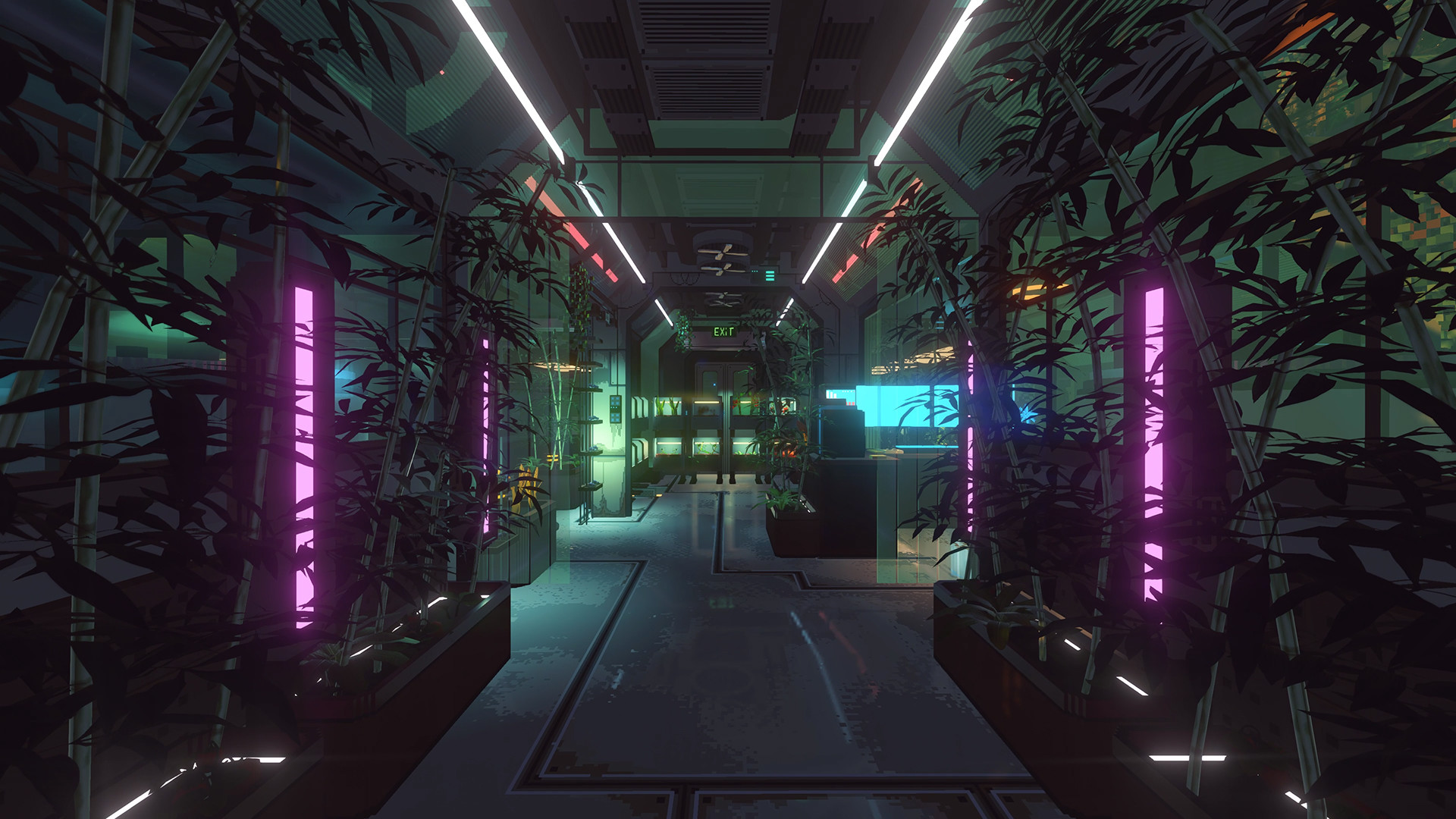
Greenhouse space is advertised as something you take on as a tenant. The pitch is to bring nature into the city: in a place where space is limited, high-tech greenhouses give you the chance to grow fresh, thriving crops even inside an industrial environment. Three things are promised to whoever holds the lease. You customize the space, you manage every condition inside it, and you cultivate everything from vegetables to more advanced resources. The developer sums the arrangement up as your harvest, your business, your rules, which places the greenhouse alongside the restaurants and bars as another asset you run rather than a side plot you visit.
Two of those three go beyond simple planting. Customizing the space implies the greenhouse interior is something you lay out yourself rather than a fixed room you drop seeds into, in the same spirit as the furniture and decoration placement used in apartments and business venues. Cultivating more advanced resources signals that the crop list runs past food ingredients into something else. As of 13 September 2026 the developer has not said what those more advanced resources are, has not named a single example, and has not explained whether they feed cooking, business stock, or some separate use, so the phrase reads as a stated ambition for the system rather than a documented tier of crops. Managing every condition is the part that is already spelled out in detail, and it runs through the control consoles described below.
Each greenhouse is equipped with control consoles that let you adjust three key environmental parameters: temperature, humidity, and light. These factors directly influence the growth speed of your crops. Getting the balance right means faster harvests and better yields. Setting the conditions poorly means slower growth and wasted time.
Parameter | Effect |
|---|---|
Temperature | Controls the heat level inside the greenhouse. Different crops may respond differently to temperature settings. Finding the right temperature for your current seed selection is key to efficient growth. |
Humidity | Manages the moisture level in the growing environment. Too low or too high can slow growth. Adjusting humidity alongside temperature helps create optimal conditions. |
Light | Sets the amount of artificial lighting provided to the plants. Light levels affect photosynthesis rates and influence how quickly crops reach maturity. |
The interplay between these three parameters is where the depth of the system lies. You are not just planting a seed and waiting. You are actively managing a growing environment, and the decisions you make on the console have a direct impact on how productive your greenhouse is.
Greenhouses are situated near the docks, the same area where you go fishing. This means a trip to the docks can serve double duty: check on your crops, adjust the console settings, and then hop on your boat for a fishing run. The proximity of these two activities makes the docks a natural hub for ingredient sourcing.
Renting does not stop at the first greenhouse. Every citizen with enough money can rent and manage more than one. This is not locked behind a story gate or a specific quest line; it is purely a financial decision. If your businesses are doing well and you need more produce, renting additional greenhouses scales up your farming operation. Managing multiple greenhouses means more consoles to monitor and more crops to harvest, but it also means a significantly larger output.
The greenhouse system is designed to grow with you. Early on, your seed selection is limited to basic crops. As you progress in the game and develop the right skills, you unlock access to more seeds and advanced modules for your greenhouses. These modules expand what your greenhouse can do, letting you grow a wider range of produce and improving efficiency.
The first concrete seed list comes from an official gameplay video published in September 2026, in which the player's inventory at a butcher's stall held seven seed and spore items, each with a per-unit value beside it. The stall also carried a seeds tab of its own, so seeds are sold by vendors that are not primarily farming suppliers.
Item | Per-Unit Value in Footage |
|---|---|
Bamboo Seeds | 9.32 |
Bean Sprouts Seeds | 9.89 |
Black Mushroom Spores | 8.46 |
Bok Choy Seeds | 9.01 |
Corn Seeds | 8.84 |
Fennel Seeds | 9.01 |
Ginger Seeds | 9.20 |
The values are from a showcase build and say nothing about growth times, module requirements or yields, none of which were shown. The same video includes a short harvesting shot inside a greenhouse module, with the player's hands pulling red root vegetables from a lit grow bed; the crop is not named.
Compatibility runs the other way too. Produce and seed entries in vendor stock name the farming modules they can be grown with, listed as generic module slots rather than crop-specific hardware, so a shop listing tells you in advance whether a crop will fit the greenhouse you already have. That makes the shop and the greenhouse two halves of one decision: what you can profitably grow is bounded by which modules you have installed, and what you need to buy from a vendor is whatever your modules cannot produce. See Economy and Dynamic Pricing for how vendor stock and pricing work.
The progression here ties into the broader economy of the game. Early crops might only be useful for simple dishes at your noodle bar. Advanced seeds unlocked later can produce ingredients for more complex and profitable recipes, which in turn attract higher-paying customers and increase your restaurant's reputation.
The crops you grow have two primary uses. First, you can sell them for profit. The market value of produce fluctuates based on supply and demand, so timing your sales matters. Second, and often more valuable in the long run, you can supply your own restaurants with fresh ingredients. Growing your own ingredients rather than purchasing them cuts costs and gives you more control over your supply chain.
This creates a satisfying loop: you grow crops in your greenhouse, harvest them, use them to prepare dishes in your restaurant, serve those dishes to customers, earn money from the sales, and reinvest that money into expanding your greenhouse operation or upgrading your equipment. The greenhouse is not an isolated feature. It is a core piece of the economic engine that powers your rise through Nivalis.
As your business empire grows, you may not want to personally tend to every greenhouse every day. The manager system lets you hire help. Managers can take on a range of duties to make your life easier, including collecting and making use of goods from your greenhouse. By assigning a manager to handle greenhouse operations, you free up your own time for other activities while still benefiting from the produce output.
Managers can also handle restocking ingredients across your various business locations, boosting overall staff efficiency and morale. This delegation system is particularly useful in the mid-to-late game, when you are juggling multiple restaurants, a nightclub, several greenhouses, and a social calendar that keeps getting more demanding.
The weather outside the greenhouse does not directly affect the conditions inside, since the whole point of the greenhouse is to create a controlled environment. However, weather does affect your broader decision-making around farming. On rainy days, when fewer customers visit outdoor stalls and foot traffic shifts indoors, you might choose to spend more time at the greenhouse optimizing your crops instead of working the restaurant floor. Bad weather days are natural windows for greenhouse maintenance and planning.
