
Loading...
Loading...
Axiom and Umbral
August 17, 2026 at 09:51 PM
Re-pointed the page image to an Umbral realm scene and wrote accurate alt text
The world of Lords of the Fallen II exists as two overlapping realms that share the same space: Axiom and Umbral. The series' signature dual-realm structure returns, but the balance between the two has shifted.
Axiom is the classically dark fantasy realm of the living, shaped by centuries of titanic clashes and fallen civilizations. It is the world the player walks through by default, a war-torn land crumbling from within.
Axiom is much larger here than the slice of it seen in the first game. It spans four distinct biomes, from sky-scorched deserts to overgrown jungles, and each carries its own culture, architecture, factions and enemies. The team describes the realm as aged rather than merely older: worn, dated and scarred, with a thousand years of Umbral corruption mutating each region differently. It also says the map is fully connected with no loading screens between areas, and that both realms are rendered simultaneously rather than loaded in turn. The kingdom of Thorngar is the part of Axiom the player fights for.
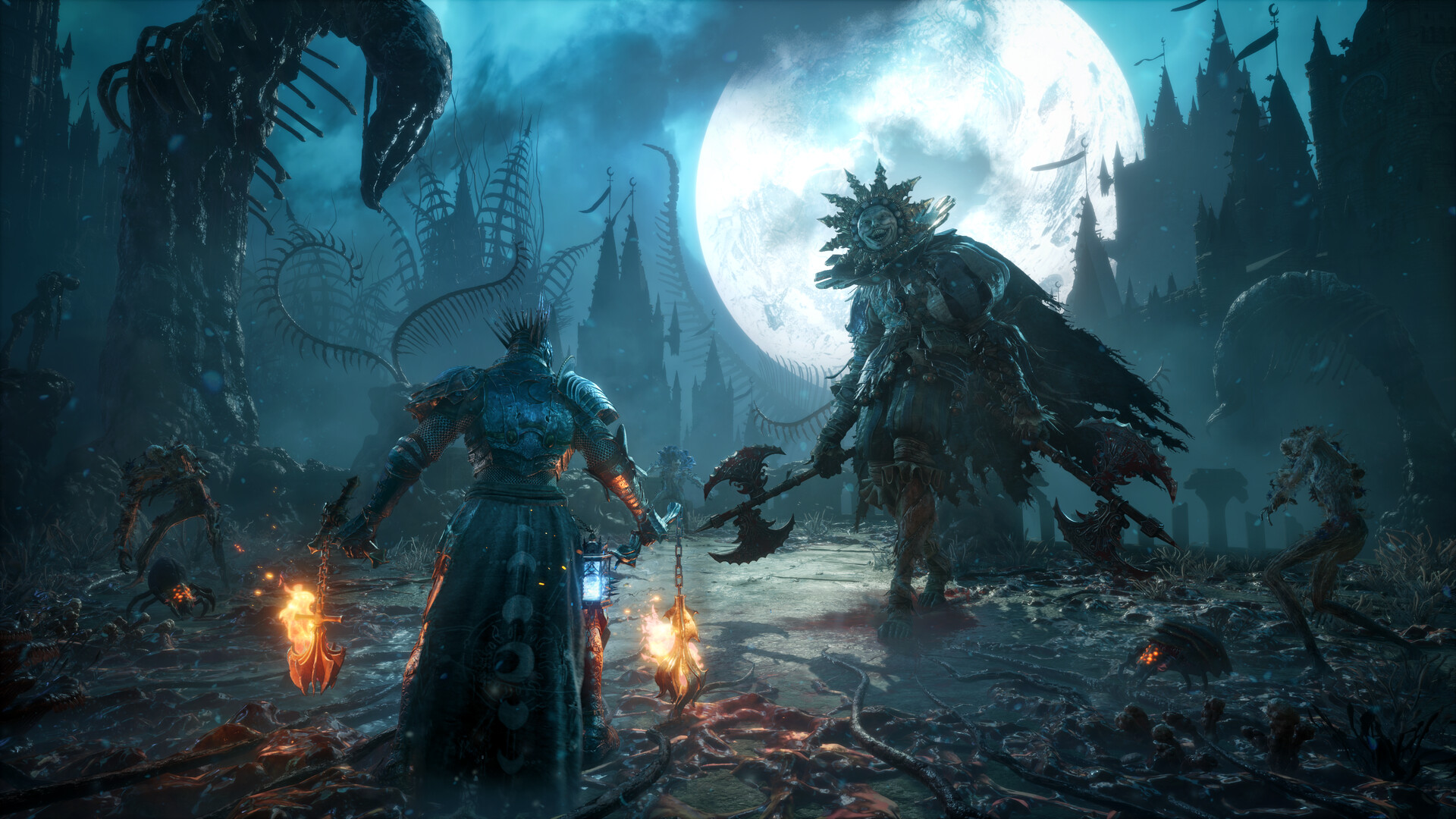
Umbral is a grotesque, visceral mirror world where the laws of physics and death grow mysterious. In this entry the developers have recast it from the realm of the dead into the realm of the undead. As the team describes it, Umbral's former scab-like crust has been ripped away to reveal the raw flesh beneath, an open wound that seethes with newfound hunger.
Rather than a separate dimension the player briefly visits, Umbral is now an invasive force that actively bleeds into the living world. The two realms are rendered together without loading between them, and the danger of Umbral reacts to the player's actions. Crossing between them is done with the Umbral Lamp.
Beyond the shifting balance between the realms, the sequel’s world is built to react to the player. The developers have confirmed dynamic world events alongside the dynamic Umbral encounters, so the state of the world can change as the player moves through it rather than staying fixed. This reactivity feeds the game’s emphasis on varied, repeatable runs.
