
Loading...
Loading...
Combat
October 16, 2026 at 10:05 PM
Added a table of combat mechanics from the first Steam playtest (stamina, lock-on, QTE prompts, red-eye charge attacks, unavoidable attacks, skill gauge, orb drops, guarding); updated the ranged examples and difficulty tiers
Combat in EVILBANE is real-time and built around a single idea: every character goes into battle carrying one melee weapon and one ranged weapon at the same time, and can switch between them freely on the fly. That swap is the core of the game's combat identity. Rather than locking you into one fighting style, it asks you to read the moment and pick the right tool, closing the gap with steel one second and pulling back to fire the next.
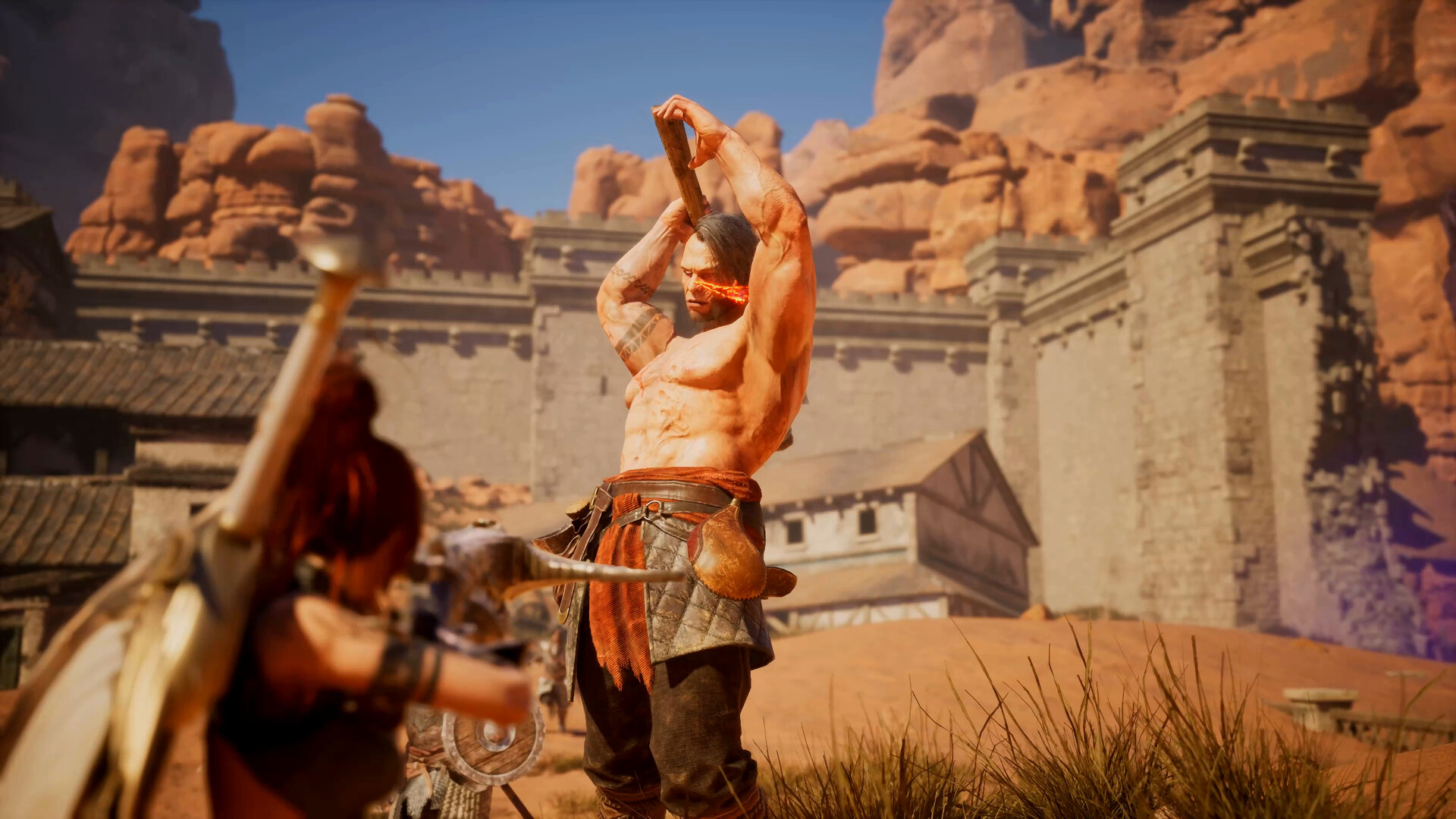
Because both weapon slots are live at once, fights flow between two ranges. Melee gives you up-close pressure; ranged lets you deal with enemies from a distance and keep the pace under control. The game uses a third-person camera, and ranged play is described as feeling shooter-like, so firing a crossbow or a Magic Orb has the responsiveness of an action shooter rather than a stat roll behind the scenes. Knowing when to swap, and chaining the two together, is meant to be where skill expression lives. See Weapons for the weapon types and what each one brings.
On top of basic attacks, each character equips active skills that come from the weapons they are carrying, plus the customizable abilities of the Heavenstone System. Heavenstone skills are powerful enough to turn a fight, and a squad can combine them for big moments, so combat is as much about timing your abilities with your teammates as it is about your own inputs.
Swapping weapons is not the only thing the game asks you to time. The developer has described skill-based mechanics built on reading an incoming attack: you can meet a blow head-on and hit back, or roll clear and answer from the opening that follows. Trailer footage has shown that counter play running through both stances rather than being tied to one weapon. Land those windows and the payoff is a finishing move, staged as a short cinematic beat rather than another swing in a chain. The line the team keeps returning to is that timing, positioning, and coordination are what separate a clean run from a messy one.
The October 2026 playtest and its official FAQ filled in a number of mechanics that earlier showings only hinted at.
Mechanic | How It Worked in the Playtest |
|---|---|
Stamina | A green bar below the HP bar. Sprinting, jumping, and rolling all spend it, and none of them work once it runs out. |
Lock Target | Tab on a keyboard or RS on a controller locks the camera onto mid-bosses and main bosses. Switching to a ranged weapon releases the lock, and locking on while holding a ranged weapon switches you to melee. |
QTE prompts | A blue glow on an enemy means a QTE is available. Pressing the key at that moment triggers a special action, such as heavy damage or a quick reload. |
Red eyes | An enemy whose eyes turn red is charging a powerful attack and will not flinch while it does, so dodge if you cannot take it down first. |
Unavoidable attacks | Some attacks cannot be dodged even with perfect timing; the answer is to get fully out of range. |
Skill gauge | Charged by basic weapon hits, blue SP Orbs, Weakness Breaks, and melee Heavy Attacks, then spent on weapon Active Skills. |
Enemy drops | Red orbs restore HP, blue orbs charge the skill gauge, and light blue orbs restore Magic Ammo and mana. |
Guarding | Some One-handed Swords can guard to reduce incoming damage. |
The playtest's Heavenstone Skills also had hard limits: a total equip cost of 10 and a maximum number of uses per operation, covered on the Heavenstone System page.
The fights shown so far lean hard on coordination, especially the co-op boss battles against demonic foes. Positioning, target priority, and lining up abilities across a party matter, which fits the game's broader framing that teamwork and smart choices, not reflexes alone, decide victory. The Co-op and Multiplayer and Missions pages cover the team and encounter sides in more detail.
Finishing moves are not limited to what one player can set up alone. The developer has described attacks chained between teammates, with one player launching an enemy into the air and another closing it out with a mid-air quick-time attack. The team called this and the ability to revive downed allies systems still in testing, so the specifics may move.
On how hard all of this is meant to be, the team is preparing multiple difficulty levels so players can learn at their own pace; the first Steam playtest offered three, Easy, Normal, and Hard. The developer has said directly that the dark fantasy art style may give the impression of a Souls-like, but that punishing difficulty is not the goal.
A lot of the fine print on combat has not been made public. There are no released combo strings and no published damage tables; the only numbers so far are test-build values visible on playtest screens, such as weapon ATK and skill cooldowns. Beyond the playtest details above, specifics like the size of the counter and dodge windows and exact ability behavior have not been laid out either. This page sticks to what has actually been confirmed and will be expanded as more concrete details are shared.